
I admit at the outset that I am not a fan of black tea. But in recent years, visits to Japan have seen me entering the world of green tea. I love the flavour of it in ice cream and cakes, and I’m growing to like drinking it. I’ve found you can even get green tea latte in Japan!


Green tea is proving to be a journey of exploration as I figure out what I enjoy. There are so many different types of green tea and further differences occur in taste, depending on when they are harvested, and where the tea is grown.

BLACK TEA
I grew up in a household of black drinkers. It seemed that the jug (kettle) was constantly on the boil for black tea. ”Make me another cuppa, duck?” my father would constantly plead with a smile. I’m not sure why he called me duck. It was a term he called others who were close to him. Like ’dear’ or ’darling’ – duck was an endearing term.
So tea is a strong, enduring and comforting reminder of happy times past for me. It evokes memories of my childhood home, family and my long departed much loved parents. Memories of family gatherings around cups of tea – my late Aunty’s rock cakes served with tea. She must have overcooked them as they truely deserved the name of ‘rock’. No one else seemed to like them, but me. I loved them, and always looked forward to her rock cakes, even when I abandoned tea for coffee.
When visitors arrived in my childhood home, out came the teapot – black tea or with milk, sugar or none? A few scoops of loose leaf tea, hot water poured over and the brew allowed to steep briefly. Turning the pot a few times was advised by my grandmother. Often the teapot was covered with a hand knitted cover – a ‘cosy ‘- to help insulate the pot and keep the tea hot. You were getting a little exotic if you requested black tea with a dash of lemon juice!

Although tea bags had been invented in the early 1900’s, they didn’t appear and become popular in most Australian homes until in the 1970’s. So thoughout my childhood and early teen years, we used loose leaf tea. We selected tea by brands – Liptons, Bushells. I don’t think we knew much about how tea was grown, or where it was grown. I certainly had no concept of a tea farm, and never saw one until I visited Japan.
By then, I was no longer a tea drinker. Perhaps I got a mouthful of leaf residue in my cup at some stage – turning me off tea and onto coffee as that became more popular with Australians.
TURNING TO GREEN TEA
I’m still not a black tea drinker, but I have come to the green tea table. My trips to Japan have awoken my curiosity about green tea, and I am now on a journey of green tea – taste, texture, aroma, – and the areas that grow the best tea. Green tea, I find, is a taste to be aquired, explored, and developed – much like wine.
As you travel around Japan’s countryside, you will almost certainly see tea farms. They look like carefully tended hedged rows – and in fact, they are hedged. Apparently, if left unattended the tea plants can grow into large trees! Or so I was told.
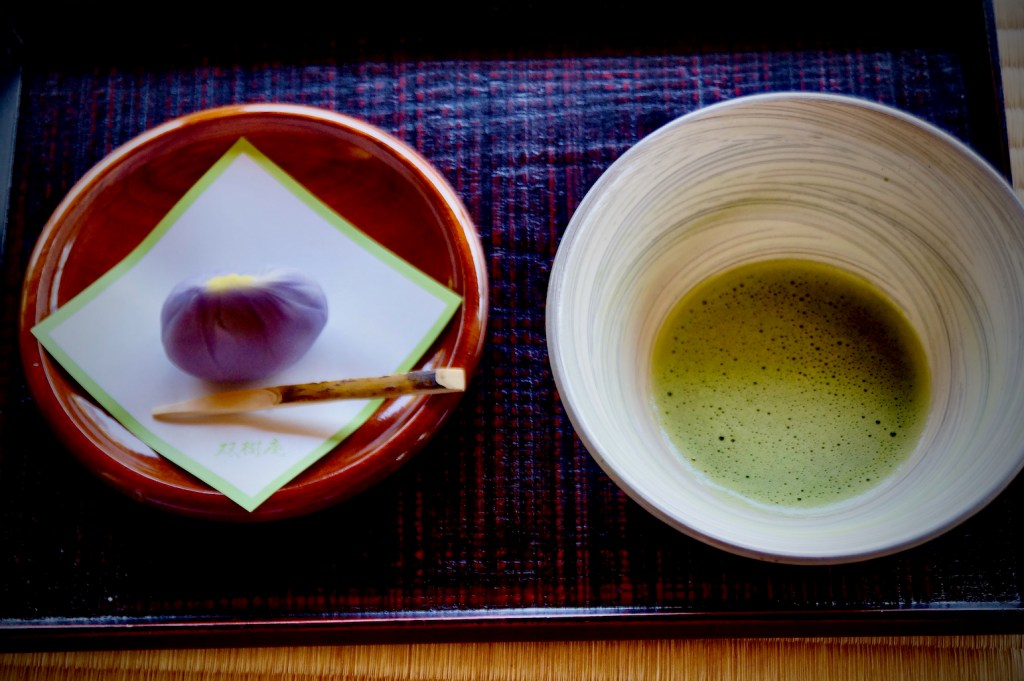
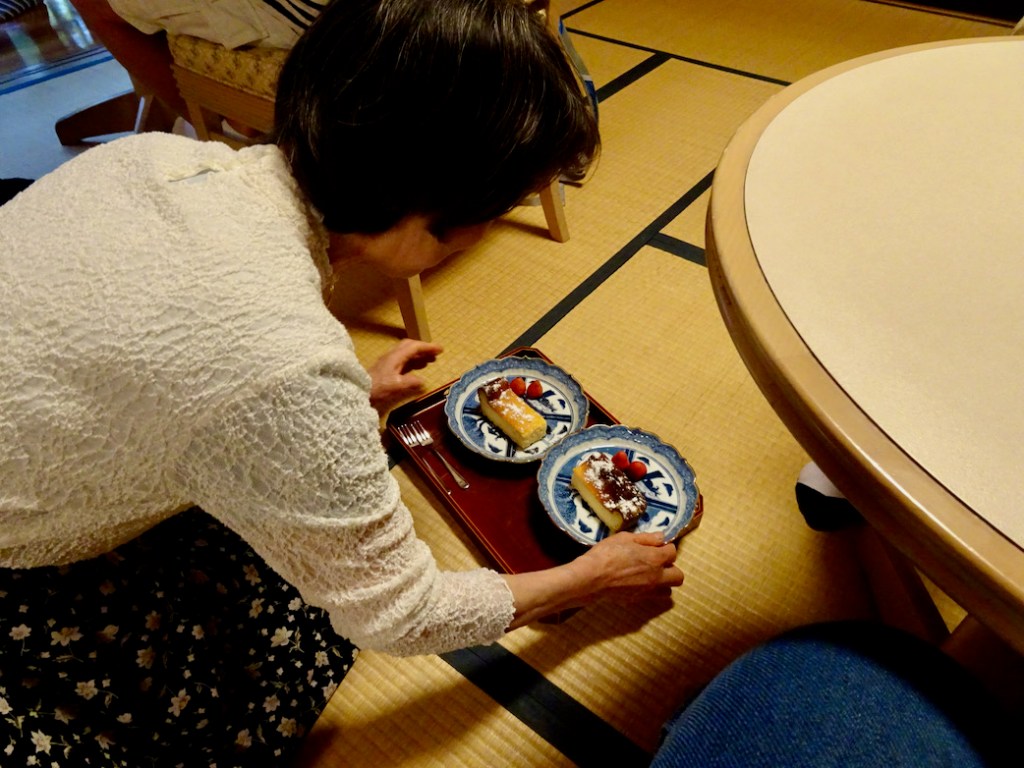
Attending tea ceremonies in Japan heightened my interest in green tea. One of the most wonderful experiences was at the small Hineno Museum in Hida Furakawa near Takayama in Gifu where the owner served us tea in exquisite tableware that was hundreds of years old. I dared not spill a drop! The cheesecake that was served with the tea was from a 50 year old recipe.
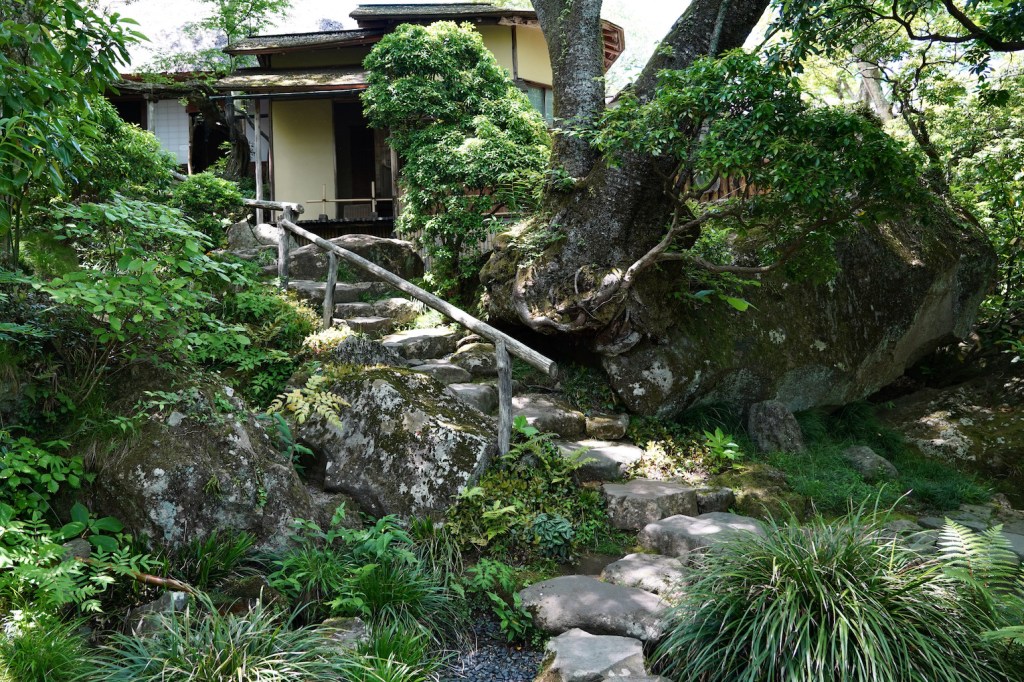
On my 2019 trip to Japan, I very nearly enjoyed tea at a Royal Palace. What is known as the Hakone Detached Palace (旧箱根離宮, Kyū Hakone Rikyū) was once the summer palace for the Japanese Imperial Family, but is now open to the public – and you can drink tea there on the southern shores of the very beautiful Lake Ashinoko on the peninsula between Moto-Hakone and Hakone-machi. Sadly for me, the tea shop was closed.


Another great tea memory was being offered tea at the small Koma glass museum, also in Hida Furukawa where we had the cheesecake experience. This tiny place exhibits glass products from the end of the Edo period to the beginning of the Showa period. It has hundreds of nostalgic glass products once used as daily necessities such as Japanese lamps, shaved ice bowls, uranium glass, and glass clocks. We were surprised when the owner urged us to sit at a small table where he brought us complimentary tea. He couldn’t speak English – we couldn’t speak Japanese. But tea brought us together in friendship.

At home, I’m well supplied with quality Japanese tea. I’ve been saved a little by my local chemist that remarkably sells quality green tea from Uji – a leading tea growing area near Kyoto that I visited in 2022. Uji is only about 15 minutes by train from Kyoto on the Nara line, so it is very easily accessible and definitely worth including on any JAPAN itinerary.
One good source of tea knowledge I have encountered comes from a young Journalist, based iSarawak, Malaysian Borneo Mei writes a blog on tea – ‘The Floating Tea Stem’. Yes, a whole blog all about tea. I did wonder initially how she could sustain a blog just about tea, but she does it in fine style. A really wonderful talented writer who blends her love and knowledge of tea with the travel she undertakes to sample teas.
Mei is certified as a Nihoncha Adviser by the Nihoncha Instructor Association of Japan, so she knows what’s she’s talking about. The Nihoncha Instructor Association (日本茶インストラクター協会) is a non profit organization with the purpose of preserving and promoting Japanese tea.
This will probably be my only article on tea – so I hand you over to Mei’s very enjoyable blog if you want to read more about tea! Cheers!
 Travelling Therese
Well now I might have to get back to drinking black tea, I luv a good cup of black tea so I will have to do some taste tests 👍 thank you
LikeLiked by 1 person
Ahh thanks for the mention. I’m still learning too. It’s an interesting journey. Hehe.
Now you got me interested in that Tiny Tea Shop! It’s been 10 years since I last visited Perth. Huhu. Hope to revisit someday. 😁
LikeLiked by 1 person
It’s a great little shop and the owner is so knowledgeable
LikeLike
I also prefer green tea over black tea! When I visited Japan for the first time, I attempted to try as many green tea-flavored foods as possible. Even though I am glad that matcha seems to have become more popular in Europe, I miss the deeper, more bitter flavors you can find in Japan.
LikeLike
I love it in Icecream and cakes.
LikeLiked by 1 person