
What does Sumo, the french painter Monet, deer and Japanese royalty have in common? Don’t think too hard. I have the answer. The exquisite Ōharano Shinto Shrine in the Nishikyō-ku area of Japan’s Kyoto hills!
Quite an offering, yet remarkably this shrine is not high on the ‘must visit’ list for foreign tourists – probably because of its remote hillside location, overlooking the city. Although it’s not hard to reach. The Shrine is only about an hour’s journey from Kyoto railway station, in the beautiful forests of Mount Koshio.

MJ and I were taken there by our guide and friend, Hiromi last November (2022) after she showed us the nearby Yoshimine-dera temple. They are only about a 15 minute drive apart, although quite different.

While Yoshimine-dera had a deep feeling of reverence about it, Ōharano Shrine felt lighter, more joyful. Was it the vermillion red colour adorning its buildings – my favourite colour – or the fact that one of the first things we saw as we approached was a Sumo dohyō – the ring where sumo wrestlers fight. I am a die heart sumo fan, so this caught my interest immediately. Sumo at a shrine?
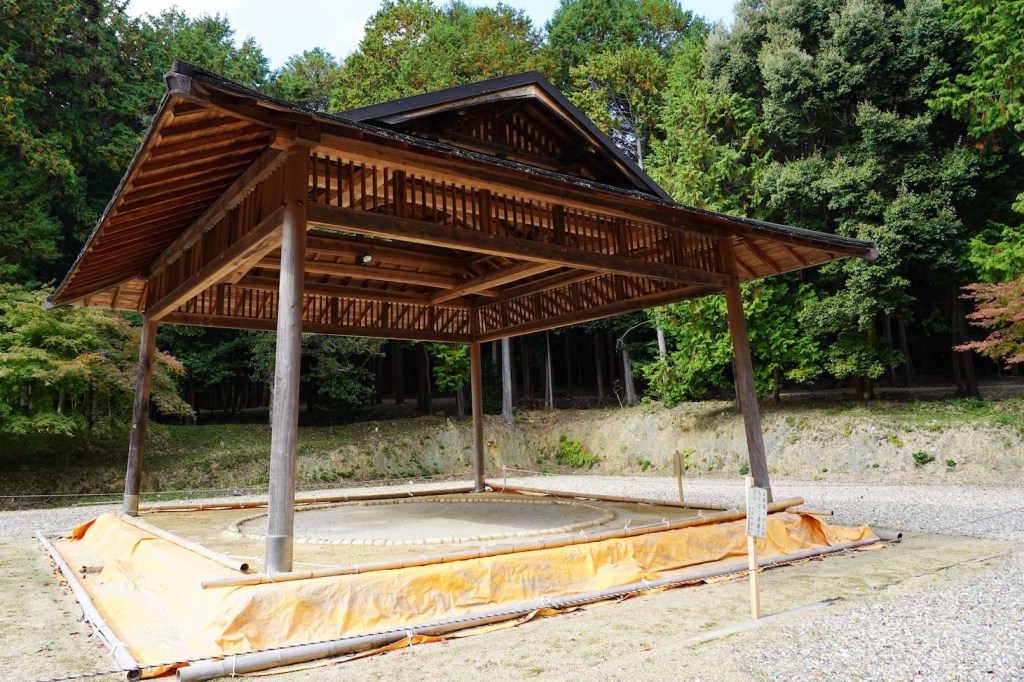
Hiromi explained that for more than 300 years the Shrine has hosted the Mitakari-sai festival where Kamizumo – sumo wrestling rituals for the gods – are carried out, usually in September. Young sumo wrestlers – boys – wrestle there after religious rituals in the shrine’s main hall.
Sumo has strong links with the Shinto religion, and you can see this in the the many sumo rituals that come from Shinto rituals. The gyōji (dohyō offical) also dresses very similarly to a shinto priest.

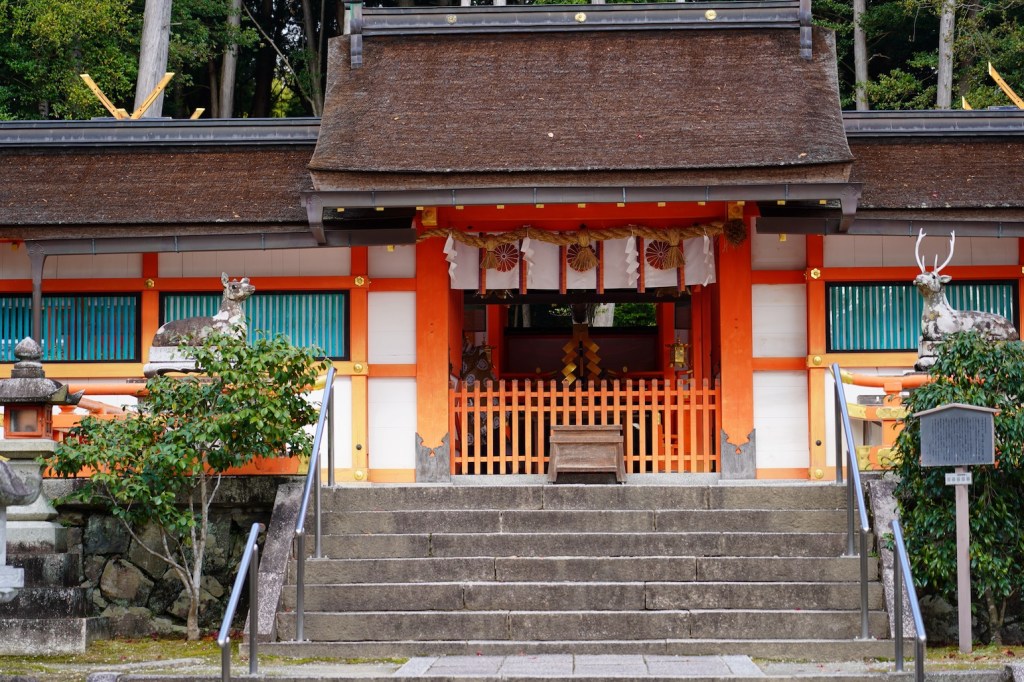
Ōharano Shrine is a branch shrine of the famous Kasuga Taisha in Nara. Kasuga shrines worship the Kasuga Daimyōjin deity, who is traditionally depicted astride a white deer. Following this tradition, Ōharano Shrine is known for its deer imagery, including two stone deer that serve as guardians of the shrine’s prayer hall. Deer images can also be seen on the shrine’s ema (votive tablets), tomamori amulets, omikuji fortunes, and as a pair of bells, all available at the shrine’s reception area.
So, if you don’t get to Nara, then you can certainly get a taste of it at Ōharano Shrine. And if you are looking for a scenic autumn leaf bonanza – this is definitely the place to visit.

The 83,000 square meter forest property has plenty of gentle and peaceful walking trails. We were treated to the most glorious golden autumn scenery, gardens and ponds. And, of course, a view over the city. I’ve heard cherry blossom season is a wonderful time to visit as well.
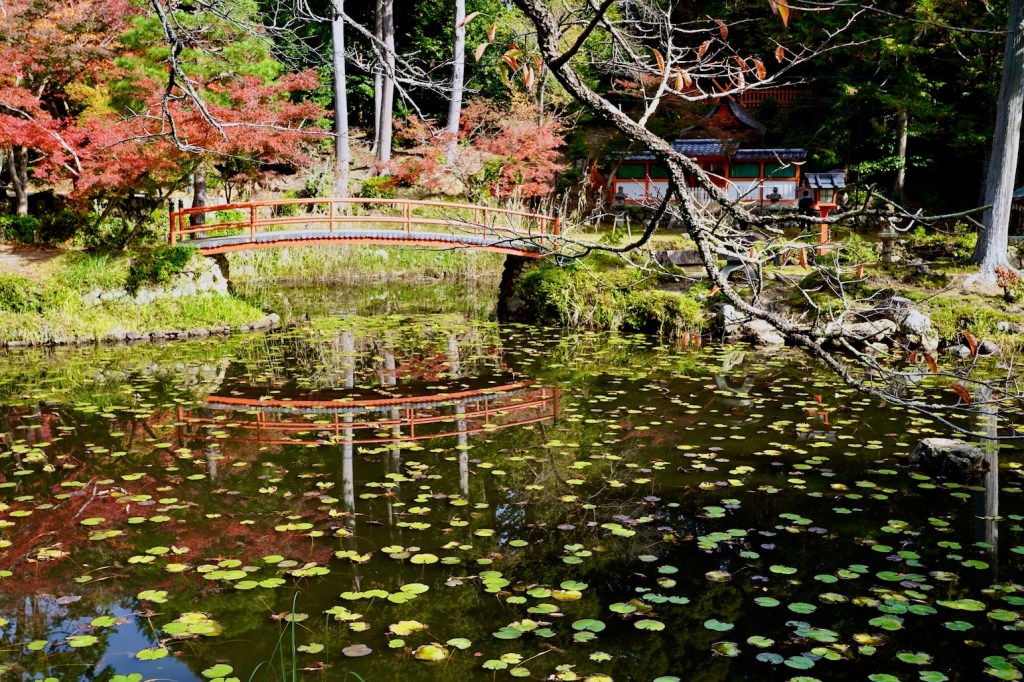
Ah – Monet? Yes, there is a distinct feeling of Monet here. Did the Shrine gardeners copy Monet’s famous water lily series to create the gardens here? More likely the other way around, given that this shrine and property was established around 784! The pond at Ōharano is supposedly modeled after Sarusawa Pond created in 749 in Nara, though I’m not sure I can see the resemblance.
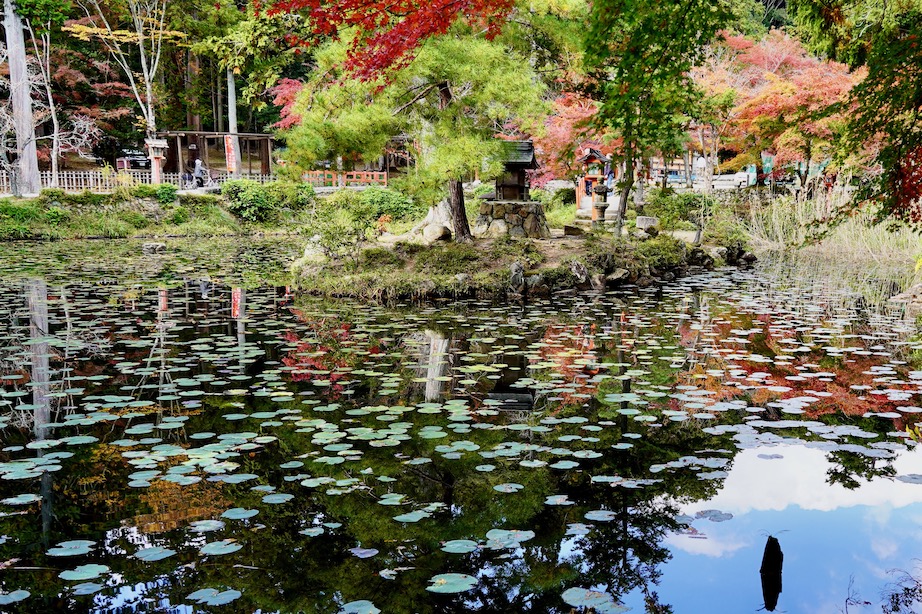
Monet never visited Japan, but he was a passionate Japanophile, even painting his wife in a kimono. In 2001, the Australian National Gallery hosted an exhibition Monet and Japan, examining ” the multiple aspects of Monet’s intimate relationship with Japanese art as it unfolded throughout his long career, spanning over 60 years.” The exhibition, said the gallery, provided a chance to understand the ways in which Monet absorbed the lessons of Japanese art, from his first encounter in the 1860s until the final years after the First World War. Monet studied Japanese prints, and built his own collection including images of life in and Kyoto.

When Monet went to live in Giverny in 1883, he created two beautiful flower gardens, and in the early 1890s, he constructed a water garden, partially inspired by Japanese gardens.
Did he ever see images of the Ōharano Shrine gardens? Who knows? But certainly, when viewing them, you will definitely think of Monet!
As for Royalty, the shrine enjoyed imperial patronage as far back as the early Heian period. In 965, Emperor Murakami ordered that Imperial messengers report on important events to the guardian kami of Japan. These heihaku offerings were initially presented to 16 shrines including the Ōharano Shrine. The Kanmu empress apparently worshiped tutelary deity in Oharano, where she often went hunting with a falcon.
This shrine was a favourite of Murasaki Shikibu, the prestigious Japanese author of “Tale of Genji”, and she mentions it in the book, written back in the early 11th century. I wonder if she would have left a prayer plaque with her wish list. This chap certainly was covering all bases with his at Ōharano Shrine.

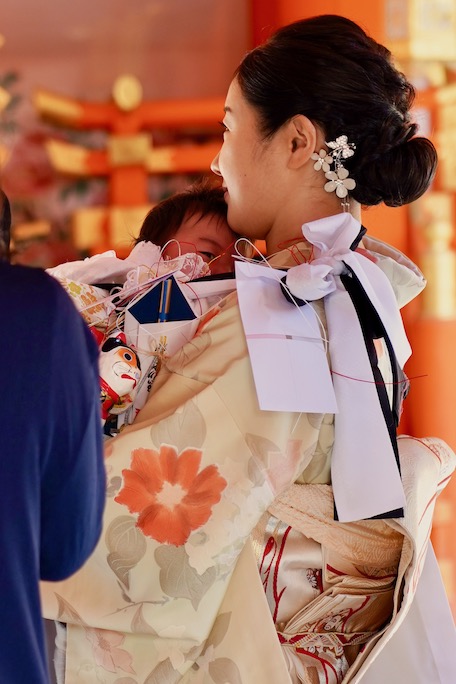
While we were at the Shrine, we were fortunate enough to see a special ceremony for a young baby. I’m not quite sure what it was about, but it seemed akin to a christening ceremony with his parents and family around him.
After our visit, our guide took us to a wonderful nearby soba restaurant on the shrine grounds. Here, buckwheat soba is made by hand, and it provides an authentic soba experience. You may have to wait for a table, even on a weekday, but there are seats provided outside and it’s worth the wait!

An extra little treat for me at the Shrine was my sighting of a Japanese mink! He flashed by too fast along the shores of the waterlily pond for my camera – but I saw him!
 Travelling Therese
Awesome. One county I must visit.
LikeLike
You must!
LikeLiked by 1 person
🙏🙏🙏
LikeLike