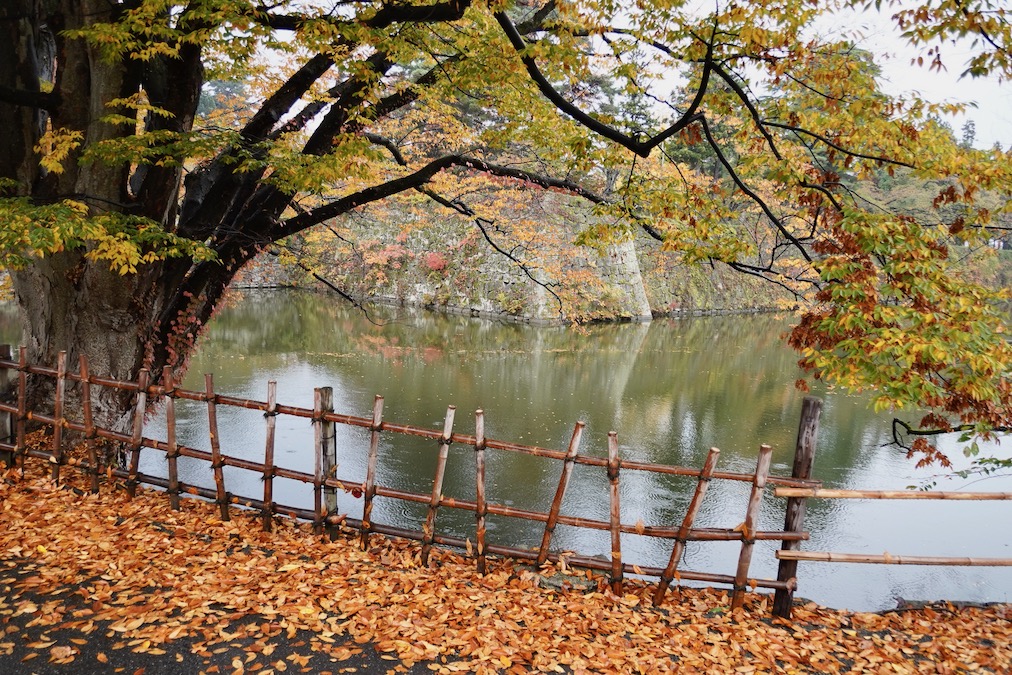
I hadn’t heard of Aizu Wakamatsu in Japan’s Fukushima prefecture until I began researching the Tadami train trip, being publicised widely as one of the most scenic in Japan – free to ride on the JR (Japan Railways) pass. And what a fortuitous way to put this historical Samurai city firmly on my radar!
Because Aizu-Wakamatsu is well worth visiting – and you can forever after allow that wonderful name – Aizu Wakamatsu – to roll delightfully off your tongue with the confidence of someone who has discovered its pleasures.

I really wanted to travel on the Tadami train after seeing a programme about it on NHK World TV, but from Australia and as a foreigner without Japanese language skills, accessing the information I needed was like pulling teeth – the nitty gritty info like how can you reserve a seat, what are its departure times, how long does it stop at stations along the way, and what exactly is at Niigata prefecture’s Koide – a tiny town at the other end of the route?
So difficult that I gave up on it for my 2022 Japan trip. The following year, I was more determined, with emails flying back and forth with various organisations involved with the train and cruising the net gathering snippets of information. It should have been simple with JR East, that runs the Tadami, providing me with the necessary information. But they didn’t! I’m sure they do for local tourists, but not for english speaking Aussies inquiring from overseas. It was typical of the many regional train trips in Japan – some desperate for customers, but failing to provide easy ways for eager foreign tourists to access them. What I didn’t want was to risk going all the way to Fukushima and not getting onboard!

I also began researching Aizu Wakamatsu as part of my investigation, and found the city so interesting that it seemed a worthy destination, even without the Tadami.
So three nights there went onto my November 2023 itinerary. Unknown territory in the interior of Fukushima prefecture, surrounded by mountains and the furthest north I had been from Tokyo – close to four hours journey from Tokyo station via the Tohoku Shinkansen and a link up with a slow local train through a rural landscape. I planned a few alternative rail journeys, if the Tadami was not a goer.

The Byakkotai Samurai boys
Aizu-Wakamatsu in 1868, towards the end of Japan’s feudal era, was the scene of one of the fiercest battles in the Boshin war between the Aizu Samurai and the new Emperor’s forces.
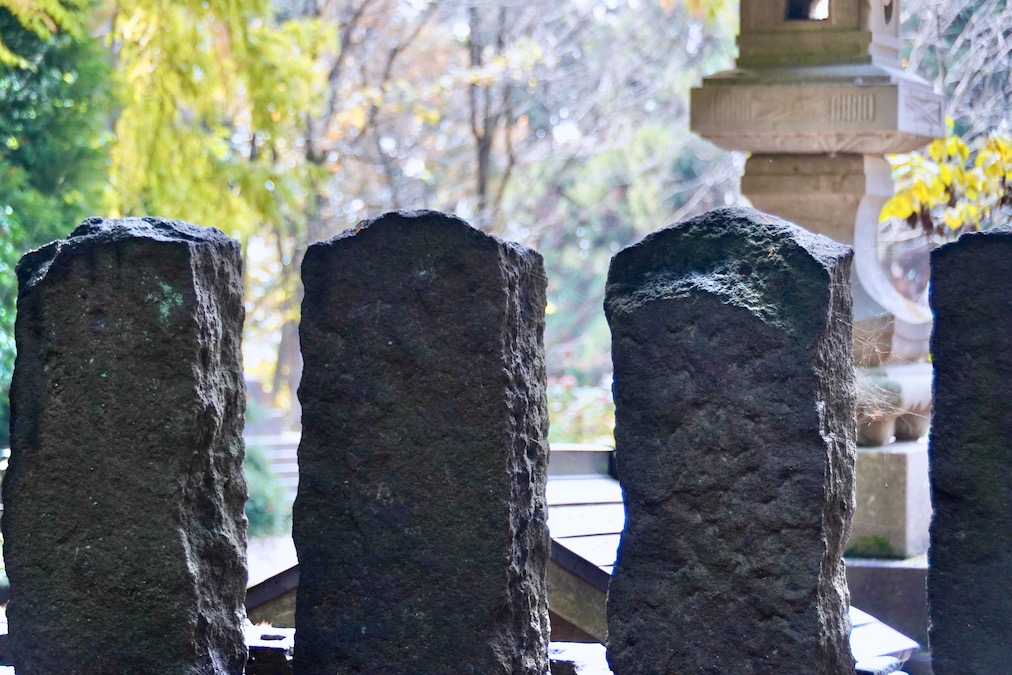
One of the big surprises for me on arrival was finding that Aizu-Wakamatsu was the resting place for a group of teenage warriors who committed suicide together towards the end of the Boshin war.
I heard about these brave teenagers years ago. Fighting on the side of the Tokugawa shogunate with a Byakkotai Samurai reserve unit, the White Tiger Brigade, they committed to ritual suicide together after believing the battle for their city was lost.
The story has been immortalised in literature, film and manga – though, for some reason I thought this tragic event happened near Niigata. So I was surprised to find the boys died on Iimori mountain, overlooking the city.
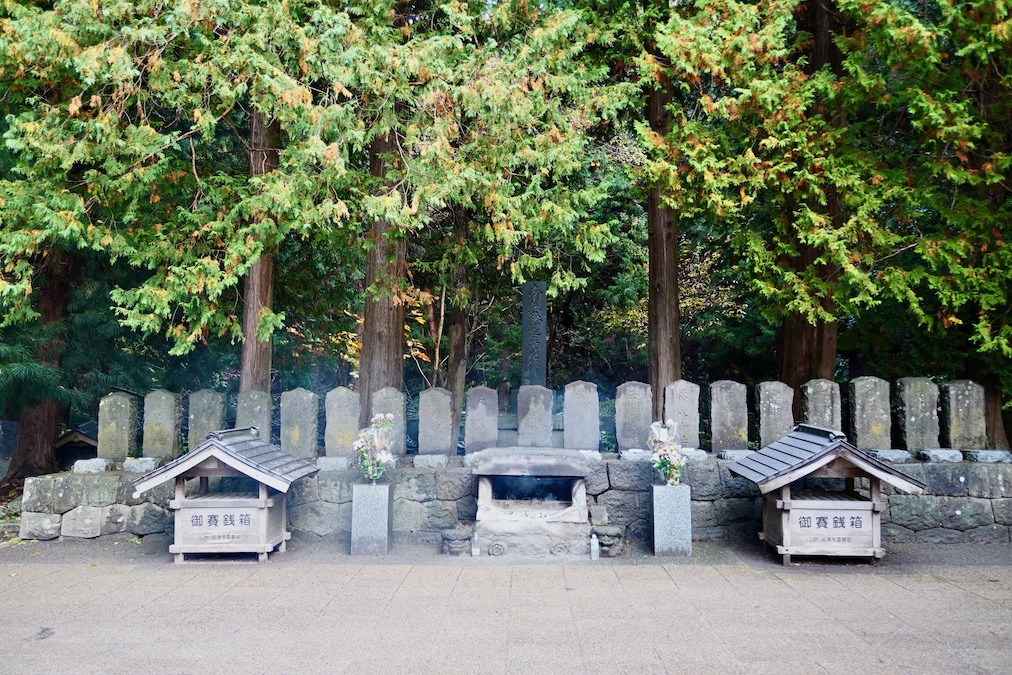

I was keen to visit their graves, so MJ and I bought day tickets for 600 yen each on the city’s tourist loop bus and headed to Iimori.
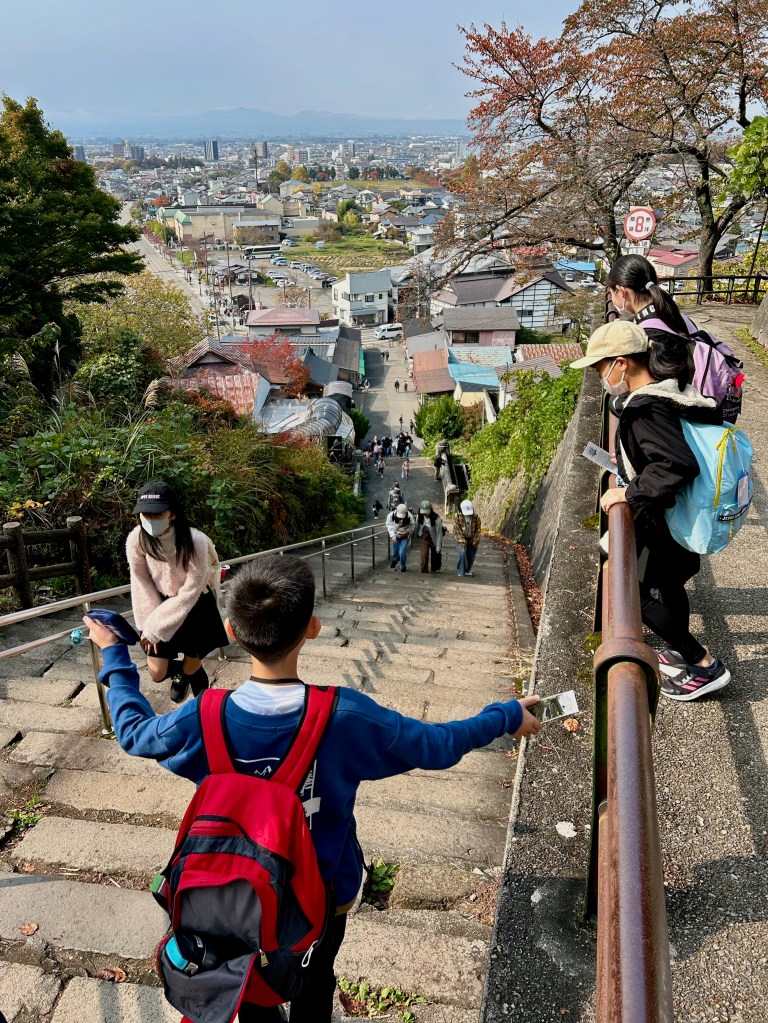
On arrival, I was dismayed to see 183 stone steps leading up a steep slope – quite impossible for me still recovering from a failed knee reconstruction. Then a lovely Japanese man, no doubt noting the dismay on my face, pointed out a covered escalator to the side of the steps! I mean – who would expect an escalator going up a mountain! I paid a small fee – a few dollars – to use it and return the smile to my face.
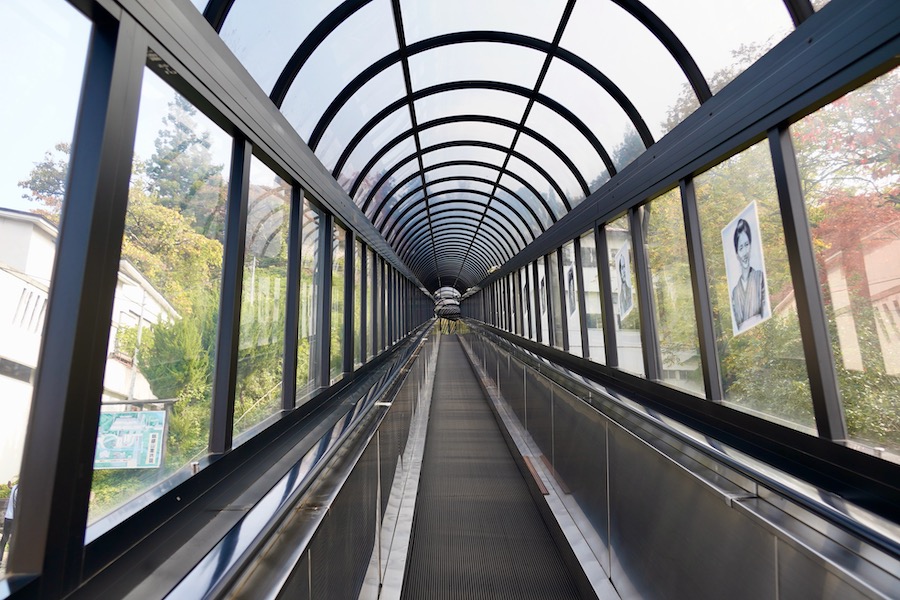

During the last days of the battle in Aizu Wakamatsu, the teenagers, cut off from the rest of their unit, retreated to Iimori mountain with their wounded to await orders. From there they saw what they thought was their castle on fire, and made the decision to commit seppuku, believing their Samurai Lord and families were dead.
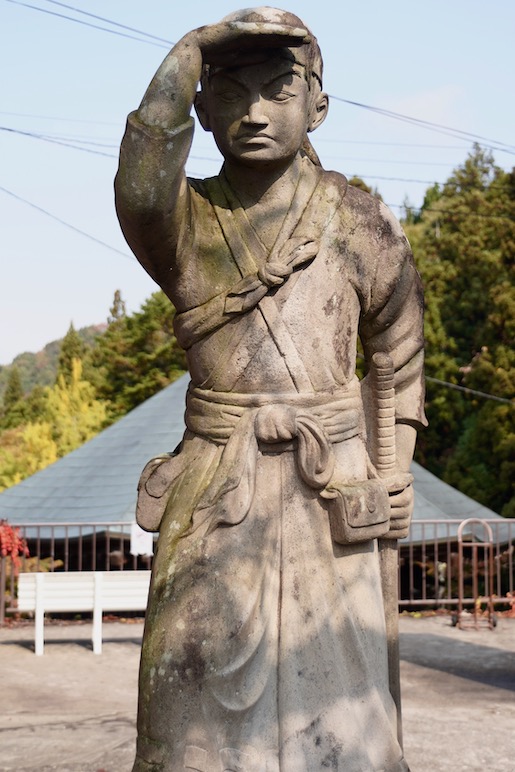
One boy – Iinuma Sadakichi – was later found badly wounded, but still alive, and was saved by local peasants. He was able to tell what happened, and he lived to his late 70’s, serving as an officer in the army, raising a family and working as an official of the local post office in Sendai.
Clearly, he never forgot his mates, requesting that he be buried on Iimori Mountain near them. And so he is.
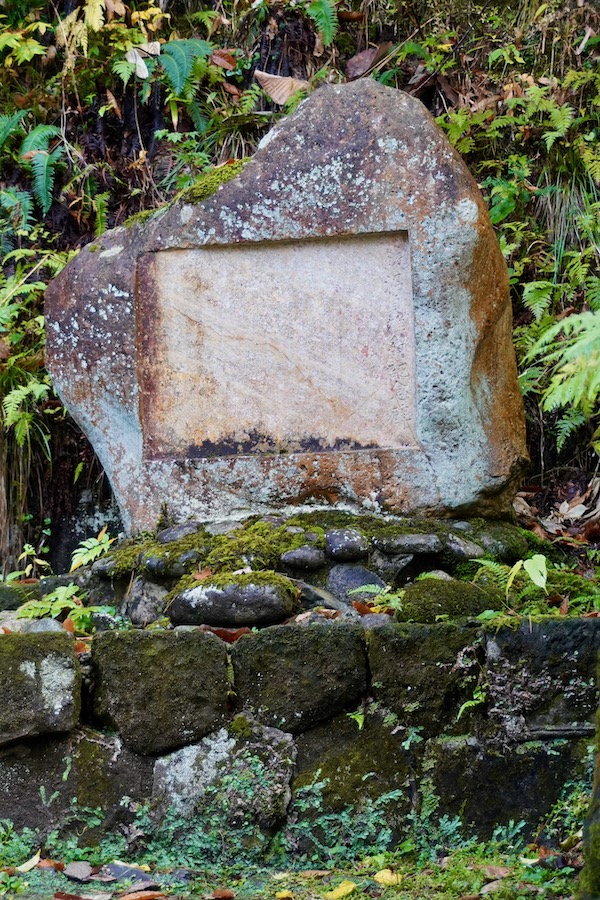
Today the Byakkotai boys are regarded as an enduring symbol of the spirit of the Aizu samurai.
A memorial is at Mount Iimori, including a stone bearing a poignant poem
“No matter how many people wash the stones with their tears, these names will never vanish from the world.”
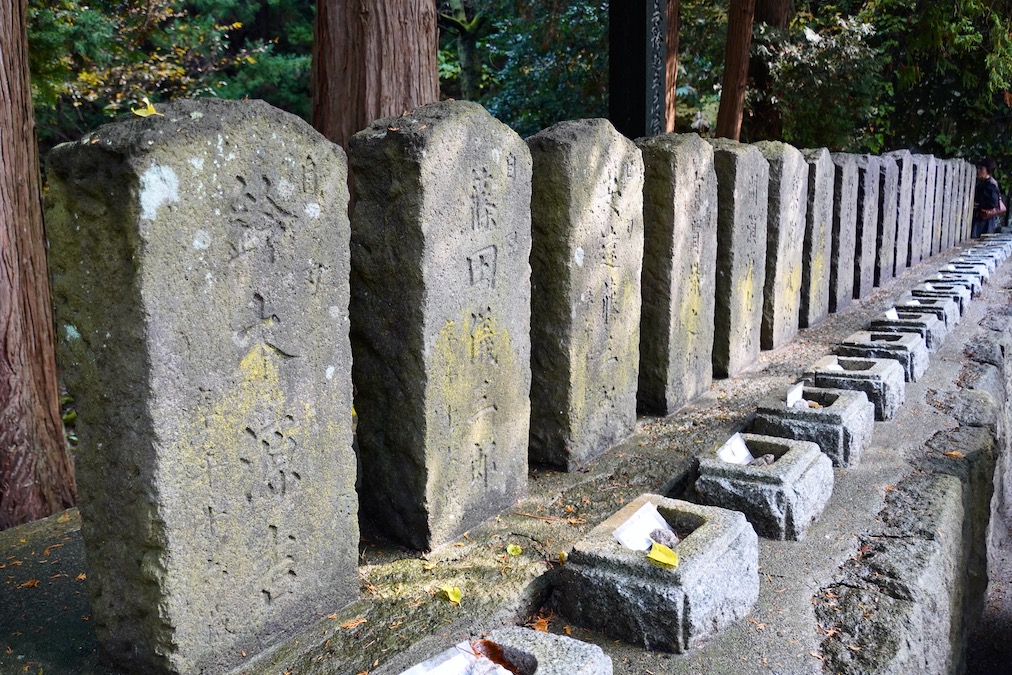
The place where the boys are buried overlooks the city and backs onto beautiful forest. It feels very sacred – very special.

They died on an autumn day – the same season I was visiting in. Surrounded by autumn beauty, standing by the graves of the boys, the futility and heartbreak of war affected me more than my visit to Hiroshima.

Pompeii on site

There are a number of other significant graves and memorials nearby on the mountain, including one dedicated to women of Aizu, killed in battle or committed suicide after defeat in the Boshin War.
But the strangest sights is a column excavated from Pompeii, and donated by the Italian dictator Mussolini! Moved by the story of the Byakkotai boys, he promised to gift it to the people of Aizu. There is quite a story behind this, all to do with facists in Japan and Italy, diplomatic rows, and efforts to save the Pompeii column post WW2. Too detailed for this blog, but you can look it up on the internet. This blogger is worth checking out about the whole story. https://marshmellowpastel.wordpress.com/2019/05/03/weird-japan-fascist-monuments-aizu/
Suffice to say that if google translate had been around then, or if Aizu Wakamatsu had not been a remote region, this original piece of Pompeii would have been lost. I visited Pompeii in the 1970’s. I would never have imagined I’d see a piece of it nearly five decades later on a mountain in Japan! There is also a German monument at the site, donated by some chap from Nazi Germany. It is in some quiet back corner apparently, and I didn’t spot it.
Architectural delight

Another surprise awaited me on Mount Iimori – a place I also had heard about years ago, but did not expect to stumble across in Aizu Wakamatsu. Sazaedo is a wooden Buddhist temple, built in 1796 and we came across it as we descended Limori on a path from the boys graves (no downwards escalator). ”I know this place,” I exclaimed to MJ. ’I’ve seen it on NHK World TV!“


The inside of the temple consists of a double-helix slope – two spiral staircases – one going up and one going down in what seems to be a seamless path. Its unique one way system means you will not meet anybody coming from the opposite direction. It is said to be architecturally one of the rarest buildings in the world and it is registered in Japan as a Nationally Important Cultural Property. And there it was before me – not even on my itinerary! Magic.
The Castle
We could see Aizu Wakamatsu’s castle – known as Tsuraga Castle – in the distance from Iimori Mountain. It’s not the same castle the boys saw. Though they were largely responsible for what stands there today.

The original was badly damaged in the Boshin war, and demolished in 1874. The land was sold off, but the enduring legend of the Byakkotai teenagers eventually saw the Government develop a public park on the castle site.

In 1965, an impressive replica of the castle was built. Gray tiles were used for the roof, but these were changed to a light red during further restorations in 2011 to replicate the color scheme of the castle in the mid-nineteenth century. Today, Tsuruga Castle is the only one in Japan with a red roof. I was amused to see even a castle needs a blower vac to sort the leaves! I know the roof tiles look grey in my photos – believe me .. definitely a red hue!
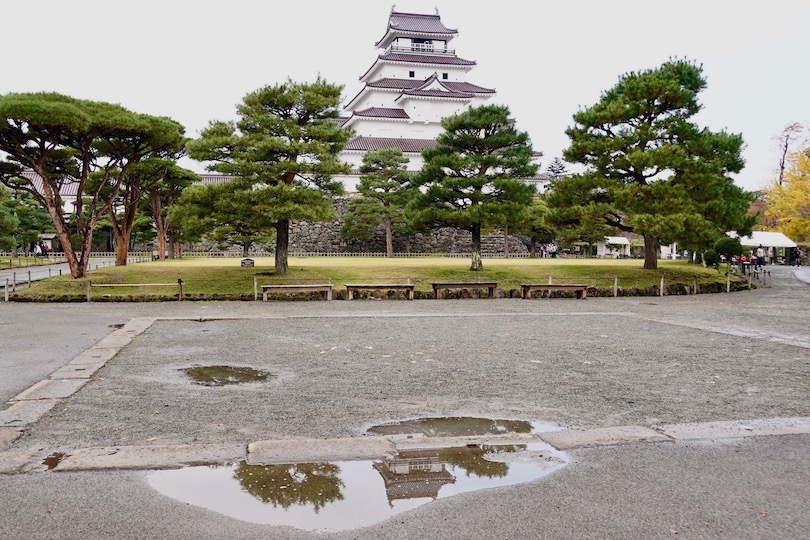
I really liked this castle. Whilst it is not an original, Japanese craftspeople do some very fine work with recreations, and this is a good example. Some of the castle’s original stone parts do, however, still exist having survived the Boshin War, and you can see examples of some of the various architectural techniques employed hundreds of years ago to create the castle’s imposing walls and moat. The stonework is considered among the finest examples in the Tohoku region. And if you look closely, you can still see evidence of the attacks on the walls during the Boshin war battles.

The castle includes an impressive museum and an observational gallery with panoramic views of the city.

The parkland surrounding is a gorgeous place to wander.

There also is a tea room on site where you can sample traditional green tea.

If you happen to be travelling on a JR rail pass, show it at the admissions office and you will get a small gift – ours were two little keyrings with the Akabeko (‘Red Cow’) symbol famous in this area.
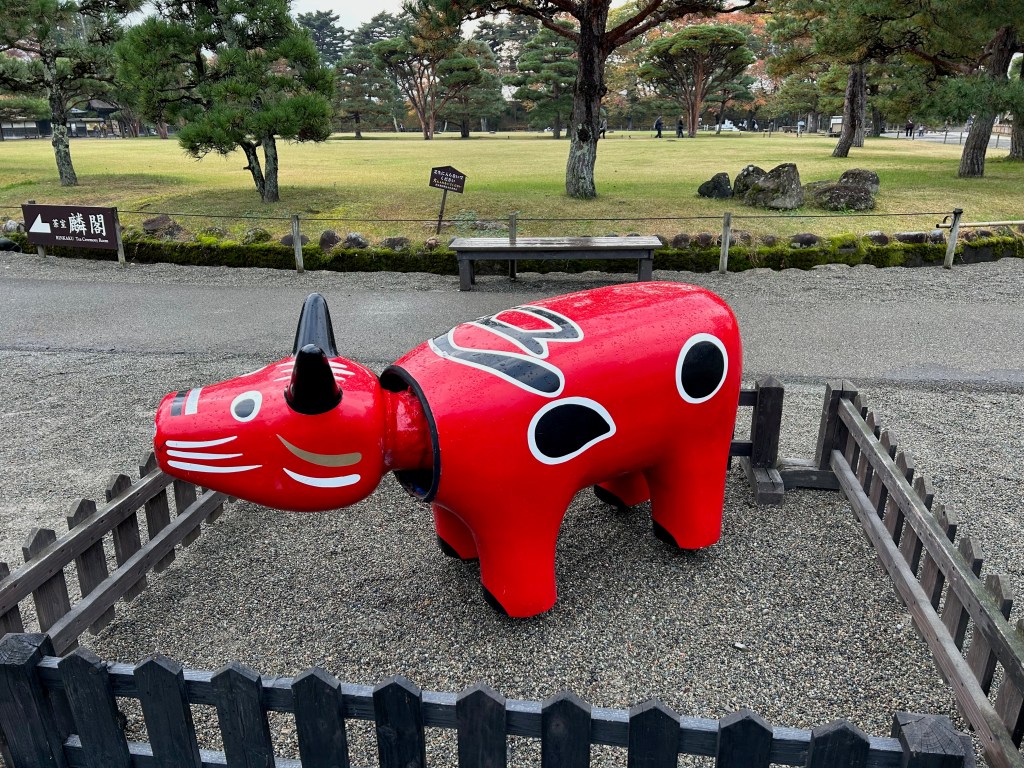
A medicinal garden

Another place we found very beautiful in Aizu Wakamatsu was Oyaku-en, a medicinal herb garden developed when a feudal Lord in the 1600’s encouraged people to grow medicinal plants. It was designated a Place of Scenic Beauty by the Japanese government in 1932.
It is also known as the Aizu Matsudaira-clan Garden, and includes about 400 medicinal trees and plants. I would describe it more as a traditional Japanese park with paths winding through in a delightful discovery journey. You can enjoy tree peonies in the spring, lotuses in the summer and Japanese anemone in the fall, and in autumn some amazing foliage.
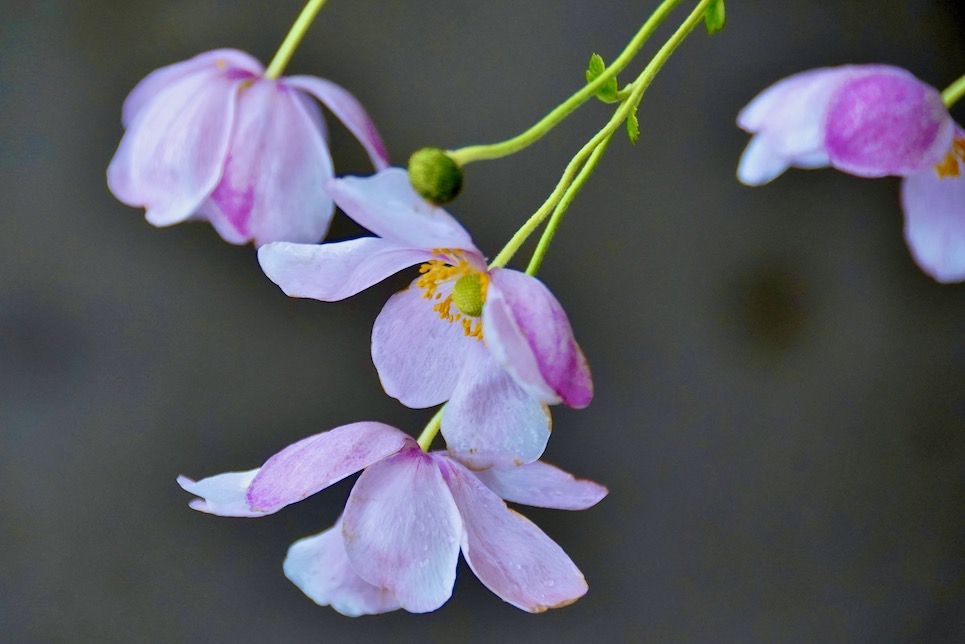
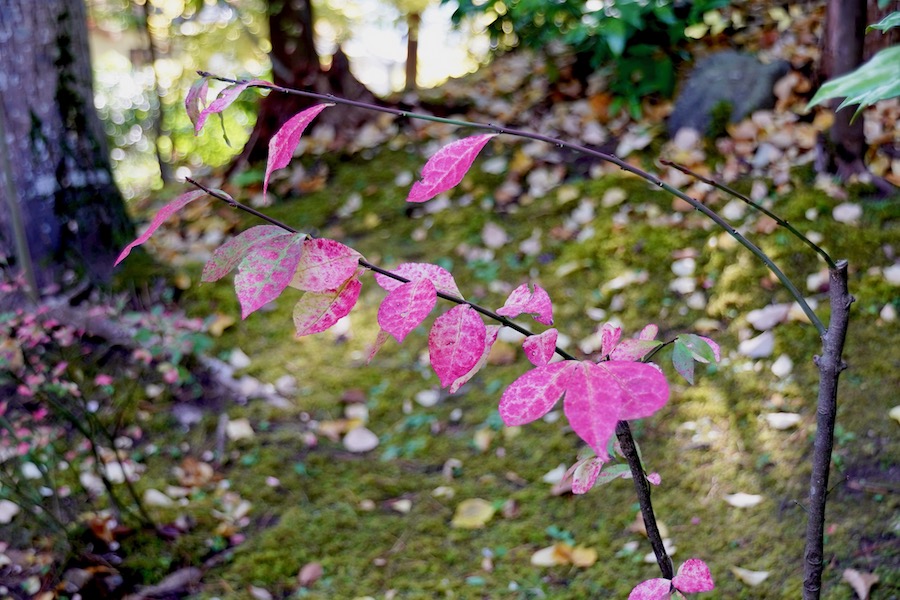
Central in the park is a wooden thatched roof one-story tea ceremony arbor built about 300 years ago. The pillars still carry sword cuts the Boshin War. I have no idea why a sword fight was underway at the tiny tea house! Today, it is such a tranquil place – to think of a battle raging there is hard to imagine.
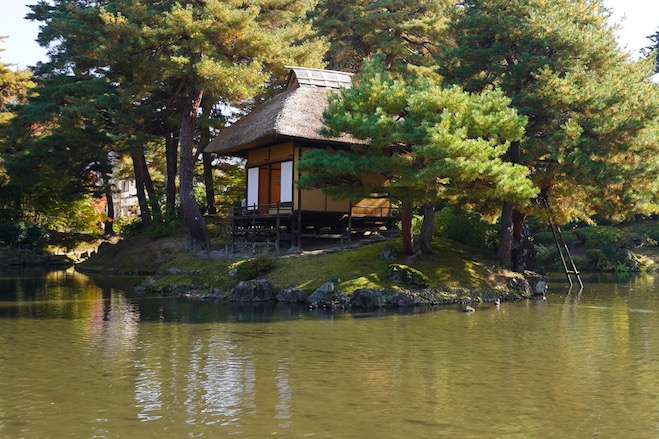
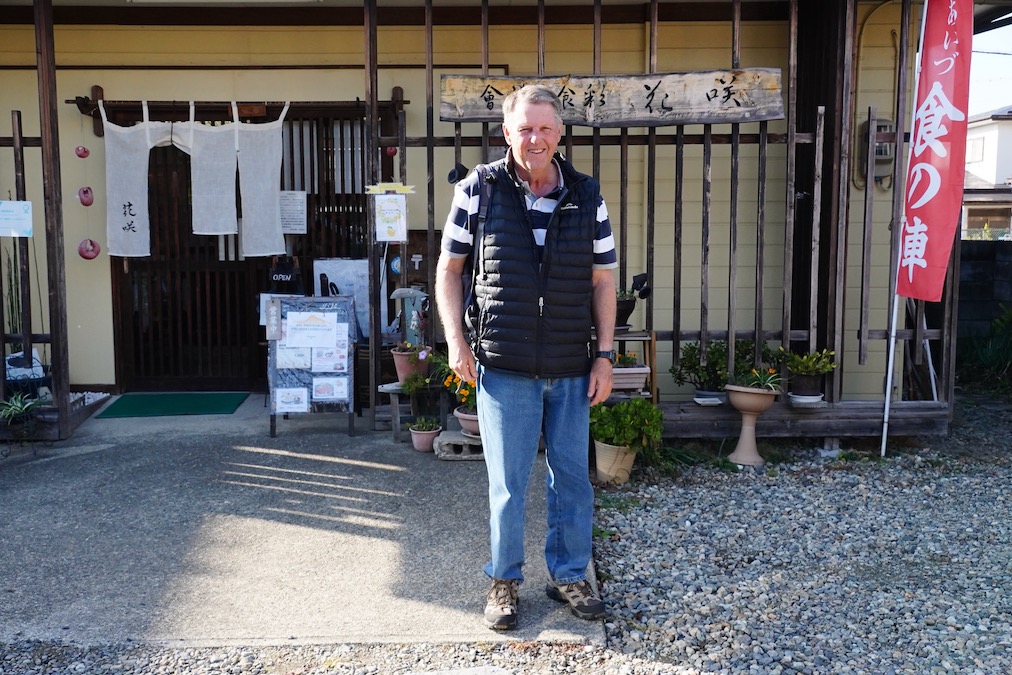
Both the tea house, available for traditional green tea, and a nearby dining room were closed on the day we visited because it was public holiday. The upside was we were charged no admission – usually about 330 yen for adults – less for students/children! The other upside was that, in search of lunch, we discovered a wonderful little restaurant directly to the side of the park’s main entry gate, at the back of a small car park. There we enjoyed one of the best soba noodle meals of our trip! The signature deserts were most worthwhile too.
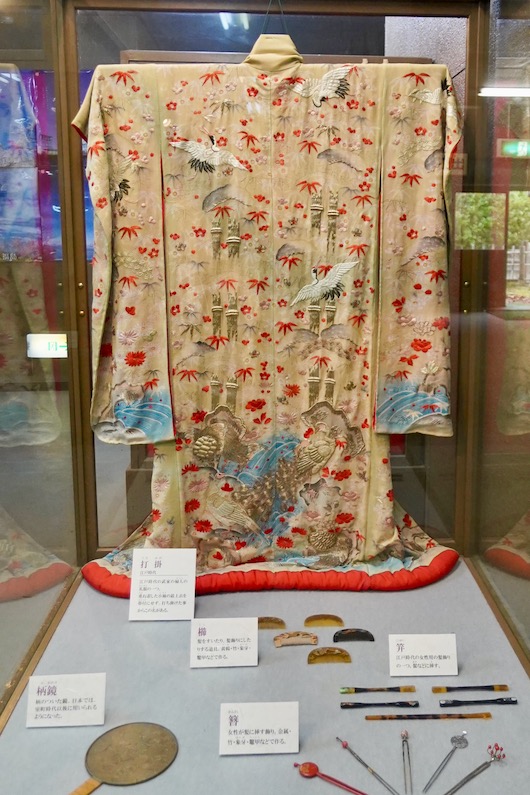
We enjoyed other interesting meals in Aizu Wakamatsu – it is famous for its ramen. There were some great deserts to enjoy, and we saw other interesting sights including an old Samurai house and original examples of centuries old kimono.


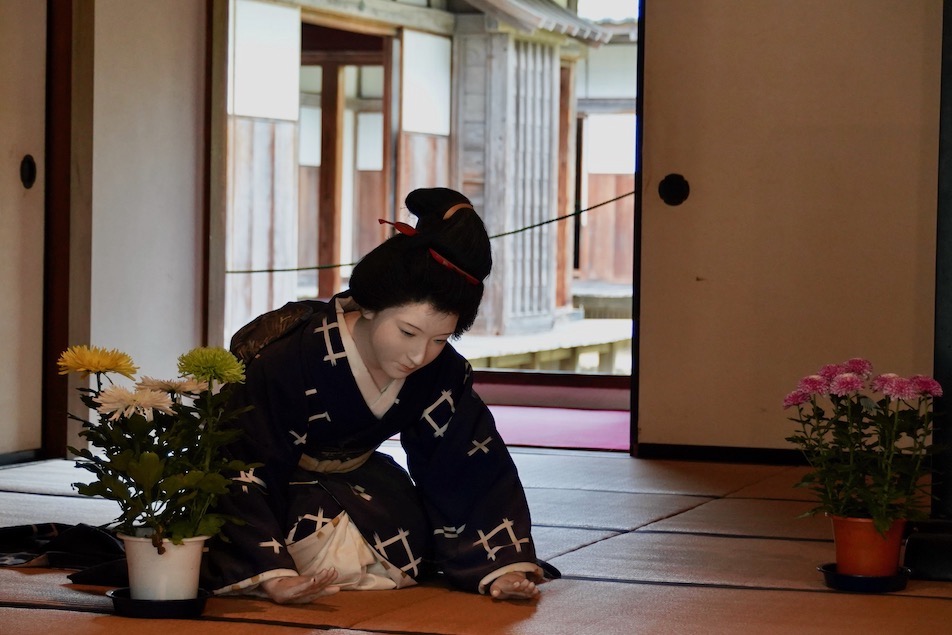
There were what looked to be very interesting day trips from the city that I had listed in case Aizu Wakamatsu could not offer enough to occupy our time. But there was plenty, so the day trips will have to wait for another visit!
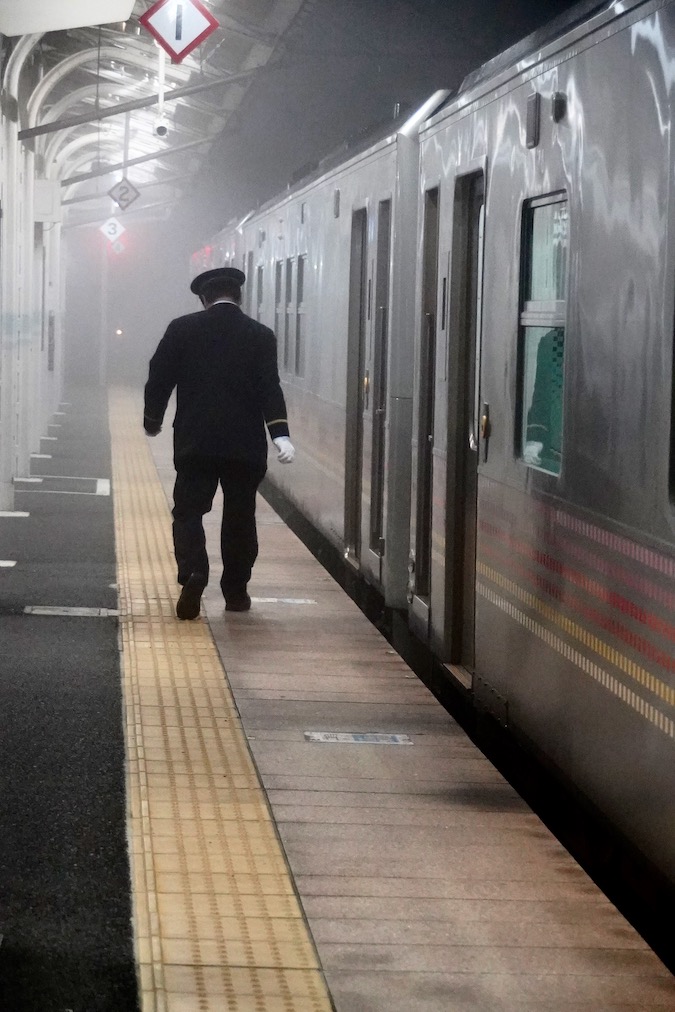
As for the Tadami, you could not book a seat unless it was a special service, sometimes offered on public holidays. So we were up at 4am on a foggy morning in Aizu Wakamatsu to secure our place on the train. Even as we boarded, there was still so much unknown to us about it. That’s another story I’ll be writing soon!
From Tokyo: JR Tohoku Shinkensen from Tokyo to Koriyama, and transfer to the JR Ban-etsu Saisen Line. It takes all up about 3-3.1 hours (1.5 on the Shinkensen).
Tips: Sightseeing information in English is available. PICK UP CITY PAMPLET AND MAP at the Tourist Centre in the Railway station.

Travelling within the city: Aizu Wakamatsu has an excellent loop bus system for tourists. Purchase a 600 yen one-day pass for the Haikara-san and Akabe sightseeing loop buses that depart from Aizu-Wakamatsu Railway Station.
Buses leave the visitor centre/railway station every 30 minutes: Haikara (blue bus)– 8am to 5.30pm – Akabe (red bus) – 9.15 to 4.15.
Tsuruga Castle: Open 9am to 5pm. Get there early as it can get crowded.
Nisshinkan – Interactive museum in a restored Edo-period samurai school.
Wander Nanukamachi-dori Street, with its retro buildings preserved from the Taisho period (1912–1926)
See the restored Aizu Bukeyashiki Samurai residence: one of the most complete mansions of its kind in Aizu Wakamatsu is well worth a visit.
Sake, pottery, and fine lacquerware are some of the largest industries in Aizu-Wakamatsu.
NOTE: While more well known places in Japan like Kyoto were over packed with western tourists last November, we saw no other westerners in Aizu Wakamatsu, and none on the Tadami train. Would I return – absolutely!
_________________________________________________________________________
 Travelling Therese
[…] AIZU WAKAMATSU – accidental delight! […]
LikeLike