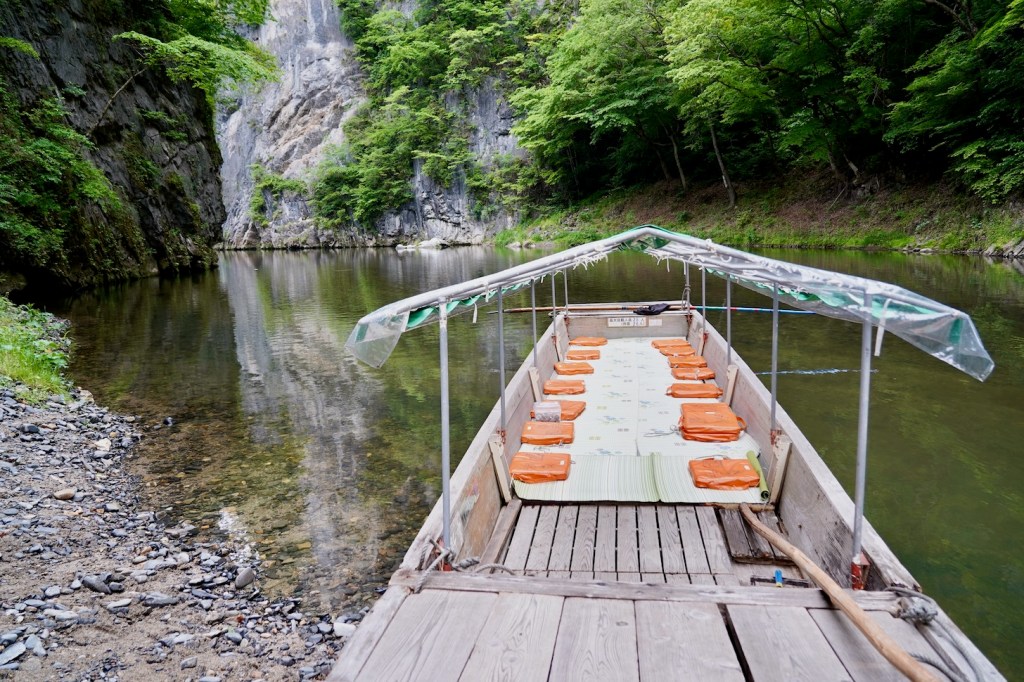
The challenge I faced with my crappy knee at Geibikei Gorge in Japan’s Iwate prefecture was figuring out how I would get down to a sitting position and up again from the floor of a flat bottom boat ferrying visitors through the Gorge.
Just to up the degree of difficulty, you have to take off your shoes as you enter the boat. This is also challenging for me – getting them off, and especially getting them back on again!
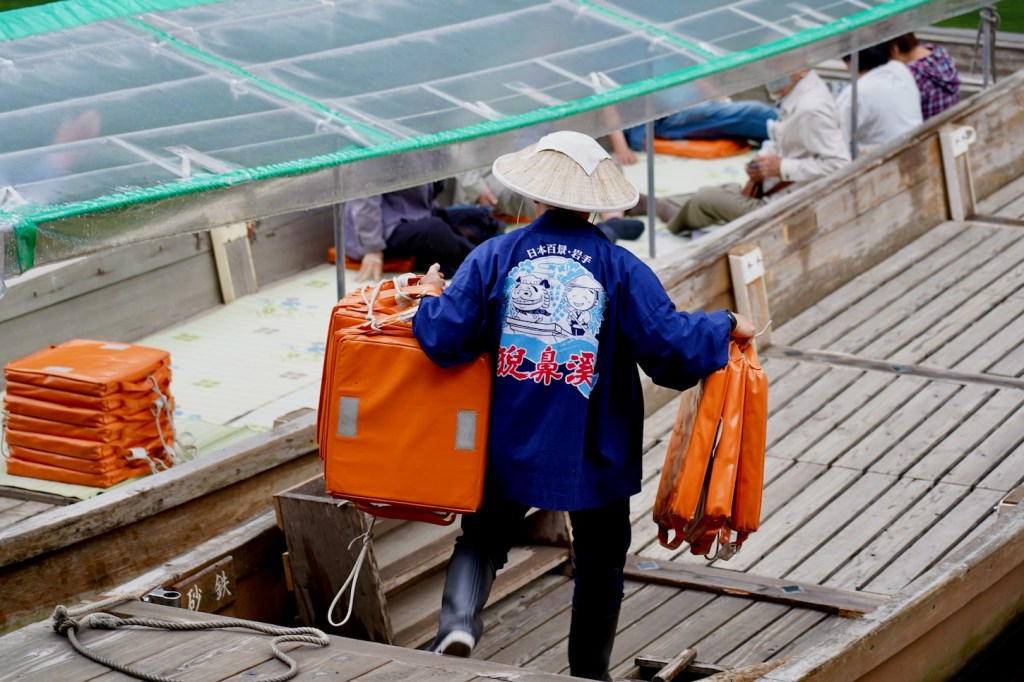
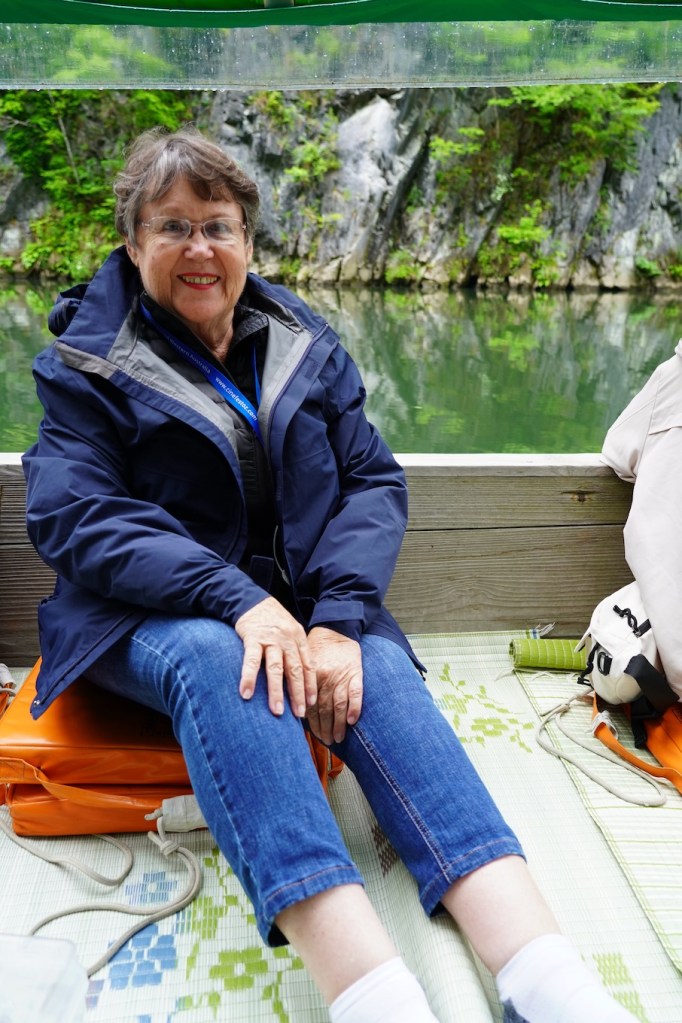
Think of a 72 year old attempting a contortionist act for the first time – not a pretty sight for other passengers – but I blocked out their possible thoughts, and somehow I managed, with the assistance of MJ and a couple of lifejackets I used to form an impromptu seat. The lifejackets raised me up a little from the bottom of the boat. It was worth the effort.
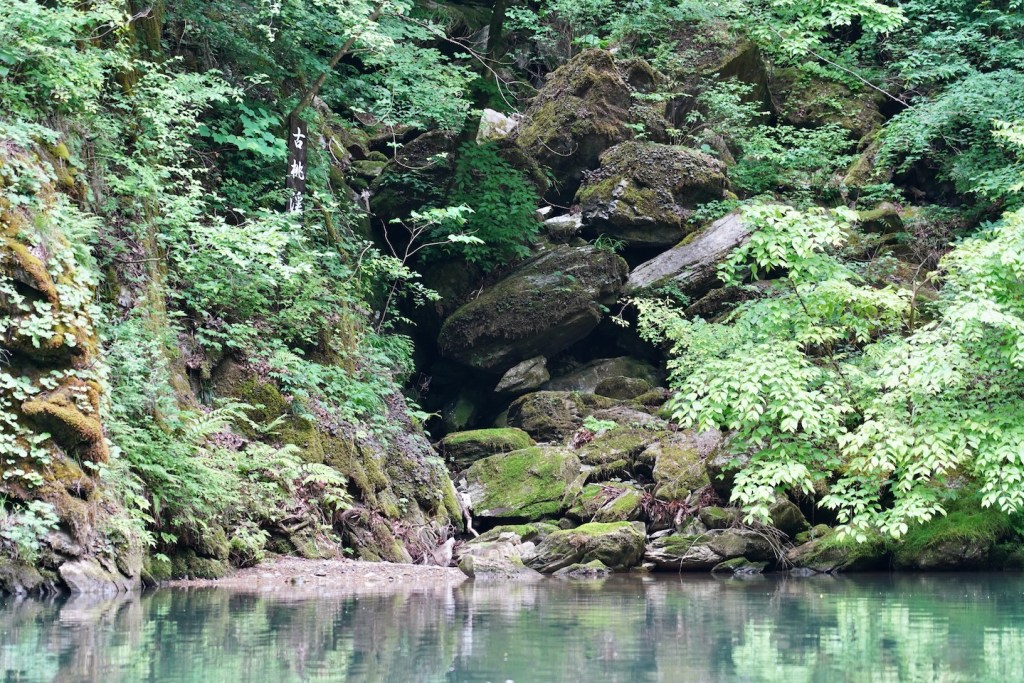
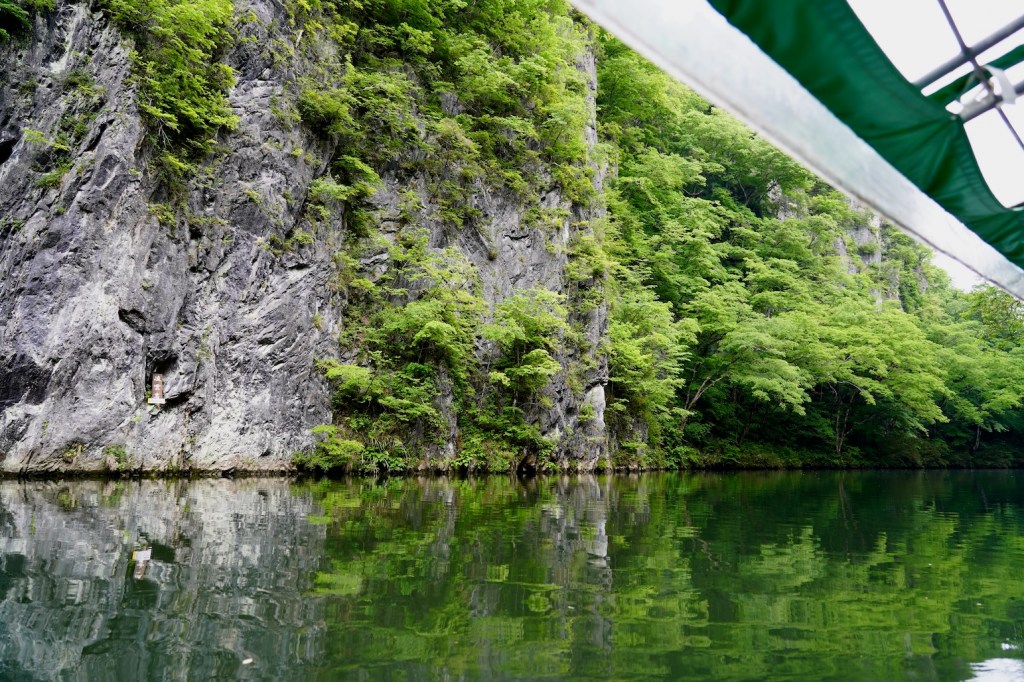
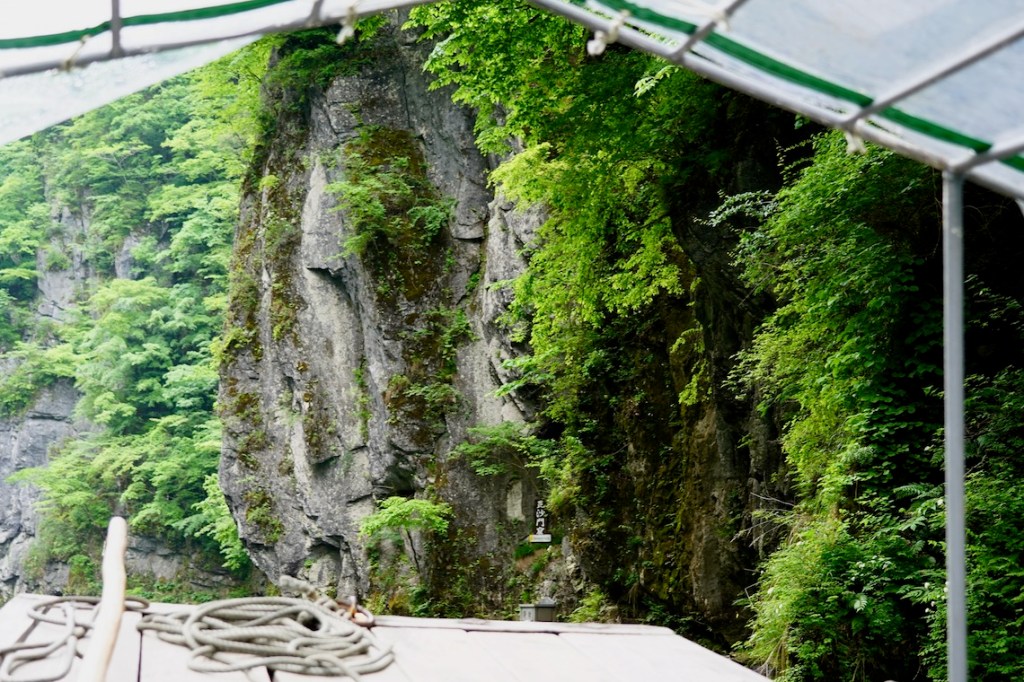
Geibikei Gorge is centred on the beautiful Satetsu River, flanked by towering cliffs, trees and jungle like thick green foliage on either side. It is gorgeous – and I say that having seen some spectacular gorges in my time. Whilst it may not be well known amongst western tourists, it is famous in Japan – boats have been transporting visitors along the gorge for more than 100 years.
Back before the Meiji period (1868-1912), the Geibikei area was regarded as near wilderness. But a couple of politicians who knew about the gorge invited literary and political people, along with members of the aristocracy, to visit it. The plan worked, and by 1927, it was designated as one of the 100 best landscape sights in Japan. Tourism was underway!
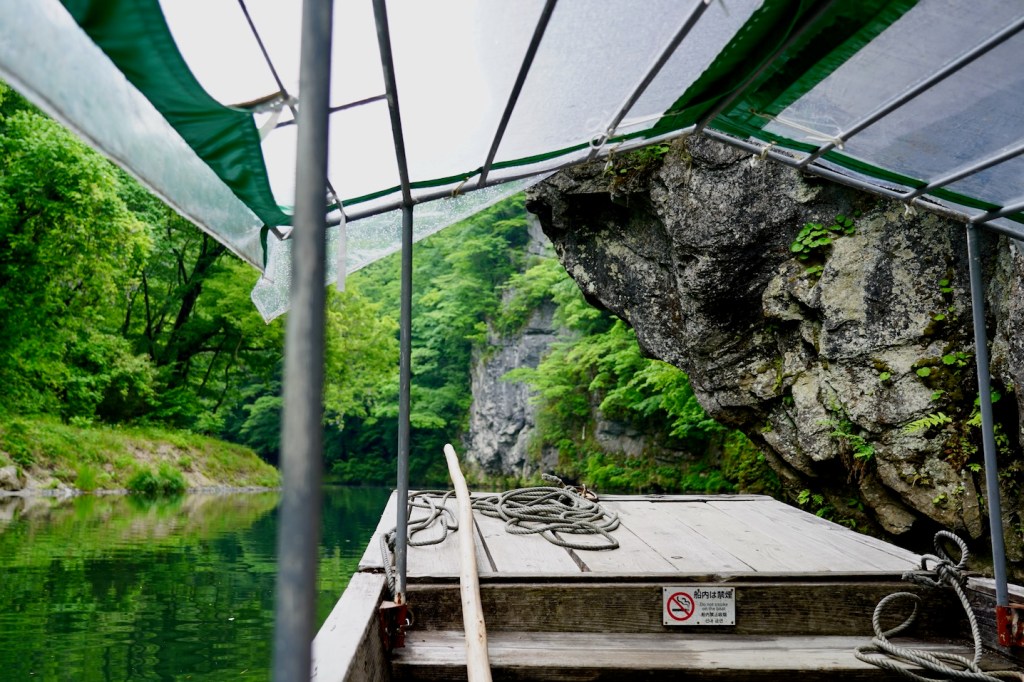
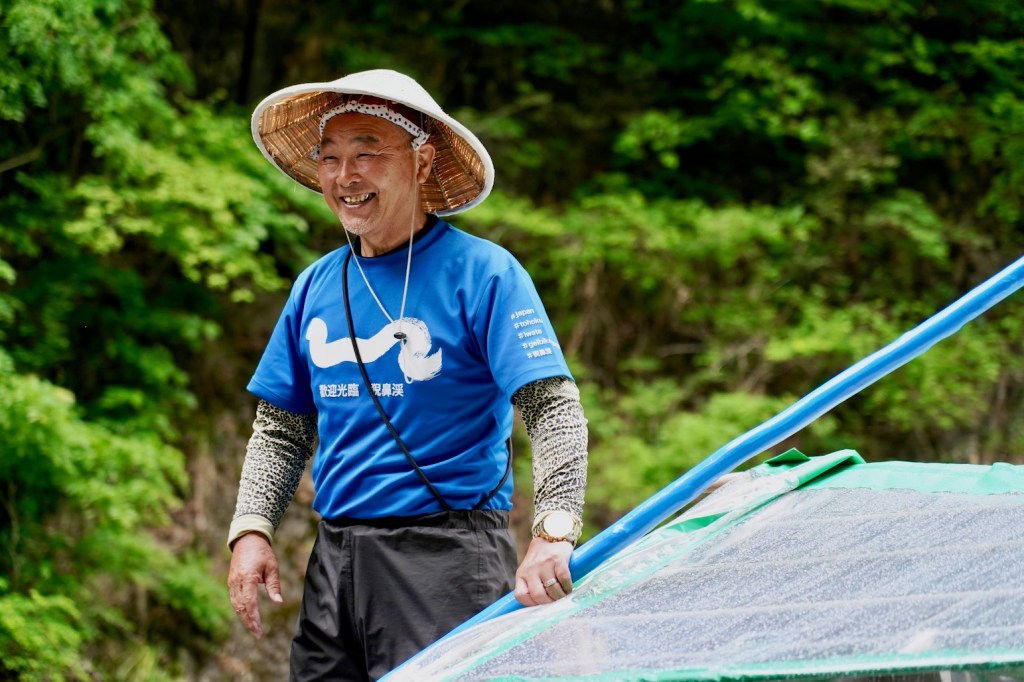
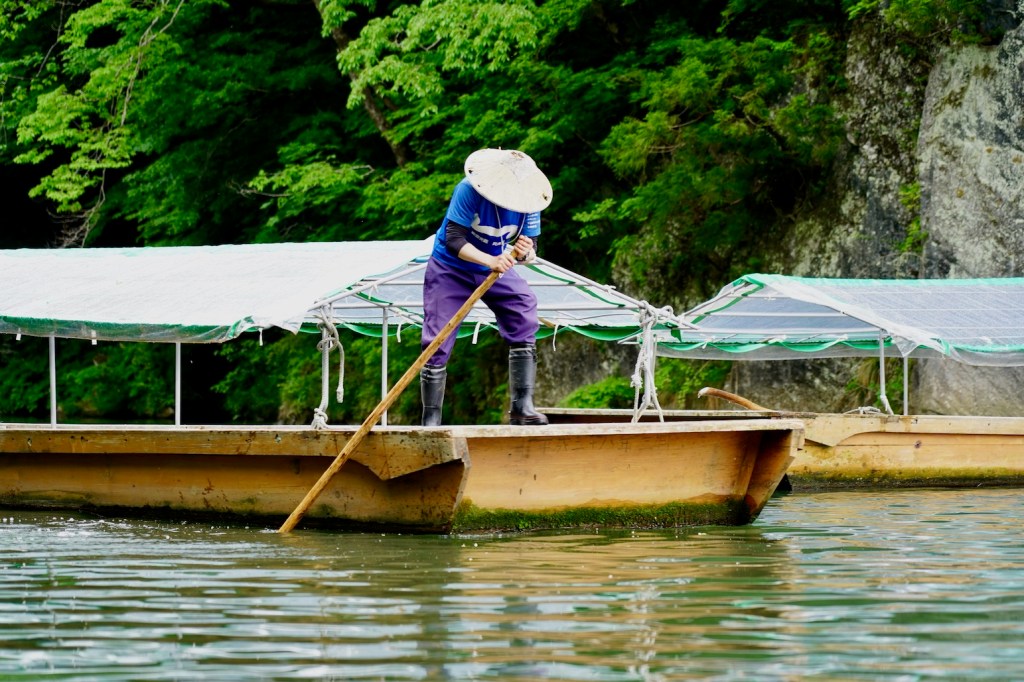
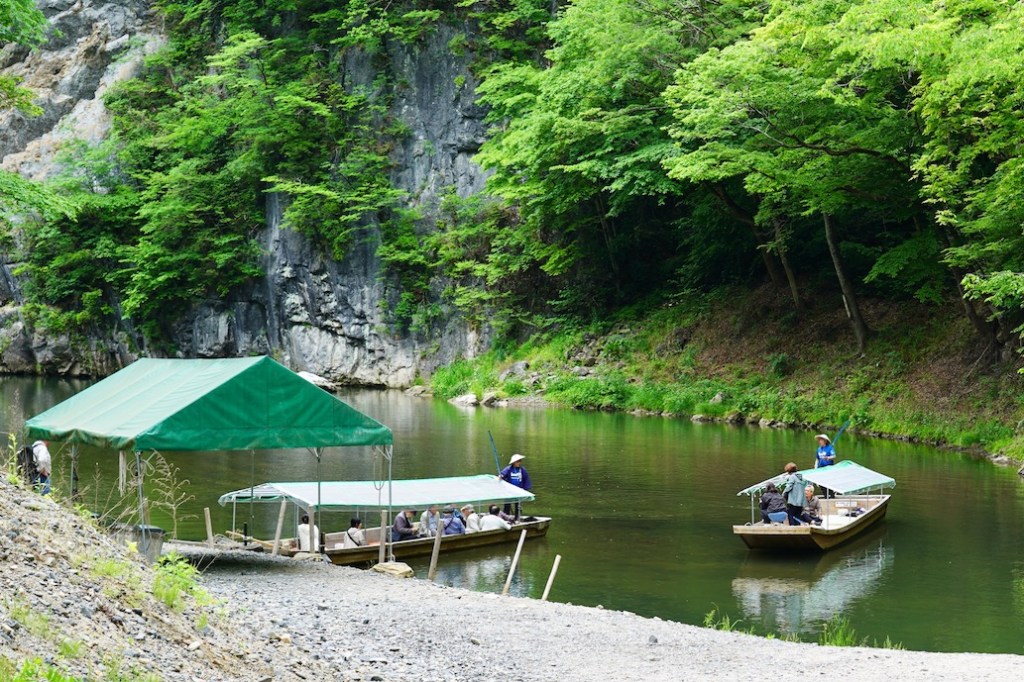
The wilderness feel of the gorge has been preserved, and boatmen today preserve the peace by using poles to push boats along, as they have done for decades – no motors involved! There are boatwomen too, though I didn’t see any on my visit.
If you are a visitor to Japan who sticks to the big cities and more famous tourist attractions, this is probably not for you – though hopefully, you will be tempted into the regions to see delights like this! Because if you don’t see it, you’ll be missing out.
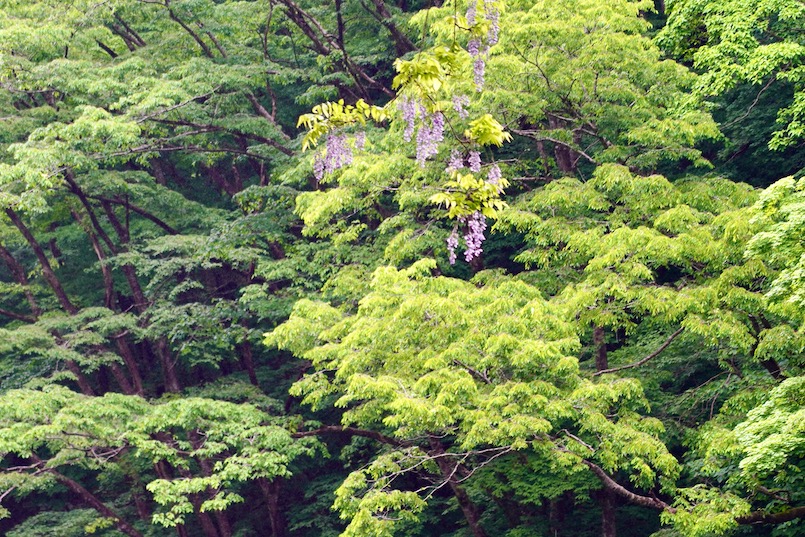
The boats run year round, with changing seasonal views (extremely inclement weather can cause cancellations). During our May visit, we were thrilled to see wild wisteria cascading down from trees and cliffs.

The gorge is cloaked in autumn colours in October/November. By winter, it transforms to a snowy wonderland when you can savour a hotpot, seated at a heated Komatsu-style table onboard.
There were a few light rain showers about on the morning we chose to go to the gorge, but a clear covering was put up over our boat to protect us. In the end, the rain was sparse and not a problem.

My number one tip: overnight in Higashiyama-cho, the small town where Geibikei is located, so that you can be ready to board the first morning boat out at 8.30 before the onslaught of day trippers on visiting tour buses. It becomes very popular as the day goes on. There were already other early birds ready to board when we arrived. So we made it onto the second boat out, after paying our 1800 yen each fee.
I waited until last to get onto our boat, so that no one fell over me as I struggled to get down into a seating position. I put aside thoughts of how I was ever going to get up again from that position.
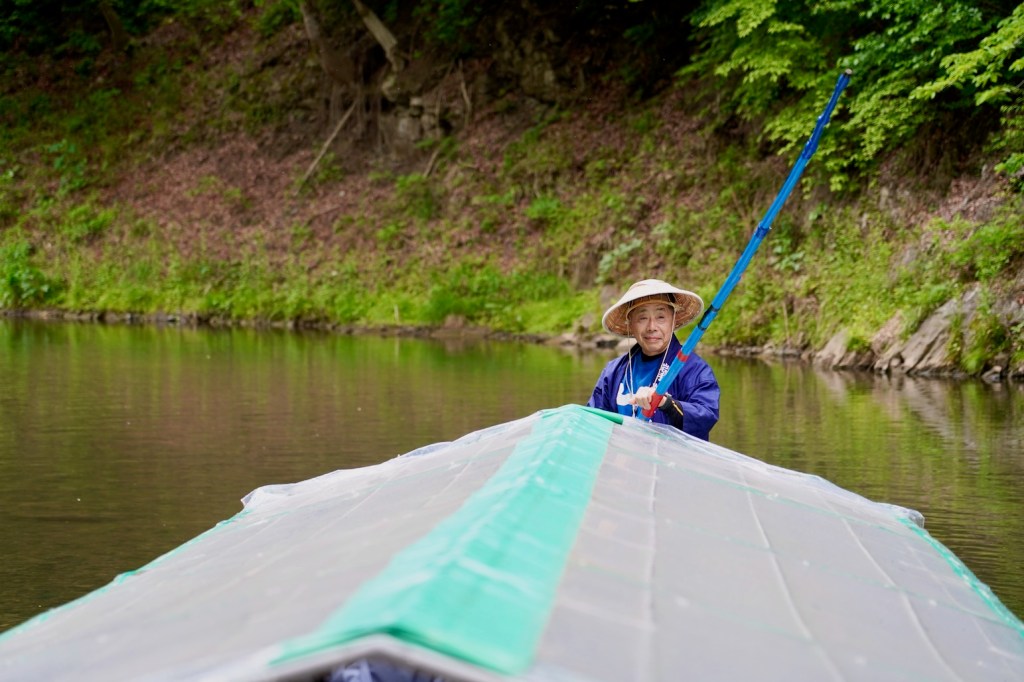
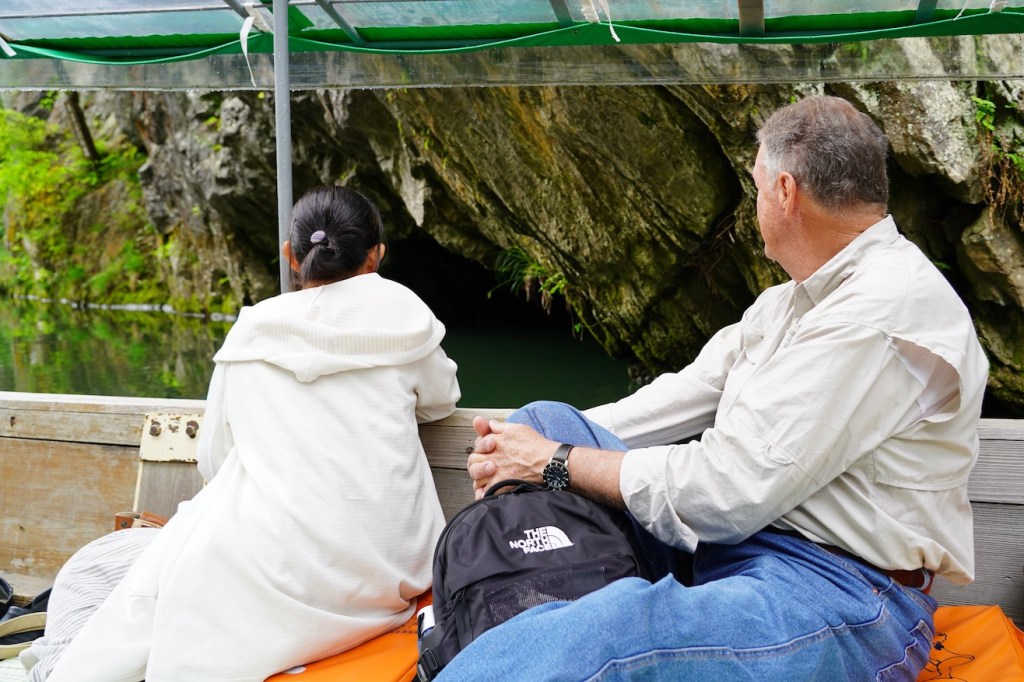
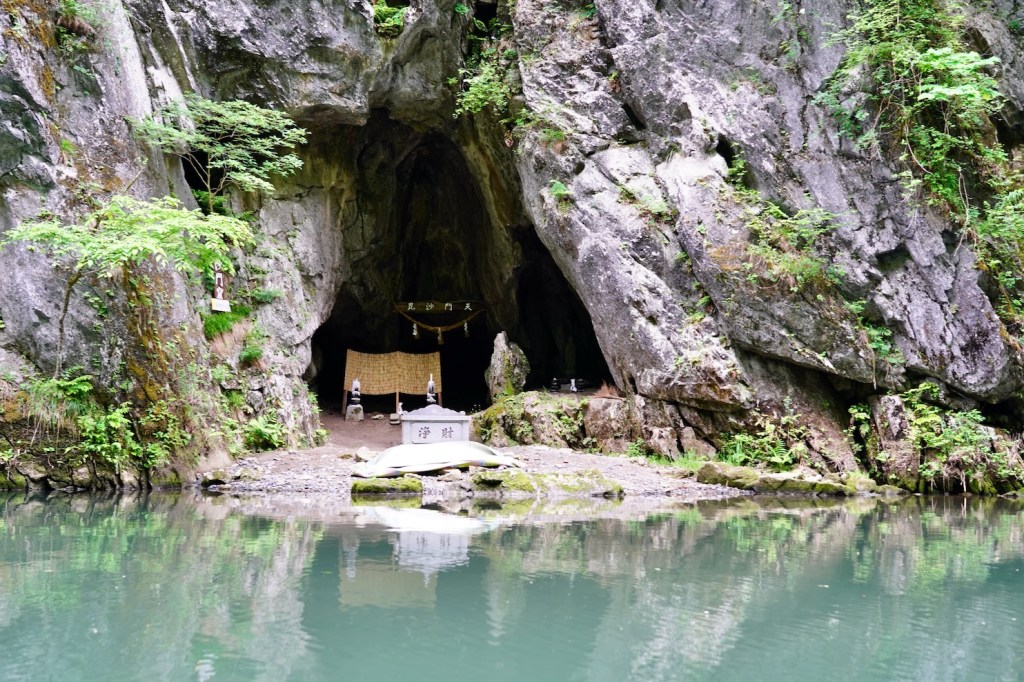
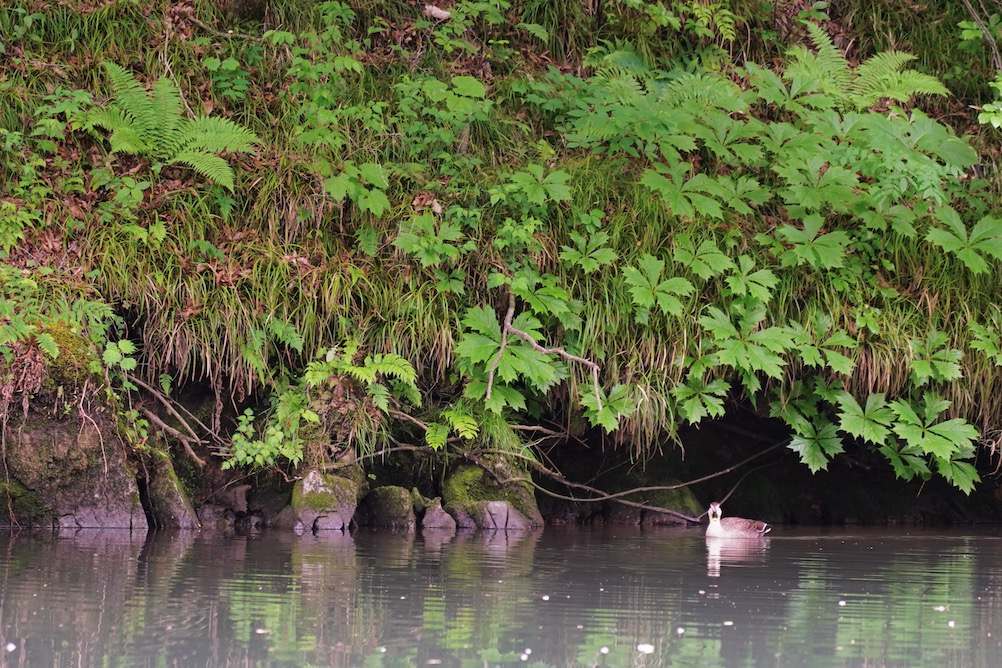
Within minutes, the boatman was expertly working the boat pole to glide us silently up the gorge. The first boat was well ahead of us, and no boat in sight behind us. So, we felt quite alone in enjoying this Japanese wilderness. We delighted in spotting fish, even a few ducks, and hearing bird calls through the early morning air. Some of our fellow passengers had brought fish food that they sprinkled out across the water to attract huge Koi to the surface. The cliff faces changed as we moved along – there was something new to see at every turn including a shrine in a small cliff cave.
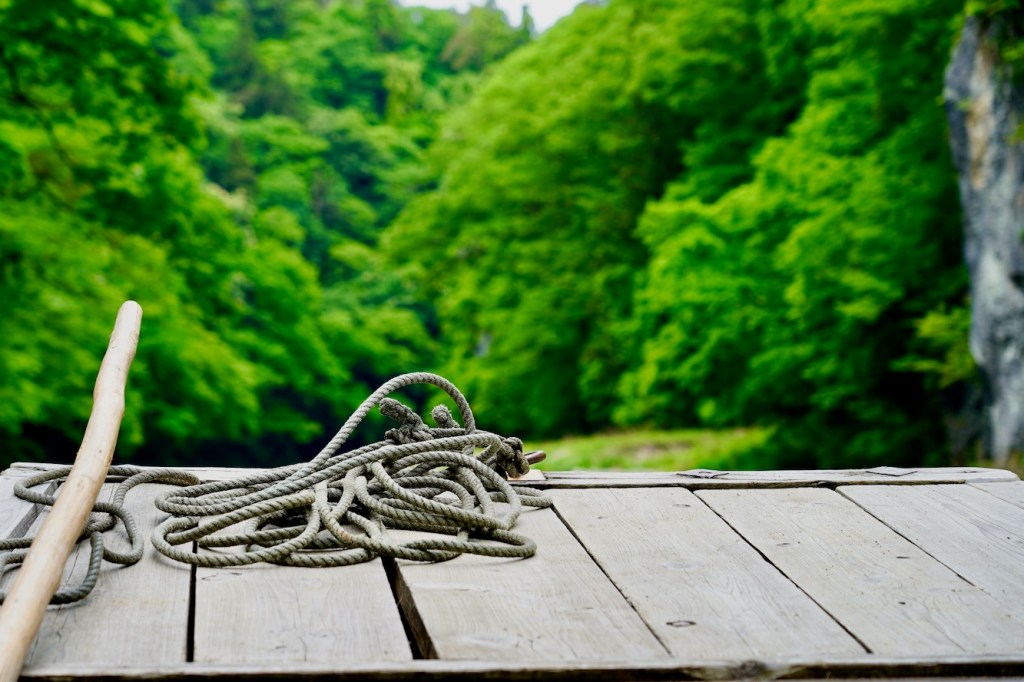

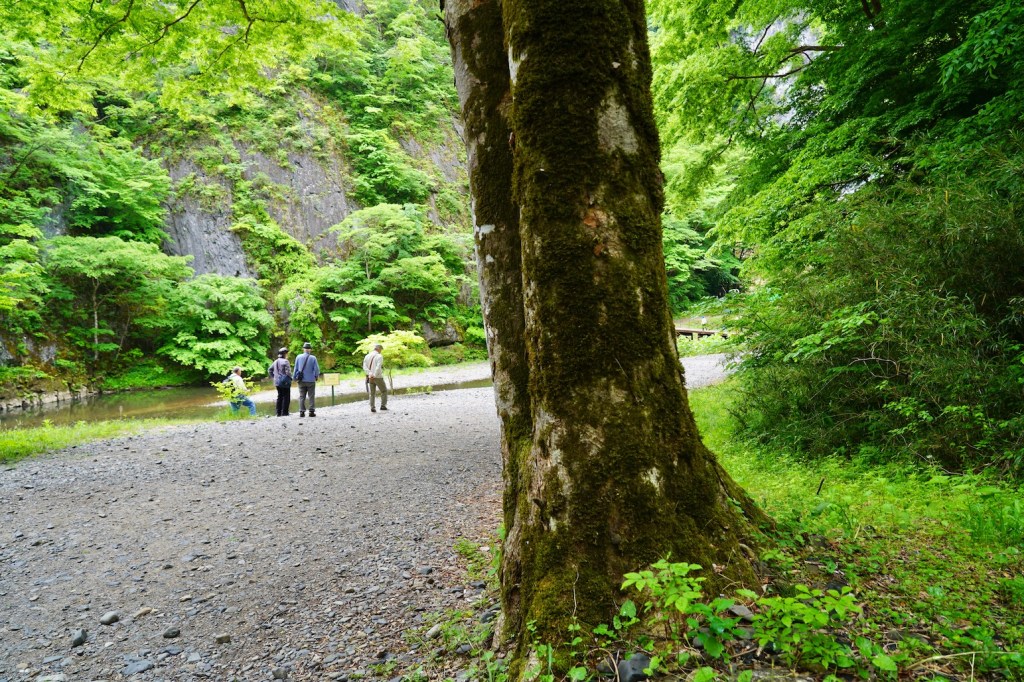
At the furthest part of the gorge, there’s an impressive 124 metre high cliff, sweeping up towards the sky – and it’s near here you have about 20 minute stop to disembark onto a sandy bank and take an easy walk to a little stall selling small lucky stones called undama. Yes, I managed to get up off the floor of the boat and put my shoes back on – though I took so long about it, I had a bit of a catch up walk to rejoin other passengers as everyone headed further up the gorge.



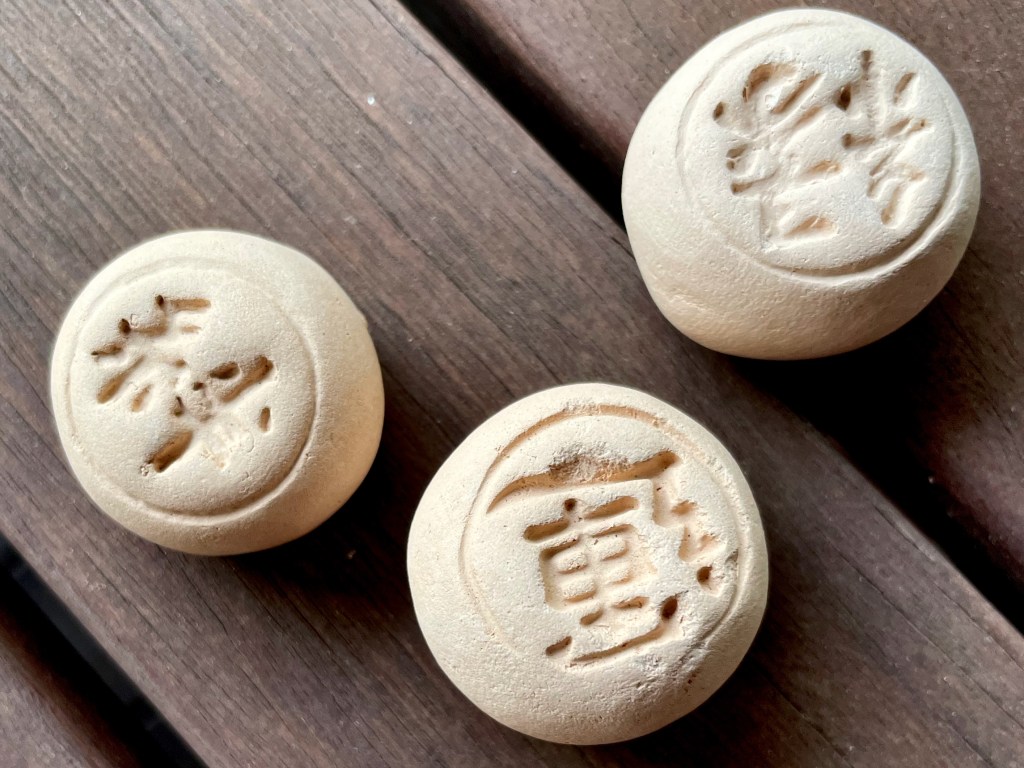
The undama stones on sale at the gorge have various characters carved into them that represent things like destiny, longevity and fortune.destiny, longevity, fortune, and romance. You can buy three for 100 yen, and then – with your best pitch – you launch them one at a time across the river aiming for a small opening in the cliff face.

Apparently, if you succeed in getting a stone into the opening, your wish will come true. I could have wished for a new healthy knee and a return to my younger, fitter, slimmer years! But, it’s a lot more difficult getting a stone into that hole than you might expect, and I didn’t fancy my chances. Mike bought three stones and had a go – no luck there – all lost in the water. I bought three – and according to google translate on my phone, one said ‘luck’. I didn’t see ‘luck’ represented on the list of undama translations. Perhaps it was ‘fortune’. It seemed to provide good vibes, so how could I throw that away! I kept my three as souvenirs and they now grace my outdoor garden table. Enduring luck and good fortune, I hope!
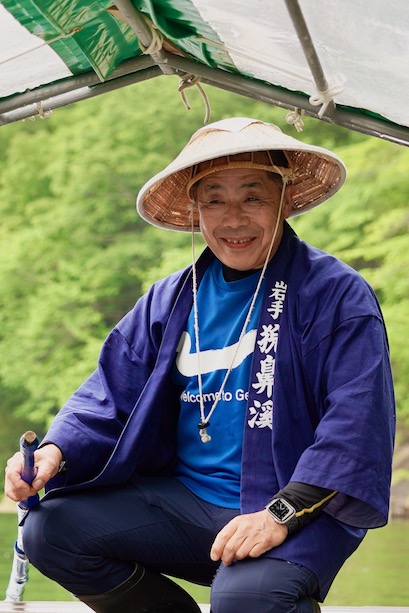
On the return journey, our boatman broke out into song – a Japanese folk song – the famous “Geibi Oiwake” sung by the boatmen and women of the Gorge. I braced. I’ve heard a few traditional Japanese songs sung by tuneless men. Sometimes earplugs are useful things. But he was pretty good, and his sweet tone definitely added something special for our gorge visit.
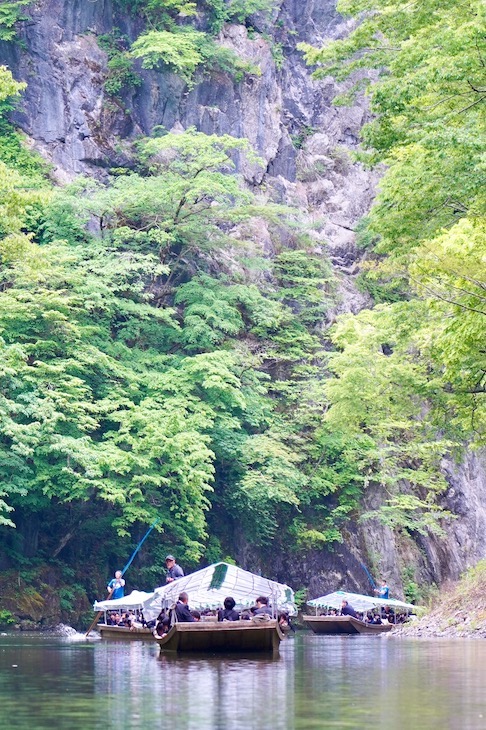
As we moved further along on our return trip, more boats began coming upstream, loaded with tourists. There was a lot of good natured waving and smiles between boat passengers, but everyone kept fairly quiet, preserving the tranquility between the walls of the old gorge.
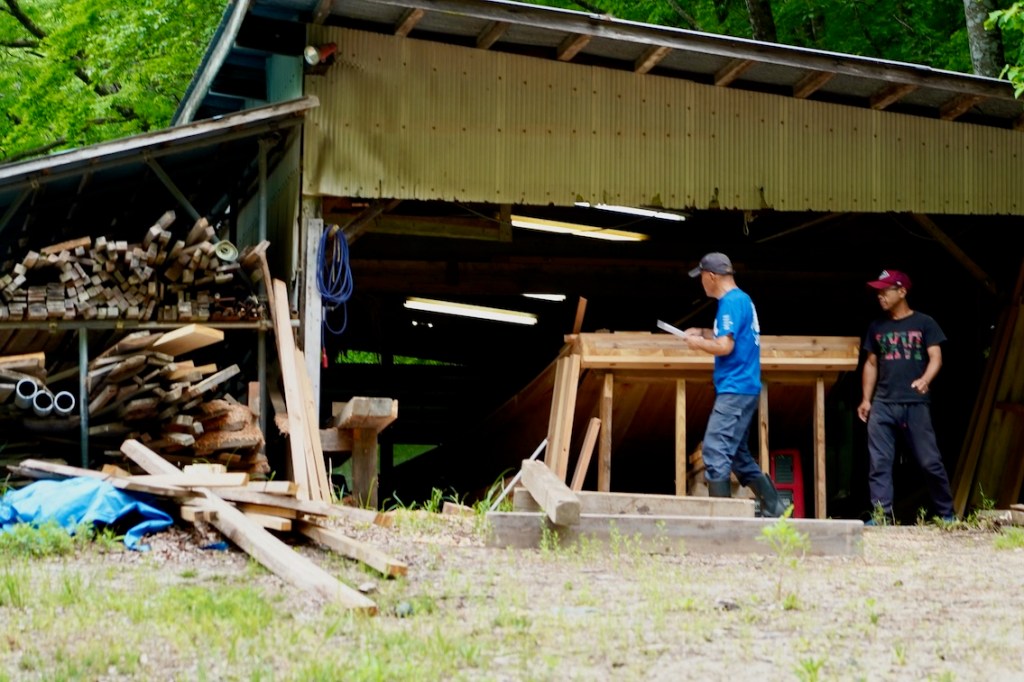
All the boats at Geibikei are built by hand from Japanese cedar by some of the boatmen. They are constructed at a small workshop alongside the river as you enter the gorge. Apparently, a boat takes about a month to complete, faithfully following the original design of the boats from the days when they were used to transport horses in the region. We were lucky enough to spot one nearing completion at the workshop.
Geibikei Gorge is unique and a place I will remember. Not to be confused with nearby Genbikei Gorge. They are really quite different experiences, and could be both done in a day. They are only about half a hour apart by car, but using public transport is a lot more involved and difficult. I didn’t make it to Genbikei, but it’s on my list for a future visit to Iwate prefecture – fast becoming one of my favourite areas of Japan!
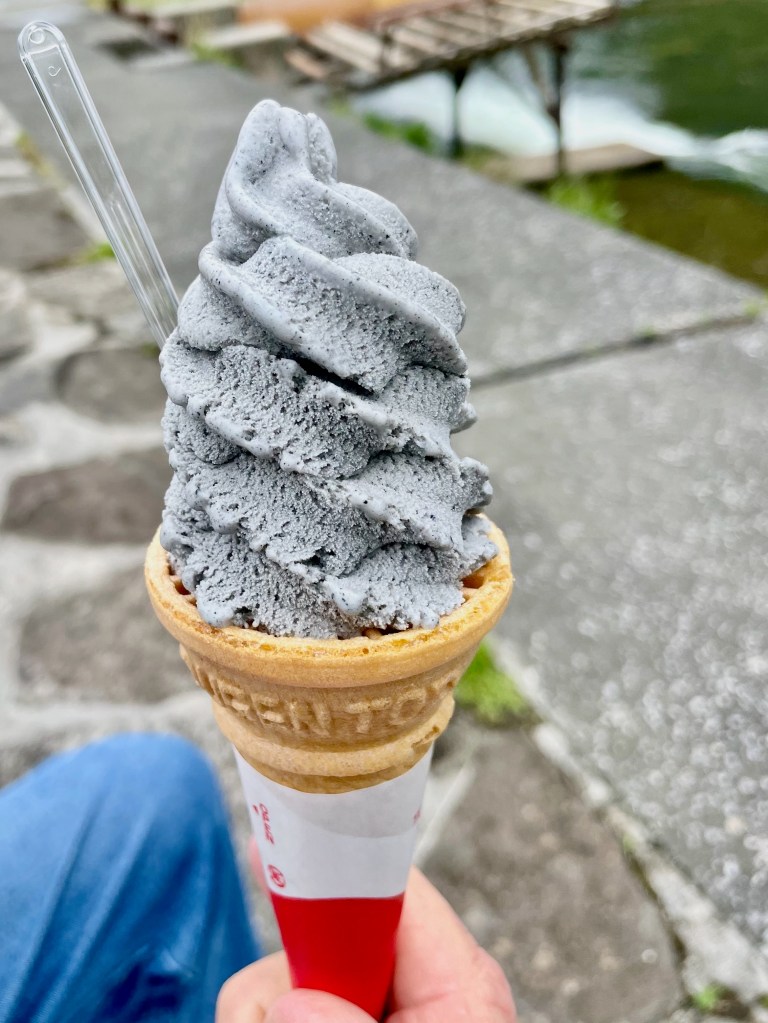
We finished our visit to the gorge with icecreams, bought at a shop near the ticket office. I was feeling in an adventurous mood, and tried a black sesame icecream. Oishi! Delicious!
The gorge boats are wheelchair accessible, and – wait for it – dogs and cats on a leash are able to come aboard! I’m unsure if you have to pay for their ride! Imagine if you ended up on a boat full of cat loving people – one cat for each person aboard, and the cats no doubt dressed up for the occasion. You do see this in Japan where you can visit clothing shops specifically catering for cats, dogs and other animals. I will leave you to imagine my thoughts on this!
Two previous stories in my blog are linked with this story, and I recommend reading them together. I think of them as a Geibikei trio of delight from our May 2024 Japan visit. One details our wonderful gourmet stay at a guesthouse that’s walking distance from the Gorge, and the other tells how we got there and our other discoveries in the township.
https://travellingtherese.com/2024/08/06/guesthouse-kaziya-japan/
https://travellingtherese.com/2024/07/22/simple-pleasures-off-the-beaten-track/
There is also an english website for Geibikei – http://www.geibikei.co.jp/en/index.html
 Travelling Therese