
When is a national a park not a national park? I was confused by the name of southern Hokkaido’s splendid Onuma Quasi-National Park near Hakodate.
‘Quasi’ suggests Onuma is not a real national park. But I found that the name in Japan simply means it is governed by local authorities, rather than Japan’s national government.

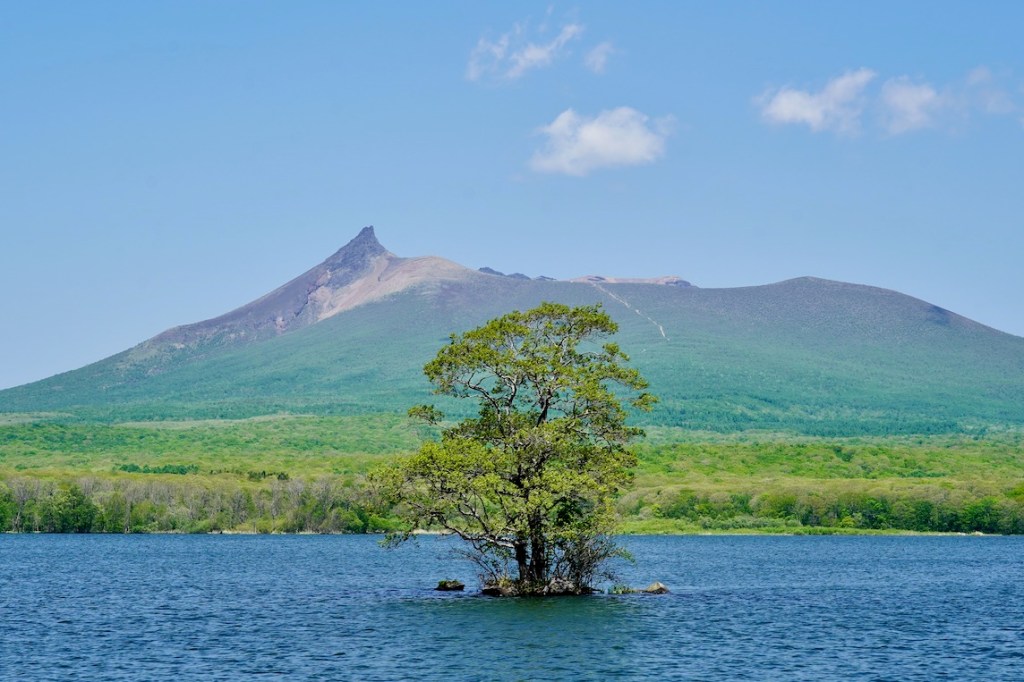
Onuma national park is unique in that a 20 kilometre rapid train ride – about half an hour – delivers you from city streets to breathtaking wilderness. Dominating is the starkly beautiful volcanic mountain – Hokkaidō Komagatake (北海道駒ケ岳, Hokkaidō Koma-ga-take) that stands out like a pointer to the beauty surrounding it. There are three picturesque lakes within the park, with two I visited set against the west slope of the mountain.
We set out early from Hakodate to visit Onuma, lucking in on a beautiful spring day for our visit in May this year (2024). People have described Onuma as an oasis. And I definitely agree.

Onuma covers almost ten thousand hectares. It is the smallest national park on Japan’s northern island, offering magnificent scenery, unique wetlands, vegetation, forests, lakes, and wildlife including a variety of birdlife including the White tail eagle, Black Woodpecker, Hazel Grouse, Ruddy Kingfisher, Snow Goose, Green-winged Teal, Red-necked Grebe, Oriental Cuckoo, White-naped Crane, Egrets, Black kites, the mountain hawk eagle, Ural owl, a variety of woodpeckers, bush warblers, mallard ducks and much more. A birder’s paradise!

Our train from Hakodate delivered us into a small town, a short walk from the park’s Lake Onuma – the largest lake in the park. It’s about 14 kilometres around the lake. There’s a tourist centre close to the station, though in a hurry to beat any crowds, we just followed other visitors – mostly Japanese – who came off our train, figuring they knew where they were going! If you are planning to do some serious bushwalking or climbing in the park, the tourist centre should be your first stop to get up to the minute information and to register. I might add at this point that we saw no other western tourists on our visit to Onuma.
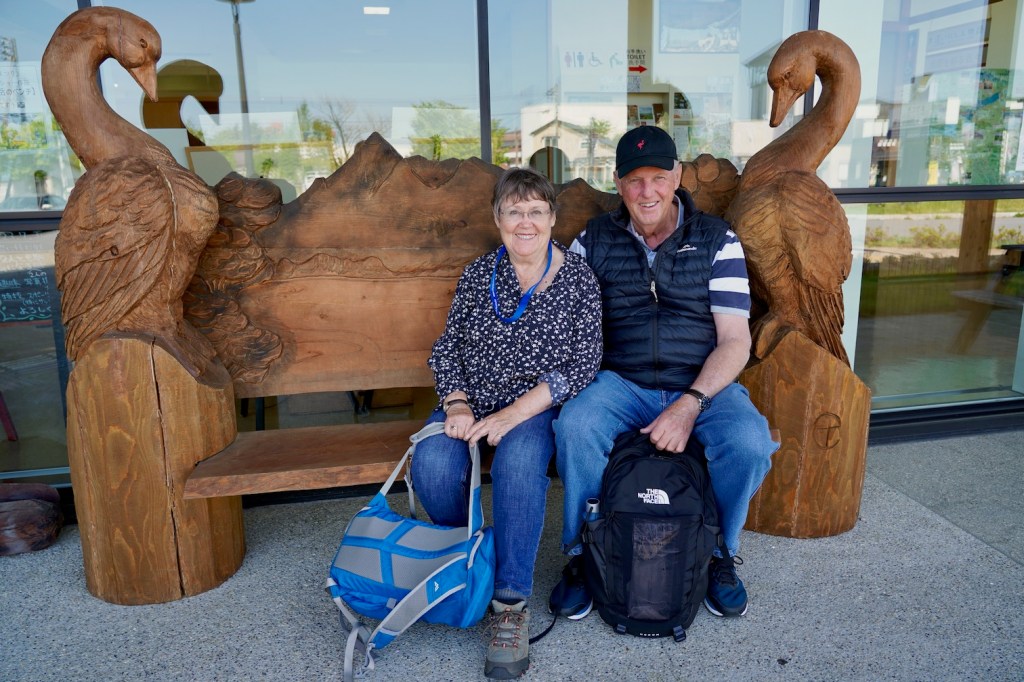
It wouldn’t be Japan if there weren’t a bevy of swan paddle boats on the water. Strangely, they seemed to fit in quite nicely. There were row boats for the energetic – and also large sightseeing boats called yuransei in Japanese that we headed for as soon as we arrived so we could board the first one out on the lakes before visitor numbers for the day built up. Being so close to Hakodate, it’s a popular place. Lucky we did that as people were pouring onto the boats as our cruise finished, including endless groups of well behaved Japanese high school children on an excursion to the park with their teachers.


On our cruise, MJ and I opted to stay out in the open on wooden benches at the back of the boat, while all the other passengers sat inside. We did miss the commentary inside, but it was all in Japanese, so we wouldn’t have understood anyway. Our choice to stay outside proved to be a good one as our boat edged out onto lake, slowly gliding along the water for a 30 minute journey. With my crook knee, we had decided that exploring by boat would be our best chance to spot wildlife, including the abundant birdlife.


The lake includes 126 tiny islands with picturesque bridges connecting some of them. The boat cruise takes you under some of them. I was intent on taking photos, and both MJ and the boatman had to sound an ‘duck’ warning many times. Not to alert me to ducks – there were plenty of those. But to avoid getting decapitated by a low bridge!
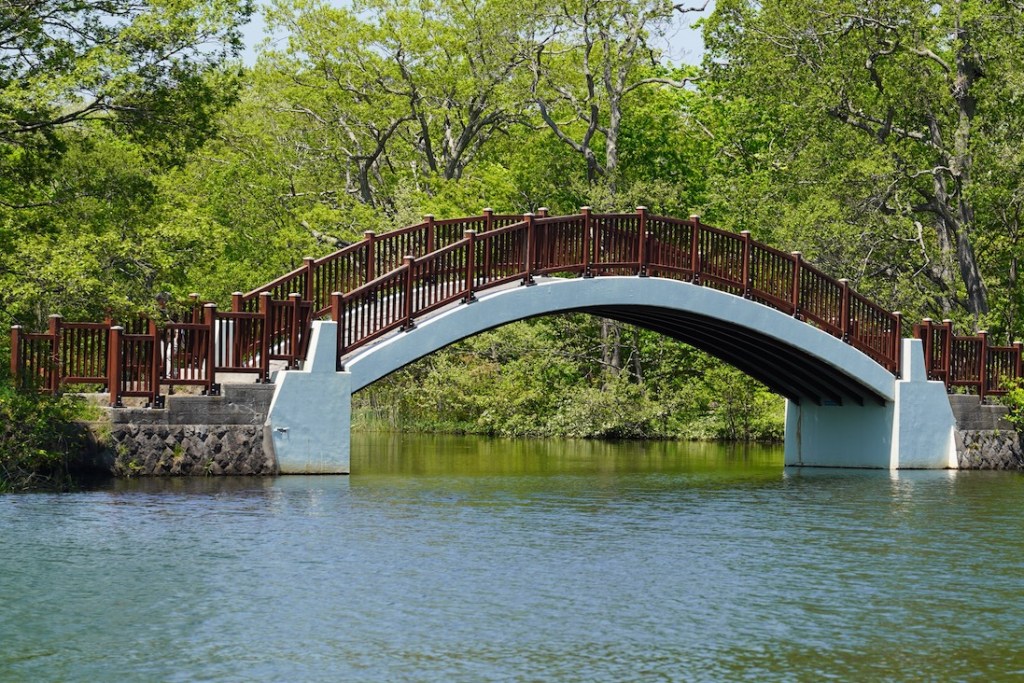
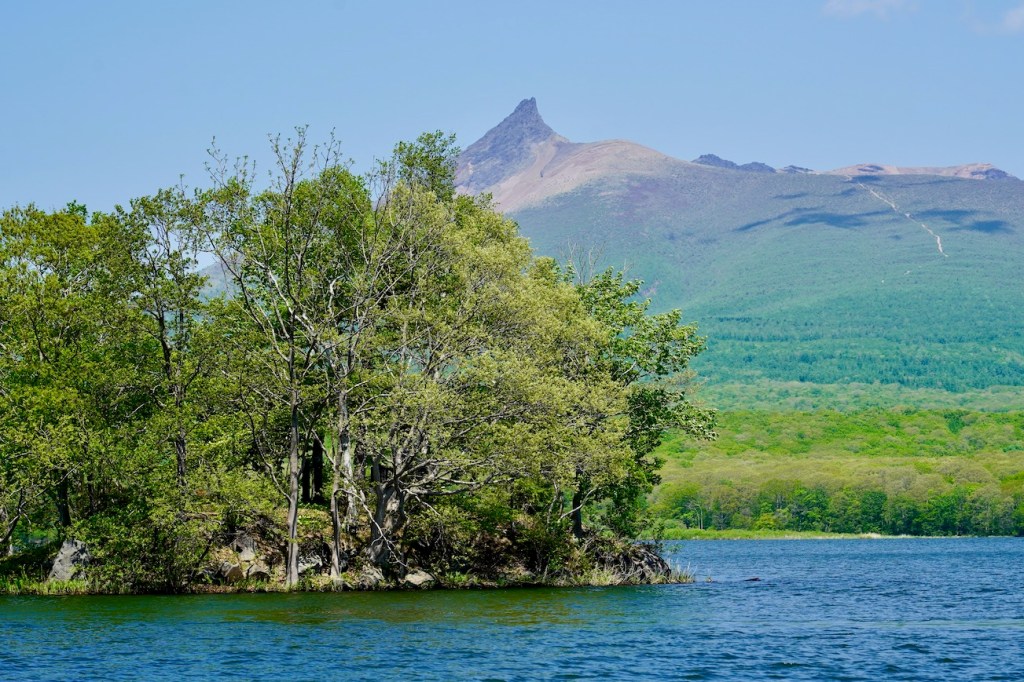

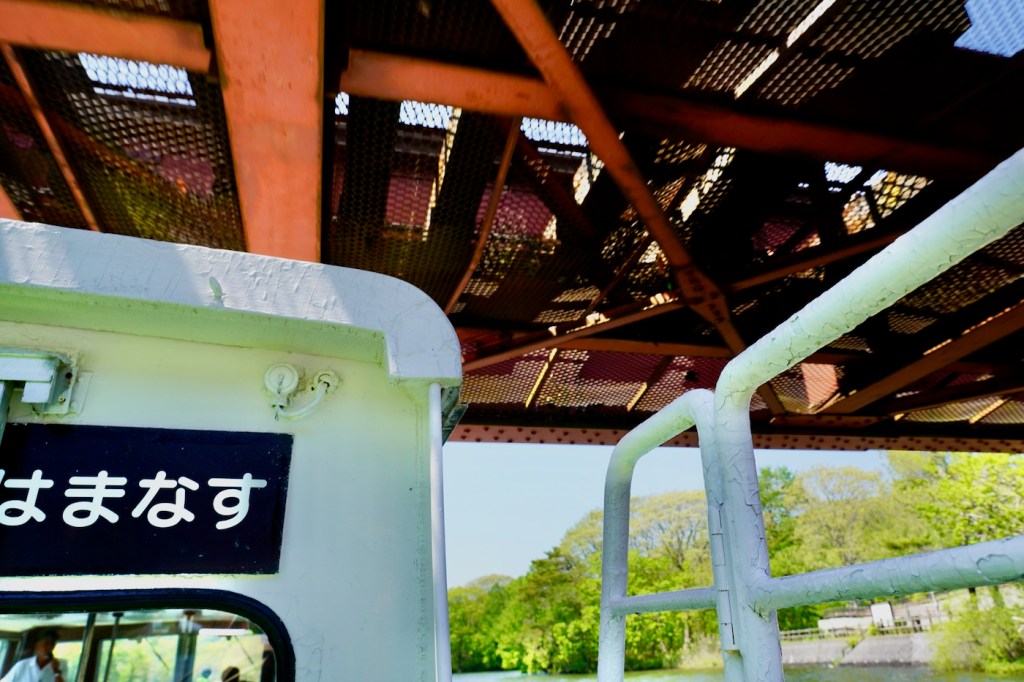
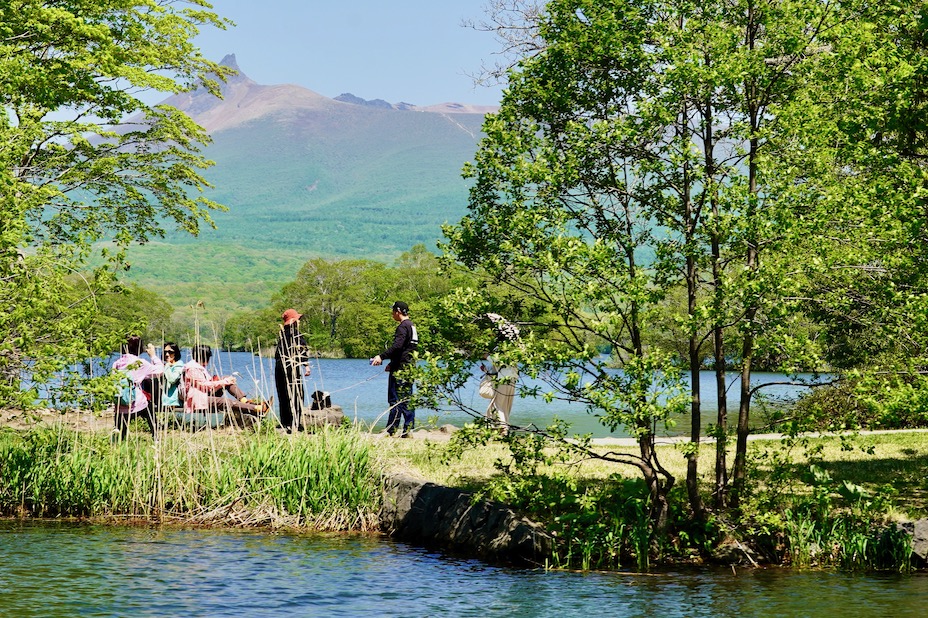
Apparently it can take around 3 hours to walk around the lake – not an option with my knee. But after our cruise, we did set out on one of the walking paths and I managed quite a decent distance.
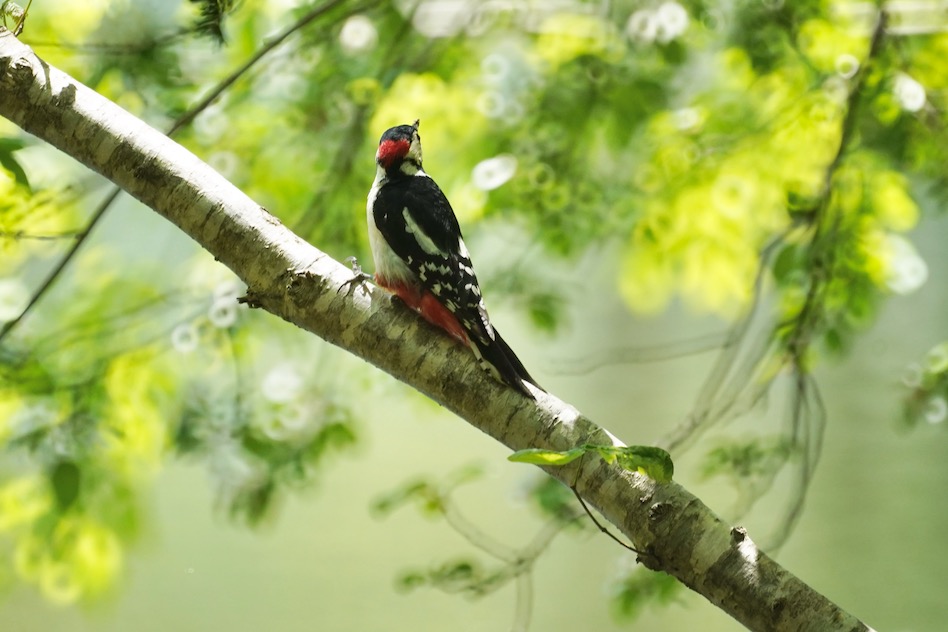
Each turn brought new delights. I rounded one corner and spotted a bird in a tree. I held my breath, not daring to move. It was the much sought after Japanese woodpecker – a bird I tried to photograph in Nagano prefecture last year, but missed the shot! I slowly brought up my camera and snapped! MJ came up behind me. He’s the real birder of the family, and I wanted to share my find with him. Not wanting to make a sound, I embarked on weird sign language trying to indicate a special bird was in the trees. He understood, but missed seeing it as the woodpecker suddenly took flight. Ah, but the woodpecker was in my camera, so I was able to share my pleasure.

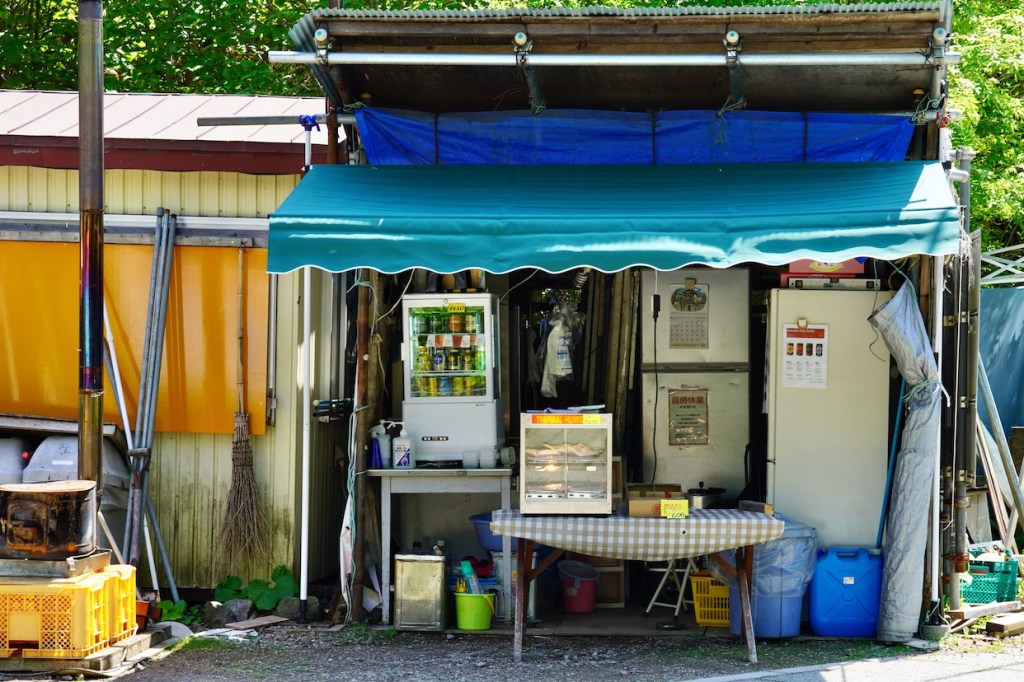
At another turn I came across a small fishing pond with narrow piers and a little wooden stall selling a few items of food, hiring fishing equipment and taking fishing fees. Unfortunately, the attendant didn’t speak any english, so I was a little at sea as to what the area was.
A couple of elderly women were fishing nearby. I can’t speak Japanese, but I have learnt a small bank of Japanese words and sentences that stand me in good stead. So, I approached them with my tiny vocab, a smile and a little gesturing, and managed to start up a conversation with one of the women. She turned out to have some limited English. Certainly light years better than my attempts at Japanese!

She was a widow from Hakodate, and regularly came up to the national park to fish with her friend. Well, why not! What a lovely place to fish! I was surprised to find out she was 81! A very stylish and active 81 year old too! Quite heartening for this 72 year old!
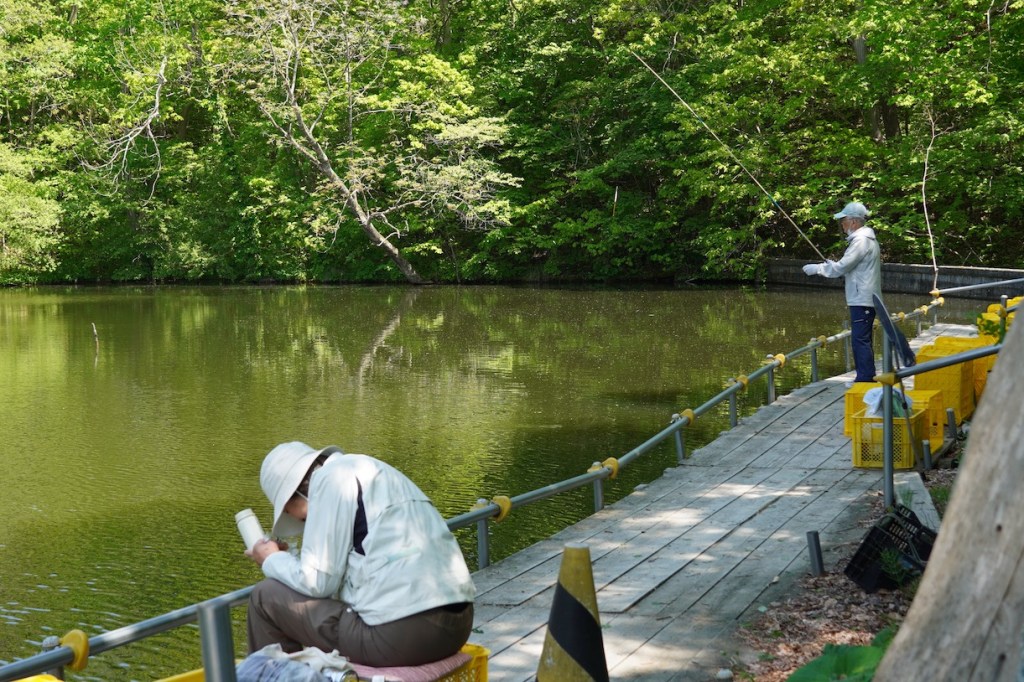
The pond offers year round opportunities to for carp and for Hera fishing (rods without a reel). Smelt ice fishing begins mid December. Fishing there costs around 800 yen for an hour, including I think rod and bait. In winter, for smelt ice fishing, this goes up to around 1800 yen a person.

There’s an abundant of other activities to do in the national park including canoeing, cycling, rowing boats, and some serious bushwalking (trekking). You can also stay in the park at a variety of accommodation or camp at designated areas – something I would recommend having now visited the park. I think experiencing early morning and evening there would be very special!
My 1800’s travelling hero Isabella Bird did stay here en route as she moved into the interior from Hakodate to visit Ainu indigenous people. She wrote about her brief stay in her book ‘Unbeaten tracks in Japan’. Let me share what she so eloquently said – words that inspired me to visit too. It wasn’t a national park back then, but it did have some facilities for visitors.
August 17, 1878. ”I am once again in the wilds! I am sitting outside in an upper room built out almost over a lovely lake, with wooded points purpling and still shadows deepening in the sinking sun. There is no village, and the busy clatter of the cicada and the rustle of the forest are the only sounds which float on the still evening air. The sunset colours are pink and green; on the tinted water lie the waxen cups of great water lillies, and above the wooded heights the pointed, craggy, and altogether naked summit of the volcano of Komono-Taki flushes red in the sunset. Not the least of the charms of the evening is that I am absolutely alone, having ridden the eighteen miles from Hakodate without Ito (her servant and guide) or an attendant of any kind; have unsaddled my own horse, and by means of much politeness and a dexterous use of Japanese substantives have secured a good room and supper of rice, eggs and black beans for myself, and a mash of beans for my horse.”

Our walk at Onuma was delightful, though we experienced only a fraction of the park. Eventually serious hunger pangs set in. We had bought some snacks at a kiosk earlier in the day, but it was time for a meal. So we returned to the little town nearby to find somewhere to eat.
En route, I was caught short and made a quick dash to the public toilets. As I rushed in, the door of a narrow cubicle directly in front the entrance was open, revealing a Japanese squat toilet. My heart sank! With my crook knee, squatting is a serious challenge, and getting up almost impossible. I looked around in panic, and spotted a handicapped toilet with this massive sliding door. I figured it at least would have a support bar to assist me. I’m not sure why a handicapped toilet would have such a seriously difficult door to open. I was relieved it was vacant, and overjoyed when I saw it contained a regular wonderful futuristic Japanese toilet! When I was leaving, finally at ease, I looked down the corridor and saw a bank of other regular toilets. I felt a bit foolish having missed them. I mention this to show my travels are not all smooth sailing! Challenging mountains come in many different forms!

Outside the cafe we chose for lunch were two giant stuffed bears. And inside, there were lots of other reminders that we were in wild bear country! Ring a ding ding. Always remember to take your bear bells with you in the Japanese wilderness, national parks and forests!

We caught a local train back to Hakodate. It was a little slower than the rapid train we had taken to reach the park, but it gave us more time to absorb the passing countryside.
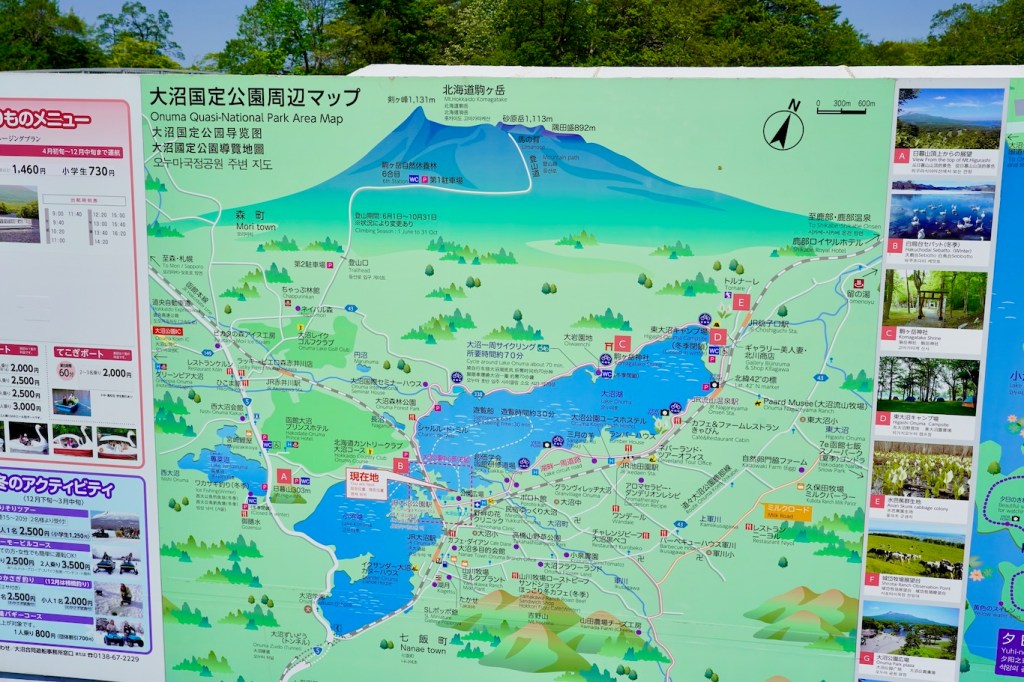
For more information check the park English version website at http://onumakouen.com/en/
 Travelling Therese