UPDATE JUNE 2025 -I HAVE RECENTLY RETURNED HOME FROM MY 7TH VISIT TO JAPAN – MY FIRST VISIT MORE THAN TWO DECADES AGO STILL HAS SOME WONDERFUL MEMORIES FOR ME. HERE IS AN UPDATED VERSION OF A STORY I FIRST WROTE ON THIS BLOG IN 2022
________________________________________________________________________________
I have felt connected with Japan since childhood, when it lingered in my mind as a mystical, mysterious and magical place. Jules Verne’s book ‘Around the World in 80 Days’, written in 1872, probably lit the first match of my curiosity when I was around 10 years of age, with the leading characters Phileas Fogg and Jean Passepartout visiting Yokohama.

The book describes dazzling camellias, lantern lit streets, bridges half hid in the midst of bamboo and reeds, temples shaded by immense cedar trees with large eagles perched on their branches, police with sabres hung to the waists, the Mikado’s guards enveloped in silken doublets, hauberks and coats of mail, women in canvas shoes, straw candles and clogs of worked wood. I’m not sure where Verne got his information, as he apparently never visited Japan! But he certainly stirred my imagination.
Fuji Keori, Osaka
In the 1970’s, the head of the prominent Japanese wool textile manufacturer Fuji-Koeri in Osaka, Fuji Tsuneichi and his son Kenroku regularly visited my tiny Tasmanian home town, Launceston, for the annual wool sales, taking the Australian superfine wool industry onto the world stage. They would arrive with an entourage of about 80 people, often including a film crew to promote Tasmania. Fuji Tsuneichi became an honorary citizen of Tasmania, and an honorary representative of Tasmania in Osaka. A special tribute was paid to him in the Australian Parliament on his death in 1992.
My father – a local Journalist – got to know him and his son as he often interviewed them, and on at least one occasion, my Dad organised a party for the son, Kenroku.
In a letter to my father, he expressed appreciation for the hospitality, courtesy and kindness shown to him. “I am indeed grateful for the nicest party you gave me and it will remain in my mind as a good memory of good friends in Launceston..”

My mother was presented with a length of beautiful cashmere wool made by FUJII KEORI. It was of such fine quality that, although she was a talented seamstress, it was years before she mustered the courage to take her scissors to it. Eventually, she used it to make a coat for herself.
My Japanese penfriend
I also had a Japanese pen friend as a schoolgirl. I looked forward to the arrival of her letters from Japan – letters sometimes handwritten in a blue airmail form, sometimes in envelopes adorned with beautiful Japanese stamps. Sadly, my penfriend suddenly stopped writing with no explanation and we lost contact. Perhaps she moved house and lost my address. Or perhaps, with little understanding of Japanese customs, I inadvertently said something wrong in my letters and offended her. I will never know.
My first hope to visit Japan fails to eventuate
In my early 20’s, I was granted a year’s leave of absence from my job to travel. I wanted to spend the year in Japan. But there was little travel information about Japan in the early 1970’s, especially for someone on a tight budget. Nor did I know anyone there. If I had known then about the great and inspirational English explorer, writer and photographer Isabella Bird, I would have been more courageous and gone to Japan regardless of the difficulties! (Bird travelled by herself to explore Japan in the late 1800’s) And perhaps I would have turned up at the Fujii keori wool mill with my dad’s letter in hand! I think it’s closed now as I can find no mention of it on the internet.
I considered joining Japan’s JET English teaching programme, but I didn’t have the required University degree. I was a qualified News Journalist with the ABC, Australia’s leading Television and Radio broadcaster, and had served a three year Cadetship training programme with the its newsroom as there were no University courses in Journalism in Australia at the time. But that didn’t count. It still doesn’t, so there goes my other thought of teaching English in Japan in my retirement!
Not knowing how I could live and travel in Japan on my own, I headed for Europe instead.
FINALLY – 2022 – Japan!
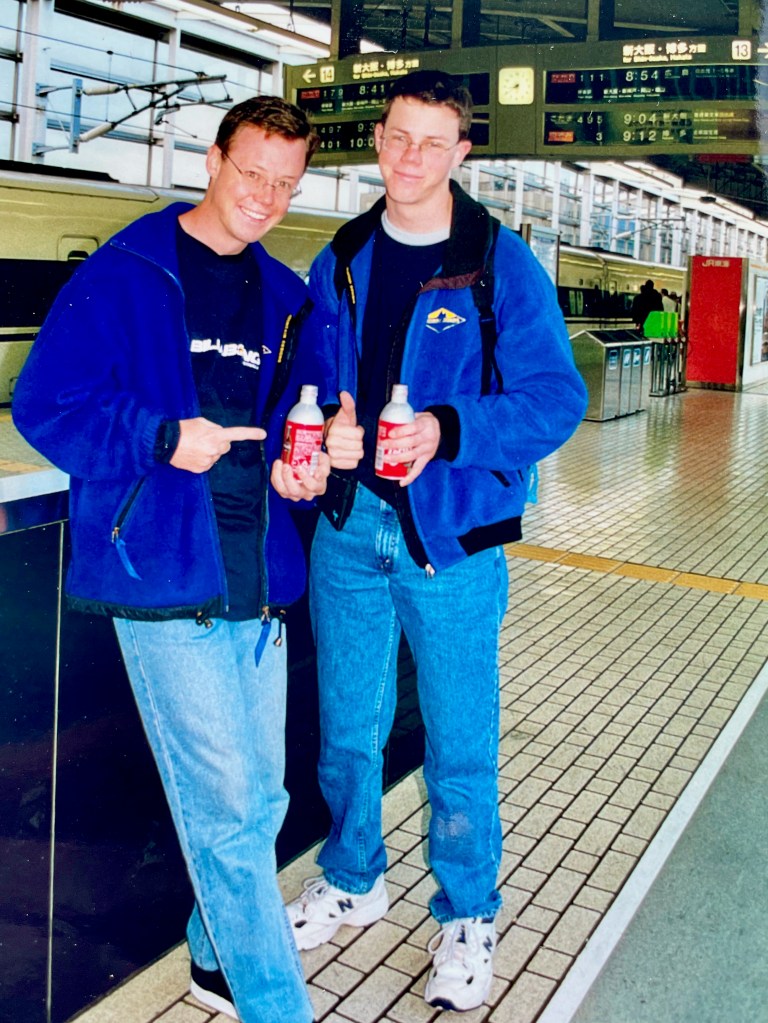
Fast forward nearly 30 years, and finally I was on a plane to Tokyo with my two teenage sons for my first trip to Japan.
My eldest son was finishing his University degree and my youngest son was completing his matriculation University entry year. So my husband suggested that once their exams were complete, I use his business airline points to take them somewhere interesting to celebrate their achievements. It was late November, and the trip would need completed before Xmas. I thought Sydney or Melbourne. But Qantas came up with an unexpected suggestion – TOKYO! The air points required were the same back then as required for Sydney/Melbourne, and there was a direct 10 hour flight between Japan and Western Australia. My sons had no hesitation in agreeing. The youngest had already been to Japan on a high school trip, and had studied the Japanese language since primary school. Here we come, JAPAN!
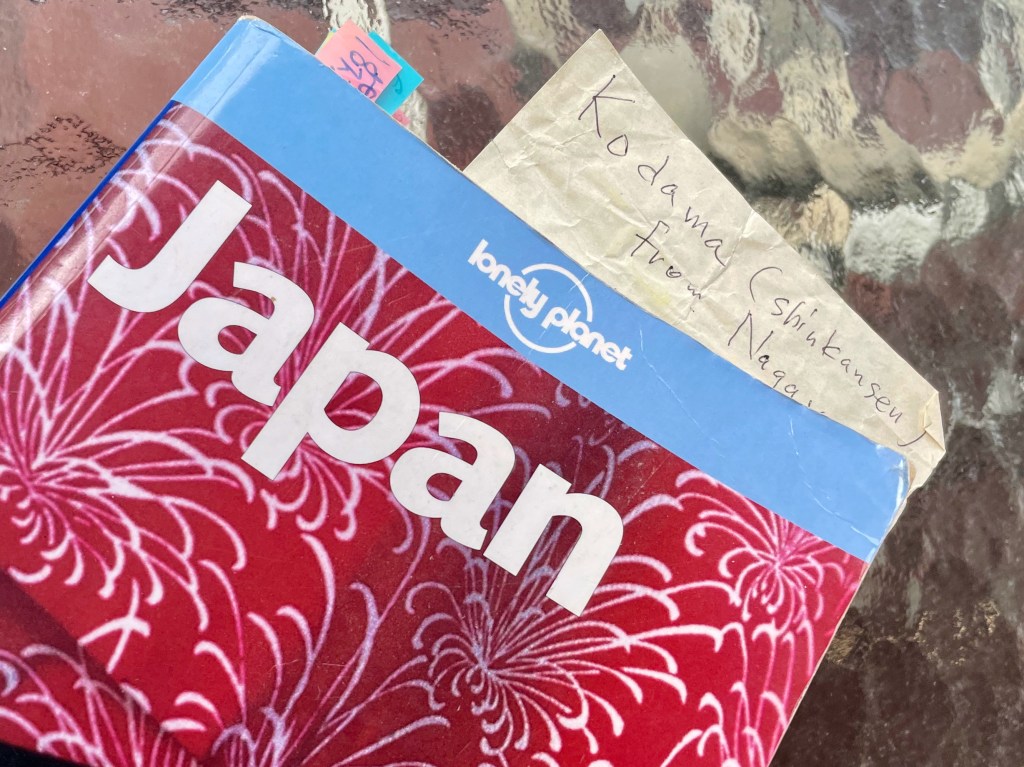
I had less than a fortnight to organise the trip. Luckily, the Lonely Planet guide was my bible back then for planning journeys, and I now had the Internet – a boon for researching and organising holidays. Both my youngest son and I had passports, but the eldest son did not. So it was a panicked rush to get one for him before our departure.
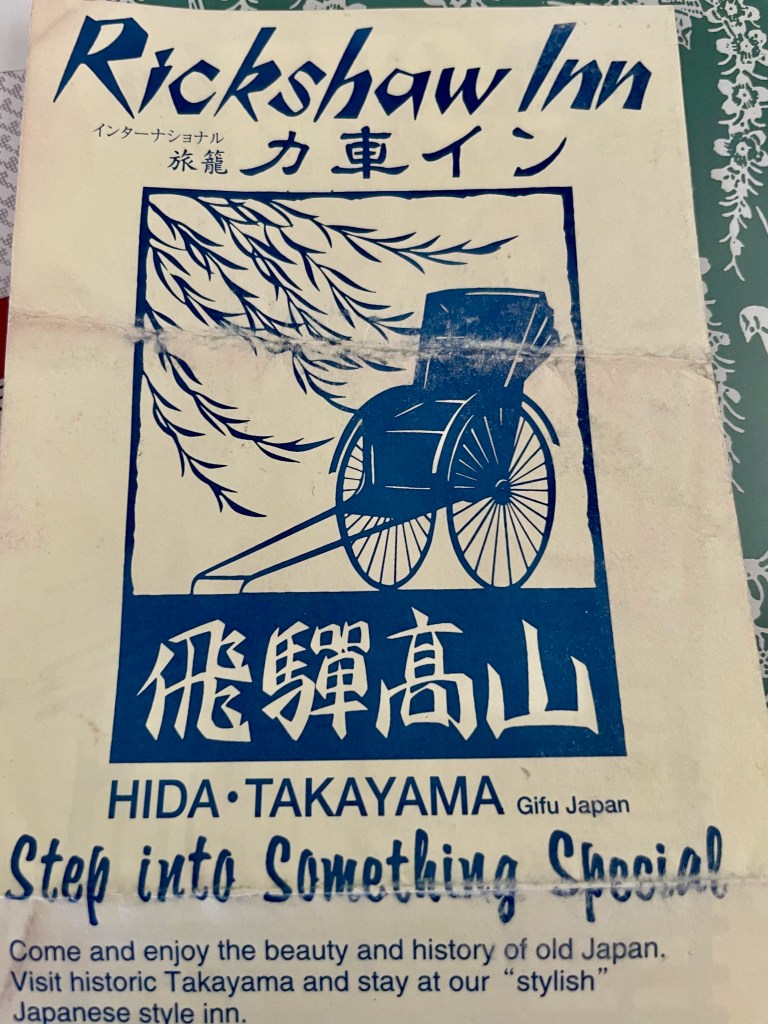
I was able to book most of our planned accommodations before we left home. But one accommodation I thought looked interesting, and within our limited budget, failed to answer my emails. It was the Rickshaw Inn in Takayama in the Gifu region, highly recommended by Lonely Planet. So I left our days in Takayama blank, hoping to secure four nights at the Rickshaw Inn once we arrived in Japan. I achieved this successfully, with the assistance of a kind tourist bureau assistant in Japan who rang the Inn and secured our stay. Lesson there – Japanese visitor centres are excellent. And the Rickshaw Inn? Also excellent! And still operating today.
https://www.rickshawinn.com/en/
In Tokyo, I booked the ryokan that my son’s school group had stayed at, hoping he would be familiar with how to get there when we arrived in Japan. We confirmed our Japan Rail (JR) passes at Narita airport, and my sons successfully negotiated a change of trains to get us to the Kiowa railway station, near where the ryokan was located. I will never forget my eldest son’s amazed reaction to the heated seats on the Narita Express!
Once we arrived at Kiowa station, the youngest son became a little disoriented and unsure about the location of the ryokan. “I think it’s up this street.” We soldiered on, two of us lugging backpacks, the youngest son wheeling a suitcase. Finally, to our relief, the ryokan appeared.
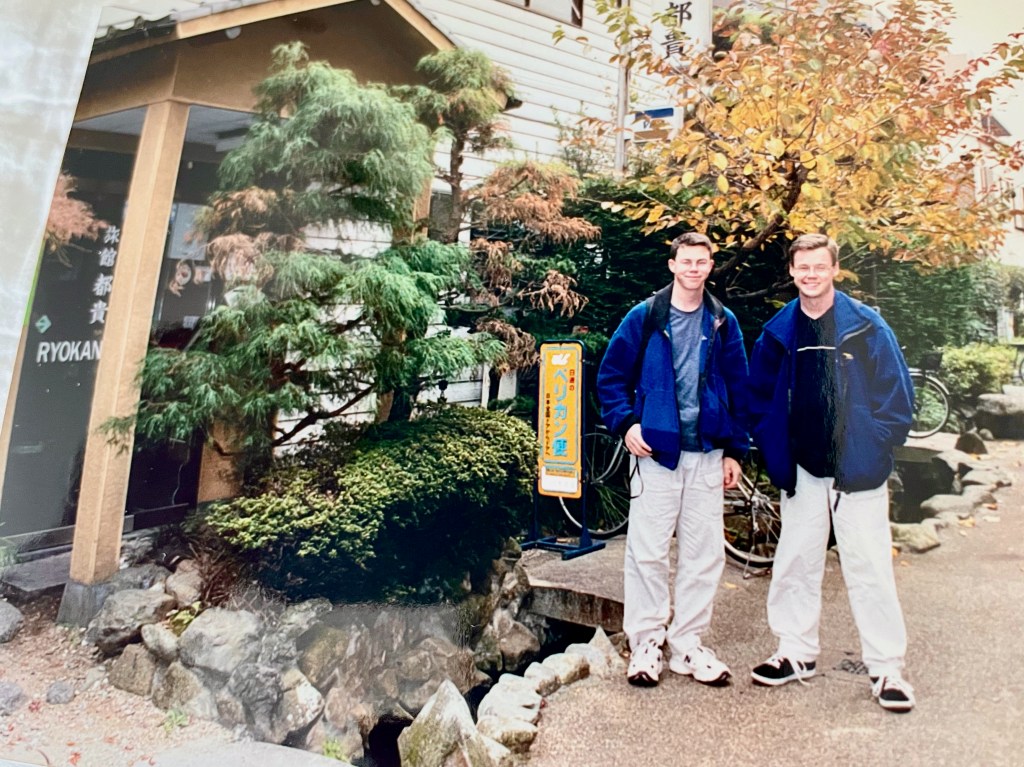
This was a low budget trip, so we stayed mainly at inexpensive Ryokans – usually small family run inns with traditional tatami-matted rooms. I got information about them from the Japan Ryokan Association. https://www.ryokan.or.jp/english/
Our ryokans were simple, inexpensive ones with rooms that were generally tiny with few frills. Comfortable, but basic, though many had a small Japanese style ensuite. It was my first time sleeping Japanese style on the floor – akin to camping, but more comfortable. I had an aching back when I began the trip, and was concerned about sleeping in futons. The back was great by the time the trip ended a few weeks later. So sleeping on the floor has its benefits! I’m glad I did it back then as my crook knee and age now makes getting up off the floor challenging!
One evening, we had an early meal around 5pm at an upstairs restaurant near our ryokan. My eldest son ordered a large pizza, and it was the first dish that arrived at the table. But meals ordered by myself and my youngest son did not appear. We urged the eldest son to eat before the pizza became cold. When he finished it, our dishes were finally served by an incredulous looking staff. We realised the staff thought we would be sharing the pizza as a first course. But no, the whole pizza was just for the eldest son, and I noticed the staff watching as he alone devoured it. Realising our mistake, we finished our meal in embarrassment, paid and quietly left. In the decades since that trip, I’ve noticed Japanese now eat much larger servings of food. So that pizza meal for my son probably would not surprise anyone these days.

Minutes after we arrived back at our ryokan, we received a phone call from a Japanese girl we had hosted for a few weeks at our home in Australia. She told us in halting english that her parents would like to meet us and take us for a meal – that night! We agreed, and anxious not to offend, we didn’t mention that we had already eaten.
Tokyo back then had around 60,000 restaurants, and the suburb we were in had a main street lined with them. But where do you think the Japanese family choose? The very same upstairs restaurant we had departed from just a few hours earlier!
The staff looked shocked when we walked in again. We stood out as there weren’t many other westerners in this area of Tokyo. And a short lady, with two tall Aussie young men, including one who ate a massive pizza by himself, was not easily forgotten! We silently prayed that the staff would not mention to Megumi’s family that we had already eaten there that evening. Or the pizza episode!
Our exchange student had forgotten most of her English, and her family only spoke Japanese. So it was up to my youngest son to interpret and chat. His confidence in speaking Japanese quickly grew as the evening went on. Before long, he was conversing quite well in Japanese, much to the amazement of his ‘pizza man’ brother who whispered to me “I thought he said he couldn’t really speak Japanese well!”
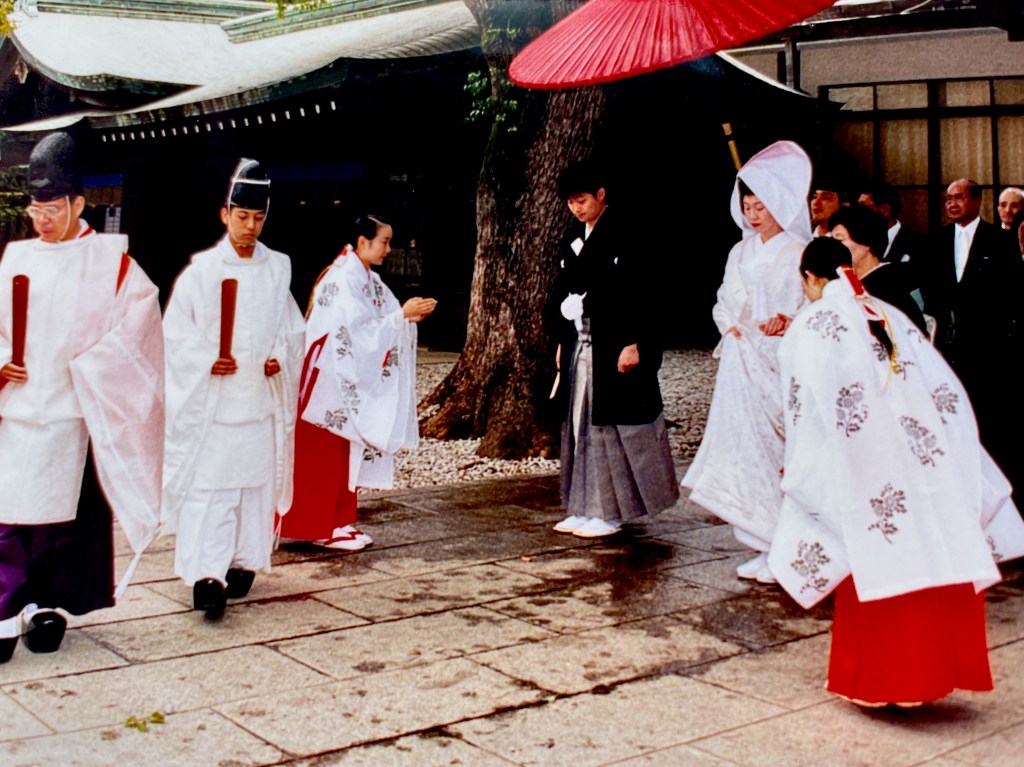
Our JR passes, bought in Australia, allowed us to go in and out of Tokyo at will on the Tokyo JR suburban railways. We explored the famous Neon lights district, visited the Imperial Palace and the beautiful Meiji Shinto Shrine where we were thrilled to see our first traditional Japanese wedding.

The boys were delighted to find McDonalds was thriving in Japan, while I was more interested in trying the local Japanese fare. There were more than a few fierce food choice debates! As Mum, you’d think I’d win, but it was two against one. I missed my husband’s ruling vote. He had been unable to join us on the trip because of business priorities.
We did get to experience some excellent Japanese food on our trip, as well as our first delicous taste of Korean food. We thought we were eating Japanese, but eventually found out the restaurant was Korean!

I asked my sons for their memories of our trip, and the eldest recalled me becoming exasperated with them after I discovered they were sneaking off from our ryokan to buy Big Macs. Well, justly so! Then there was my search for my first yakatori – Japanese skewered chicken – when they recalled me accidentally leading them into a red light district in Tokyo!
The eldest son also recalls how impressed he was with the ”Cleanliness and neatness of everything, how polite everyone was, how efficient and organised train system was.” Nothing has changed in that regard. Both sons have since returned individually with friends on trips to Japan.

I was usually awake early before the boys throughout our trip, and would head to the nearest convenience store to stock up on yoghurt, milk, juices, baked pastries and fresh fruit salads for our breakfast. I adore Japanese konbini – convenience stores. They offer a wide array of food and are not expensive. Their fresh sandwiches, replenished regularly throughout opening hours, are excellent.
Takayama, Gifu
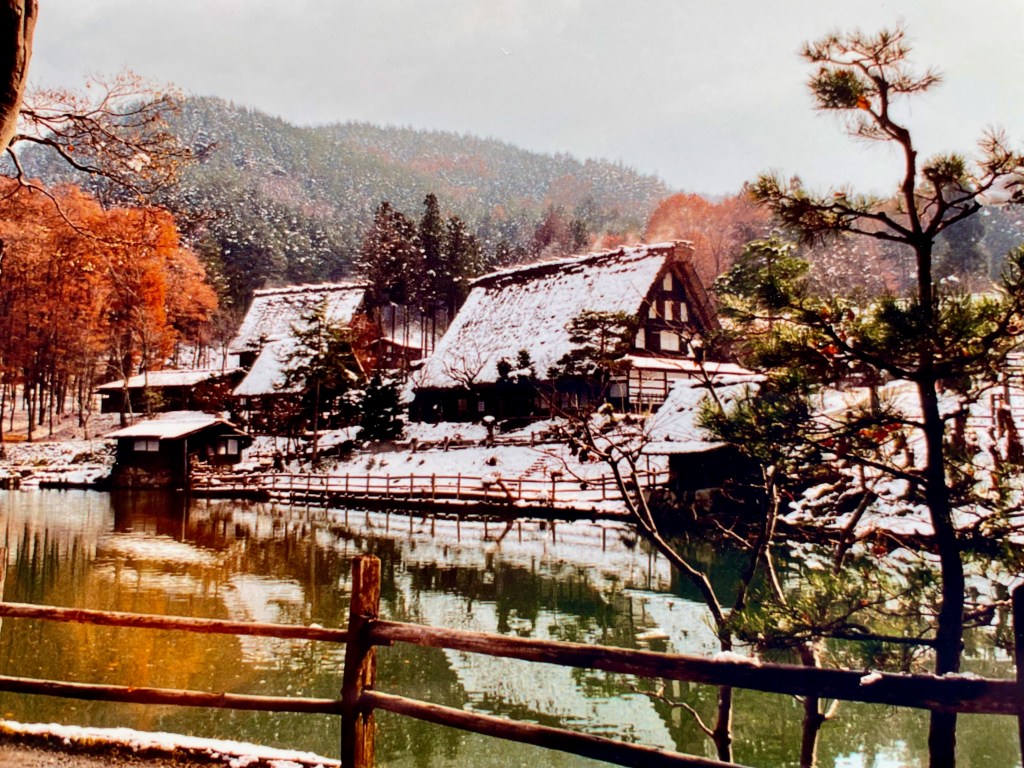
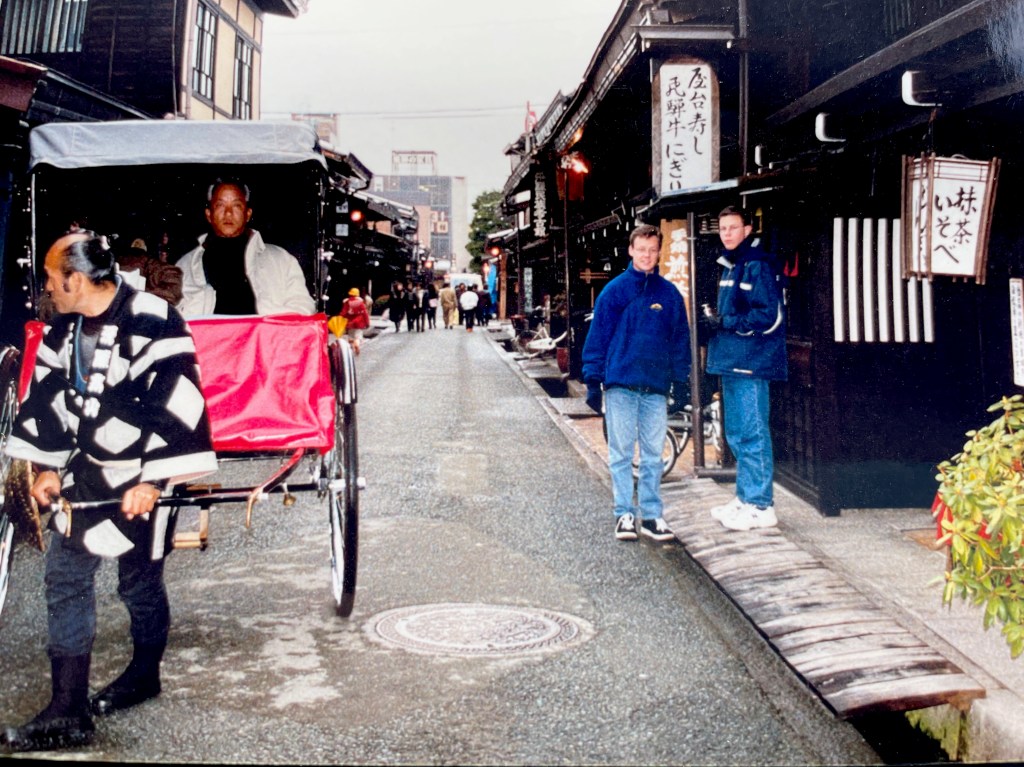
My favourite discovery on our trip was Hida Takayama in the heart of the Japanese Alps in northern Gifu where we found snow was already falling by early December. Surrounded by majestic snow capped mountains, this small city looked like a picture postcard. Takayama features a delightful old town area dating back to the Edo period. Its streets are lined with traditional wooden merchants’ homes that now serve as shops, breweries, restaurants and museums. Nearby, morning markets sell fresh local produce and where I first tasted Japanese purin (pudding), my favourite Japanese desert. I have been back to that market on many subsequent trips just to buy that market stall purin. Each time the same man has been there, just selling purin.
Takayama also was where I learnt that some food specialities in Japan are seasonal. What you might enjoy in autumn may not be on the menu in summer (ie: chestnut specialities in autumn).
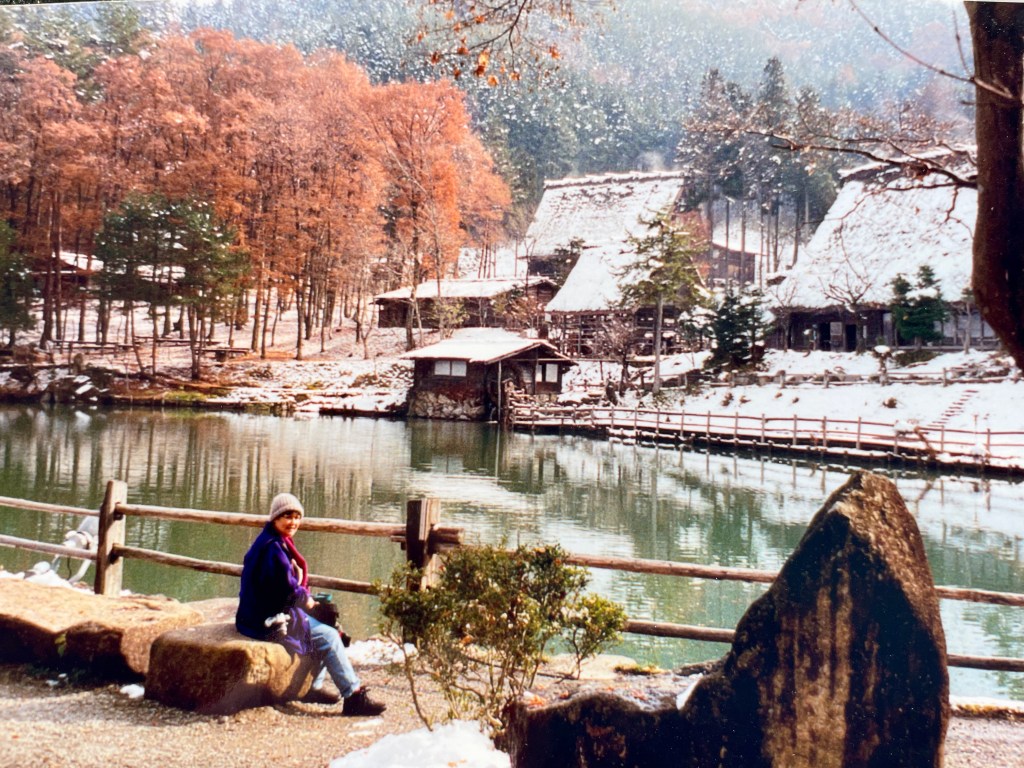
Takayama features a traditional Hida folk village – an open air museum with more than 30 traditional buildings and working displays of traditional crafts. It’s a little out of the main town centre, but I have walked there. It’s uphill to reach it, so you might prefer the local bus. The village was so impressive that I returned there with my husband MJ and a few Aussie friends in the spring of 2019, and again with MJ in 2023. Have we had enough of the Takayama region? No. It’s a lot more busy these days with tourists – but It’s like an old friend we always must call in on!
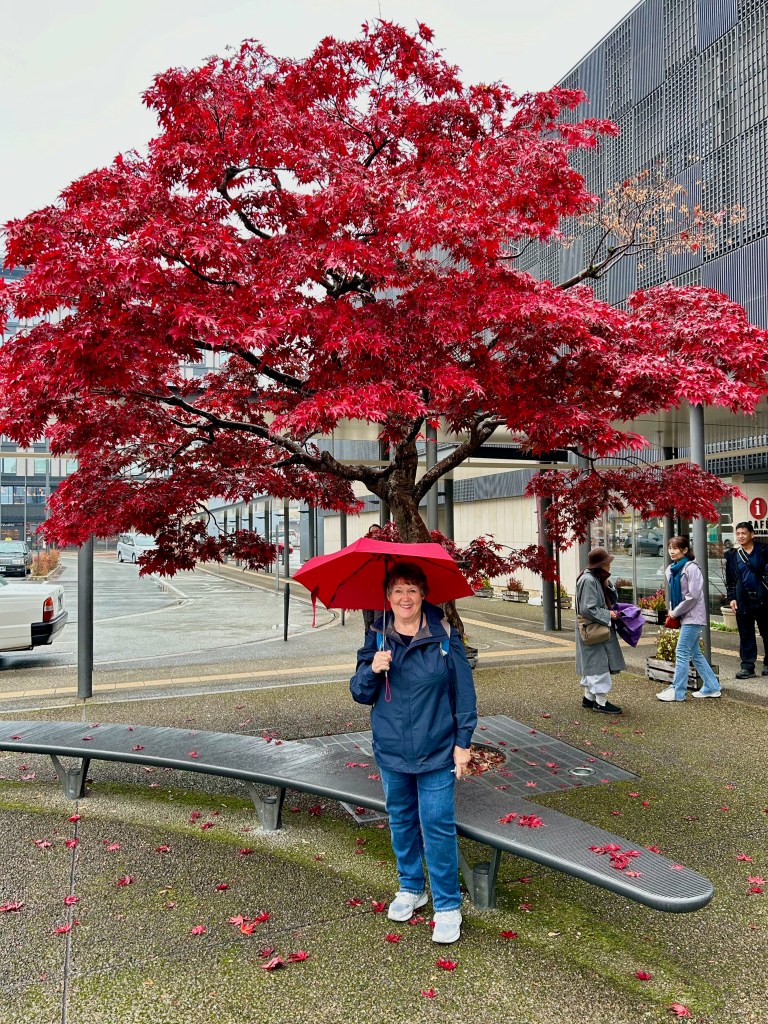
One day on that first visit, I left my Palm in a telephone box on the Higashiyama Walking course, a trail through Takayama’s temple area. Remember Palms? Little pocket Personal Digital Assistants that we had before smart phones. Staff at the Rickshaw Inn told me not to worry about it, assuring me the Palm would still be in the telephone box the next day. And indeed, it was. Locals, they said, would leave it there for a few days in case the owner came back for it. And if it remained, they would hand it into the local police station. I have since heard many first hand stories of such honesty in Japan, including wallets and passports left on trains and returned safely.
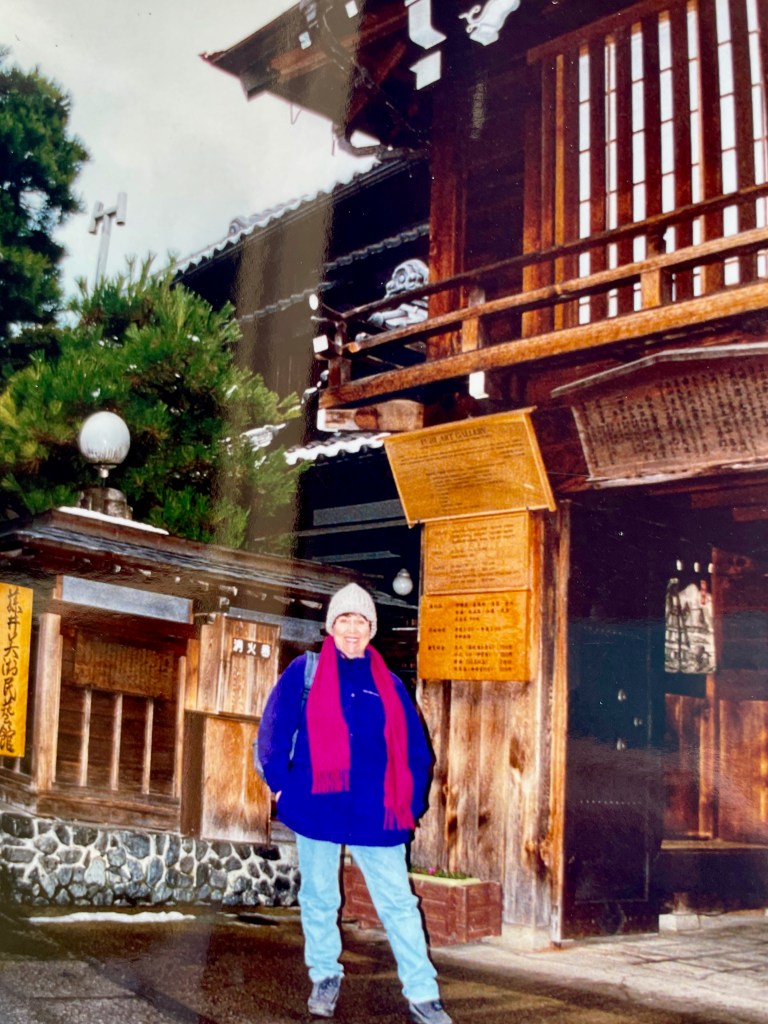
The Rickshaw Inn directed us to some nice eateries in Takayama featuring local Japanese cuisine. The aroma in one restaurant was particularly alluring. But there was no English menu and the staff didn’t speak english. Around us, diners were enjoying a variety of what looked like wonderful dishes. I was tempted to walk up to a table, and point to a few dishes that appealed. But the boys said emphatically “No, Mum!” The youngest son finally managed a few Japanese words indicating that the staff could choose from the menu for us.
And what arrived? Pizza! I could have cried. The pizza, something the restaurant thought we would like, was nice. But didn’t match the local fare on offer. Nor did I see pizza on anyone else’s table. It wouldn’t happen today, thanks to google translator that do a good job of menu reading.
Kyoto
Another city that impressed me on that first trip was Japan’s ancient capital, Kyoto, spared by the Americans from the Atomic Bomb to save its world renown ancient buildings. Many of the great ancient temples and palaces in Kyoto were built by wood craftsmen from Gifu.
Kyoto was originally on the USA’s list of targets for the Atomic Bomb. But it was replaced by Nagasaki after Secretary of War Henry Stimson went directly to the President, arguing that Kyoto was of cultural importance for the world.
Because of this decision, Kyoto is quite different from Tokyo which is a relatively ‘new city’ that arose after ‘old’ Tokyo was largely destroyed by the 1923 Great Kanto earthquake, and subsequently by a series of American fire bombings in WW2. One raid alone, on a night in 1945, destroyed 41 square kilometres of Tokyo, killing 100,000 civilians. The Tokyo fire bombings had a far greater toll than the atomic bombings.
(As a kid, I read my dad’s 1944 edition of ’30 seconds over Tokyo’, the book about the pilots who took part in the first Tokyo raid – the legendary Doolittle raid. I still have the book, published before the end of WW2. It was a story of bravery on the part of the American pilots, but it wasn’t until I went to Japan that I realised the full horrifying impact of the American raids on Tokyo. War, whichever side you are on, is devastating, particularly when civilians are involved.
The Tokyo air raids came less than 90 years after the American navy, under Commodore Matthew Perry, sailed to Tokyo Bay, threatening to destroy Tokyo – then known as Edo – if Japan failed to grant them trading rights on American terms. This move by the Americans forced Japan to open up to the world, and led to the demise of the Samurai led Shogun leadership in Japan. Don’t you love history – so many curves in the road! Nothing is absolute or straightforward.)
So, if you are looking for ancient Japan, then visiting Kyoto, originally named Heian-kyo, is a must. It is currently being overcome by waves of over tourism, but if you plan carefully and are prepared to get up early, you can get ahead of the crowds. There’s a lot of wonderful, but little known attractions in Kyoto, besides the more popular ones.
Kyoto was selected way back in 794 as the seat of Japan’s imperial court and the country’s Emperors ruled from here for more than a thousand years through to 1869 when the Court moved to Edo (Tokyo). The city today has 17 UNESCO World Heritage sites, including castles, more than 1,600 Buddhist and over 400 Shinto shrines.
In Kyoto, my sons and I stayed at another small family run ryokan, close to Kyoto railway station – even the family dog did duty at the front desk!
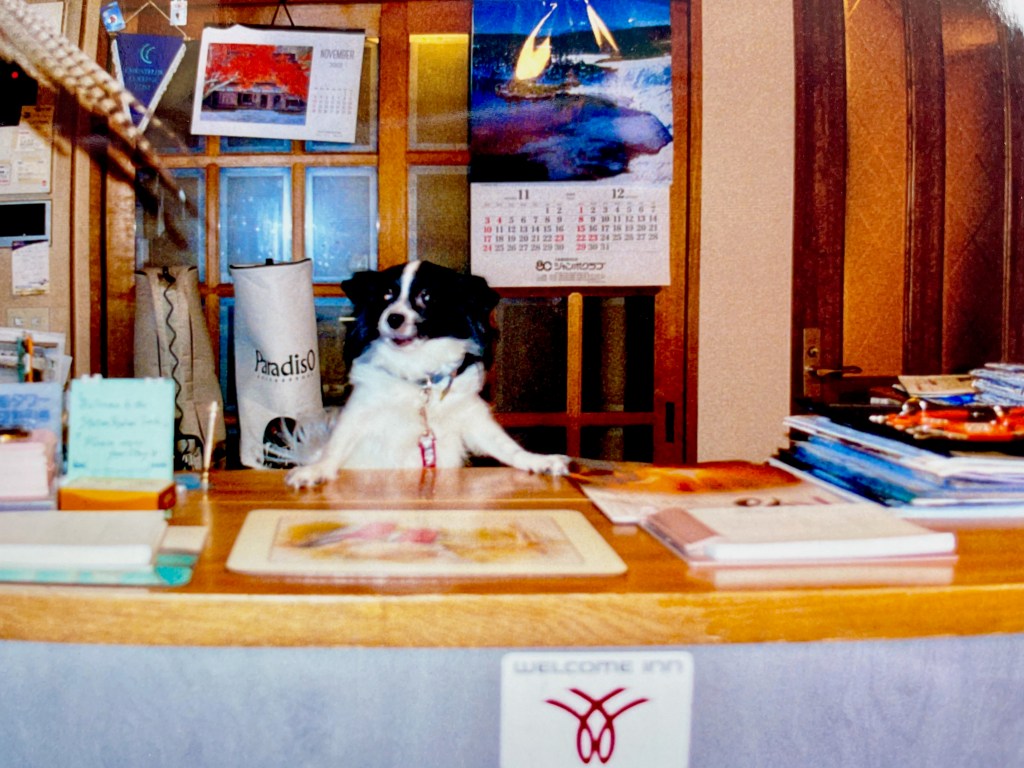
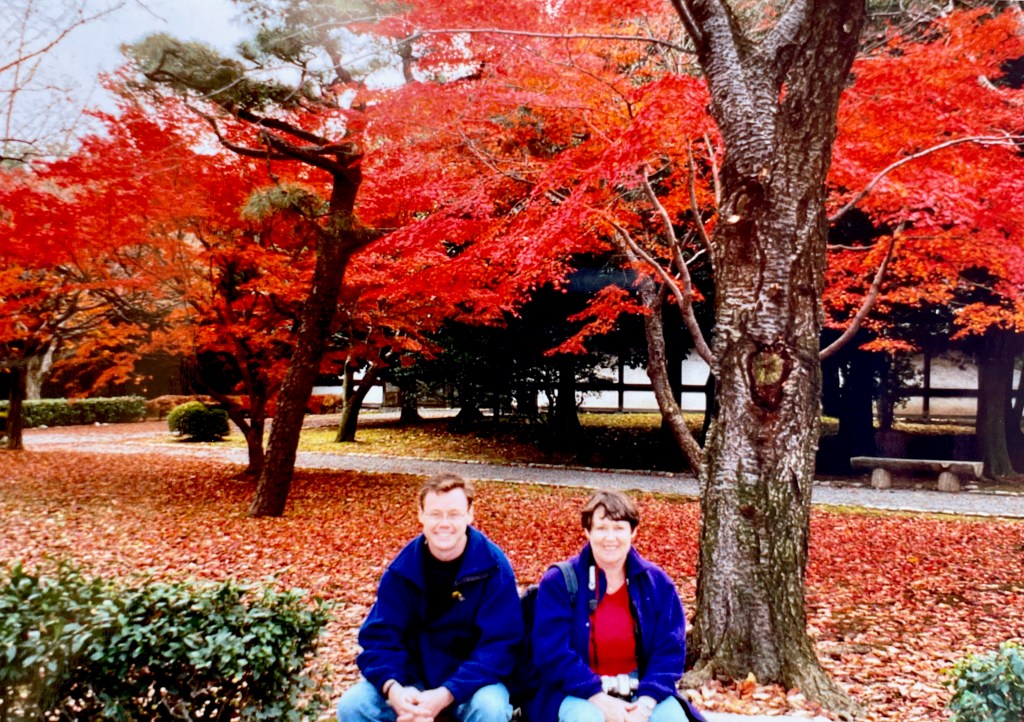
Kyoto isn’t just about ancient buildings. Its modern architecture also is outstanding, and if you arrive by train, you’ll see that immediately. Kyoto’s main railway station is a stunning architectural masterpiece – a Japanese designed mini city within a city. A massive Christmas tree soared towards the sky in the impressive glass and steel roofed main hall of the station when I first saw it. It is still the biggest and most magnificent Christmas tree I have seen.
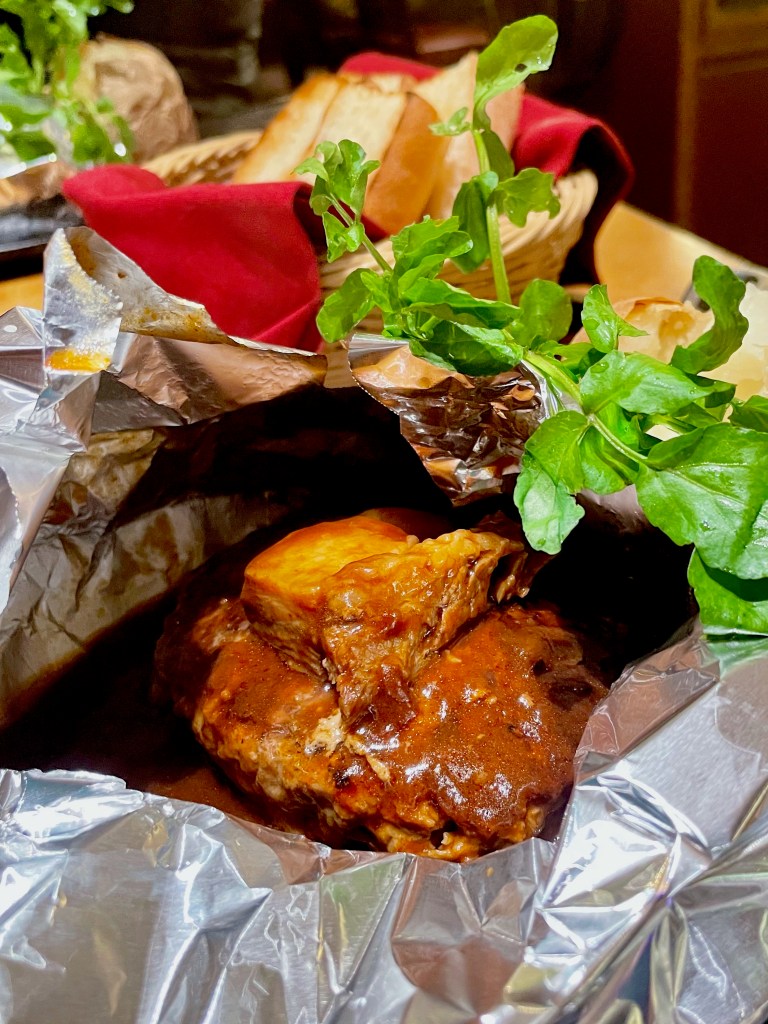
The current Kyoto railway station was opened in 1997, so it was still fairly new when we arrived there on a shinkensen (bullet train). The design remains futuristic, and when I was last there in 2024, it still seemed ahead of its time. The station includes shopping malls, an abundance of excellent restaurants and cafes, an upmarket hotel, a movie theatre, and a large department store under the one 15 storey roof. Should I mention that one restaurant there makes the most delicious Japanese hamburger I have tasted – a special treat that comes to the table in a balloon of foil – the hamburger topped with a piece of slow cooked beef. Makes me hungry thinking about it. On all return trips to Japan, I’ve been pleased to see the restaurant still thriving, and of course, I have to go in and order that unusual burger meal!
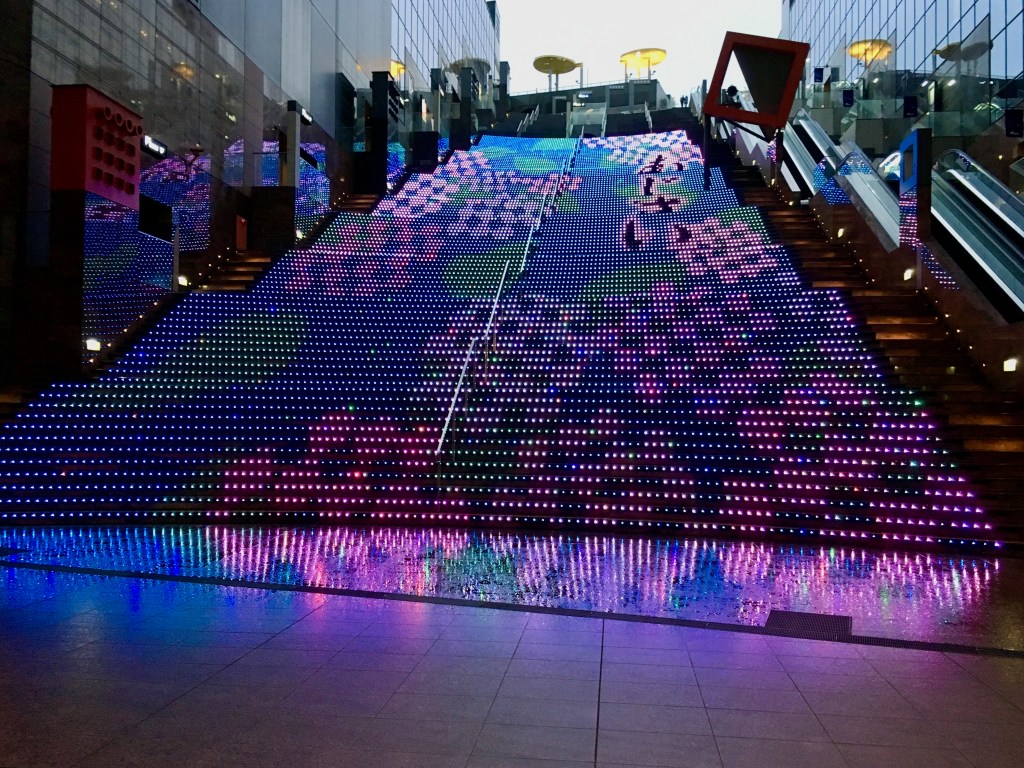
There are 3 floors below ground at the station, and 12 above with a spectacular bank of steep escalators rising up from the main hall to a rooftop parkland – a great place to enjoy a take away lunch and a view over Kyoto. Besides the escalators is a grand staircase, the canvas for a beautiful light show at night. On that first visit, the Kyoto railway station took my breath away. It still does.

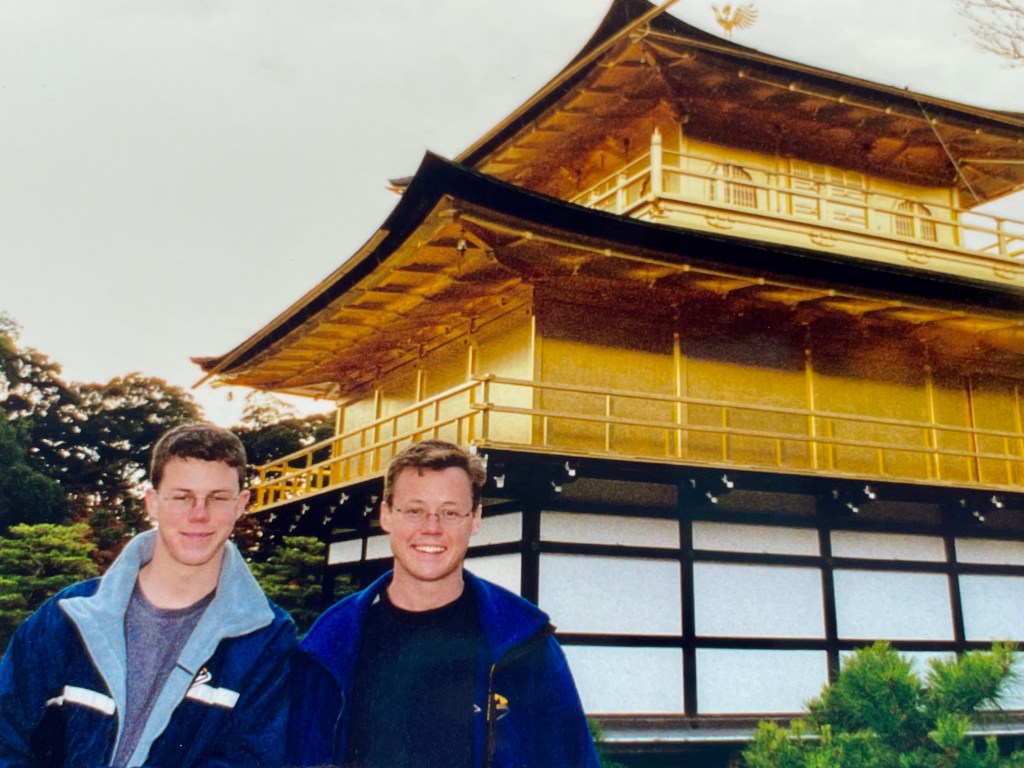
My youngest son had already been to Kyoto’s famous Golden Temple on his school trip, so we headed there on a public bus, confident he would know the way. Our personal guide! Ha ha! The best laid plans and all that! Some german tourists sitting on the bus heard us talking about my son’s previous trip to the Temple, and decided they would stick with us. Word spread amongst the other foreigner tourists aboard, and when we alighted from the bus, we had a queue of people ready to follow us. My son – a reluctant pied piper – froze with the pressure of being leader of the pack.
With a queue of people depending on his direction, he simply couldn’t think. “Ask a Japanese,” I urged. But, in his panic, he couldn’t find the Japanese words. I quickly took the map from him and stopped a Japanese passing by, pointing to the Golden Temple on the map, and shrugging my shoulders. My sign language effort worked, and we were shown the way!
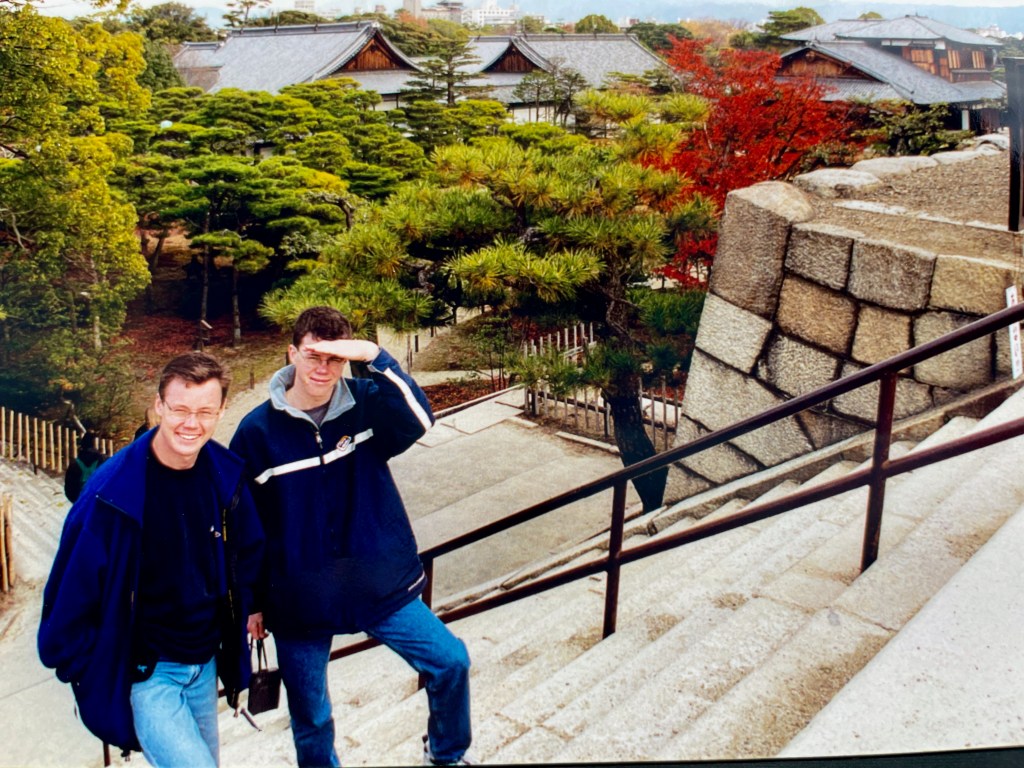
We also visited Nijo Castle, built by the Tokugawa shogunate in the 1600’s, and today a UNESCO World Heritage site. The floors in the corridors make a chirping sound when you walk on them. I was told this was deliberately done to detect unwelcome visitors. I had visions of Ninja assassins or opposing Samurai invaders creeping along the hallways, razor sharp swords and knives drawn. The floors were especially designed so that flooring nails rub against a jacket or clamp, and this causes the chirping noises. The Samurai answer to today’s alarm systems!
We headed to the old Imperial Palace late one afternoon in time for the last walking tour of the day. We weren’t booked on it, but they let us join the tour anyway. Another impressive place!
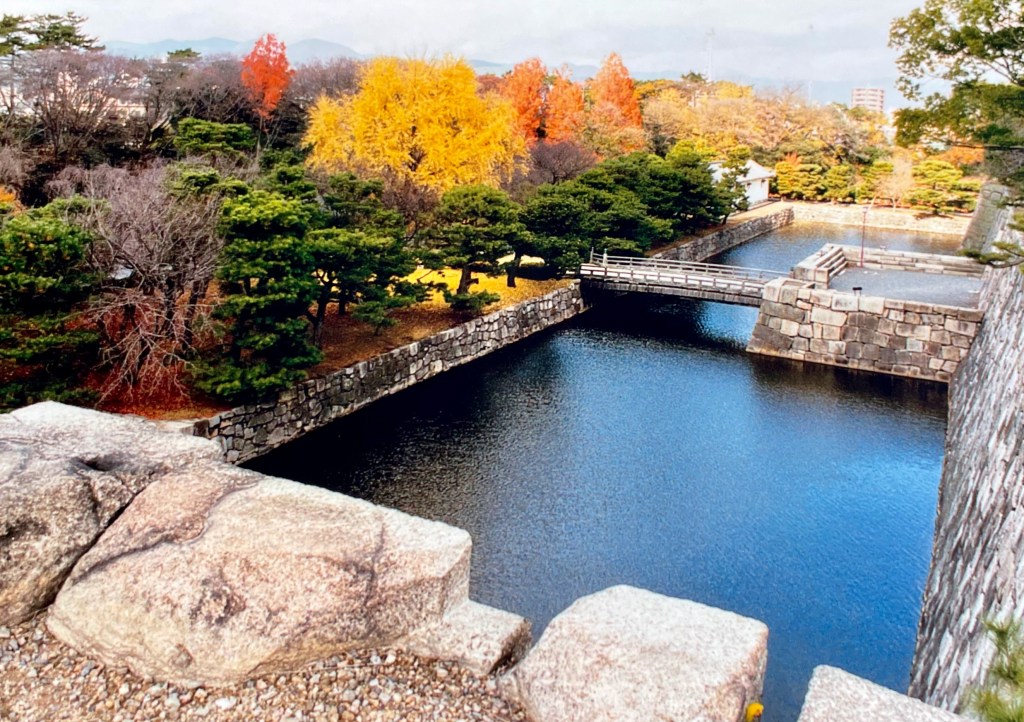
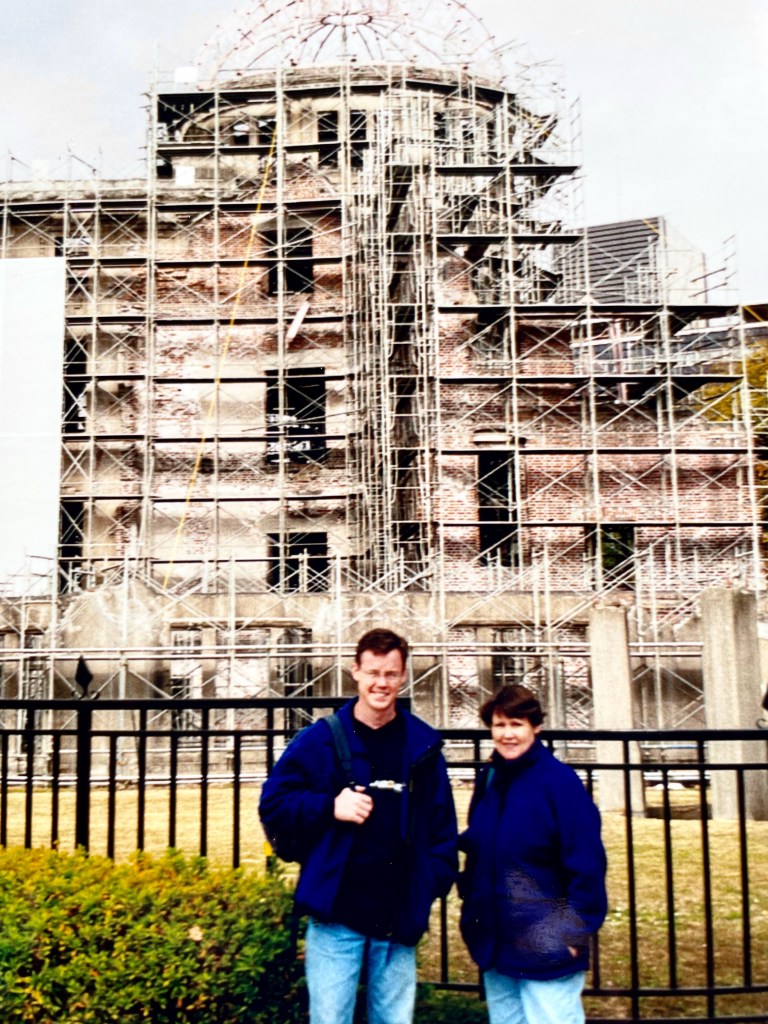
With our journey time running short, we visited Hiroshima on a day trip from Kyoto, using our rail passes on Shinkensens (bullet trains). The Genbaku Dome, one of the few buildings still standing near the Atomic Bomb Ground Zero, was covered in scaffolding for some necessary repairs. Nearby, a visit to the Peace Memorial museum was sobering, but I’m glad I saw it. It has since been substantially revamped and extended.
We had one last place on our itinerary. The Fuji Five Lakes for a good view of Mount Fuji. Our destination was Kawaguchiko and my Lonely Planet guide told me we could leave the Shinkansen en route back to Tokyo and reach Lake Kawaguchiko by public bus.
The boys were very nervous about this idea, knowing this bus transfer was not a usual tourist route and that very little english, if any, would be spoken. Leaving the railway, we found ourselves in a large area, crowded with buses and no clear idea of where the bus ticket office was. So we went into a shop that looked like it might be the bus office. It wasn’t. However, we managed to make ourselves understood, and a lady kindly showed us the way, sorting out our tickets for us – all of this without a common language between us and no google translator in those days! More map pointing! It was an example of how willing Japanese people are to help you, if you make it known you need assistance.
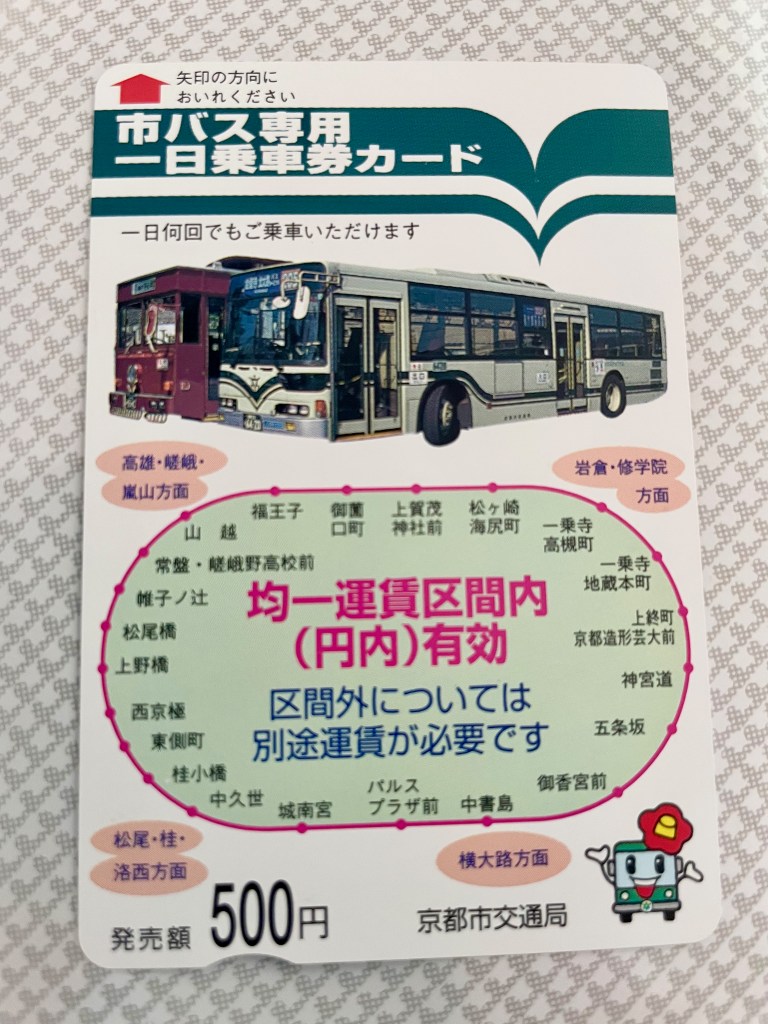
Once our tickets were purchased, the lady indicated we should follow her at a fast run! We were unsure why we were sprinting after her! She led us to the correct bus, which was just about to leave! Phew, made it. A long bus ride ensured, and eventually we were the only passengers left on the bus. The boys were now extremely worried. “How do we know we’re on the right bus?” they asked. Our bus tickets were in Japanese, and the driver didn’t speak English. Did that kind lady really understand where we wanted to go?
“I can still see Mount Fuji ahead, so we are going in the right direction. And besides, where-ever the bus stops, we will find accommodation,” I said assuredly. At this point, the boys did not have much confidence in their mum! And secretly, despite my bravado, neither did I!
We had not booked our accommodation that night. Lonely Planet highly recommended the Sunnide Village that promised a magnificent view over Lake Kawaguchi-ko of Mount Fuji. Plus a little luxury for our budget trip.
Normally, the Sunnide would have been beyond us cost wise. However, Lonely Planet advised that if you turned up at the Kawaguchi-ko tourist information centre, you could qualify for a 4000 yen per person ‘backpackers’ rate. This meant an ensuite room for the three of us would cost not much more than $120 a night, including an expansive buffet breakfast!
https://www.japanican.com/hotel/japan/fujikawaguchiko/sunnide-resort-hotel?cid=1839029
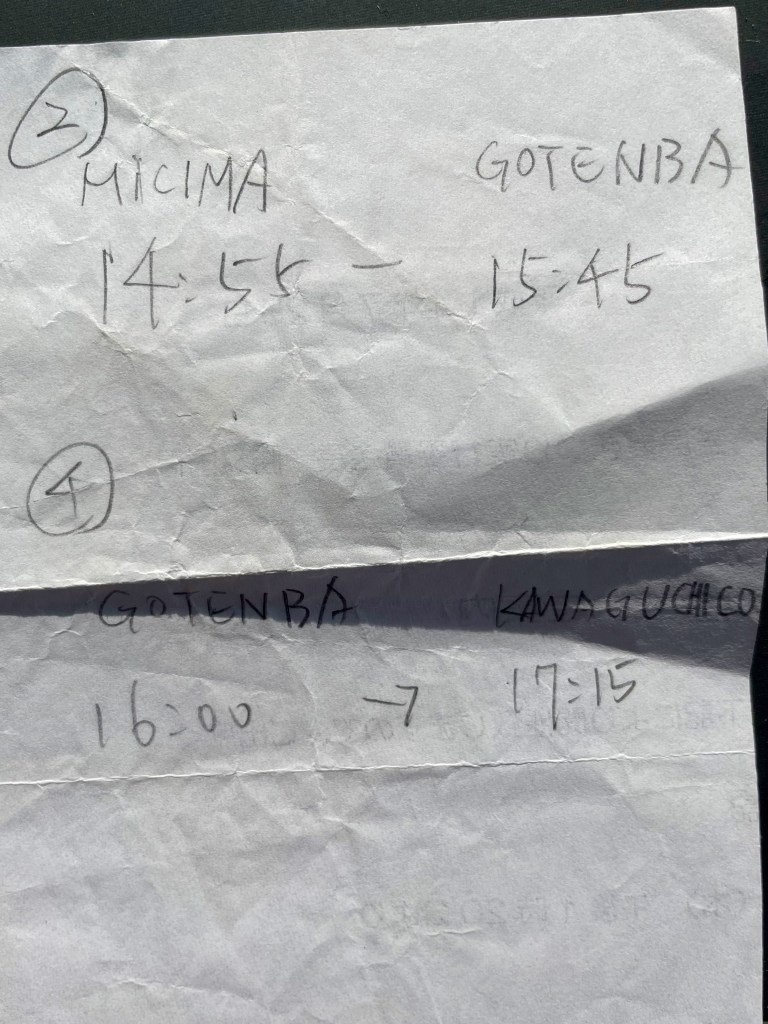
So there we were, on a bus to – where? We weren’t entirely sure. We had no accommodation booked for the night, we were the only passengers left on the bus, and it was now nightfall outside! The driver silently drove on. “The tourist bureau must have closed by now,” worried the boys. “Where will we sleep tonight?” I flashed my credit card. “We will find somewhere, and use this,” I said, trying to sound positive. Where was their sense of adventure. Credit cards weren’t in wide use in Japan back then, but I had one for emergency backup.
The good news is – we arrived in Kawaguchiko safely, and remarkably the visitor centre was open, despite the late hour. The staff were wonderful and phoned the hotel, organising our ‘backpacker’ rate. Ten minutes later, to the boys’ astonishment, a flash looking hotel mini bus, with a uniformed driver wearing white gloves, arrived to take us to the Sunnide. Definitely a step up – indeed a staircase up – from the budget places we’d been staying at. Sons, have faith in your mum!
We were shown our spacious room with pristine tatami floor mats, a very modern ensuite with an up to the minute ‘Captain Kirk’ Japanese toilet. Sitting on it, you did feel you were in charge of the Starship Enterprise with all its bells and whistles! A large window looked out to what we hoped would be a wonderful view when dawn broke the next day. In the room’s centre was a traditional dark wood Japanese low table, with elegant cushioned Japanese floor chairs around it. A little challenging for my very tall sons. Also supplied were traditional yakata clothing that we could wear while at the hotel. This is a normal thing at many of the accommodations I stay at in Japan these days, but it wasn’t at the cheap ryokans we had been staying in.
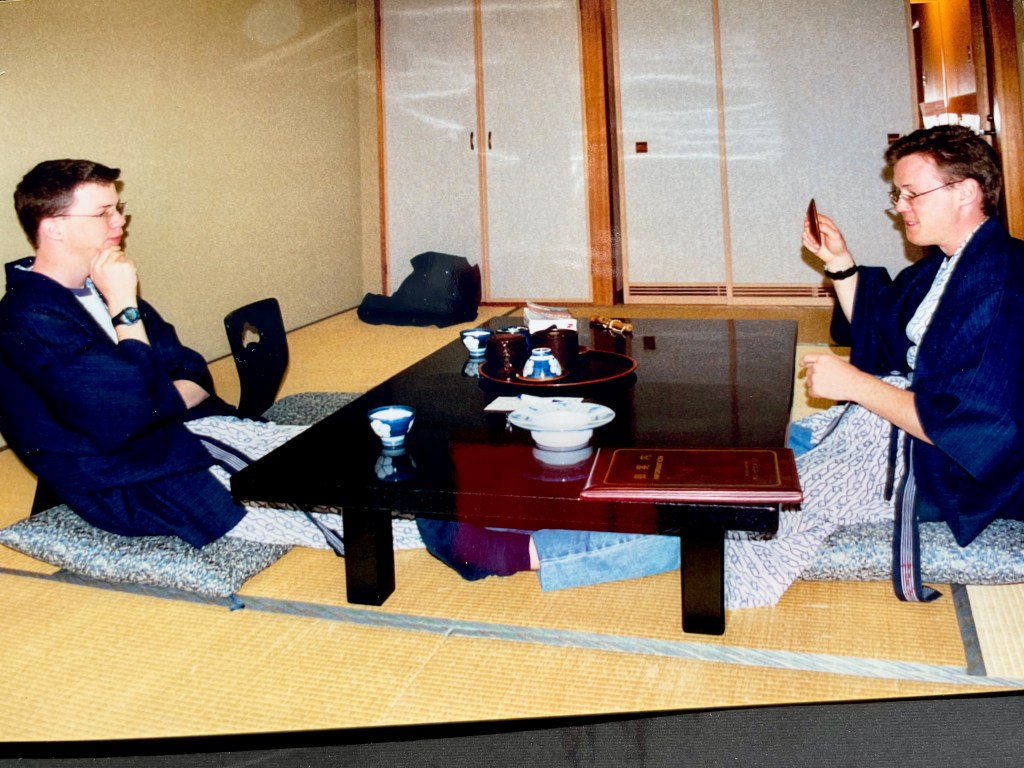
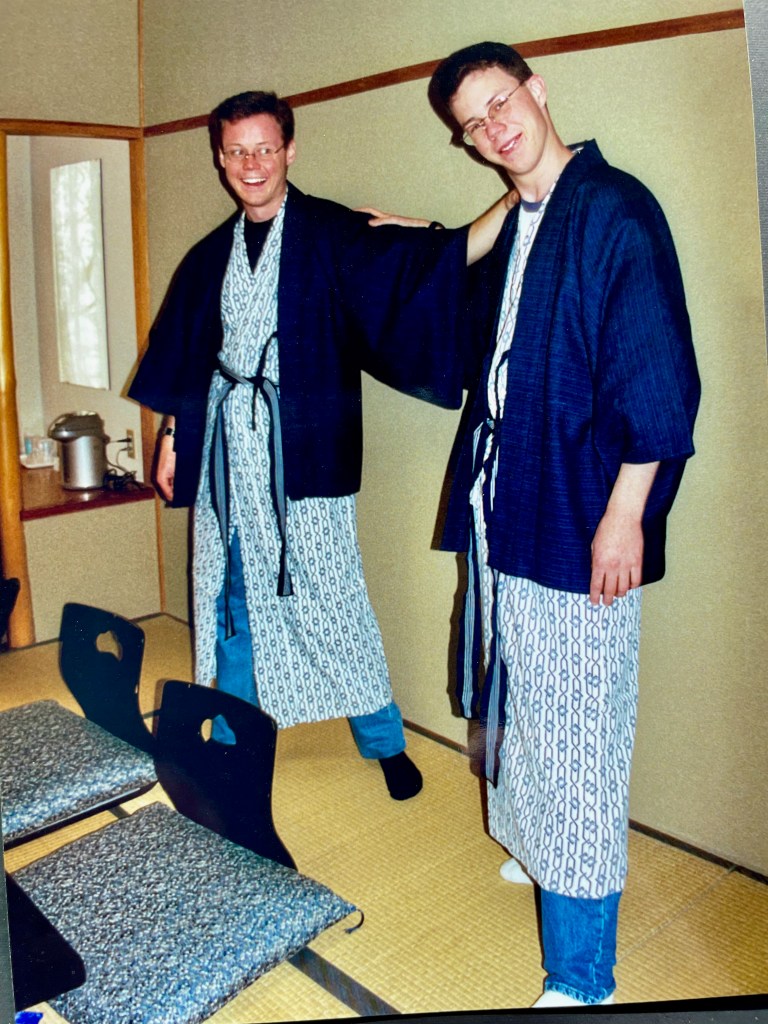
The youngest son advised our bedding would be in the cupboards. We decided to sort that after finding somewhere to eat.
On our return, the eldest son opened our room door, and then quickly retreated into the hallway, exclaiming in shock, ‘WRONG ROOM!” How could it be the wrong room? We took another look. It was our room – it just looked different to how we had seen it before we left for our meal. The table and cushions were tucked away by the window, and staff had laid out three plump Japanese futons for us in the centre of the room.

On a hotel postcard showing Mt Fuji photographed from the Sunnide, I wrote to my husband the next day: “This is the view we should have had from our window here of Mt Fuji. Unfortunately, it’s a wet, misty day and the mountain is somewhere in the cloud. Luckily, we did see it on our approach yesterday – Mt Fuji complete with a snow cap. We have also just had two days in the Japanese Alps with snow and picture perfect blue skies. A real white Christmas! Christmas is celebrated big scale here – more decorations than in Australia. We are having a great time. Love Japan! T and the boys.
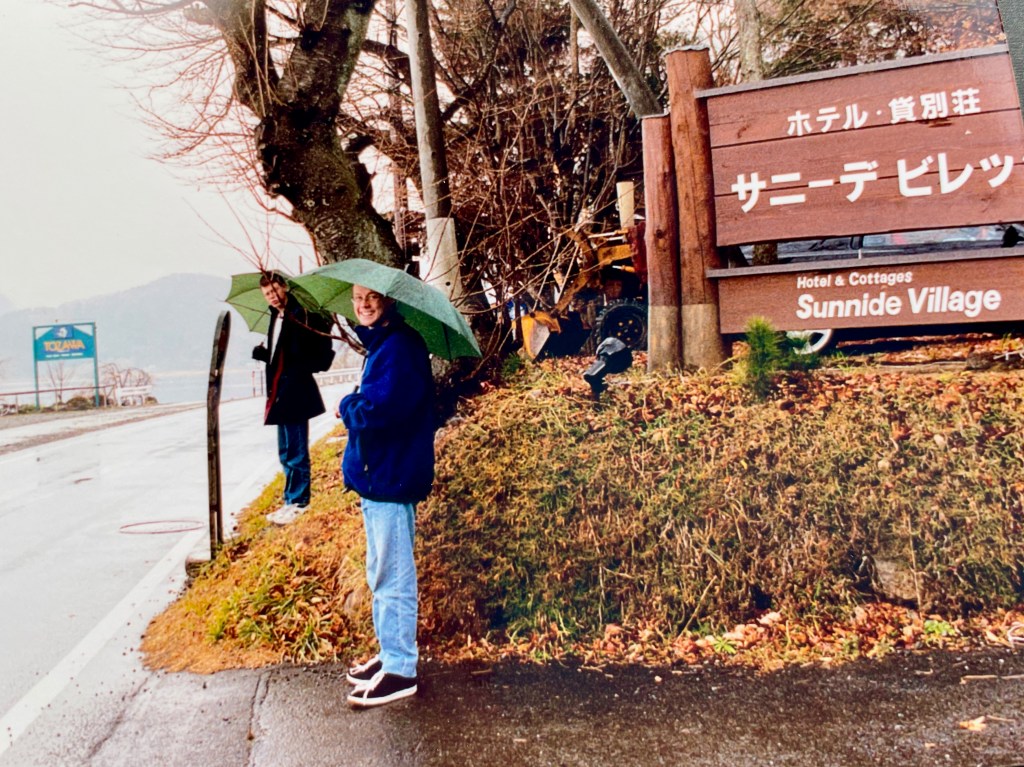
Rain continued, and we borrowed umbrellas from the hotel to explore the town. Boys being boys, the samurai spirit overtook my sons who decided to have a friendly sword contest with the umbrellas, and one brolly was accidentally broken. They searched shops anxiously to buy a replacement, but they couldn’t match the hotel umbrella. In the end, they embarrassingly fronted up to reception with the broken brolly, offering profuse apologies. No mention of the ‘sword’ battle! It seemed too difficult to explain to staff who spoke little English. The staff were lovely, indicating with a smile that everything was fine.
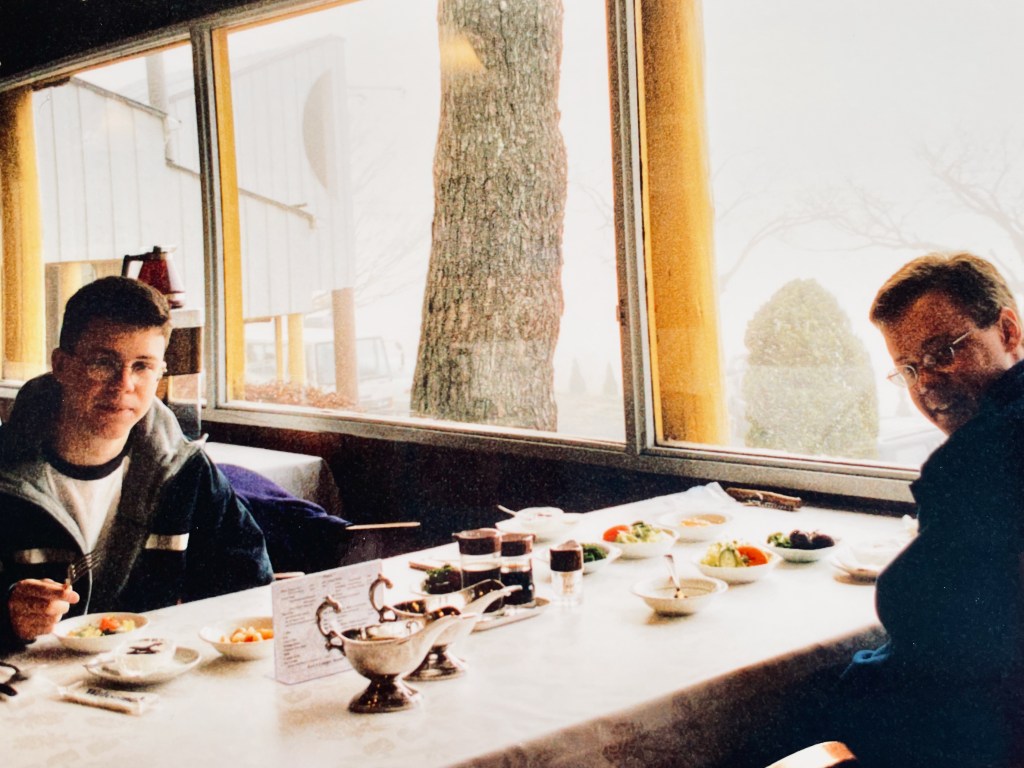
On our second morning at the hotel, we went to breakfast to find that only one other guest, a Japanese businessman, was in the hotel. It was a Monday, and weekend Japanese visitors had all gone home. The buffet was off, but the Chef cooked up a wonderful breakfast feast just for us, complete with silver sauce jugs.
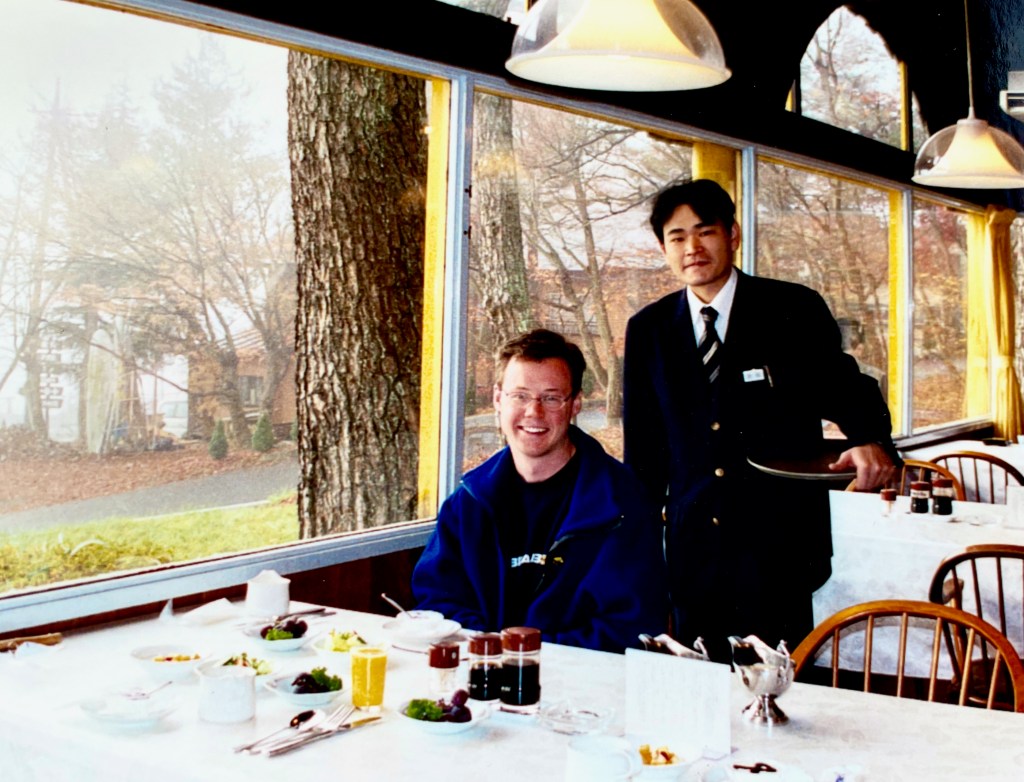
As we were half way through our meal, staff rushed up to our table and urged us to follow them outside.
And there she was, in all her glory – Mount Fuji. The clouds had parted like curtains on Opening Night at the Theatre, and and what a show stopper this one was – Fuji reigned supreme over the Lake, whispers of cloud floating about her like the edges of a regal robe.
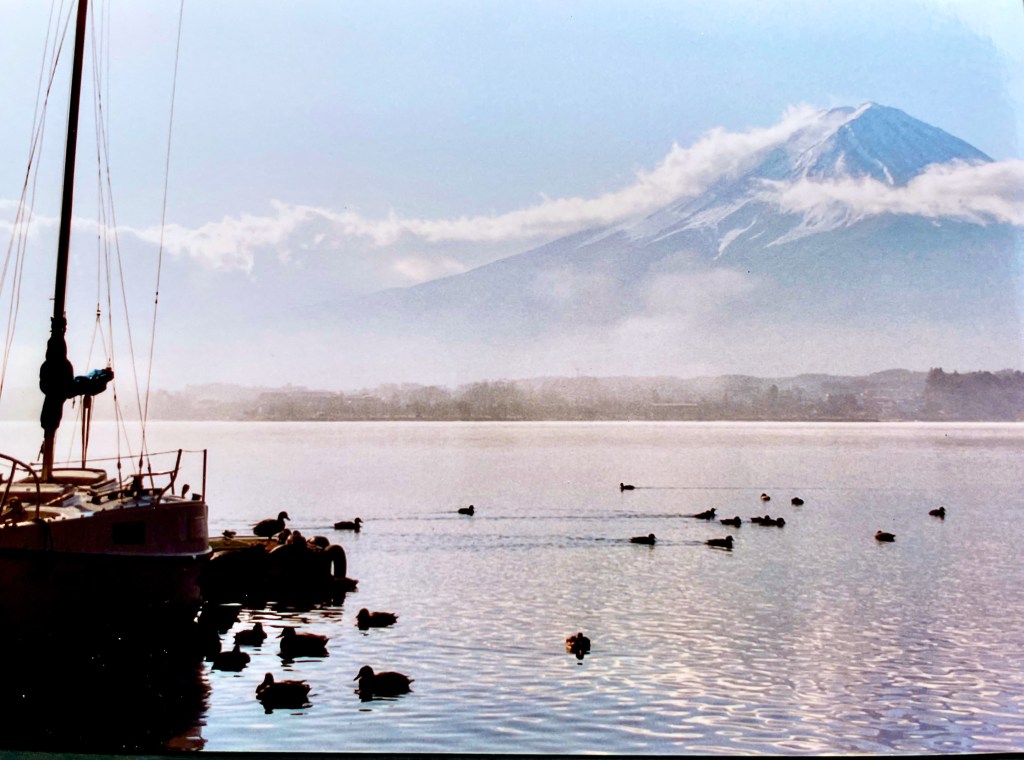
A fitting finale to our trip. Within two days, we were back in Australia with some wonderful memories. I vowed to return to Japan. My heart had been captured. But it wasn’t until 2017, when my husband and I retired, that it finally happened.
Husband MJ has joined me for all of the trips since the first one, and loves travelling in Japan as much as I do. We still travel mainly by rail, independently plan our trips and try to find out of the way places, off the beaten tourist track. Google translator has been a game changer for us, enabling us to explore Japan without worrying too much about the fact that we don’t speak or read Japanese. A smile and knowing a small collection of courtesy words – please, thank you, excuse me, and may I take your photo – goes a long way towards connecting with locals in Japan.
Kyoto has become particularly special for us as we have made some treasured friendships there, and have seen a side of the city not a lot of tourists get to enjoy. So Takayama and Kyoto remain on our Japan list.
That first trip I took with our sons remains a wonderful memory and introduction to Japan.
Most of the photos in this story were taken before digital cameras, and I’ve tried to reproduce them from the prints taken on our trip.

 Travelling Therese
Thank you so much for sharing Japan with those of us who may never be able to visit, Therese. I look forward to reading about your upcoming adventure! 😊🌸
LikeLike
Thank you. Much appreciated.
LikeLiked by 1 person
Awesome to read about a previous adventure in one of my favourite places. I look forward to your next trip.
LikeLike
Thanks. Writing and choosing photos from my collection brings back the memories for me too! I have one more small story to put out from the last trip… then it will be a while before I start writing about the upcoming trip – my 7th to Japan… around Xmas/New Year probably. New places for me and my blog will include Matsue, Okayama, and Shikoku.
LikeLiked by 1 person
While in Okayama, you might want to check out Kurashiki. I have fond memories of this little place.
LikeLike
It’s on my list as a day trip from Okayama. Unfortunately, it’s a long weekend – so likely to be very busy. However, we plan to get over there by 7.30 for breakfast, and I have organised a volunteer guide for 9.30 to hopefully take us to places a lot of tourists miss.
LikeLiked by 1 person