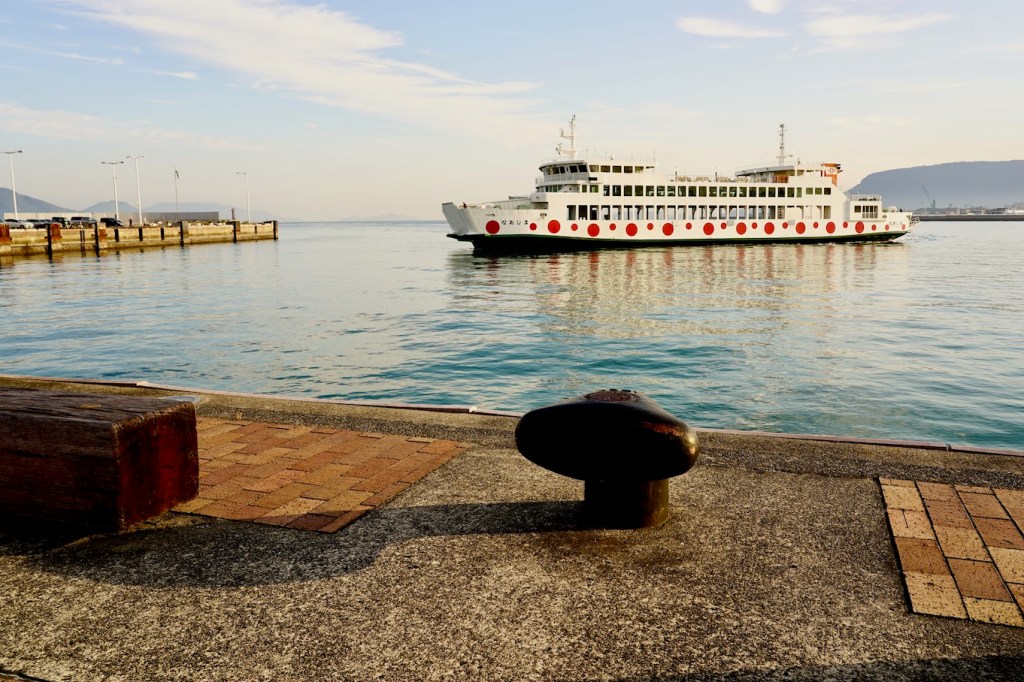
For a long time I have heard about the beauty of Shikoku, the smallest of Japan’s four main islands with its coastlines bordering the Seto Inland sea.
Finally, last November (2024) I made my way there, crossing from the Honshu mainland on one of the world’s longest bridges – 13 kilometres of what is actually series of double deck bridges across a series of five small islands in the Seto Inland Sea.
If you are into bridges, this is the one you must see. It is an architectural and engineering masterpiece, showcasing various structural technologies – part cable-stayed, part suspension and part truss bridge. It carries both a roadway and a railway, and a skilled maintainence team is employed full time to ensure its structural integrity.

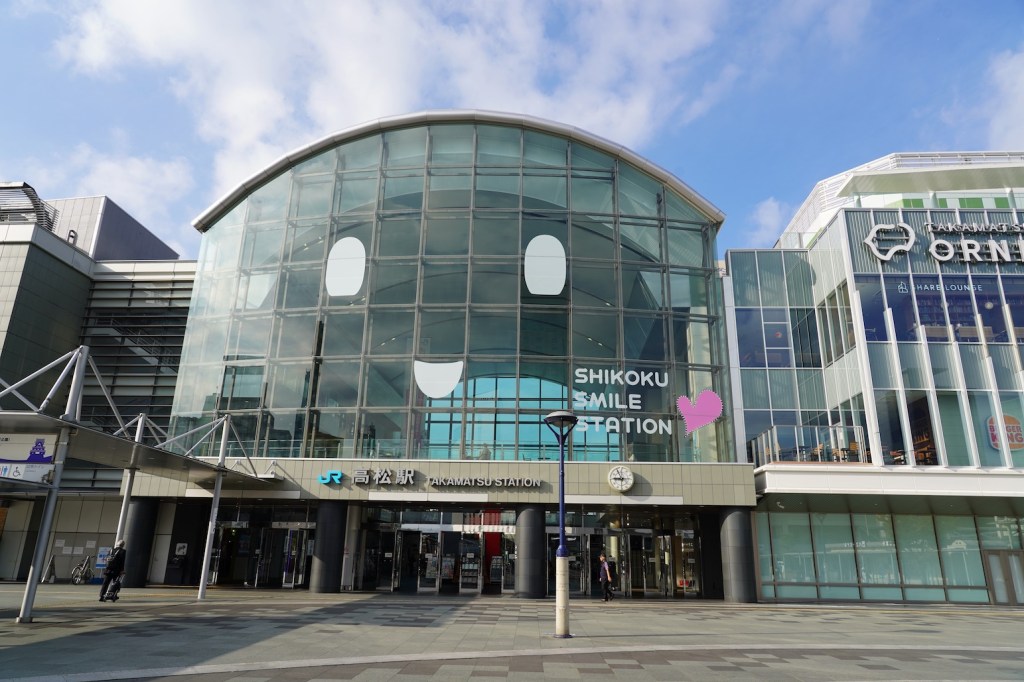
I travelled over it by rail, with the line running under the roadway. My destination was the old castle town of Takamatsu, now an attractive modern city and the capital of Kagawa, Japan’s smallest prefecture. Takamatsu is a place where the railway station is called SMILE and its entry looks like a happy face. Got to love that!
Kagawa is the smallest of four prefectures on the island, serviced by both Japan railways (JR) and private railways. Takamatsu is ideal as a base to explore much of Shikoku, as well as to visit nearby smaller islands in the Seto Island Sea by fairly inexpensive local ferries.
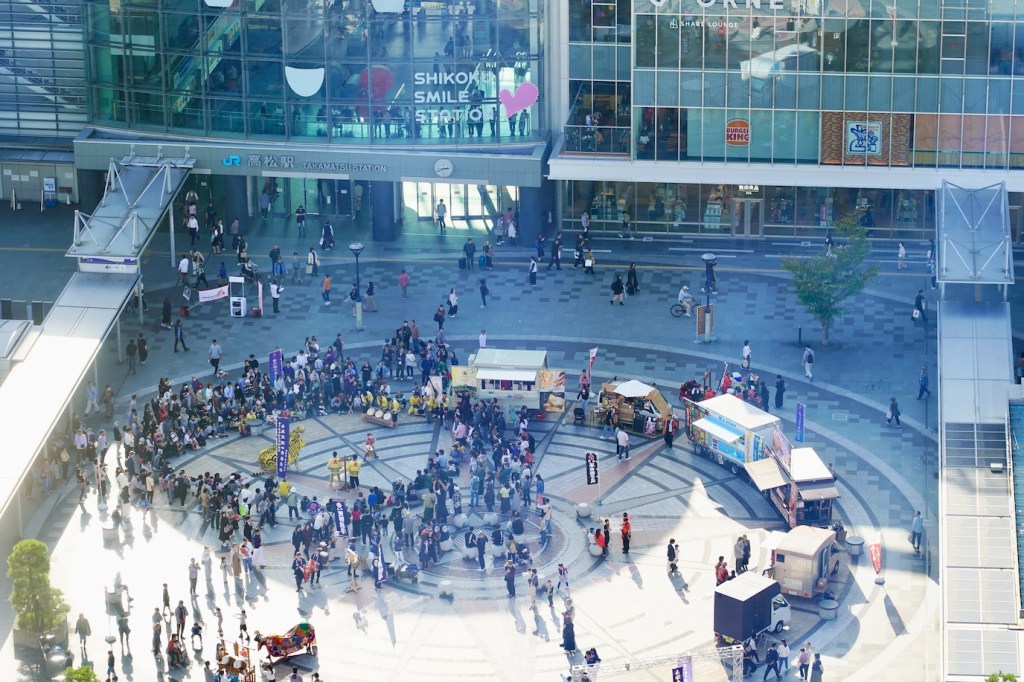
Our timing couldn’t have been more perfect, walking out of the railway station into the middle of a colourful lion dance festival underway in the station forecourt. I’ve never intentionally planned to visit any festival in Japan. I just seem to luck in on them.

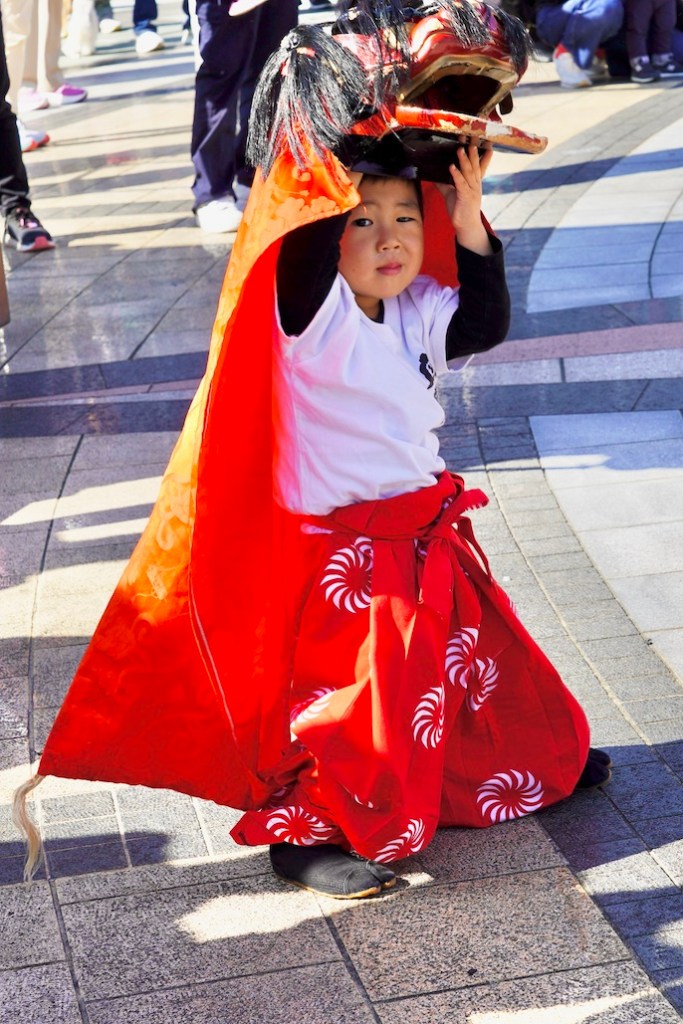
This one, I found out later, is called Shishimai, introduced way back from China and India to Japan. There is a culture of Shishimai around Japan, but Kagawa has the largest number of Shishimai teams (shishigumi). It’s generally a New Year’s event, but in Kagawa it’s an autumn festival dedicated to local shrines wishing for peace and bumper crops.

Kagawa has about 600 teams, and one happened to be performing outside the railway station on our arrival. My attention was taken by a tiny performer on the sidelines, practicing his moves with great seriousness.
Our hotel – the JR Clement – was close by, on the other side of the forecourt. It was my first experience of a JR hotel, and I mention it only because walking into its luxurious reception area, we thought we might be in the wrong hotel.

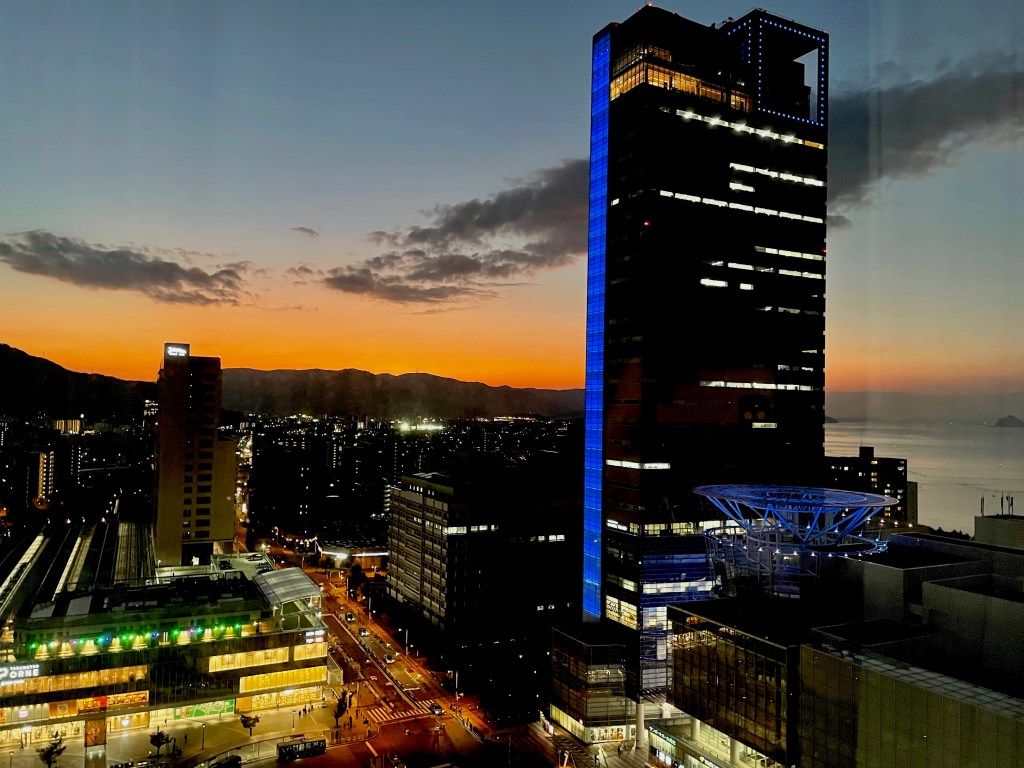
Our economy double room was costing just over $200 Australian a night, but this hotel looked a lot more expensive than that. We joked they might be accommodating us in an under the stairs cupboard! In fact, we were given a delightful room up on the 17th floor, with two windows providing views of the railway forecourt with its Lion dancing festival underway, the city nestled by beautiful mountains and its magnificent harbour looking out onto the sparkling Seto Inland sea, very reminiscent of the Mediterranean.
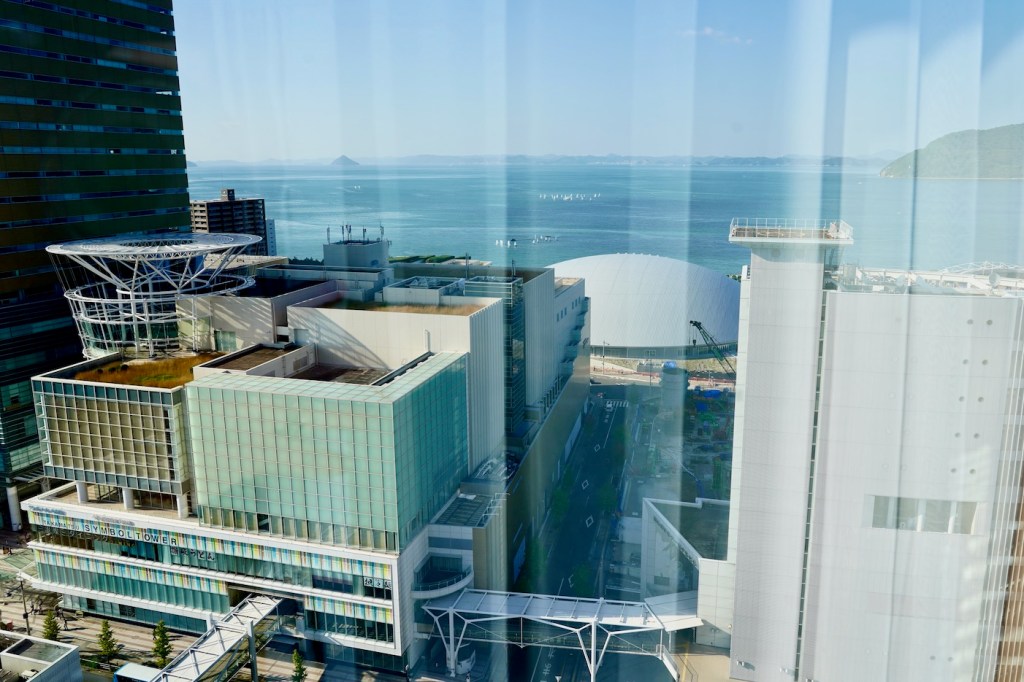

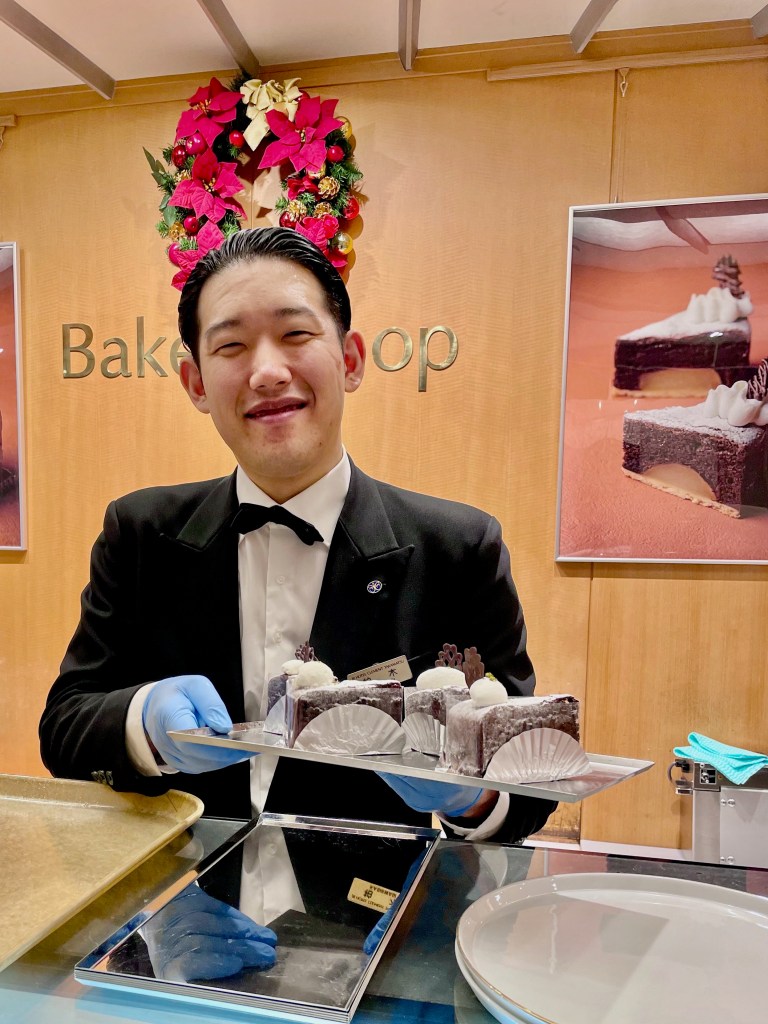
The JR Clement hotel is ideally situated, with plenty of eateries and coffee shops close by, city attractions, access to the port for cruises to nearby islands, and the railway for day trips. It also has the most amazing in house bakery!
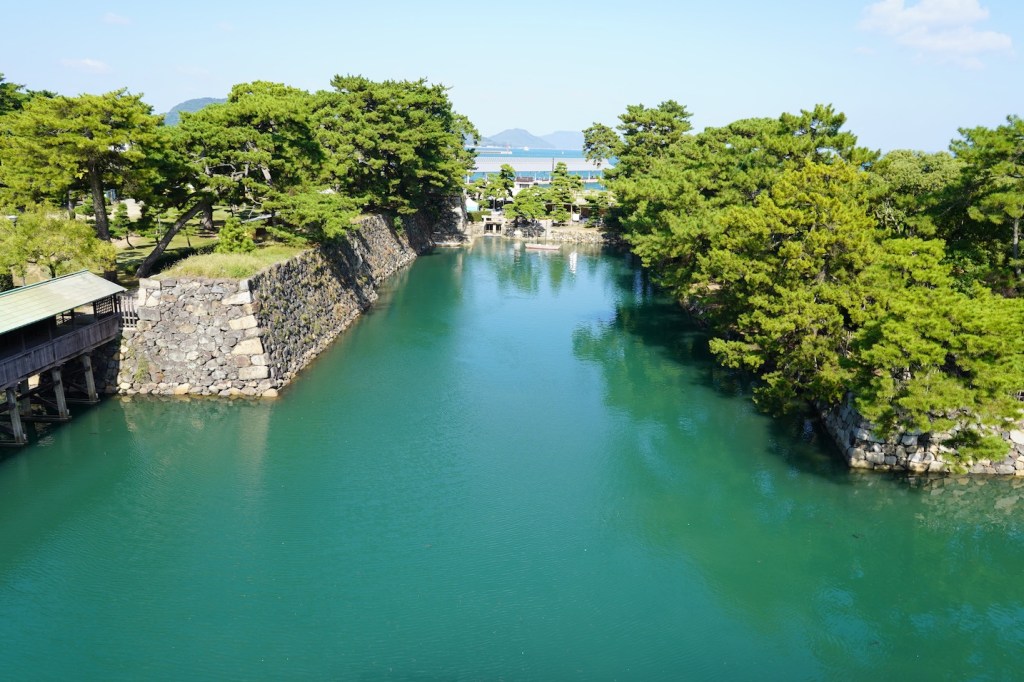
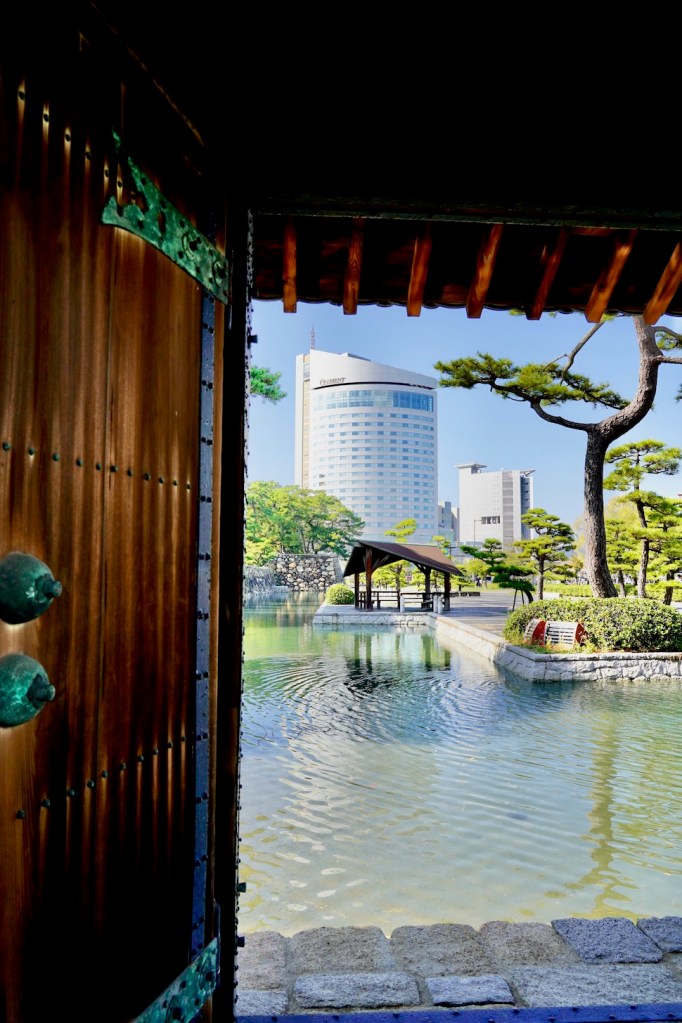
We kicked off our Takamatsu visit with a short walk to the nearby old castle, built on the waterfront in the late 1500’s, with saltwater moats that draw directly from the sea. It’s mostly in ruins now, but there’s still plenty to see from impressive walls to turrets, gates and gardens.
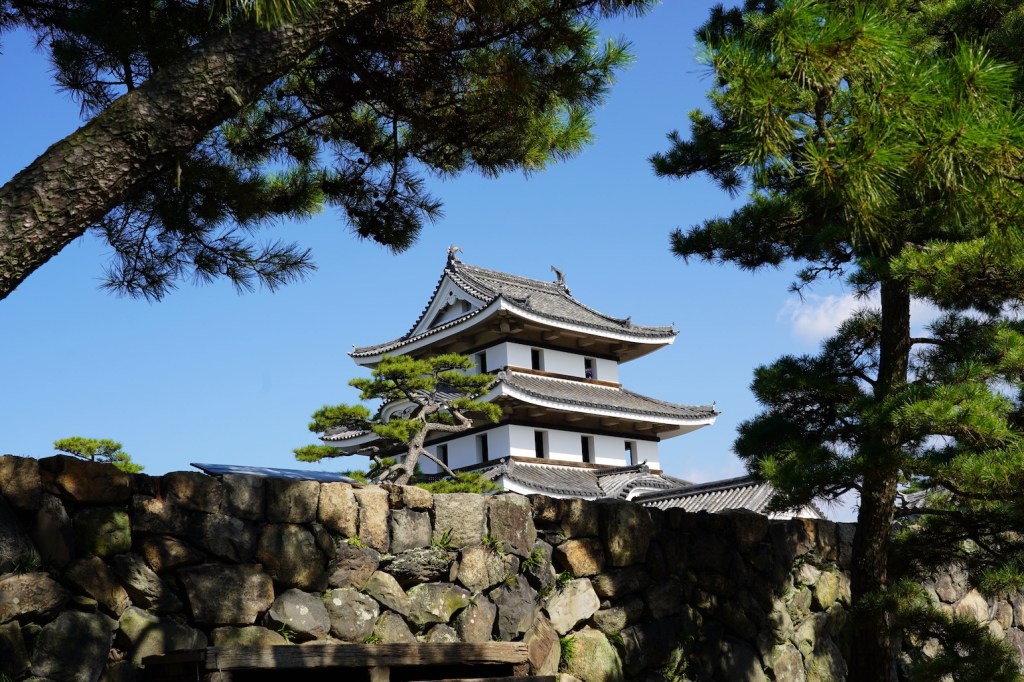
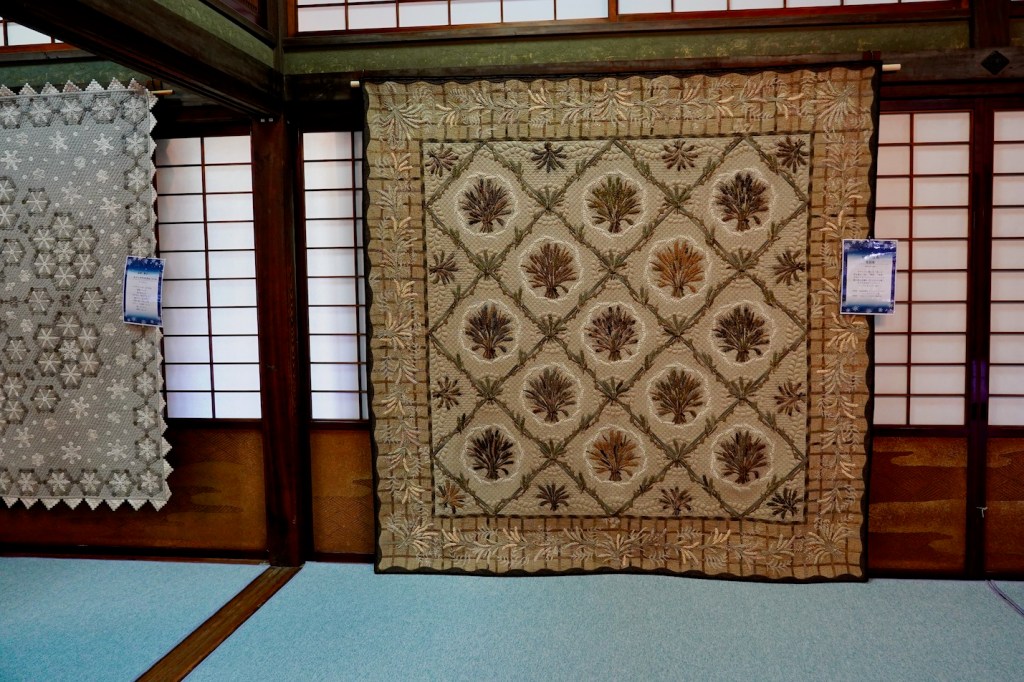
At the center of the castle park is the beautiful Hiunkaku building, contructed in 1917 as a residence and governmental office. It’s now used as an exhibition space and a community hall, and on our visit it was hosting a hand crafted quilt show. I am not a needle woman myself, but the work there couldn’t fail to impress.
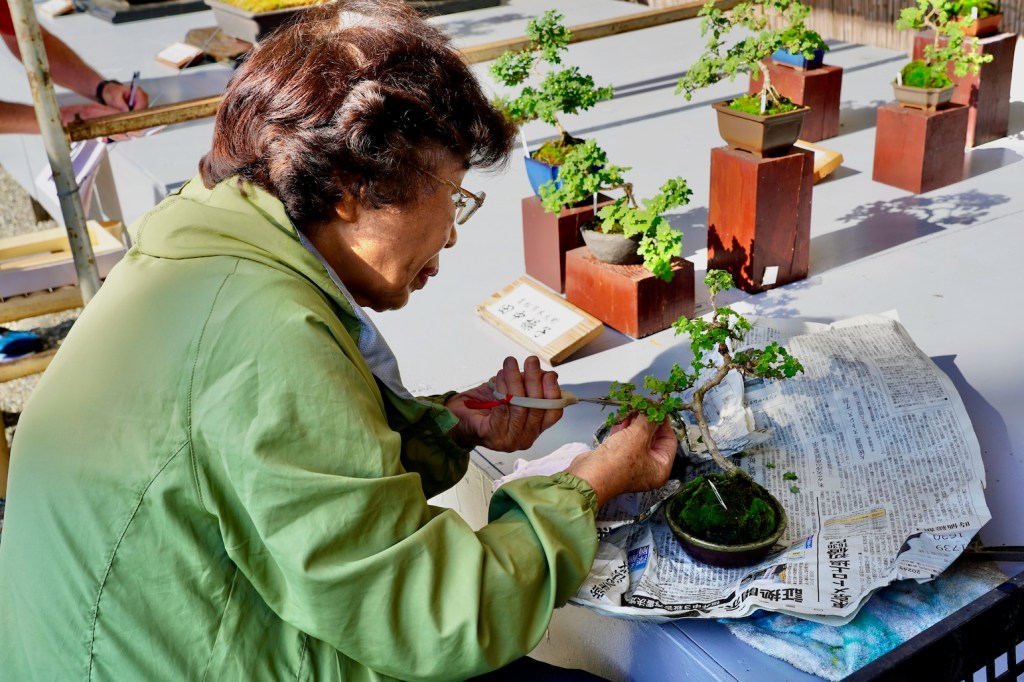
In the castle gardens was also a bonsai display, with expert demonstrations. I’m unsure if this is a permanent feature in the gardens, or just our lucky day.
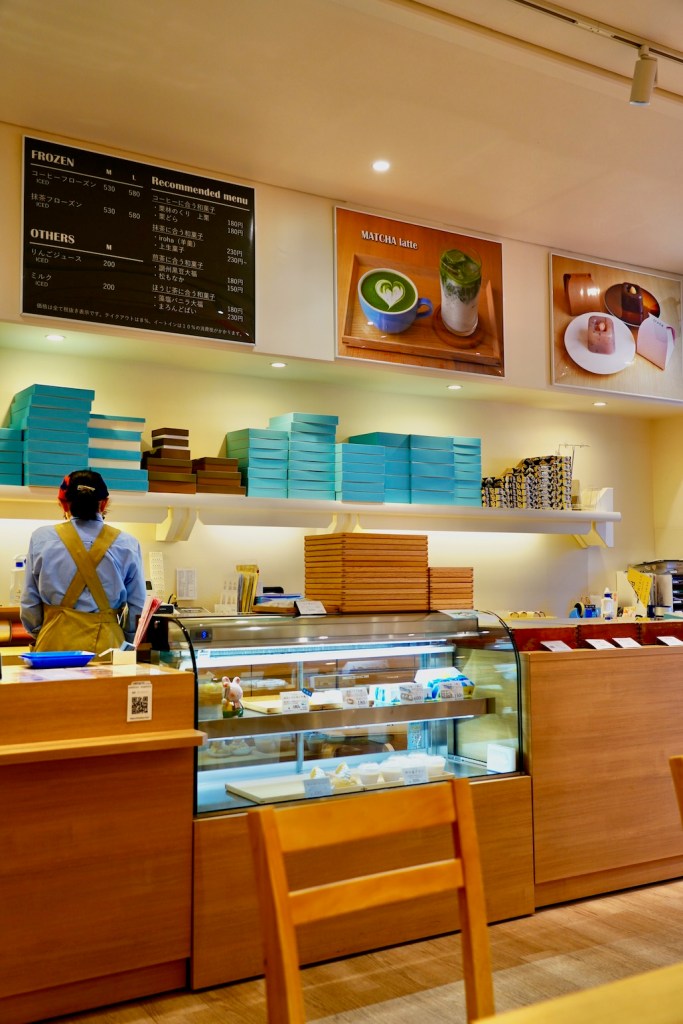
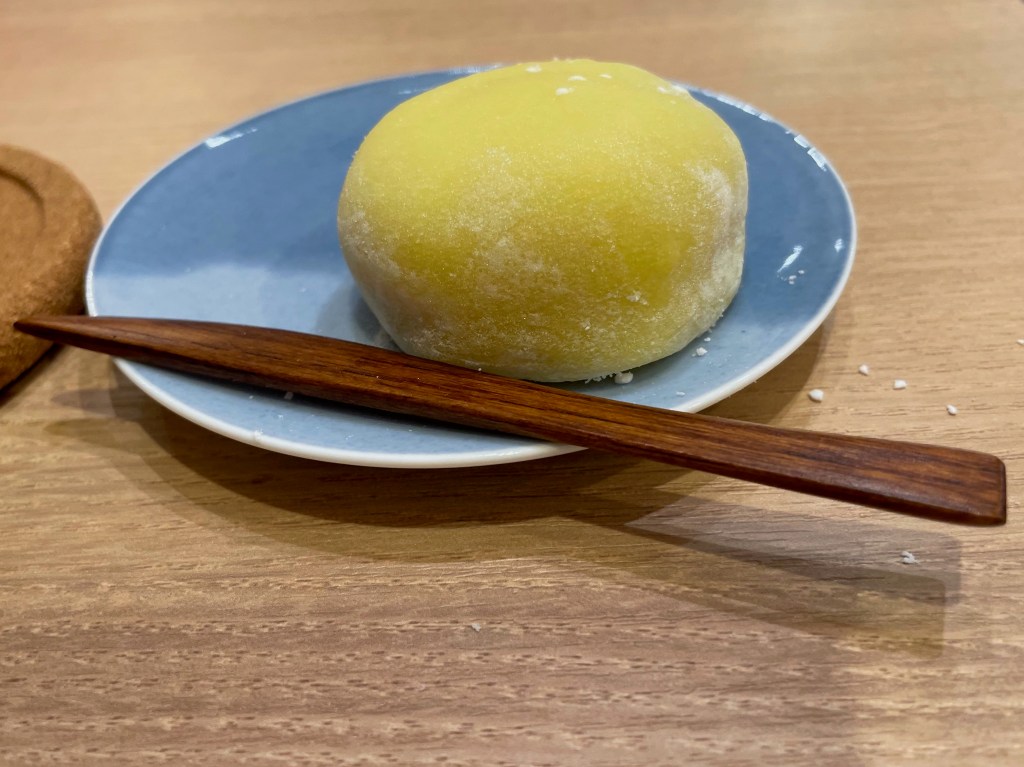
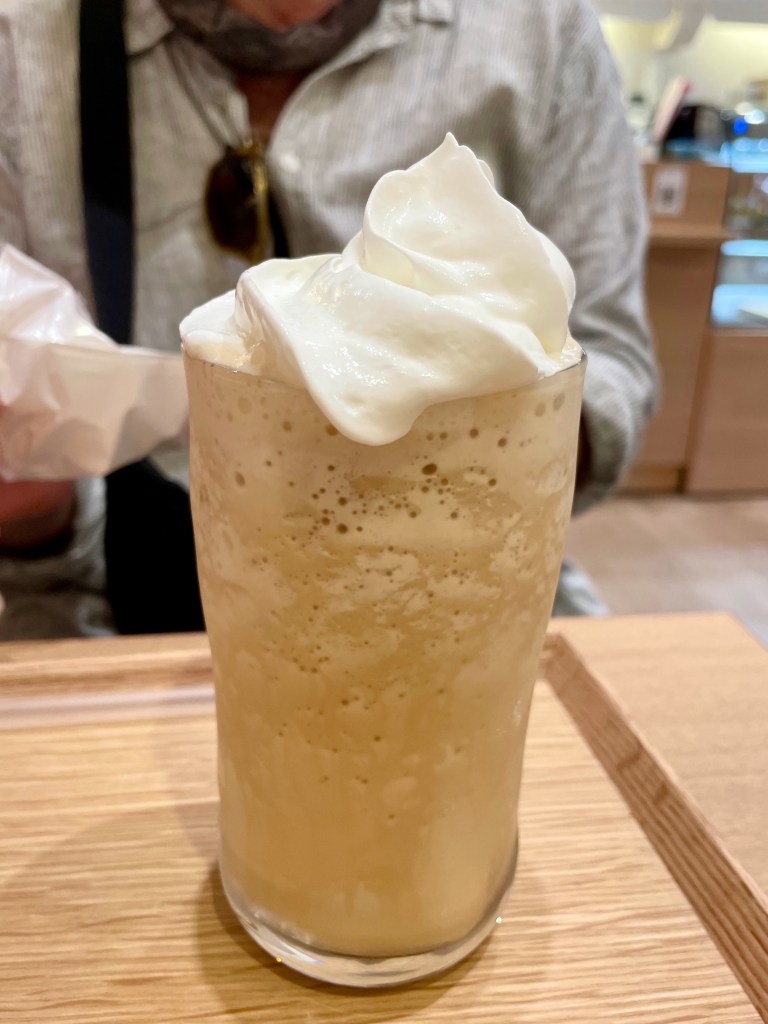
En route back to the hotel we stopped by one of the wonderful desert cafes in Takamatsu for iced coffee and mocha! Oishi! Takamatsu has a lot to offer on the foodie scene.
RITSURIN KOEN GARDENS
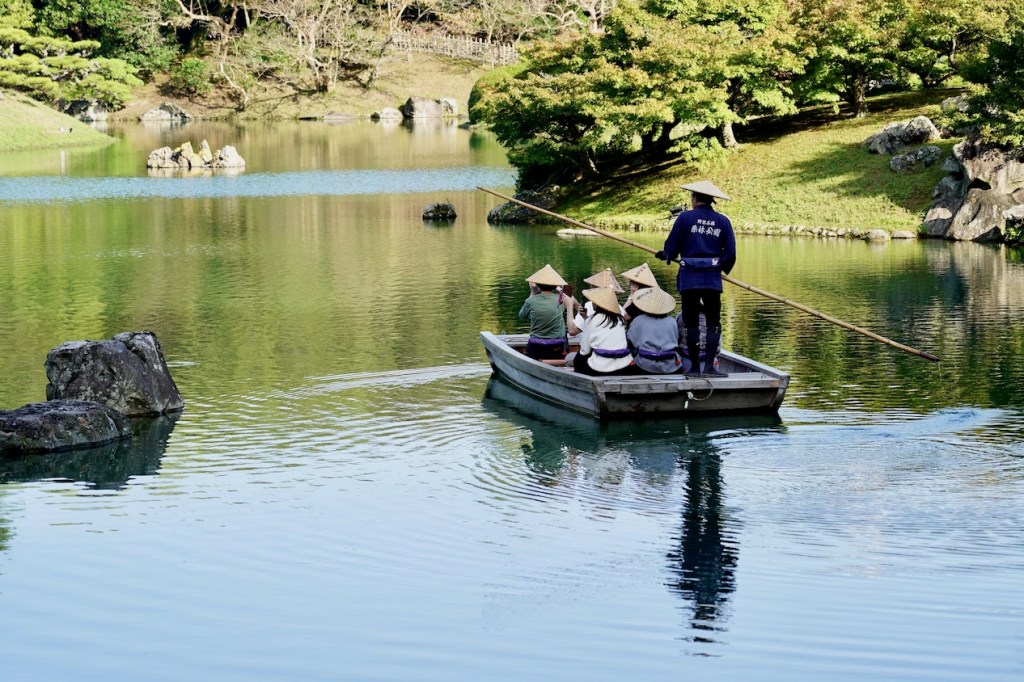
The following day we headed for the city’s famous Ritsurin Koen Gardens, built by local feudal lords during the early Edo period, and regarded as one of the three best gardens in Japan. It’s an easy short rail trip from the harbour area by either JR or a local private railway company.
Personally, it isn’t a favourite garden of mine. Were my expectations too high, or was it that, on the day I visited, the gardens were not at their best? A friend had visited in the Spring and fell in love with its many ponds, hills, trees and beautiful pavilions. She couldn’t understand that I wasn’t also in love with it.

It’s a massive park, separated into a western gardens side and a Japanese gardens side. So expect a lot of walking. With my knee problems, it was challenging. We started at the western gardens side that was looking – shall I say – dull. Features such as its famous Iris gardens were out of season, with no flowering. I suspect it’s much more attractive in spring and summer.
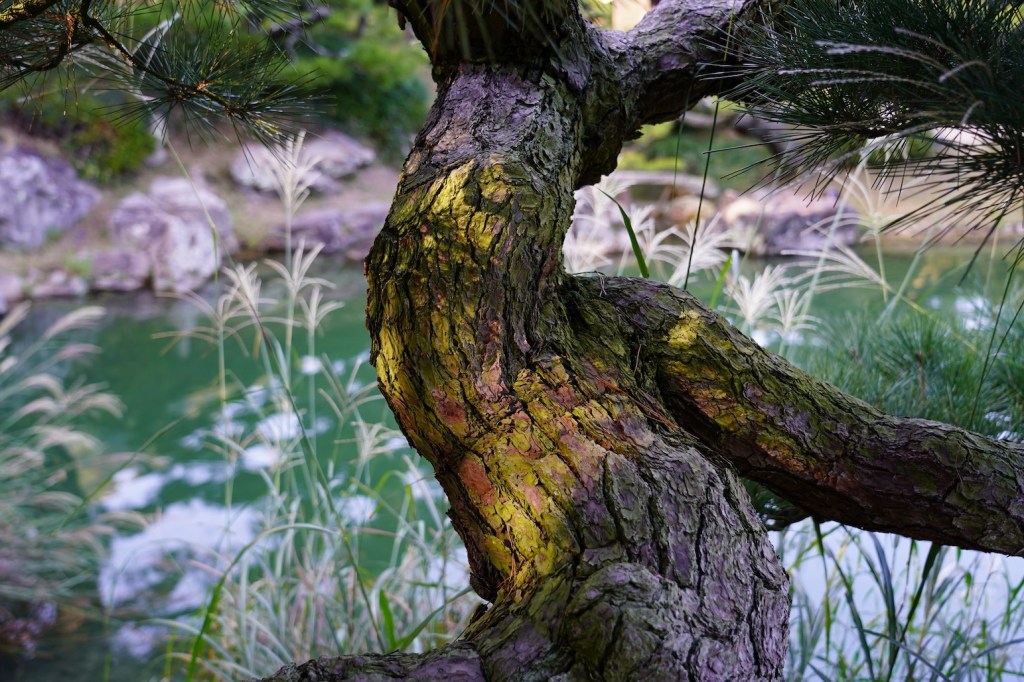
By the time we walked through to the Japanese gardens side, my crappy knee was giving me problems. How much further, my mind raged! Fortunately, the zen kicked in, and I suddenly found lots of lovely scenes, with waterways and beautiful autumn colours, to photograph. The Japanese gardens were spectacular, although they had attracted quite a few local tourists. I guess they all knew to skip the western side!


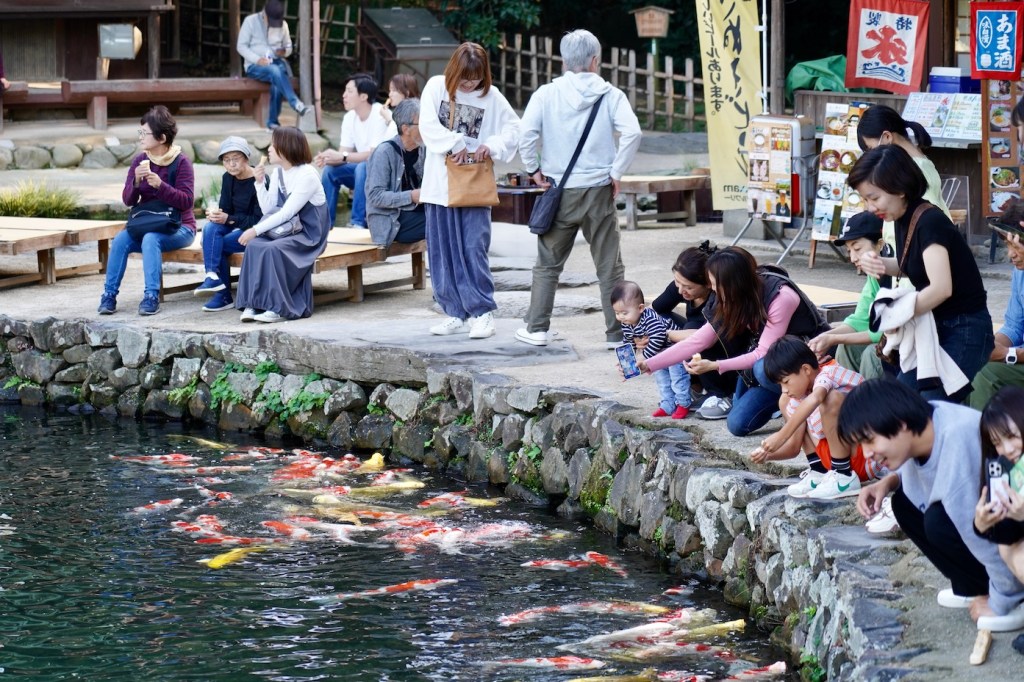
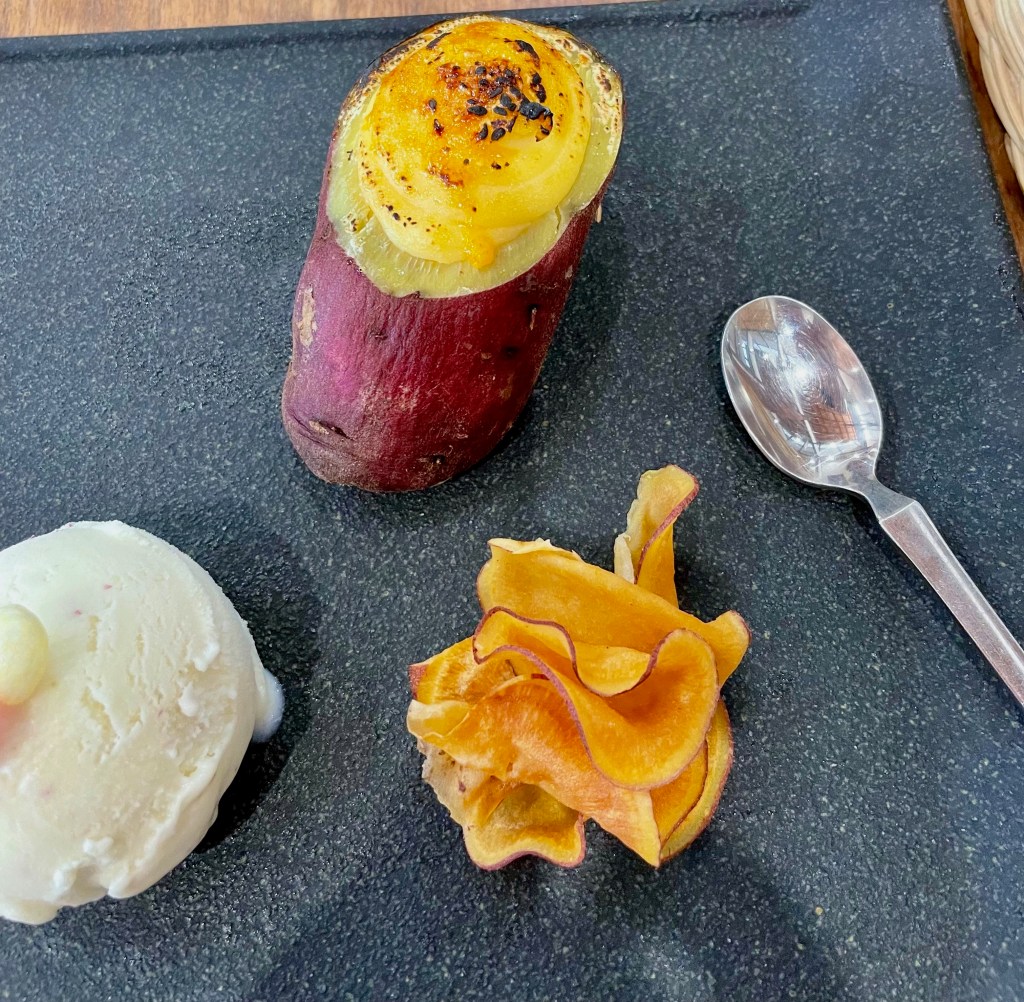
We had planned to lunch at the Garden’s main cafe, housed in an architecturally interesting modern building. For some reason, nothing was being served on the day of our visit, other than deserts. Did I turn away to find another eatery? Don’t be silly! The desert menu looked far too good, if not a little unusual. Mine centred on sweet potato, and I kid you not, it was very good! Who knew sweet potato could be so well used in a high class desert! MJ went for a dish that seemed to gather in all sorts of Japanese ingredients .. a little mochi, Japanese dango, icecream, and elements we couldn’t identify. But he said it all tasted good.

Inside the Gardens are a number of facilities, including a folk museum, a few touristy shops and a few traditional rest and tea houses. Do I recommend Ritsurin Koen ? Yes, if you are on Shikoku, though I personally wouldn’t cross the country for it – at least not in autumn.
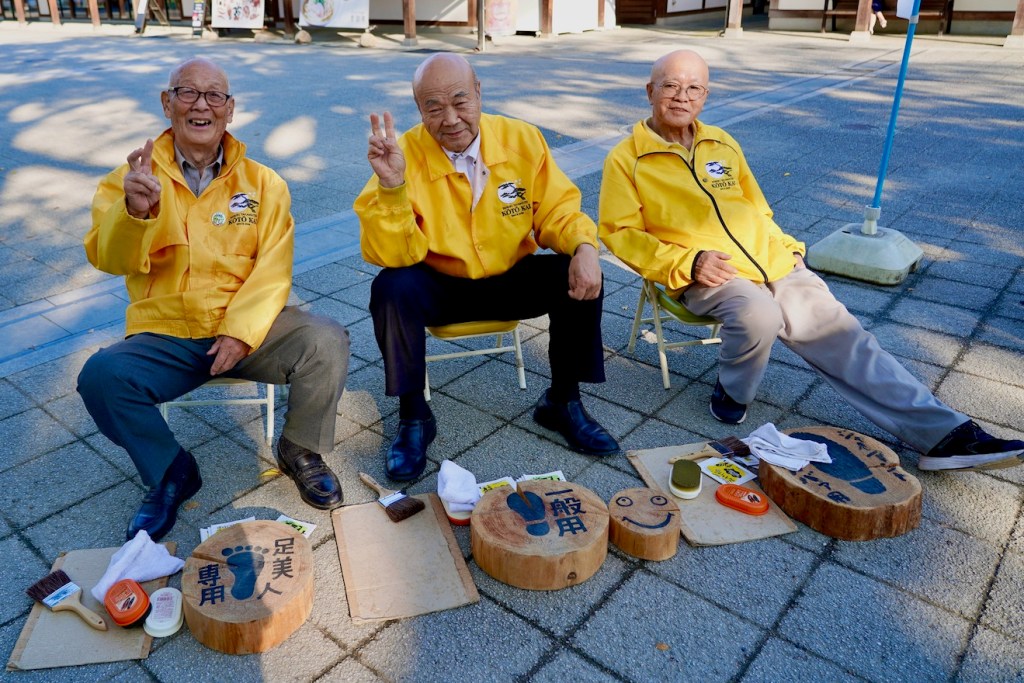
Did I mention the Gardens’ shoe shine guys? Retired gentlemen who kindly posed for me, providing my best photo of the day!
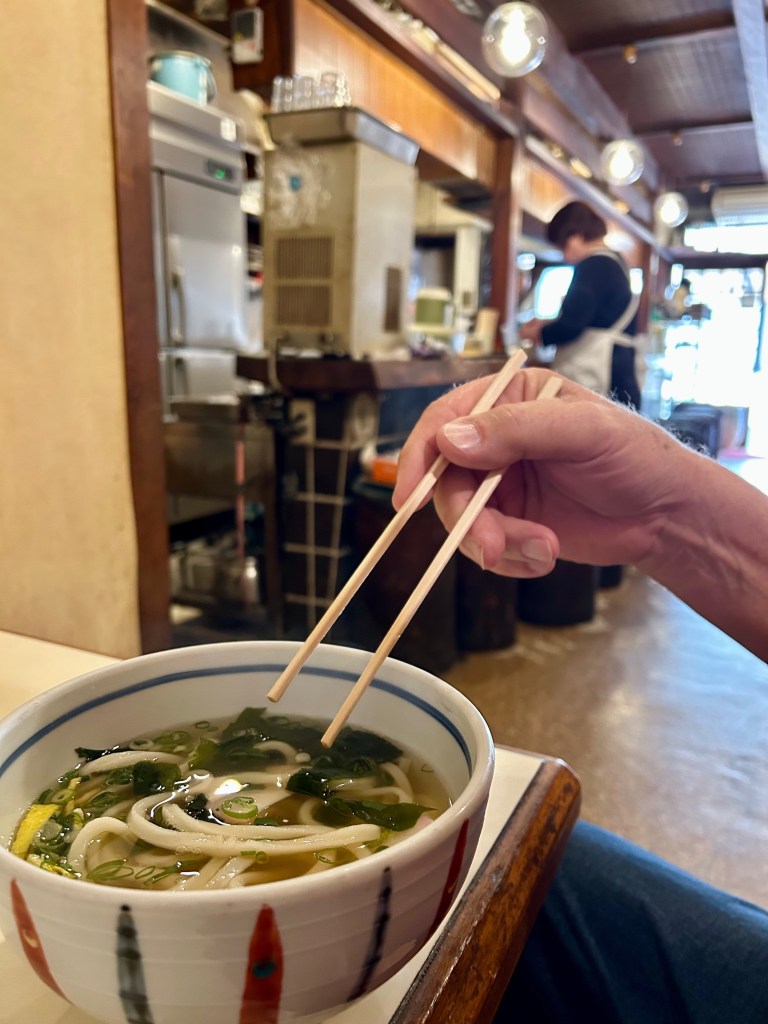
MJ had heard of a good soba noodle place, so the following day we went in search of it for lunch. Either it was closed or we were in the wrong street, but we never did find it. Instead, we wandered into this tiny ramen shop run by a mum and pop duo, who spoke no english. It looked like it had been there forever. The menu was up on the wall, and all we could make out was that dishes were numbered – ‘mama’ recommended Number One. Did that mean it was their number one dish in popularity? Well, she seemed to know what she was doing, so we all got number one each. Incredibly cheap, incredibly delicious!
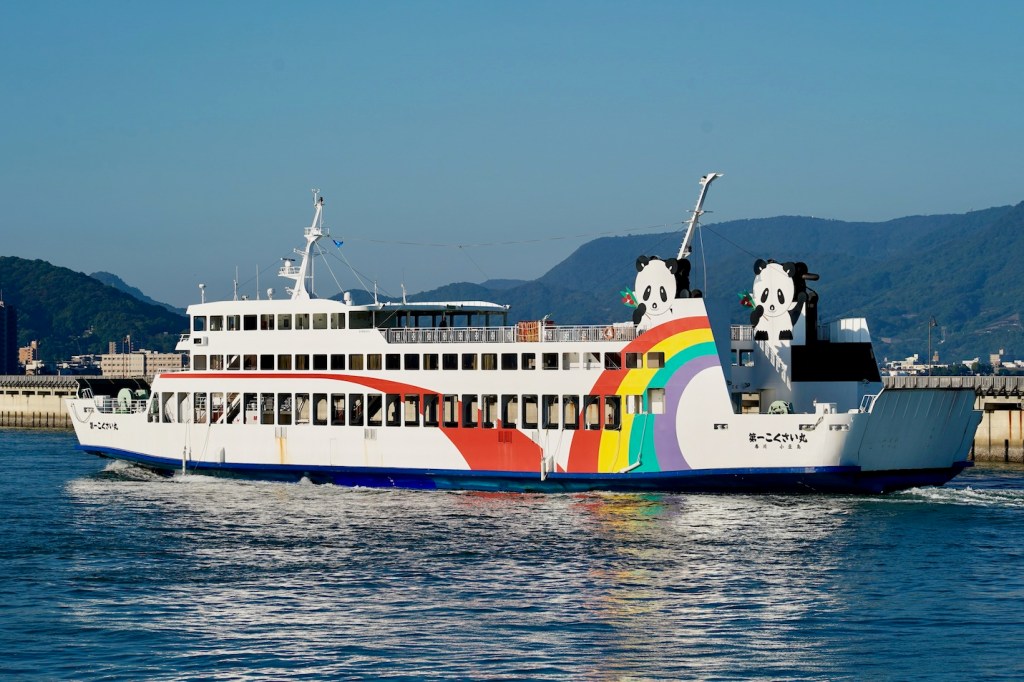
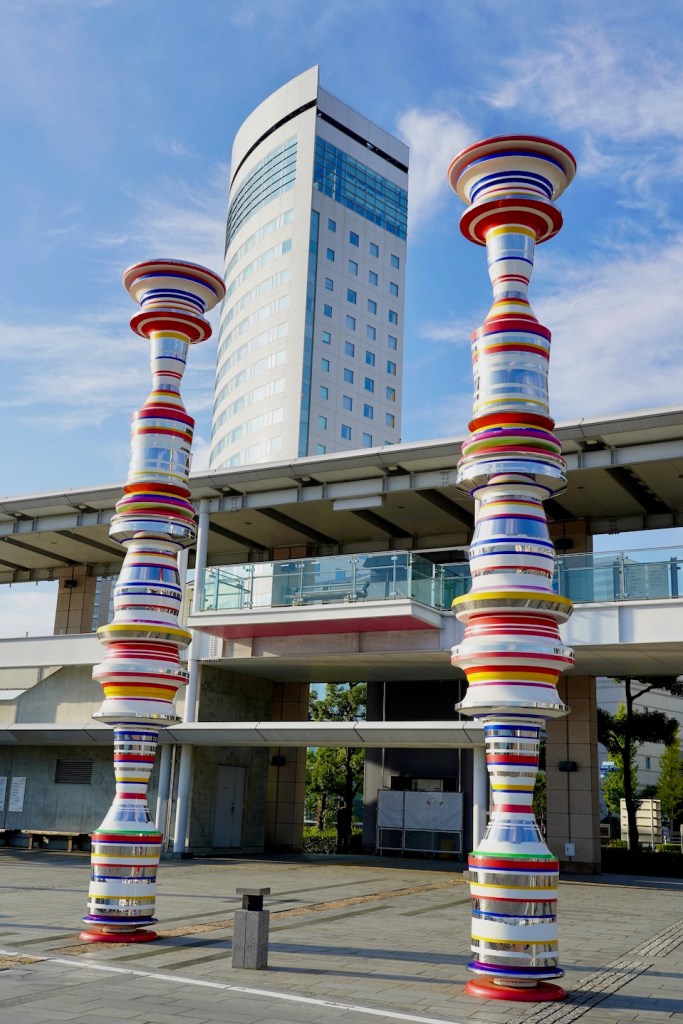
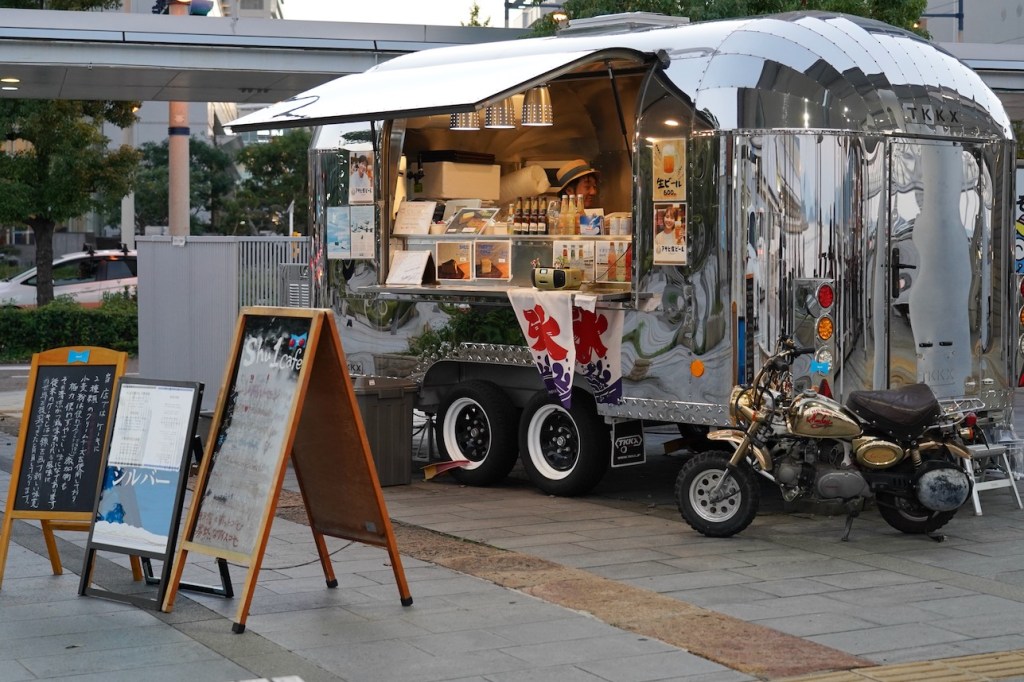
Although we had three days in Takamatsu, our time in the city was more limited than that as we had already planned to take trips out of the city, heading out one morning to nearby islands by ferry – there’s an abundance of them to visit and the ferry prices are cheap.
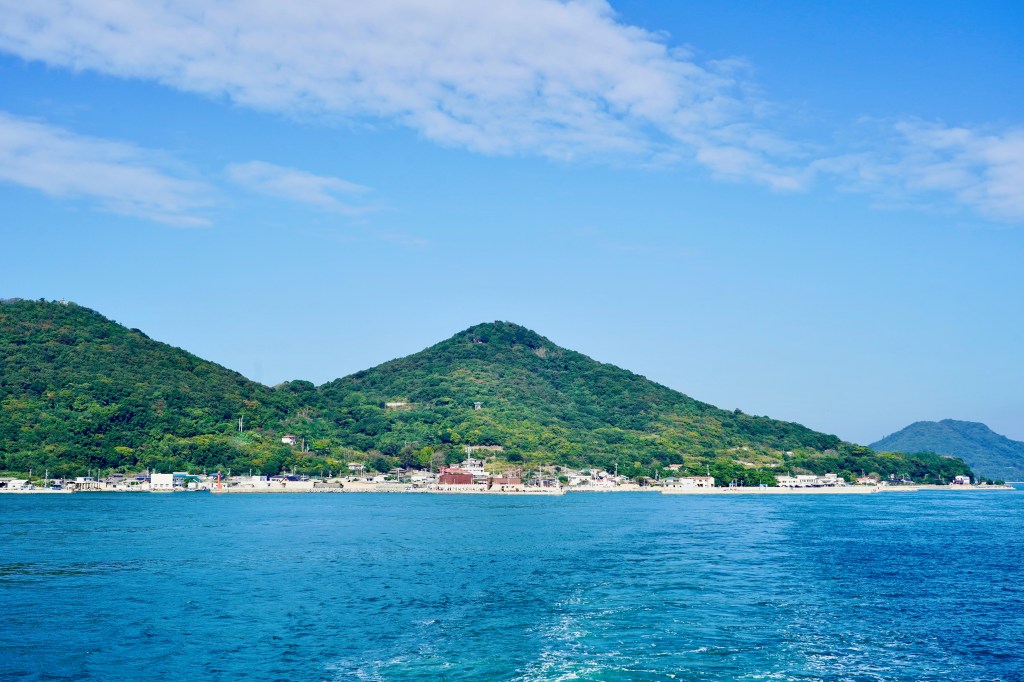
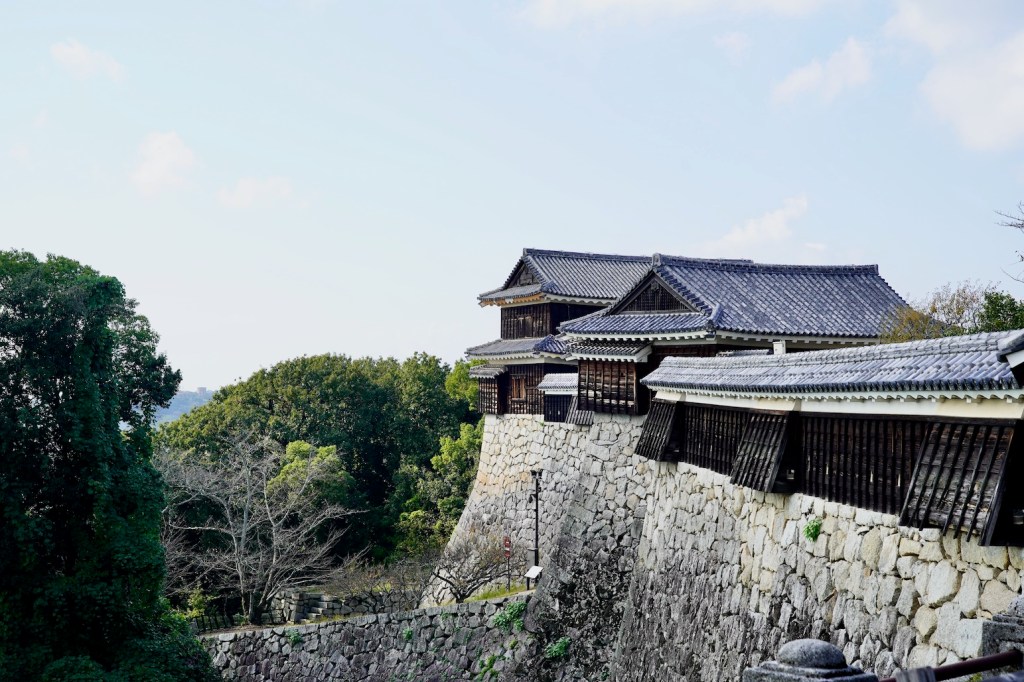
On another day we took a day trip by rail to the city of Matsuyama – the biggest city on Shikoku and home to one of the twelve Japanese castles to still have its original tenshu (highest tower in the castle). It was built in 1603, with some brilliantly thought out fortifications to hold off enemies. I’m unsure how it is acclaimed as having its original tenshu, as the original was a five storey building that was hit by lightning. So today, it only has three storeys. But I guess that’s still original. Matsuyama is one of the most stunning and most fascinating castles I have seen in Japan, and I have seen quite a few on my Japan journeys.
Location, location, location as the ancient Samurai real estate guys surely said! It’s perched on top of a mountain overlooking the city. No, I didn’t push the crappy knee up the mountain! You can certainly hike a very winding trail to the top – it was designed to confuse and exhaust any attacking enemies. Fortunately, these days there’s also a chair lift and cable car!
Both these trips deserve a story each, so I will write about them in the coming months.
Our stay on Shikoku was far too short – a drop in the ocean when it came to what the island offers to the visitor. We needed a lot more time to explore and discover. It’s a place where you could centre your whole Japanese holiday on, with an amazing variety of things to see and do.
So even though we now have been there, it hasn’t been crossed off my list of places to see in Japan. Because I really just got a taster – a glimpse. Enough for me to resolve that I have to go back!
 Travelling Therese
w
LikeLike
wow
LikeLike
It’s a very special part of Japan. And we barely touched what you can see and do there. The centre of Shikoku is very mountainous – next time (well, the time after that LOL)
LikeLike
I’d never heard of Shikoku and love that your Japan adventures take you far and wide around the country. It looks like a lovely place! $200 a night- what a steal in this economy. I hope you do go back and find that soba restaurant. I love the desserts with mochi, beans and ice cream.
LikeLike
It’s easy to get to. South of Kyoto about 1.5 hrs by train to Okayama, then train over the bridge to Shikoku. Hotel prices in the big cities have risen substantially since covid. We have had to abandon our usual hotel choices in Tokyo because of their cost, and have gone to a new location for our upcoming trip. But once you venture to other places there are good deals. I mainly use Qantas for booking hotels in Japan, watching out for their frequent flyer specials. And a Japanese booking agency JAPANICAN. We mainly stay in average no frills business style hotels – rooms not large, but not smaller than 18 s. I look for one treat stay per trip. And sometimes we are at japanese inns – ryokans. In the Japanese spring this year we will average $210 a night over 3 weeks – that goes from a very basic small hotel in a remote area to a treat resort seaside stay. Not going to Shikoku on the next trip..maybe the time after that if these old bones can do it
LikeLike