
I’ve passed through Narita Airport many times in the last few decades. Usually on arrival, I’m straight onto the Narita Express train into Tokyo, and vice versa on departure.
That changed last year when a fellow blogger wrote about a historical and well preserved canal town called SAWARA, a short local train ride from Narita city. On researching Narita further, I found another attraction that also appealed to me – an expansive Buddhist temple complex tracing its roots back to the year 940, and only a kilometre walk from Narita railway station.

So, to finish my November 2024 visit to Japan, I included a two night stay at a central Narita hotel that offered a free airport shuttle to the International airport for my mid morning flight home. No brainer! Time for breakfast – and no long train ride from Tokyo.

Sawara was worth the effort. I wrote about it in my blog story ‘Japan overtourism – not what I see” last December –
https://travellingtherese.wordpress.com/wp-admin/post.php?post=12730&action=edit
Sawara is charming, delightful, known to Japanese, but not well known to foreign tourists who pour through Narita airport, oblivious of the little gem close by. Its lovely canals are the same waterways merchants used 200 years ago to supply Edo with rice shipments. Some Sawara businesses from those Edo times still operate today, including a few sake breweries. And there are plenty of old Edo era buildings to see.

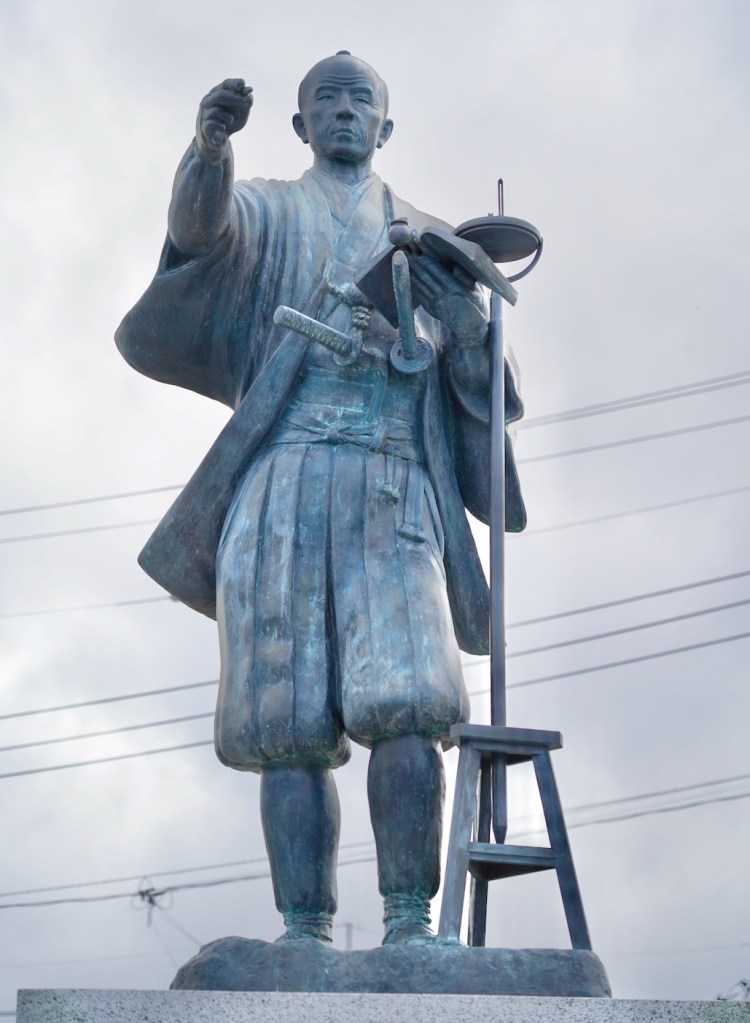
The town also is famous for one of its residents Ino Tadataka, a mapmaker and cartographer who created the first detailed map of Japan based on his mammoth surveying journey in the early 1800’s. He took it on as a retirement project, studying for five years before devoting the remaining 17 years of his life to it. If I was his wife, I might suspect this was an excuse to visit all the best fishing spots in JAPAN!
It is said he traveled 34,913 kilometres, producing detailed maps. Some are accurate to 1/1000 of a degree, and were the definitive maps of Japan for nearly a century. You’ll see his statue as you come out of the railway station, and you can also visit the house he lived in.
I have visited the more famous and popular canal town of Kurashiki, near Okayama -and I rate Sawara as the better place. I really liked Kurashiki, but it can become packed with tourists. Its canal is also a lot shorter than the waterways of Sawara. You are definitely going to get a better canal boat trip in Sawara.
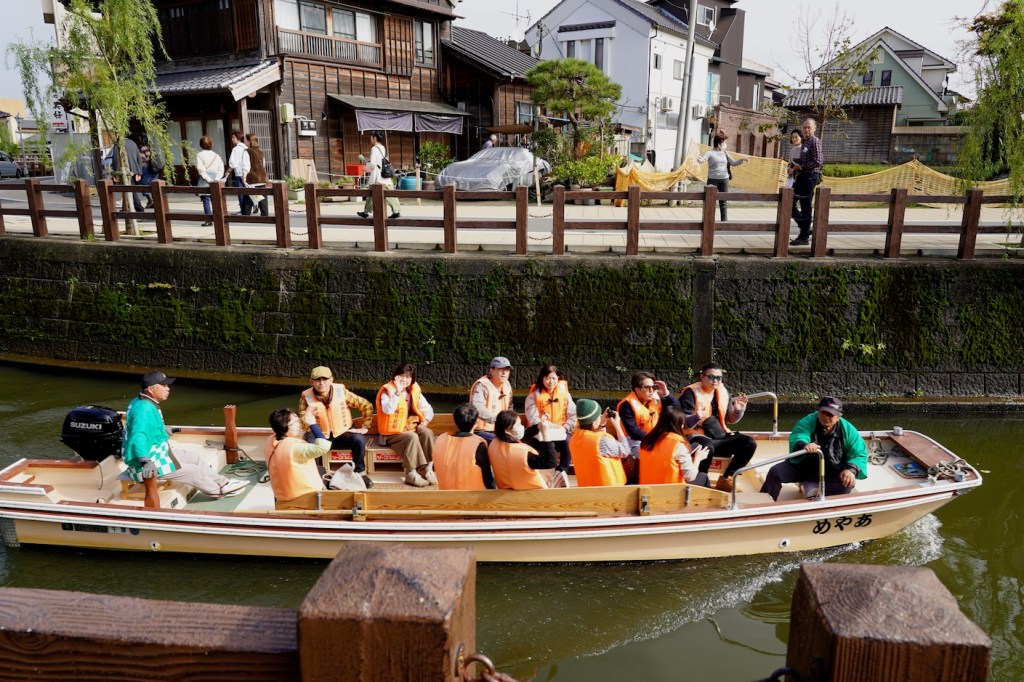
One canal bridge is particularly interesting as it releases a waterfall at regular intervals during the day. The original bridge once served as an irrigation channel, supplying river water to the rice paddies where JR Sawara railway Station now stands. When water was needed during the rice planting season, the bottom center and both sides of the bridge were boarded up so that it could carry water across the river through a conduit inside the bridge. When water was not needed, the boards were removed and the bridge would discharge the water into the Ono River.

While we were visiting, a professional photo shoot was underway by the canals, organised by local authories to promote Sawara. Of course, I had to join in with my camera!

There are high end places to stay in Sawara, and they look wonderful – but they were beyond my budget. So basing ourselves in nearby Narita city where there are reasonably priced hotels made sense.
NARITASAN SHINSHO-JI TEMPLE – A special Japan treasure

We didn’t make it to Narita’s Buddhist NARITASAN SHINSHO-JI temple on that 2024 visit. But we got there in May this year, and it is definitely worth the effort. The 800 metre long ancient Omotesando street leading to the temple from the station is lined with shops, cafes, restaurants and take away eateries.

Japanese foods such as grilled eel, rice crackers and Django rice dumplings are all available on the route. You can even see the knife skills involved in preparing eels for the griller.


The origins of the street goes back as far as 300 years ago when it was a busy route for pilgrims and locals visiting the Naritasan temple.
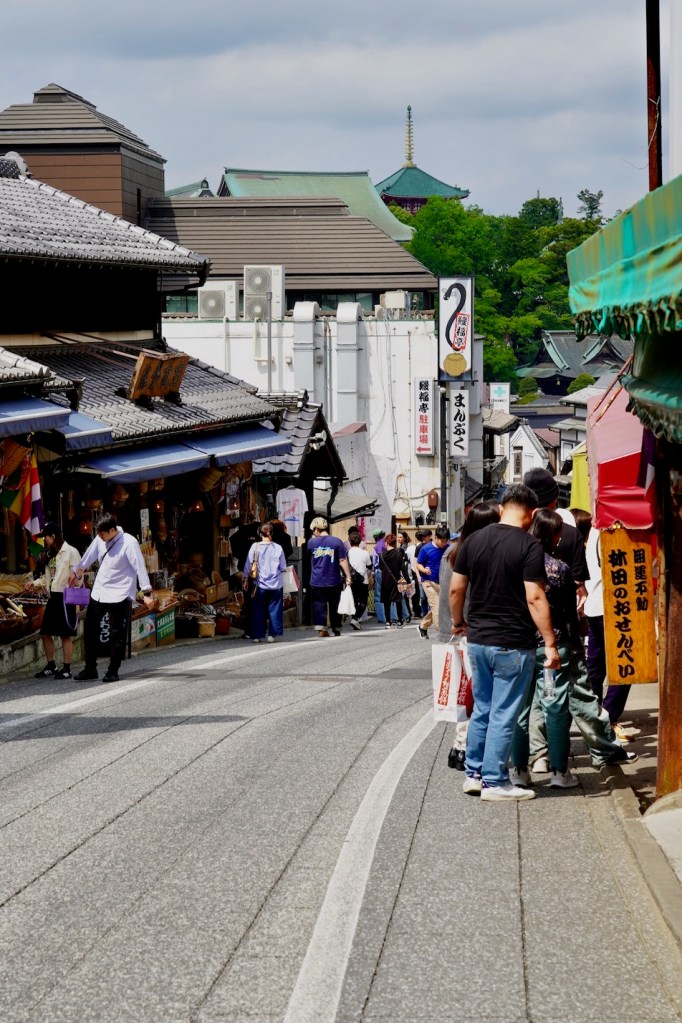
Our 2024 plan had been to go there in the afternoon after visiting Sawara. But the street has a downhill section – up hill on return! And my failed knee replacement was saying NO MORE WALKING TODAY!
We returned to Narita city May this year (2025), my knee in a better mood, and finally got to see NARITASAN. It was a Sunday, with plenty of Asian tourists and a sprinkling of westerners. Not overwhelmingly packed though, as it had been in 2024. I’m unsure what the difference was – both were Sundays with good weather.


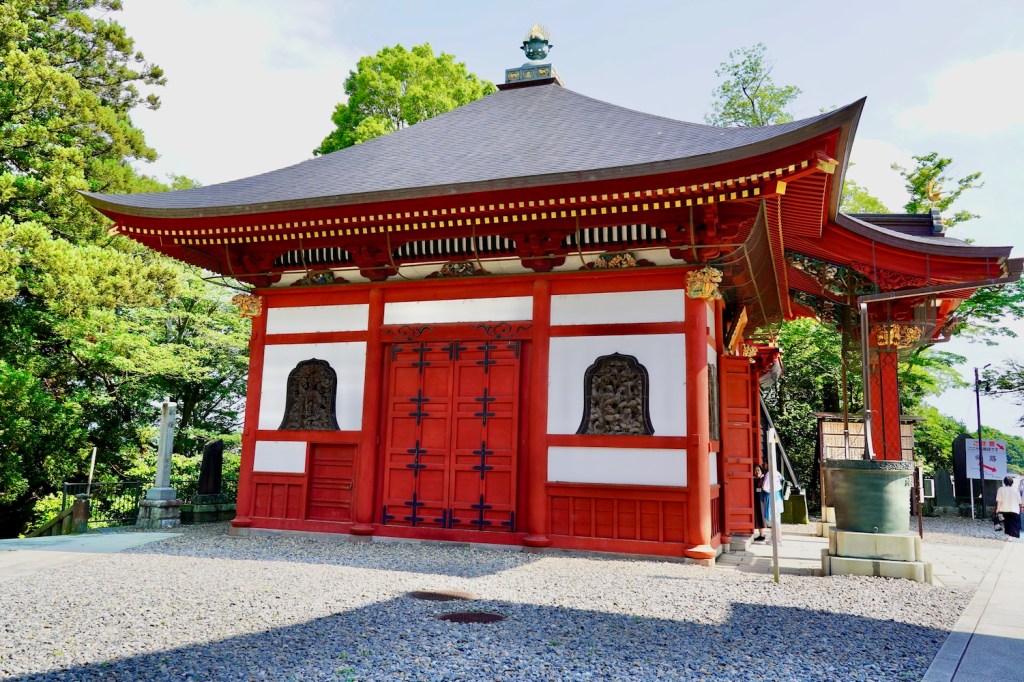
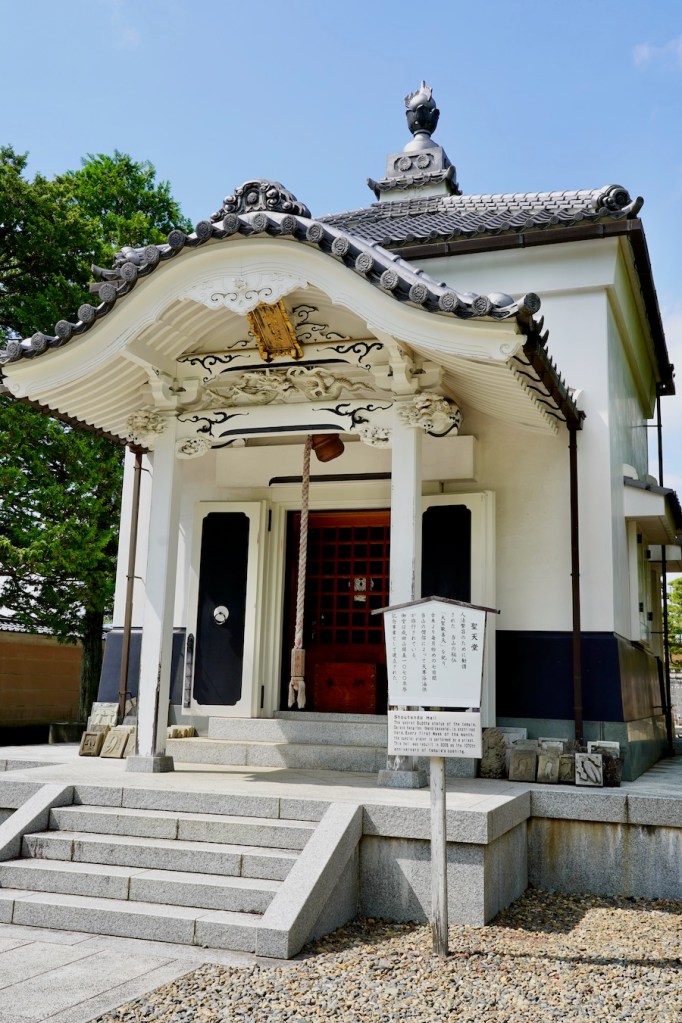
Naritasan is not just one temple – it’s a massive, rambling complex with some buildings dating to the 9th century, while others such as the main gate were built as recently as 2007. A 27 metre high three-storied colourful pagoda is one of the outstanding features, constructed in 1712.


I have seen many temples in Japan. Naritasan is right up there with the best!


I don’t pretend to understand the whole story behind Naritasan, but in a nutshell it seems that in 939 a revolt was underway and the nation was in turmoil. Apparently, the Emperor at the time instructed in a secret order that a sacred image enshrined at a Kyoto temple be moved. It ended up in Narita, where prayers were conducted for peace. On the final day of the prayers, the revolt was suppressed, and Naritasan was founded to commemorate the victory.
Well, what the world needs right now is peace – so hopefully prayers at Naritasan are still doing some good!
Prayers are also offered for the safety of the family, expelling evils – and traffic safety! While we were there, a service by Buddhist monks was underway with their chants adding to the atmosphere of the temple. As we were leaving the complex later, we heard a women’s choir. I couldn’t make out where the singing was coming from, but it was beautiful. A nuns’ choir perhaps?

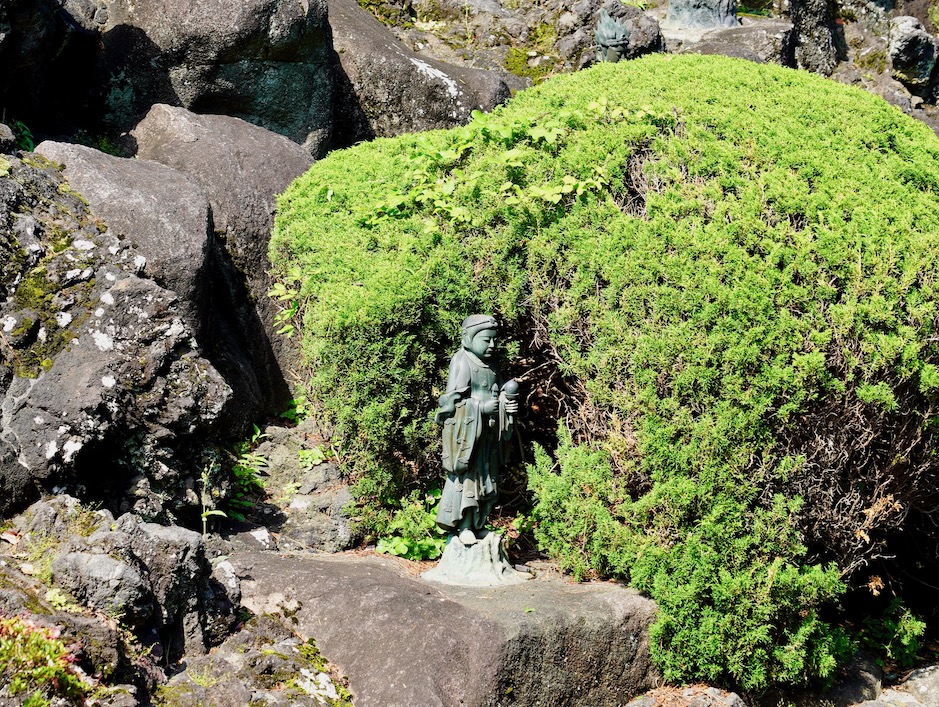
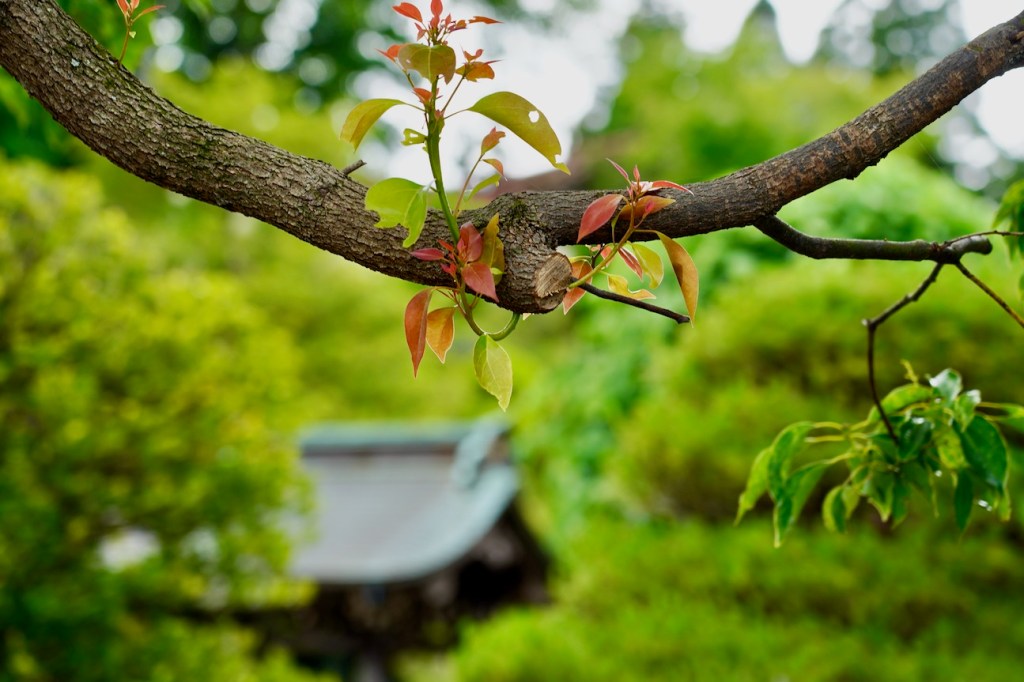

The temple complex also features an extensive rock garden along the slope of a small hill. And adjacent to the temple complex is Naritasan park,covering about 165,000 square metres. This huge parkland was opened in 1928 and renovated in 1998. The park has a changing face, depending on the season with plantings of cherry and apricot trees, azaleas and other foliage. Look for the festivals held here in February/March and mid November. The park includes a calligraphy museum, a tea ceremony room and other small buildings of interest.
Naritasan manages and offers various social services, emphasise welfare, education and culture. It is estimated you need about an hour to see the temple complex and a further hour to see the park. I would think perhaps a bit more. If you have children with you, don’t miss the little turtle pond! Look for the red and white lanterns!
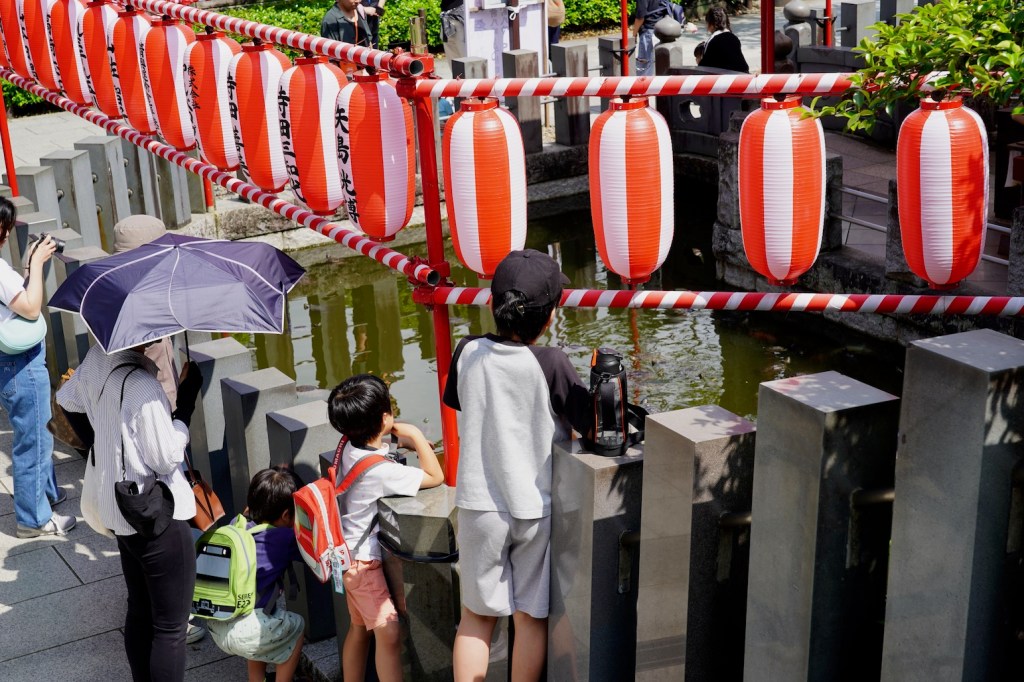

It can take some time to walk up and down the street leading to Naritasan with about 150 shops, cafes and restaurants to peruse. We stopped for lunch on the way there, and afternoon tea on the way back.

Don’t be daunted by the steep steps at the entrance – seek and you shall find – an elevator! It’s a little hidden, and whilst we found it on arrival, we ‘lost’ it on our departure, wandering on a different route out of Naritasan and walking through what looked like an old railway tunnel to the main street.

I am used to seeing shops in Japan that exist purely to sell clothes for animals – I have walked into a few mistakingly thinking they were children’s shops, seeking cute clothes for my granddaughter! I’m also used to seeing pet dogs being pushed in prams in Japan – they seem to be a child substitute, which is concerning given the current crisis with the dramatically falling birth rate in Japan. At Naritasan I spotted middle aged man pushing one dog in a pram, with another close to his body in a baby harness. Both dogs wore sunglasses! To me, a little strange. But how cool were those dogs!


The Narita area offers other attractions such as an Aviation Science Museum near the airport and Boso-no-Mura – an open-air museum village that reproduces the world of the samurai, farmers, and merchants that thrived here as the Edo period transitioned to the modern Japan. I haven’t been to these places yet – next time!

I might add that Narita city retains a sense of humour with regards to people who accidentally end up at its railway station while aiming for Narita airport.
Narita city is one of the oldest inhabited areas in this part of Japan, with a lot more to offer than just its famous airport. Many people have trod its paths over the centuries, establishing Narita as a place to definitely include on a Japan itinerary. A door into Japan’s ancient past that I highly recommend!

Note: We stayed at the Richmond Hotel in Narita – a short walk from the station, and with a couple of convenience stores a short distance away, around the corner. I don’t usually mention our accommodation. But we have found the Richmond chain to be very good, and I am happy to recommend it. We have stayed at three of their hotels – in Matsumoto, Moriaka, and at Narita. Their prices have been budget friendly – and whilst you would rate them an average business style hotel, we have found their facilities, room sizes and staff to be excellent. The free hotel shuttle to Narita airport was also an attraction. They don’t pick up from the airport, but they do deliver, and the timing was spot on for our morning flight back to Australia.
See more of my photos on my Instagram: https://www.instagram.com/aussieboomer1/
 Travelling Therese