My parents had a record collection bringing the latest tunes in the 1950’s into our home when I was growing up. My favourites were the Italian flavoured Mambo Italiano and Volare – both sung by Dino Paul Crocetti – otherwise known to the world as the American crooner Dean Martin.
The songs were carefree, fun, warm and romantic. They carried the scent of Italy – exotic and fascinating – faraway from my small island home wedged between mainland Australia and Antarctica! These songs helped spark my desire to travel!
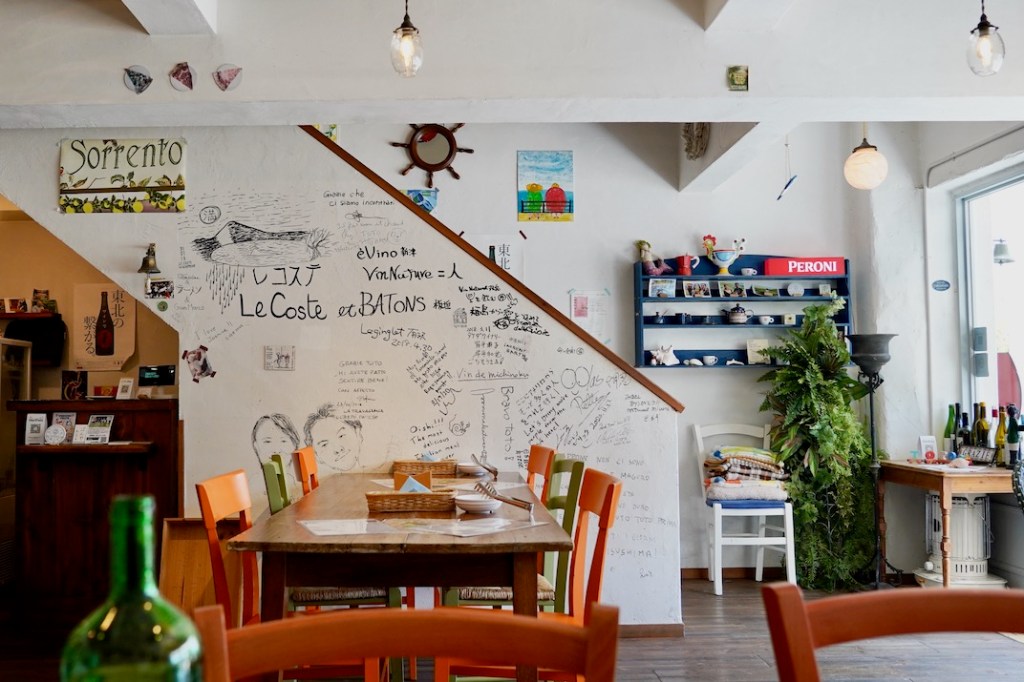
As an adult, I’ve been to Italy, but I have never heard either of these songs played there. Surprisingly, I did in Japan this year – in Matsushima, an idyllic coastal town in Sendai prefecture. They were on the playlist at an ‘Italian’ cafe there that we fell in love with. There were a few Greek tunes being played as well. Greece being my second favourite place to travel behind Japan! Tino’s cafe was a winner! The tunes did not seem out of place. Matsushima, with its sparkling blue bay and holiday mood, reminds me of Mediterranean seaside places in both Italy and Greece.

I went to Matsushima because it’s rated as one of the three most beautiful bays in Japan, and because it was the favourite seaside holiday of Sendai’s famous Samurai Lord Date Masamune – see my earlier story about him : https://travellingtherese.com/2025/08/29/sendai-dinner-date-with-date-masamune/

I was very keen to see a museum in Matsushima dedicated to Date Masamune, and it exceeded my expectations. It’s small, but effective with about 200 excellent life size waxwork figures detailing his remarkable life. Adult admission was 500 yen. You might get a discount by showing your passport. There is a cafe and shop attached to the museum.


Matsushima is an easy day trip from Sendai – accessed by a 40 minute regional train service. It attracts a lot of day trippers! On the advice of a fellow blogger, MJ and I opted to stay a few nights. This is because bus tours and day trippers crowd the main streets of this small town for several hours, especially on weekends. If you overnight stay, you can be down onto the jetty to take a cruise before most of them arrive, and you can check out the town at a more leisurely place early and later in the day. Then there’s sunrise and sunset – not to be missed!
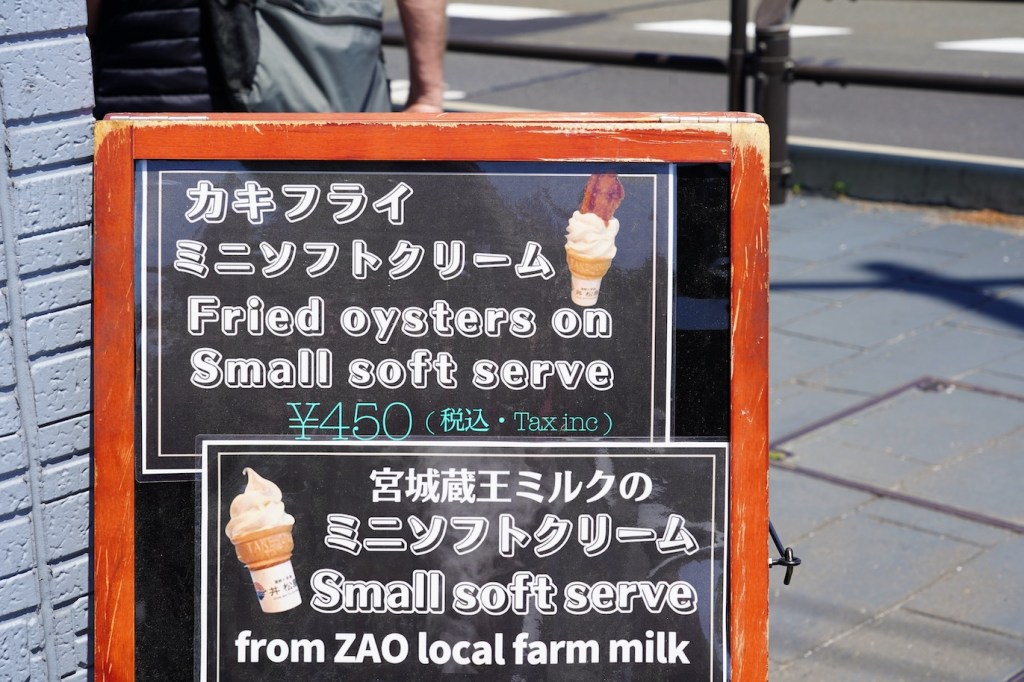
Matsushima’s fame rests not only with its natural beauty, but as a place for fresh oysters and other locally sourced seafood. For oyster lovers, Matsushima is heaven! I even spotted ice-cream topped with oysters!
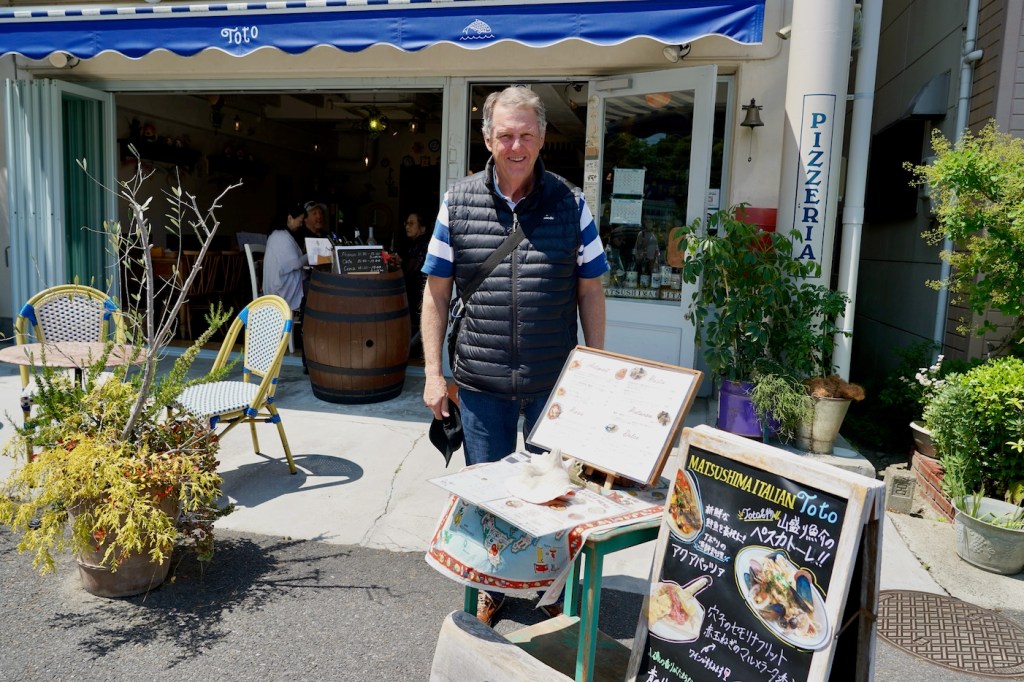
I’m not keen on seafood – so while searching for lunch that didn’t involve oysters we came across our little Japanese Italian gem just outside the Matsushima Kaigan railway station. The menu includes pastas, excellent pizza, good coffee, quality tiramasu and very good cheesecake! And that music! It’s also licensed, so MJ was able to order a nice red. Luckily, we had been walking a lot throughout the morning exploring Matsushima – so there was no ‘put on weight’ guilt with our lunch!
Some might wonder about eating Italian in Japan – but that’s soooo Japan. It doesn’t just offer Japanese food, but cuisine from around the world – often with a Japanese touch. I’ve enjoyed an excellent spaghetti bolognaise, topped with fine strips of nori (edible seaweed). It went very well together! Did you know Tokyo has more Michelin star restaurants than Paris? Many of them feature French and Italian menus.

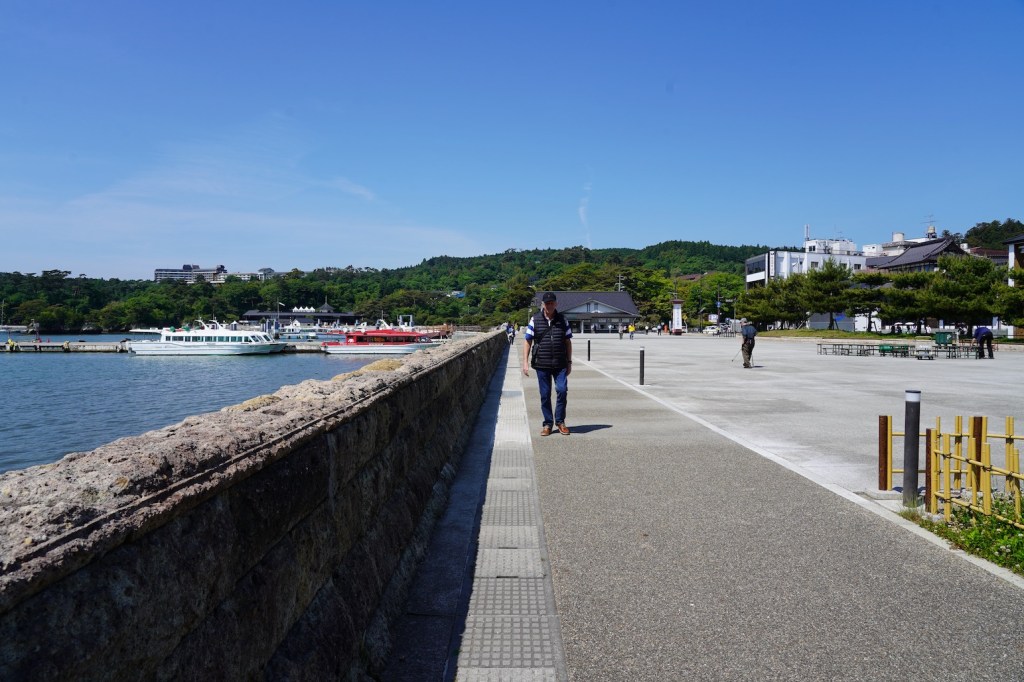
Matsushima is an ideal place to explore by foot as the town centre along the foreshore is fairly compact. It was flooded by the 2011 tsunami, but the town was saved from major damage by the 200 plus small islands that dot the bay. They acted as a natural breakwater.

You can relax on a cruise boat to check out these tiny islands. There’s plenty of cruise options on offer at the main wharf in town. We decided against a cruise, preferring instead to explore on foot a few islands that can be reached by bridges near the town centre.

Firstly, we headed to a tiny island, very close to the main town pier. It is home to Godaido Temple, the famous symbol of Matsushima. The island’s history goes back to 828 CE. The temple was built in 1604 by Date Masamune to celebrate the victory at Sekigahara, near Nagoya – the decisive battle in Edo times that brought an end to the era of civil wars. I’m planning to visit a much praised history museum at the battlefield on my next visit to Japan.

The temple is the oldest example of Momoyama period architecture in the Tohoku region and is designated a National Important Cultural Property.
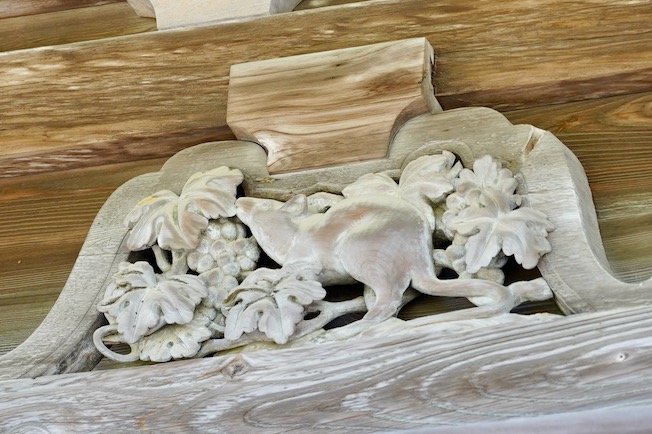
Apparently the hall was once painted bright red. The animals of the Chinese zodiac are carved around the building. One of them looks like a kangaroo to me!
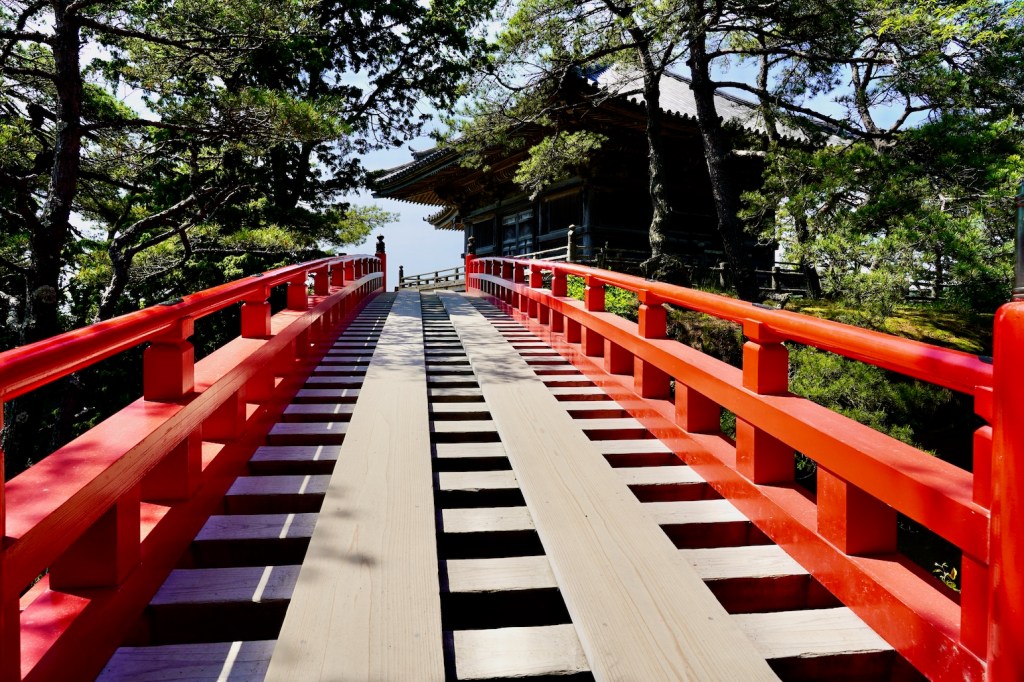
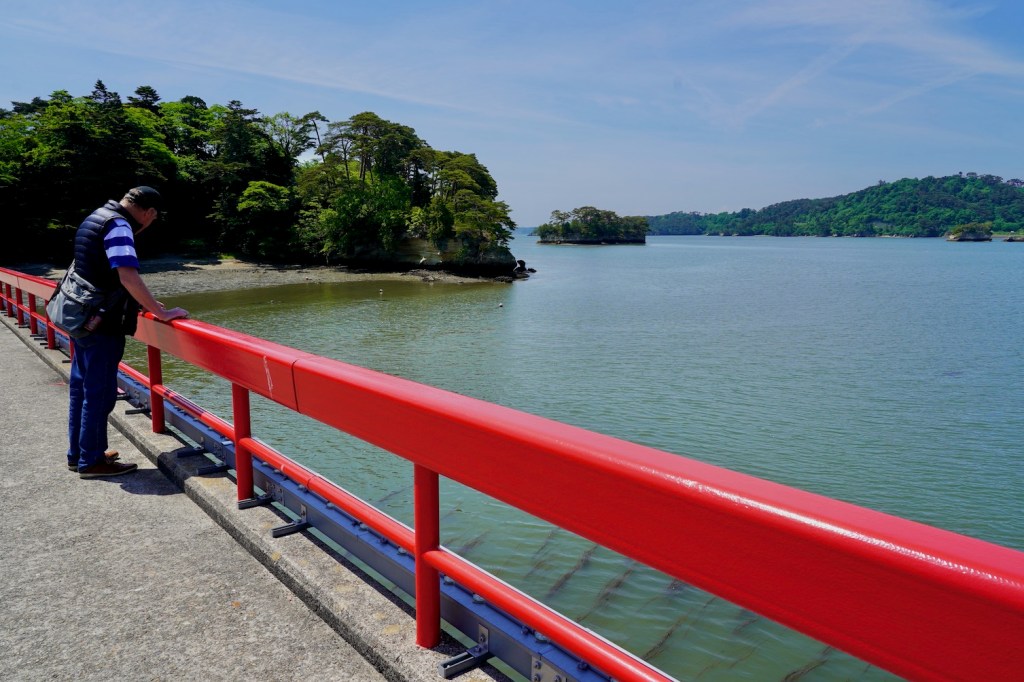
The small red bridge connecting the island to the shore is unusual – gaps between the boards are deliberate, designed to focus concentration as you cross. Very zen! Challenging for my crap knee! Luckily, they have now placed planks over it for those not keen on doing the gap walk! Concentrate on the gaps or walk the plank – your choice!
Fukuurajima Island

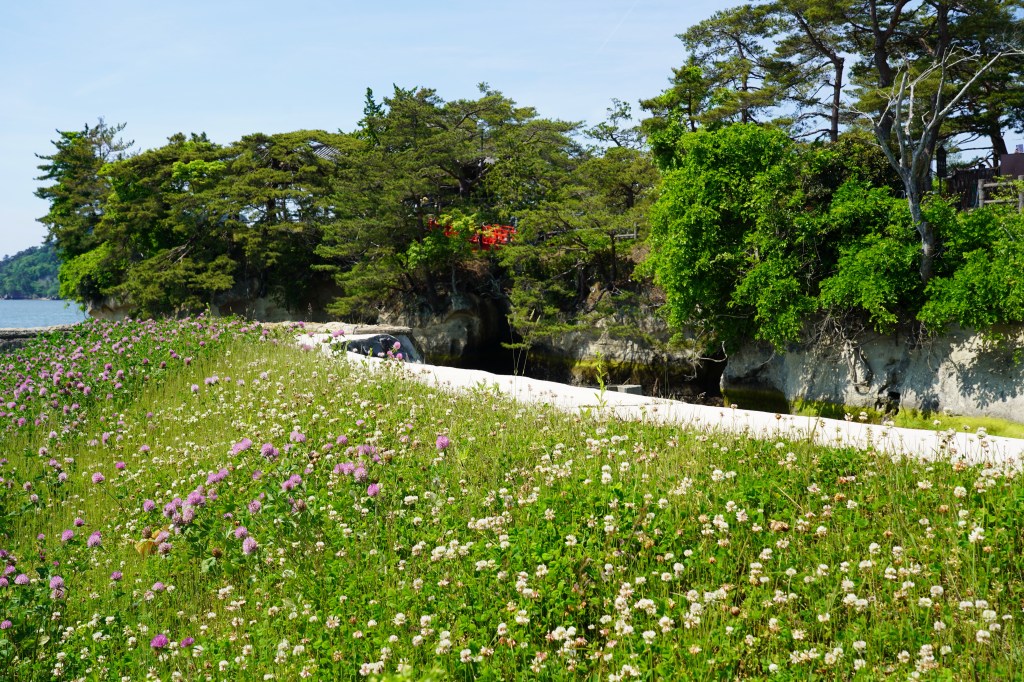
A much bigger island close to town is the beautifully wooded Fukuura Island – a lovely place to ramble and gain great views over the Bay. In Edo times, it was a popular with Samurai elites on sightseeing tours! Date Masamune often visited. The island also has long attracted Buddhist monks for meditation. It wasn’t until the Meiji era (1868-1912) that the island became more accessible to the public. It was developed into a natural park to preserve its beauty and biodiversity, and provide a space for relaxation and contemplation for visitors.

Fukuura Island features more than 300 species of trees and plants, including red pines, cedars, and Japanese firs. At the heart of the island is a botanical garden that changes with the seasons, providing a continuous spectacle.
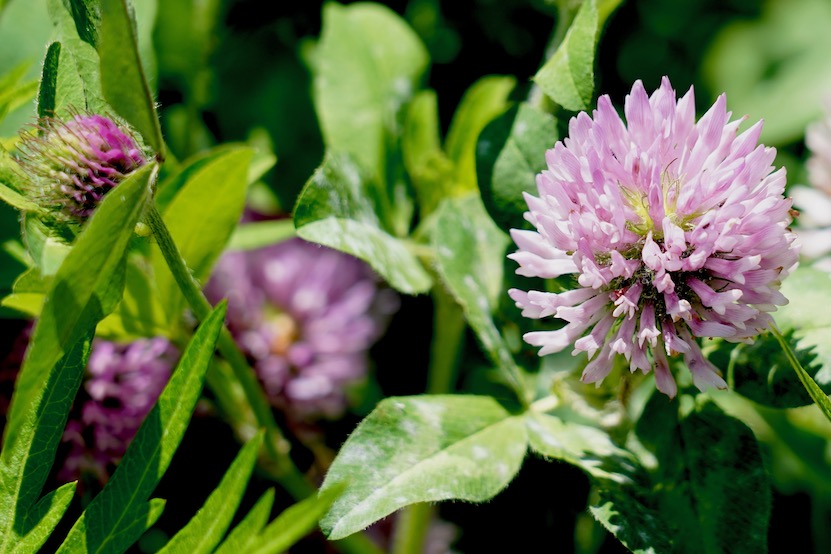

It costs 200 yen (about $2 Aud) to cross over to the island via a 252 metre long vermillion red bridge. I was fumbling for small change in the shop where you pay your money into a machine, and the lovely people there took over with a smile to sort it for me. It provided a nice beginning to my walk on the island.

The bridge to the island is known as ‘the bridge of romantic encounters’. It’s lit up in the evenings from April to August between 6 PM and 10 PM, and from September to March between 5 PM and 10 PM.
The Bridge is wheelchair accessible, but it would be difficult to wheel around on the island as it has steep slopes and stairs in some places.


There are well maintained walking tracks criss crossing the island. You can take short cuts to get back to the bridge if it becomes too much for you.
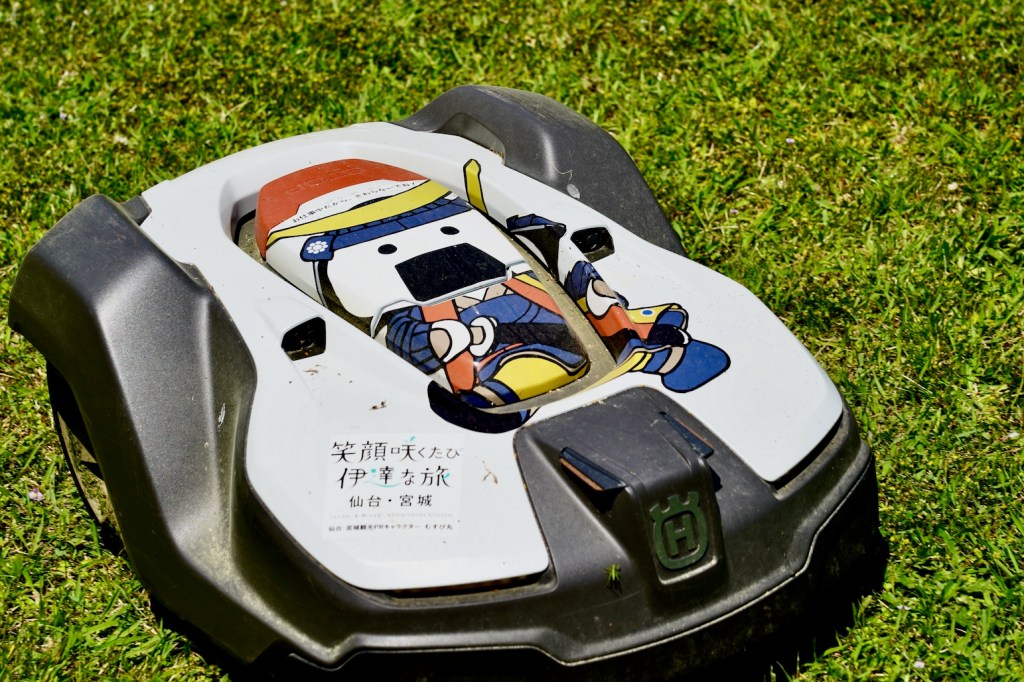
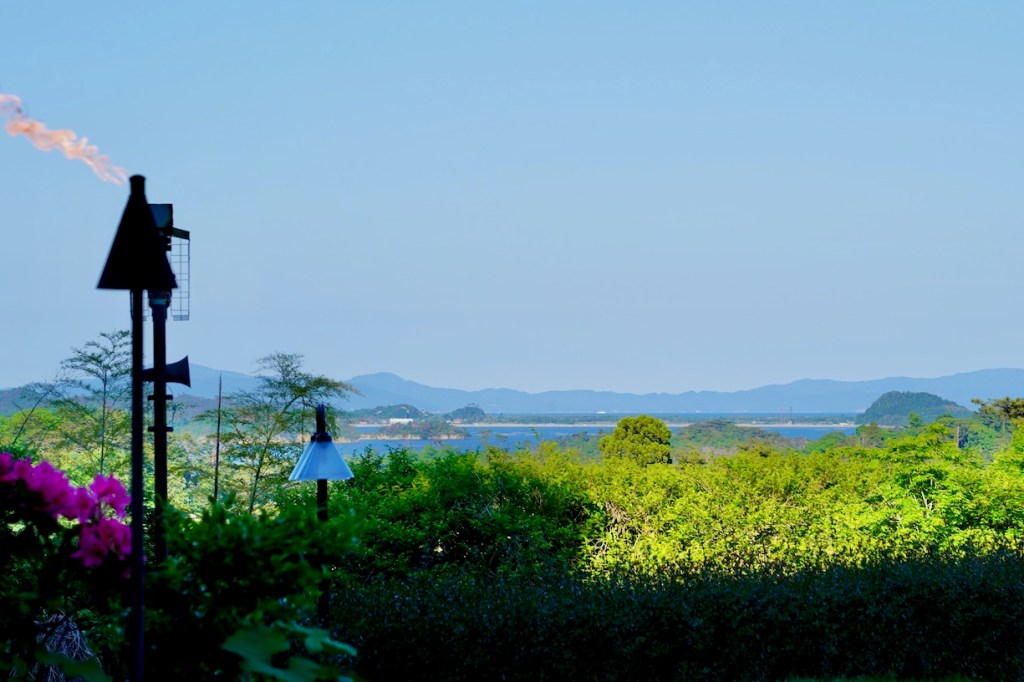
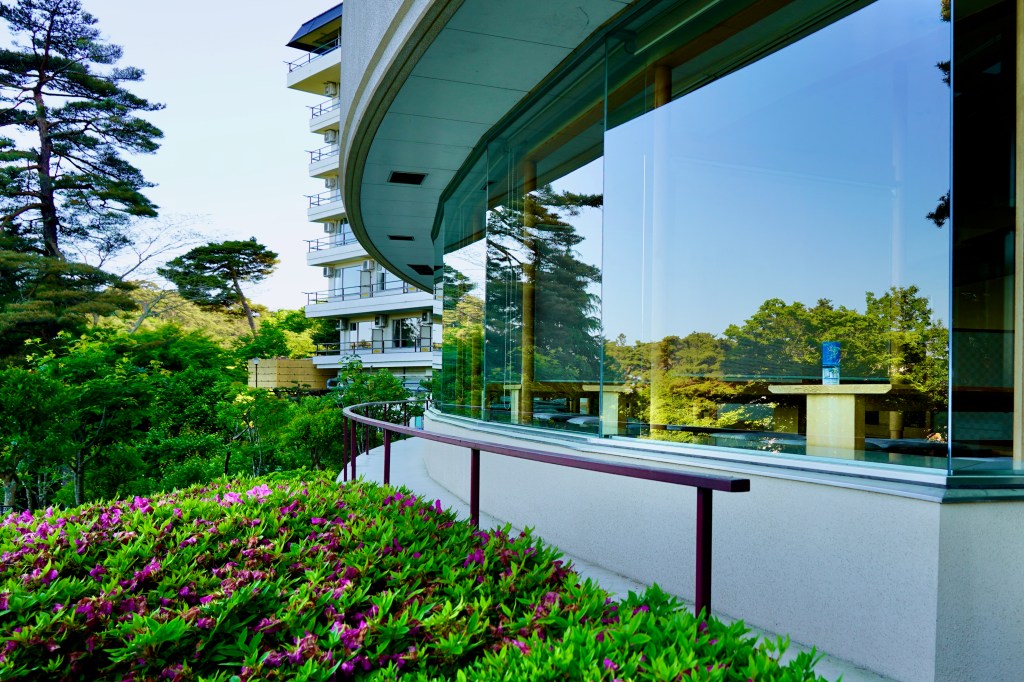
For our stay in Matsushima, we chose a hotel high on a hill behind the town. Hotel Matsushima Taikanso is a touch classier than our usual accommodations in Japan, but at $300 Australian a night including buffet breakfasts for two, it was cheaper than some very average and unexciting hotels around Tokyo Station where prices have skyrocketed in the last few years.

I booked the hotel through Japanican – an agency that many travellers might not be familiar with. It is a major booking agency in Japan, and we have booked with it on several occasions without any problems. Some regional hotels in Japan only deal with Japanican. I don’t have any connection with Japanican, but mention this to assist other travellers.

 Travelling Therese