
I am back home from a week travelling in Tasmania, Australia’s island state across Bass Strait from Melbourne, Victoria. The continuing problems with my total knee replacement earlier this year presented some difficulties for the trip. But equipped with a trekking stick – so much cooler than a crutch – all went well.
When I say home, I have two. Western Australia where I have lived for more than 40 years, and Tasmania, my birth home that I left in my mid twenties. It is an exquisite small Australian island State that features a myriad of scenery and geography from majestic mountains and beautiful beaches to wind swept highland plains.
Famous too for being a British penal colony in the 1800’s – men, women and children sent here to serve prison terms for anything from murder through to trivial thefts. While some did it very tough, for others it was a lucky break. They began their sentences illiterate and without work skills, and ended their sentences able to read and write and with a trade. Many went on to become leaders in Tasmanian industry and society!
There was a stigma to being a convict though, and when I was growing up, few people would admit to a convict in their ancestry. Now-days, it seems everyone wants a 1800’s convict in their family!
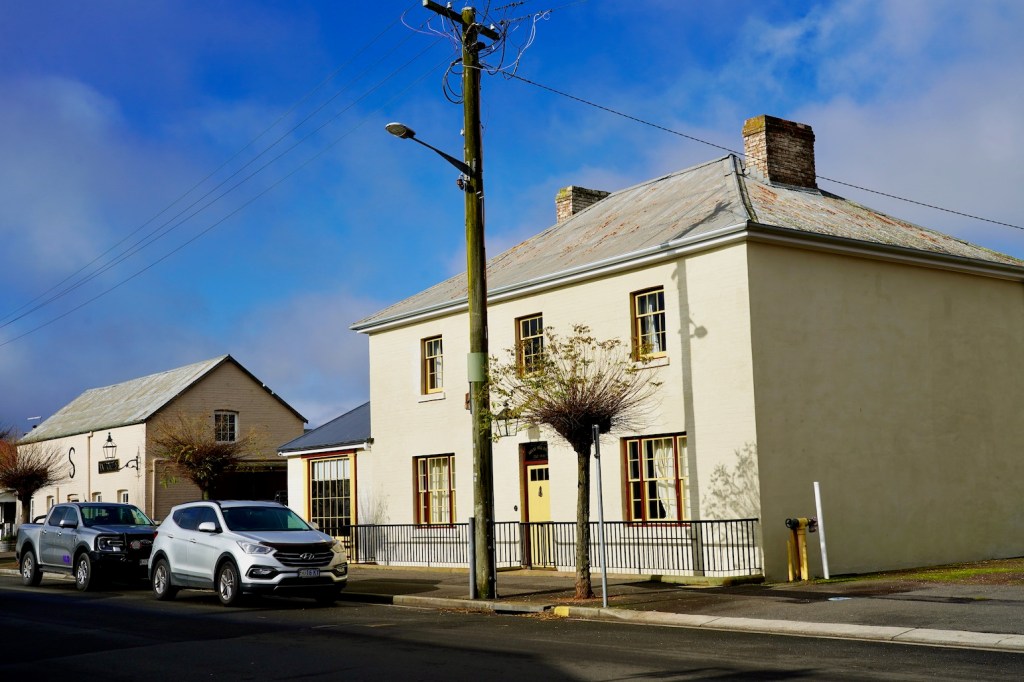
The island is full of wonderful examples of 1800’s architecture – some whole towns like Richmond in the south and Evandale in the north like living English 1800’s villages.

For me, growing up in Tasmania was paradise. Trips to other parts of Australia – collectively referred to by Tasmanians as ‘the mainland’ – and journeys overseas convinced me Tasy was one of the best places to live on earth. Romance intervened, and I left to marry and settle on the other side of the country – thousands of kilometres away – in Western Australia.
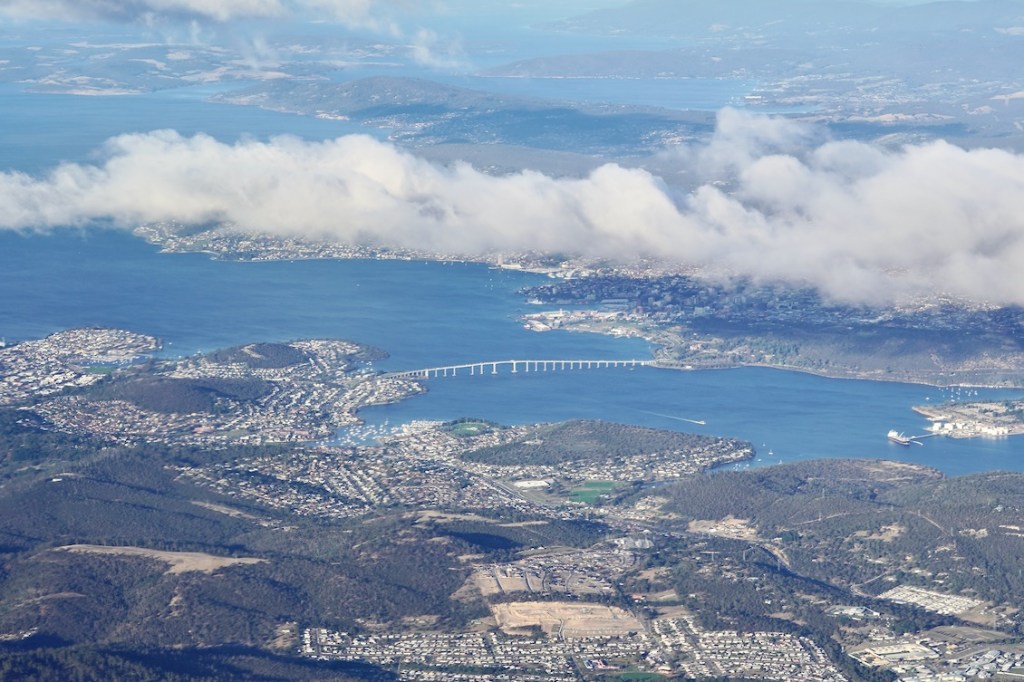
This Tasmanian trip was a fleeting one, mainly for a major school reunion and a catch up with family and friends. MJ and I couldn’t resist including a few days relaxation at Freycinet Peninsula on Tasmania’s east coast – one of my most favourite places in the world – see my separate story on that stay at: https://travellingtherese.com/2023/06/14/freycinet-a-return-tasmania/
My view of Tasmania these days is a blend – a one time local and that of a tourist. When I was growing up Tasmania was known internationally for its excellent apples – so much so that its nickname was ‘the apple isle’. It was also famous for its high quality wool, often attracting world’s best prices. Since I moved west, Tasmania has become famous for a wide range of quality produce, wine and whiskey.
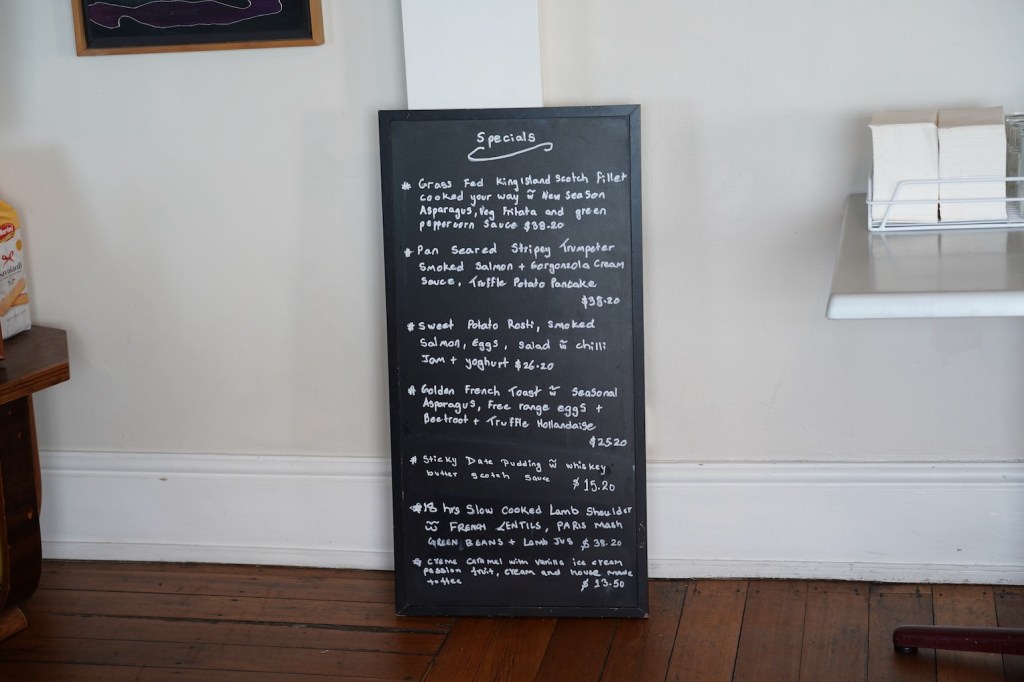
Tasmania today has world class restaurants, very cool cafes, interesting festivals and a vibrant arts and crafts scene – but for me, its scenery is still the big winner.

On this trip, I enjoyed several days in the north of the State in my hometown, Launceston. It is the second biggest city in Tasmania, and one of the oldest in Australia. It famously was the first city in the southern hemisphere to be lit by electricity in the late 1800’s. Last year it was named Australian Town of the Year. Tasmanians always can tell if someone is a local or a mainlander in the way they pronounce Launceston. ‘Lon-ces-ton’ is the way we say it. Mainlanders usually get it wrong by pronouncing it ‘lawn-ces-ton’.

Launceston is also the home of Gourlays- a sweets shop established in 1896. They still use original equipment and traditonal methods to produce their sweets. My favourite is ‘jockey caps’ – a coconut ball wrapped in red toffee that I’ve enjoyed since childhood. They can only be found at Gourlays, and until recently you had to go to the shop to get them – unless kind siblings mailed you a birthday package of them! Now Gourleys has an on-line shop! Progress!
Launceston also was a major centre for building and repairing trains many decades ago. Railway workshops there were servicing steam locomotives and rolling stocks in the early 1870’s. By the 1930’s, wooden carriages and wagons were being made, and by the 1950’s aluminium wagons, logging wagons and passenger carriages were being constructed.
Sadly, by the late 1970’s, Tasmania was abandoning its passenger trains. I travelled on one of the last services between Hobart and Launceston in 1978. I’d never been on this service before, and decided to take it because it was being phased out. It was already very antiquated by then. The care factor was well gone. No heating for a start, a problem as the train travelled through Tasmania’s chilly midlands in winter. I remember being chilled to the bone sitting in my carriage, and a conductor bringing out old grey army blankets to distribute to the passengers. An American couple, sitting a few seats ahead of me, excitedly discussed how wonderful it was to be on a steam train. Steam train? No, it wasn’t. I didn’t correct them. I can only think they were mistaken because of the painstaking slow progress of the train.
Much of the old passenger stock went to the Don River railway – a vintage railway and museum run by volunteers in Don on the State’s North West coast. They upkeep and renovate the old train stock, and provide a short passenger train ride from Don to nearby Coles Beach and return.

Sadly, an accidental fire swept through its workshop earlier this year. Three warehouses containing carriages and wood working equipment caught alight.
The fire was a big blow for the railway and its hard working volunteers, and the public was asked to donate tools and to visit the railway to help boost their coffers. Don is a picturesque easy journey from Launceston, so on our visit we decided to support Don River Railway by visiting and taking a train ride. The volunteers were very enthusiastic about their work and welcomed us. I highly recommend a visit for anyone in Tasmania.


At 16, I ventured for the first time to Hobart, Tasmania’s capital, and I totally fell in love with it. It has to be one of the most beautiful small capital cities in the world – a little reminiscent of Vancouver in Canada. It spreads out around the expansive Derwent river from the foothills of kunanyi / Mount Wellington, a majestic mountain that rises 1271 metres above the city.
Hobart is the site of Wrest Point, Australia’s first casino, and it still operates today. More to the point, this was where my now husband proposed over cheesecake in a cafe at Wrest Point, enticing me away from Tasmania to Western Australia. I also lived right across the road! So fond memories here.

In my youth, I climbed a lot of mountains in Tasmania, but Mt Wellington has particular fond memories. I remember camping in the wilderness by a creek overnight once with fellow members of the Hobart bushwalking club, and being reminded that we were only five miles ‘as the crow flies’ from the city’s main post office in the CBD. There were times too when club members would hold parties at Rock cabin, one of the mountain’s many trail huts, backpacking in kegs of apple cider along a mountain track for the festivities. Alcoholic cider was in vogue at the time! As the night would wear on, slightly ineberated rock climbers would practice their skills on the walls of the hut!

On early morning work shifts in Hobart, I would watch the early morning sun light up the mountain in pink hues from my newsroom’s window and if I finished work at lunchtime, I would often quickly change into bushwalking clothes for an afternoon hike on the mountain. It only took about 20 minutes to get from my workplace in the city’s heart to be on a mountain bush track. I was lucky enough to see those pink sunrise hues again on this trip.
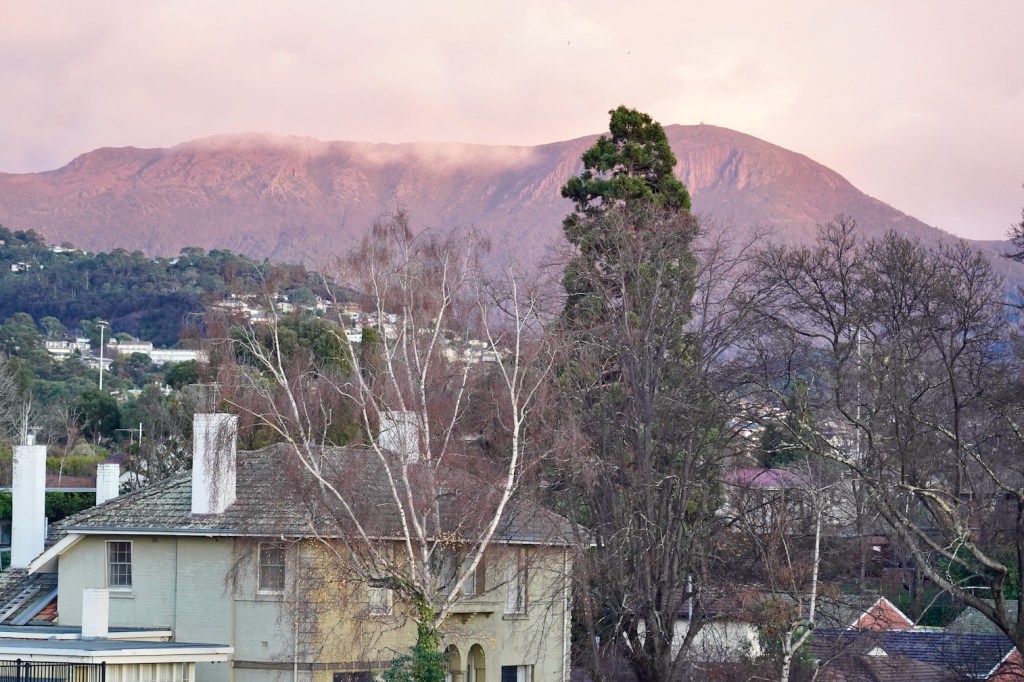
Of course, I had to venture onto the mountain on this holiday, my crook knee aided by a trekking stick. It would be like missing a visit to an old family member if I didn’t go up Mount Wellington.
Our first early morning attempt didn’t work out. We got caught in traffic in a wrong lane on the road leading up to the mountain, and suddenly found ourselves veering off onto the Southern Outlet highway, heading south out of the city and with no u turn in sight! No worries. Wrong turns often lead to good things in life. Luckily, I have local knowledge and quickly had some new directions for driver MJ. We ended up on neighbouring Mount Nelson enjoying an unscheduled, though superb breakfast at a cafe in the old Signalman’s house, built in 1897.


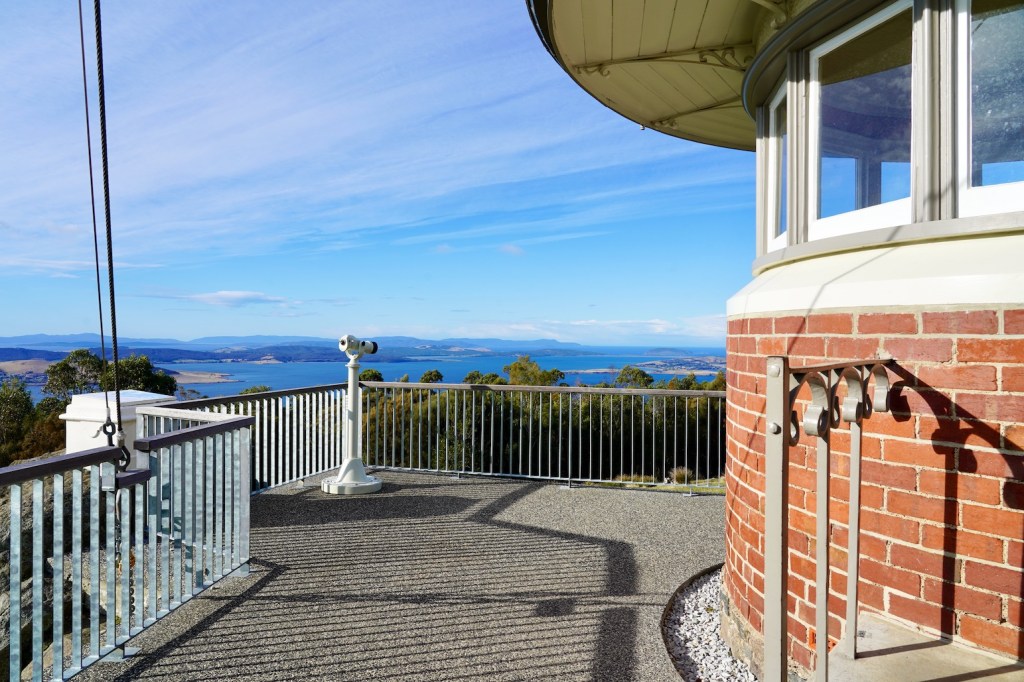
The Signal Station was the first built in Tasmania, with superb panoramic views over the city, the Derwent River and out to Storm Bay. The public can still view the station for an insight into semaphore signalling, station life and early shipping in the Hobart area. And the cafe, inside the quaint cottage that was the signalman’s home, is first rate!
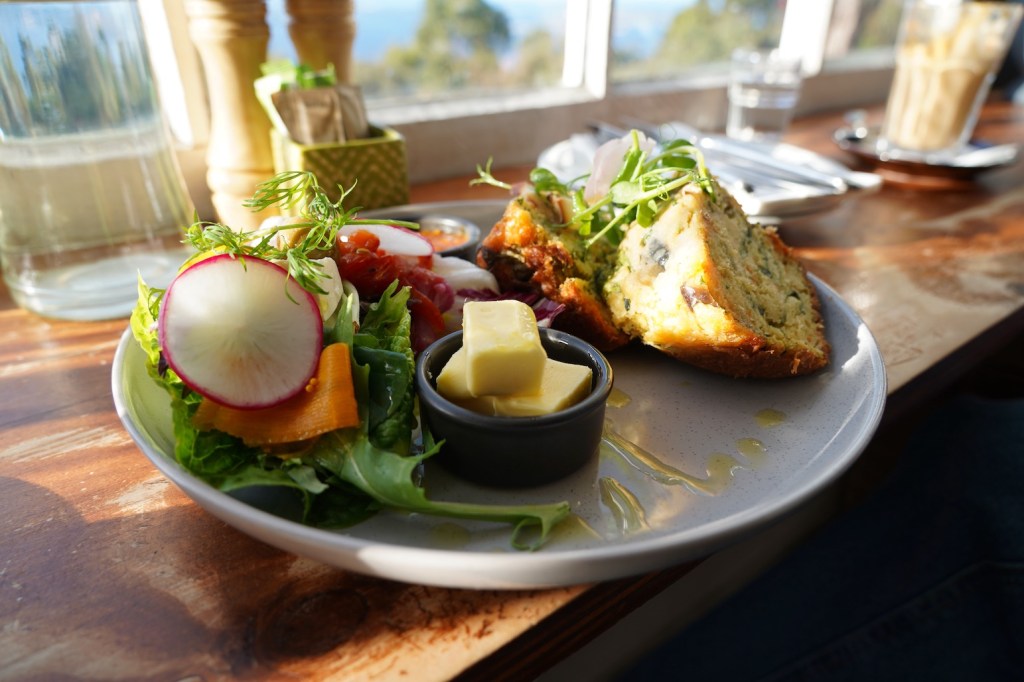
I’ve been here before in summer when bean bags are strewn along the lawns as relaxing seats for patrons.

We did get up the mountain the next day for another view of the city, enjoying a coffee at ‘The Last Freight’ – an unusual little cafe at what is known as the Springs.

As I flew out of Hobart to return to the West the following morning, Mount Wellington, its summit lightly peppered with snow, peeped out above the clouds in farewell.

 Travelling Therese
Captivating post. Thanks for the history and the tour.
LikeLike
This is lovely – I’m surprised really at how little I know about the island – While plenty of Irish (including ourselves) visit Australia I actually can’t think of one person I know who went on to Tasmania! You are right in describing it as ‘exquisite’!
LikeLike
You will have to visit, Marie. Very easy to travel around..lots of wonderful walks etc. if you ever do, I have special travel notes to share. I regularly visit to see family and friends
LikeLiked by 1 person
There’s a few other tasy stories on the site..one specifically on Hobart, one on the Bay of Fires and one on Corrina on the West coast..magic place. At the PORT ARTHUR convict prison, they kept some Irish political prisoners. They must have had influential family/friends as they weren’t housed in the main prison, but in beautiful cottages.
LikeLike