
It was raining hard, my crook knee was playing up, and we had a few days left of our Japan 2022 November trip ahead of flying home from Tokyo. I looked at my list of ‘what to do’ options – a list I always detail ahead of a trip. Yanaka stood out. A small historical inner suburb, about 15 minutes train trip from Tokyo station where we were based. Not, I might hasten to add, in the luxury Tokyo station hotel – I wish! But at a perfectly nice, less expensive hotel nearby.
Yanaka appealed to me as one of the oldest suburbs of Tokyo, its roots reaching as far back as the Edo days of the 1600’s. Samurai once walked its streets. It largely escaped the damage of the 1923 Great Kanto Earthquake and the months of WW2 fire bombings that obliterated much of the rest of Tokyo. Yanaka is proudly old Tokyo, and local residents have fought hard to keep it that way – renovating old homes, keeping out the big corporations and their cutting edge modern skyscrapers, and providing a vibrant community for small businesses and artisans.
Don’t expect giltz here or a barrage of neon lights. No ultra modern sterile environment here. This is unadorned Tokyo – old style, with masses of twisted electrical wires dangling high above its tiny streets, like armour keeping ultra modern Tokyo at bay. Untidy, and packed with character. A place with nooks and crannies. A place to explore – approach Yanaka with a sense of adventure and fun.

We boarded the circular Yamamoto railway line, covered by our JR (Japan Railways) pass, and were quickly at Nippori Station six stops from Tokyo station. Nippori originally opened back in 1905. Emerging from the train we faced an exit dilemma. Which one to Yanaka Ginza – the main shopping area?
My notes told me there was a north and a south exit, and you could actually walk in a circular pattern to and from the station. En route would be one of Japan’s most famous graveyards with over 7000 graves – some quite famous people laid to rest here, including Tokugawa Yoshinobu, the last Shogun of Japan. You’d probably run into a few Samurai spirits if you did a night time ghost tour. Ignore my sense of humour. I don’t think they actually run night time cemetery tours.
Unfortunately, my failing knee was never going to allow an endless amble. Nor was I up for a lengthy inspection of the 100 thousand square metre cemetery in the rain . We needed to find the quickest route to the Ginza area. We were a little disoriented about which was north and which was south from the Station – where is a compass when you need it!
Luckily, there was a tourist desk at the station. Unluckily, the young girl attending it seemed to have no idea of what we meant by the Yanaka Ginza. She probably had two main places to promote – the old Ginza shopping area and the cemetery. I wondered what she thought we were looking for. Her english was minimal. A bit like our Japanese. Things were definitely being lost in translation.
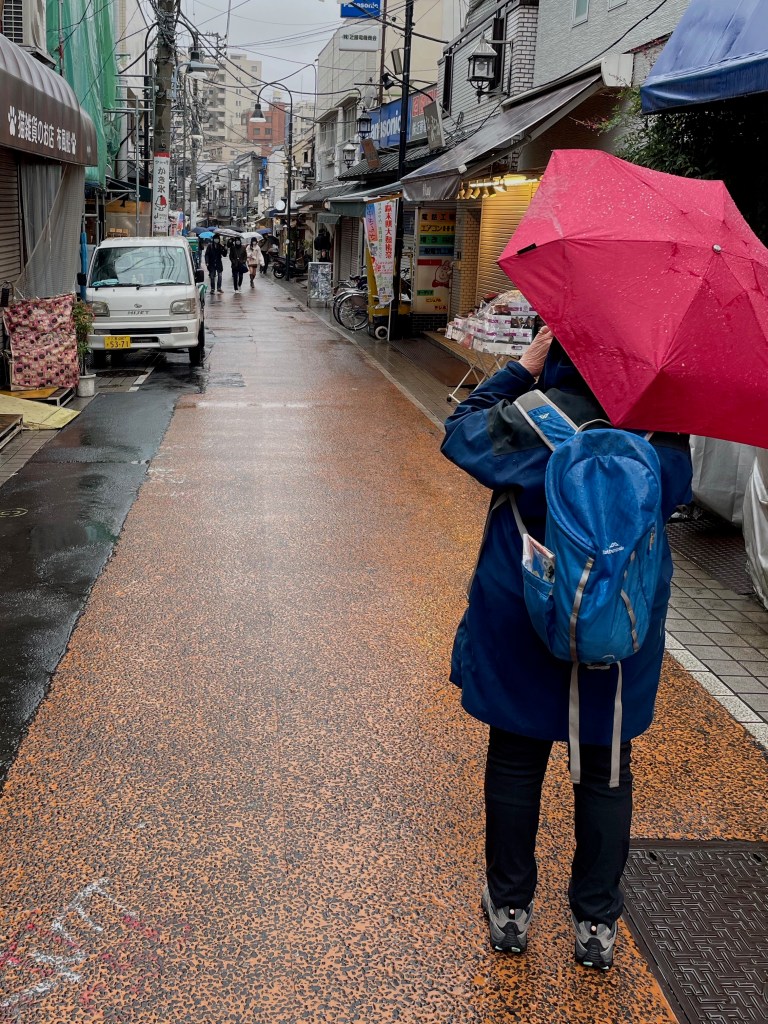
Finally, we took a punt after reviewing some of the research notes I’d made back in Australia. We emerged from the station. It didn’t look too promising, but we pressed on and suddenly five minutes walk from the station there was the staircased slope into the narrow main street of the Ginza area. Apparently, these stairs are a great place to see a sunset in Tokyo. No sunset today .. no sun .. just an overcast sky sending down the rain. Umbellas were definitely the order of the day!
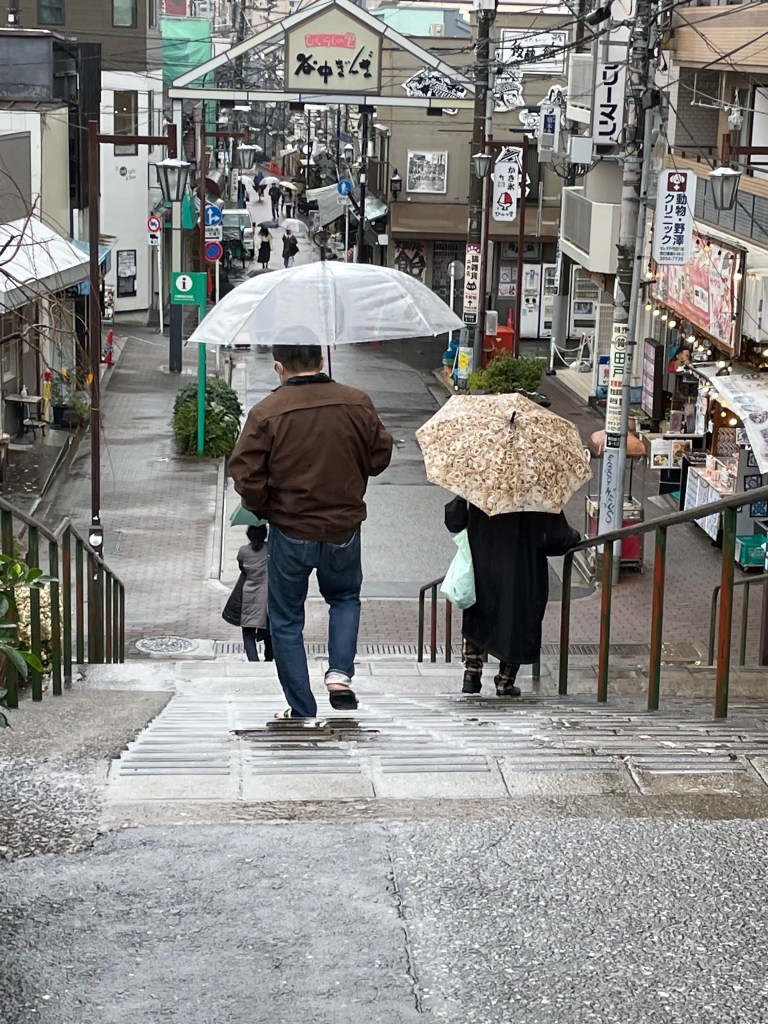
I figured that with its history of avoiding earthquake and war damage, Yanaka was clearly a lucky place. So I reasoned my luck would hold too, and my knee would stand up to browsing its tiny streets. So much of Yanaka remains very old Tokyo. Some temples, founded in the 1600’s, still stand. So some of what you see here, has been here a very long time. This is an area of Tokyo that retains an abundance of ground roots soul.

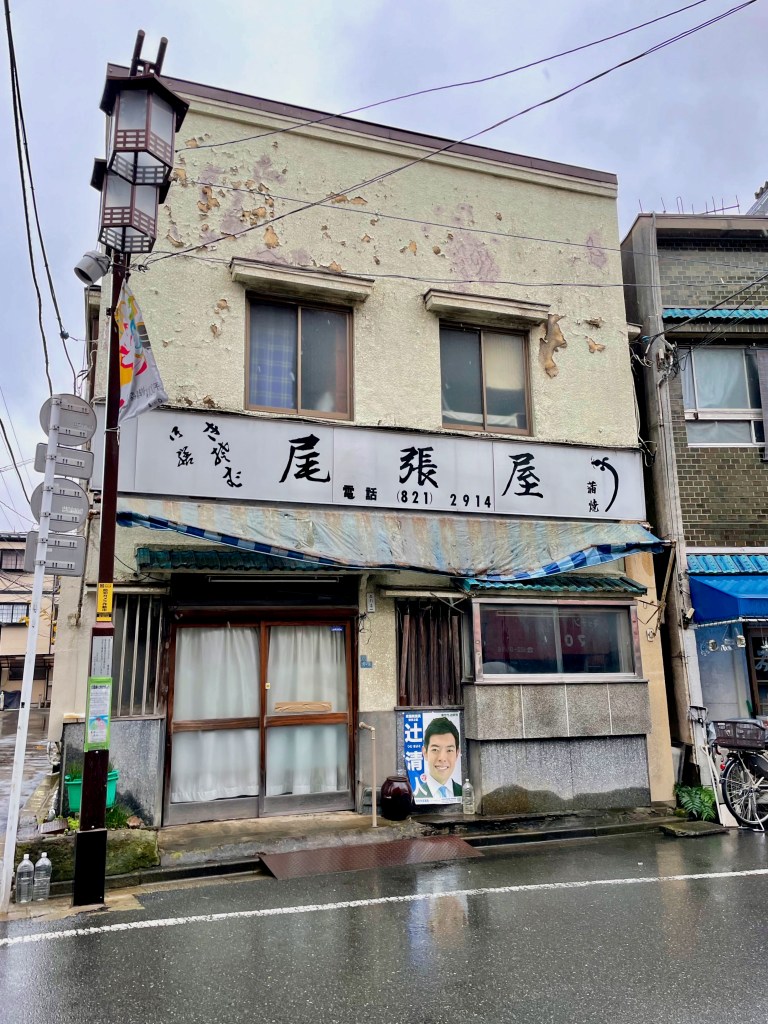


This shop, closed for the public holiday, was celebrating its 100th birthday
Yanaka has a vibe quite different to the more famous suburbs of Tokyo. An abundance of artisans here work in crafts ranging from textiles, ink prints, wood carvings, traditional cuisines, innovative stationary, pottery, jewellery and other hand made goods. Yes – cuisines – a creative chef is an artisan in my book.
Young enthusiastic entrepreneurs inject new life blood into Yanaka, without ruining its old time feel. They have opened stores such as an olive shop, a boutique brewery, a French boulangerie and patisserie, and various other interesting enterprises. Many have renovated and transformed old buildings – Showa era (1926-1989) for their shops and galleries. Small stores are owned by locals, and citizen groups work hard at preserving the old buildings in the area – people with a passion for maintaining the community spirit and history of Yanaka.
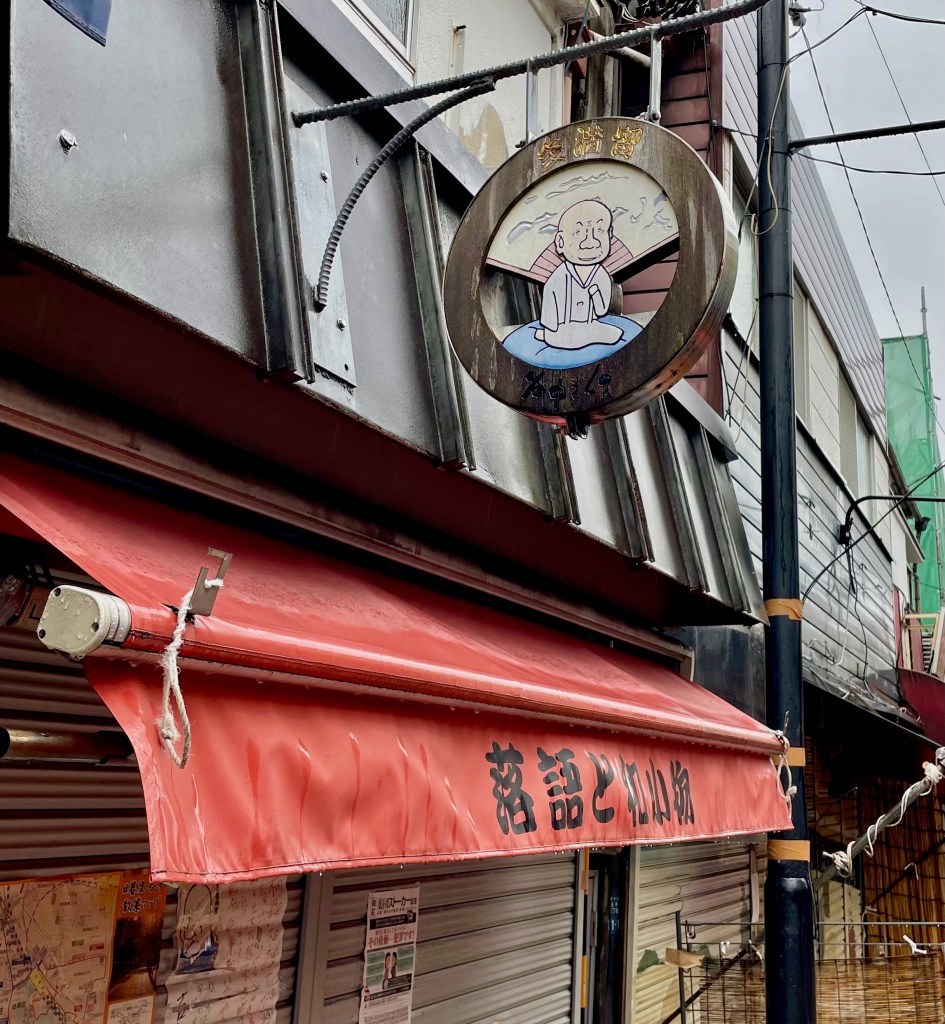
The day we chose to visit happened to be a Monday – tiny mistake there. Many shops are closed in Yanaka on Mondays, and we couldn’t see what was on offer behind the security shutters.
There was still plenty to experience, however. Plenty to occupy us. We made our way through a patchwork quilt of interesting little places, so many with handcrafted bespoke offerings. We explored the old temples and shrines scattered amongst them – reminders of Yanaka’s ancient history – and wonderful little laneways diverting off the main thoroughfares – they look like they’ve been there forever and they beckon.
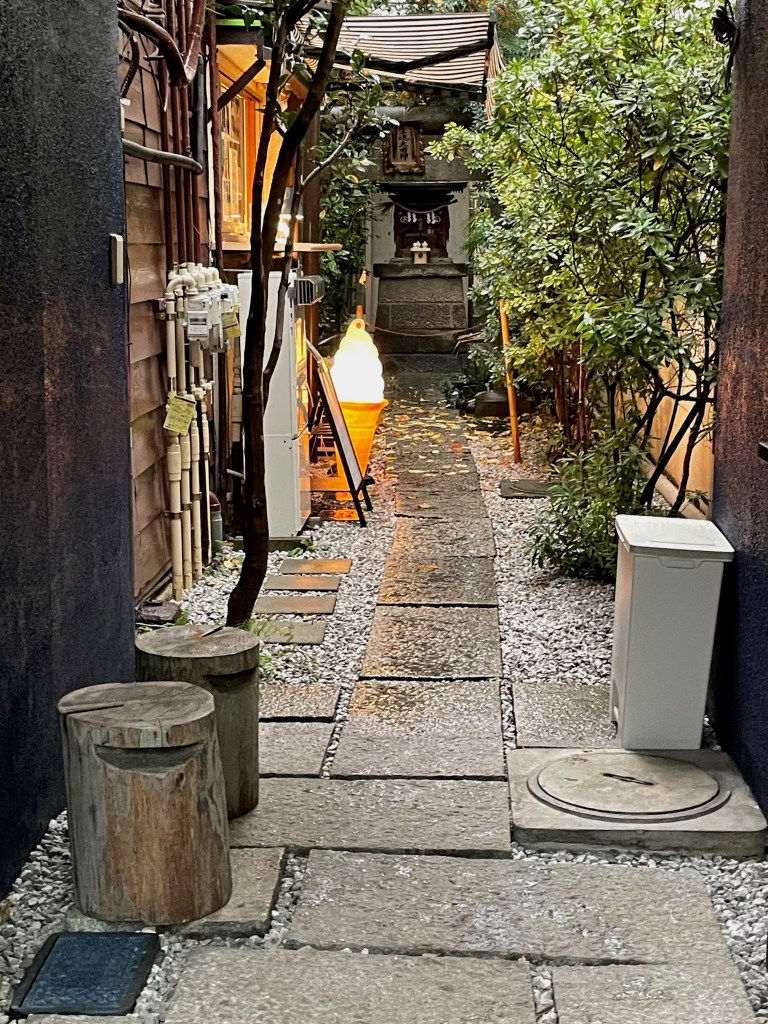
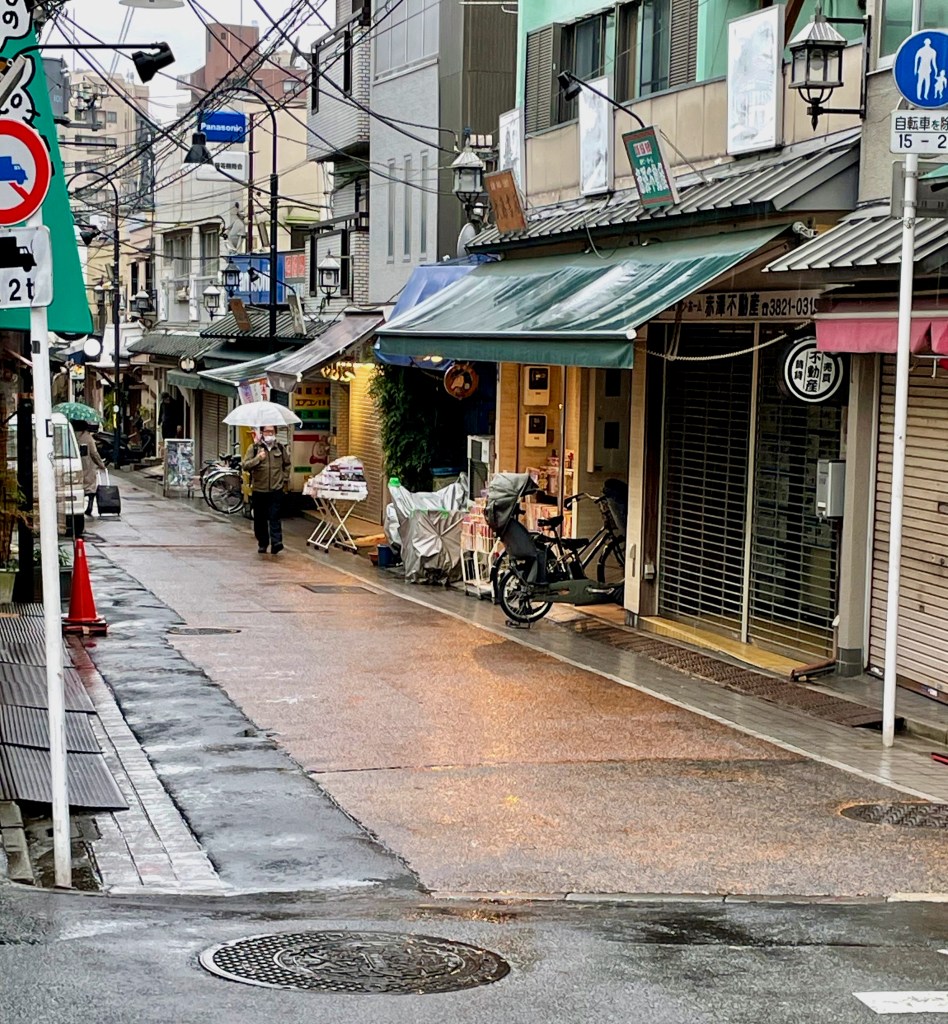

Apparently, there are about 60 shops in the Yanaka Ginza area – many of them tiny with one owner or server. Only foot traffic is allowed along the main Ginza street.
We spent a few hours wandering. I bought the best ever Japanese made nail clipper at a Japanese knife shop, and found an understated traditional Japanese Kokeshi doll of the Naruko variety lingering at the back of a shelf in another store. The shop keeper was very knowledgeable about her origins, and she spoke to me. Take me back to Australia kudasai (please). I complied. The stop keeper lovingly wrapped her for her upcoming journey, along with a few other things we bought in his store.

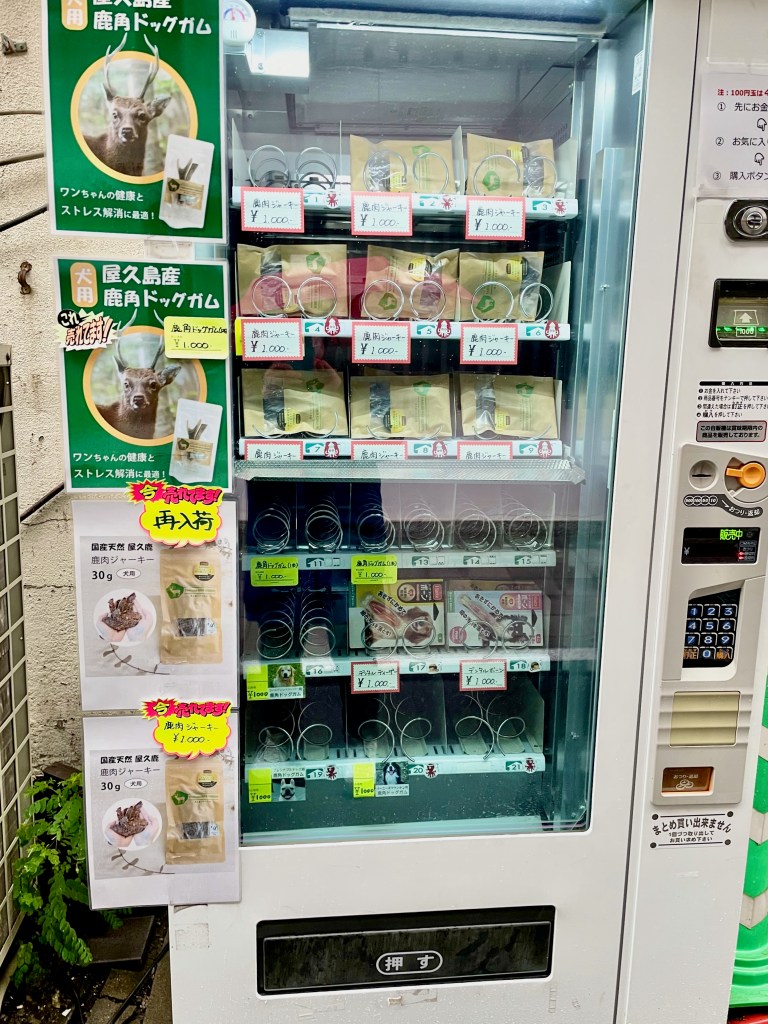
Locating a place for lunch was a little challenging. By now, the rain was pouring hard, and people were taking shelter in cafes and restaurants – so many were full. I contemplated buying from one of the vending machines we spotted in a little alcove off the main street. One had a very serious looking Chef photo on it. Was he someone famous? Should we try his food? He didn’t look like the sort of man who would entertain bad food in his vending machine!

Another machine seemed to offer some nice venison. Thank heavens for google translate. It was deer meat for dogs – a vending machine for pet food! Google told us the deer meat was “perfect for your dog’s health and stress relief”.
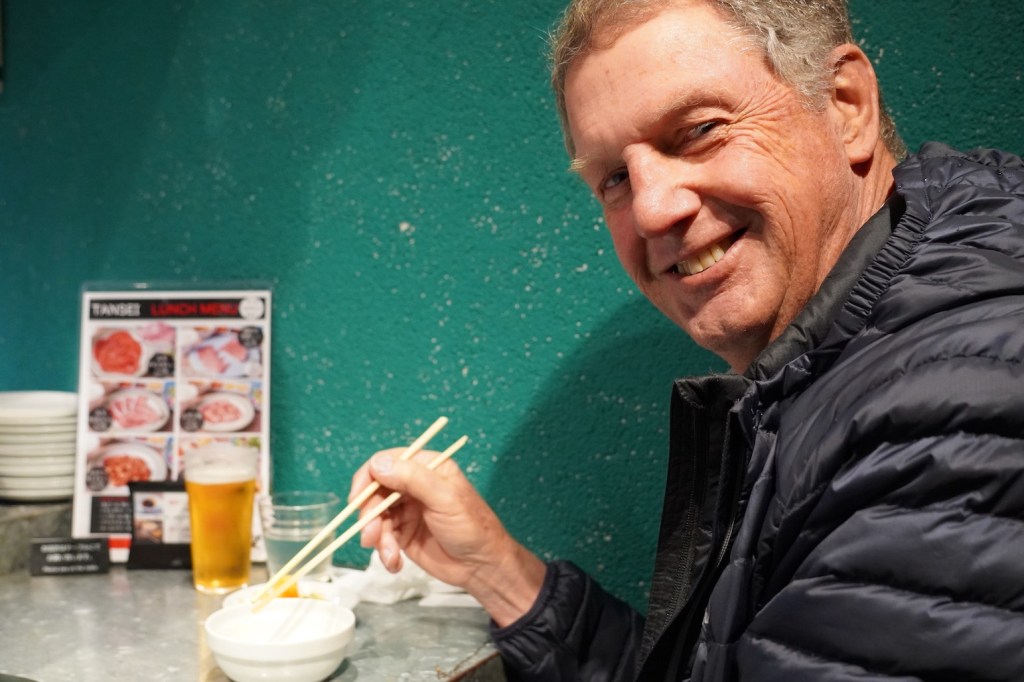
Eventually we spotted an interesting looking Korean barbecue restaurant – Tansei – in the Main Street, and it offered A 5 (top quality) beef. Yes, this is Japan, but there are plenty of opportunities in the big cities to enjoy a Korean BQ. Our mouths watering at the thought, we entered and asked for a table. They asked ‘Have you a reservation’. Well, no. Our hearts sank, takin in all the occupied tables before us. Would we be heading back to the vending machines?
“Do you mind sitting out round the back at the counter by the kitchen?” Very happy to do that! And why not. They turned out to be the best seats in the house, as we had a great view of the culinary action. Before us, we watched an expert knife man deftly slice beef for customers to cook. Artisan? Definitely! You could see into the fridge through glass doors, and the beef looked excellent quality. And rather expensive too surely? No time to worry about the budget when it’s pouring outside, and everywhere else you’ve checked has no tables. But, happy surprise – when the menu came, we could see some great affordable lunch options. Big tip here – it’s cheaper to have your main meal at lunchtime than in the evening in Japan. There’s usually lunchtime specials.


For around $25 Australian each at Tansei, we enjoyed various cuts of bq beef, salads, sake for me, and beer for MJ and – of course -deserts for us both. It was such a standout meal, with great customer service, that we intend to head back there again for lunch when next in Yanaka later this year.

https://www.yakiniku-tansei.com/tansei/english.html
One place I didn’t find in Yanaka was the Ueno Sakuragi Atari, a small cluster of old Japanese houses that have been revived by a group of local artists and local government funding. I saw a programme about it on NHK TV World back in Australia. There it was promoted as being in Yanaka, rather than in neighbouring Ueno – and indeed it includes the Yanaka beer hall where you can sample draft beer and original craft beers.
It seems it’s a fine line as to which suburb the Sakuragi Atari belongs to. Apparently, it is only about a ten minute walk from Nippori station and 15 minutes walk from Ueno staton. Yes, you can walk between the two suburbs.
I liked the backstory to the development of Sakuragi Atari – a project undertaken in conjunction with the Taito Cultural and Historical Society which restored three houses dating back to 1938. Originally, these houses were set to be demolished to make way for a parking lot. Commonsense, and no doubt a lot of hard work by locals, prevailed. The society is dedicated to bringing the historic culture of Yanaka, Ueno and another neighbouring suburb, Asakusa, to life. For more on the society’s activities, check their english language website at: http://taireki.com/en/
Along with the beer hall, it includes a boutique bakery, BQ food, and an olive shop! I was frustrated in not locating it, but with the rain increasing and the knee becoming more wonky, I reluctantly had to give up. Turns out we needed to go out the cemetery exit of the railway station and walk towards Ueno to find it. It’s back on my list for our next Tokyo visit. We will return to Yanaka – but not on a Monday! I want to check out those shuttered shops!

 Travelling Therese
What a lovely area to explore. It’s nice to read that crafts is still being kept alive and I can only imagine the delights that you would have been able to come across. Looks like I’ll need to add this to my list for when I’m back in Tokyo.
LikeLiked by 1 person
We have added it back onto our list for our next Tokyo visit to explore more.
LikeLiked by 1 person