Reposted with a few changes:

The Gamagori Classic hotel sits regally on top of a 40 metre high hill, overlooking Japan’s exquisite Mikawa Bay, its beautiful foreshore and a magic little Pacific island with a unique Torii gate. What’s astounding is that it is just a 60 kilometre train ride from Nagoya in Aichi prefecture, but most foreign visitors are unaware of it. Unaware of its art deco beauty, its history and its connection with romance, baseball and a famous American spy.

In this historical hotel’s hey day, she was popular with the super rich and famous, including the Japanese Royal family, and was the first to be designated an International Tourism hotel in Japan. Today, the Gamagori Classic is a faded old Queen, rated only 3 stars. Which made her affordable for me! $295 Australian for a twin room, including ensuite and silver service breakfast!


The Gamagori Classic has no pool, no wellness spa, no gym – her carpets are worn, and the chesterfield leather couches scattered in her foyer are wrinkled with age. But she enjoys a wealth in impressive history, with some very famous guests. Despite her weariness , I found the hotel still graciously beautiful, retaining the art deco style and a sense of quality service from the 1930’s when she was built. And her location? Stunning – the jewel in her crown.
The Gamagori Classic looked glorious on her website, and I wondered if she would live up to the photo shoot treatment. Indeed, she did.
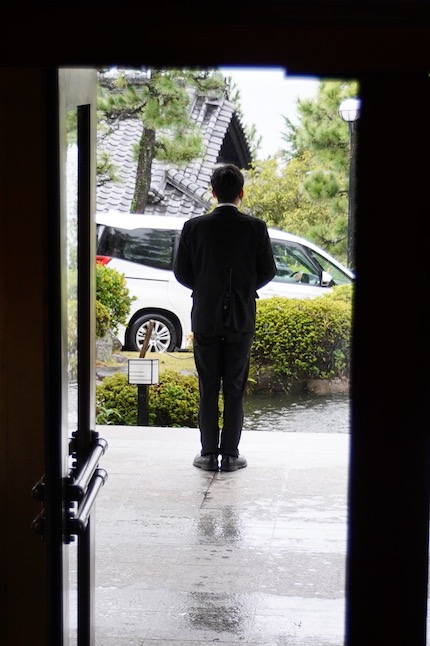
After a short, pleasant train ride from Nagoya, we easily picked up a taxi outside the Gamagori railway station. Within five minutes we were driving up a long sweeping steep driveway to the hotel’s wood framed double glass front doors, where a young uniformed man came out to greet us with a welcome smile and a deep bow.

The Gamagori Classic overlooks the Pacific Ocean. Directly below is the tiny dome-shaped island of Takeshima, a sanctuary featuring Yaotomi Shrine, dedicated to Benten (or Benzaiten) the goddess of entertainment and marriage. Other shrines are scattered around the island.

Takeshima island is connected to the shore by a 387-meter-long causeway that leads you through a stone Torii gate. This is the only place in Japan where a bridge runs directly through a Torii gate!

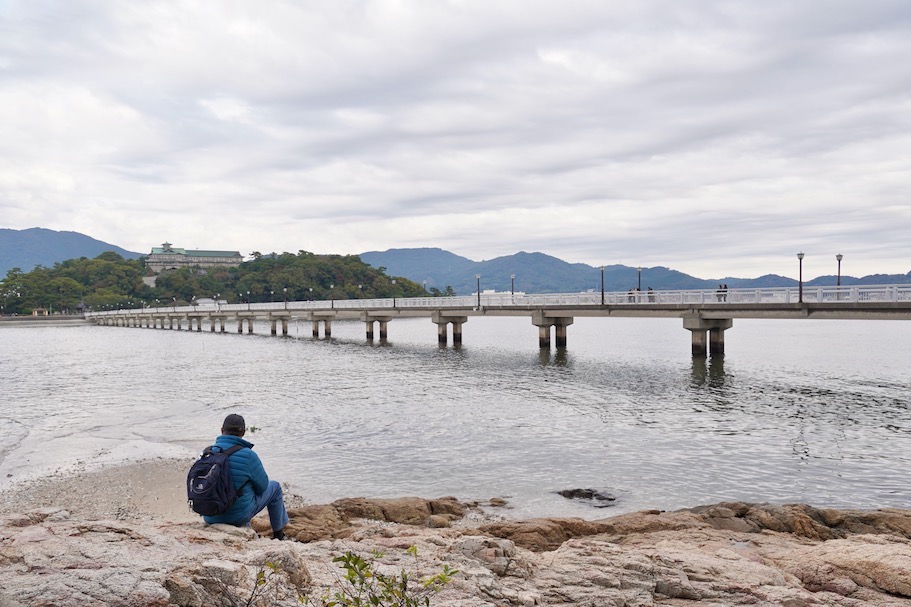
And there is romance to be found here. The causeway is said to be lucky for couples, and holding hands while crossing is customary. It attracts a steady stream of couples year-round. The Gamagori Classic Hotel has capitalised on this, promoting itself as a wedding venue with its own purpose built chapel, set in the gardens just below the main building.

Takeshima island has a circumference of just 620 meters, enclosing an area of 19,000 square meters. As we crossed the causeway to it, fish were jumping out continuously in the clear water of the bay. Oh, for a fishing rod, wished MJ (the hubby). He was so intent on figuring out what the fish were, that holding my hand under the Tori gate didn’t occur to him.
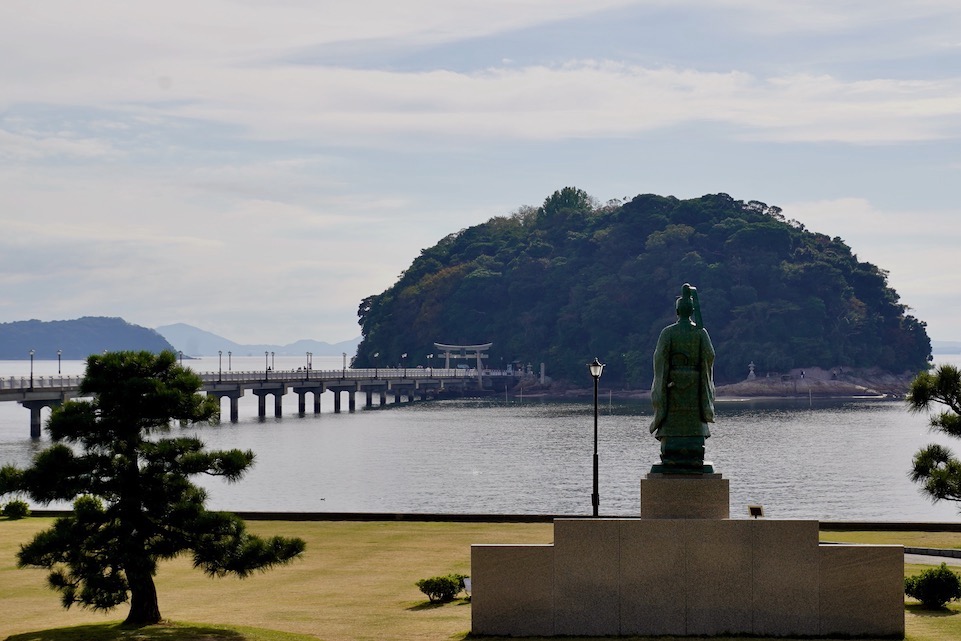
Evergreen trees cover the 22 meter high rocky outcrop, with more than 238 species of temperate region foliage – some unique to Takeshima. In winter, the island hosts migratory birds escaping Siberia.
Looking out towards the island is an impressive statue of Fujiwara Shunzei, a court noble and poet in the late Heian period to the early Kamakura period (1114-1204). He served as Governor of Mikawa Province and developed Takenoyajo and Gaqmakatajo – the current Gamagori City.

In days long past, the future Shogun, Tokugawa Ieyasu, apparently visited the island to pray for victory en route to the decisive Battle of Sekigahara in 1600. Local samurai magistrates would pay their respects here too before leaving Gamagori for annual duties at the Shogun’s capital in Edo (Tokyo) and immediately upon their return home.

Architects and lovers of design would delight in the Gamagori Classic. Her three storied white walls are topped by green copper tiled Japanese styled roofing and gables. She has been described as a ‘castle like atop its hill’, surrounded by extensive gardens that include 3000 azalea bushes. They bloom in May – a sight to behold! My visit was in autumn – last November (2023). The gardens were still a delight.


So how did I find the Gamagori Classic? Simply because I was chasing a dream on a budget! My earliest travel days in the ’70’s were on a stretched shoestring budget. Very stretched! Sharing youth hostel rooms with up to six other travellers. Sleeping in my old Kombi van with two of my siblings, or squeezed into my tiny tent carried in my 20 k backpack! There were some very cheap hotel stays in places like India and Pakistan with shared bathrooms – most had no hot water!


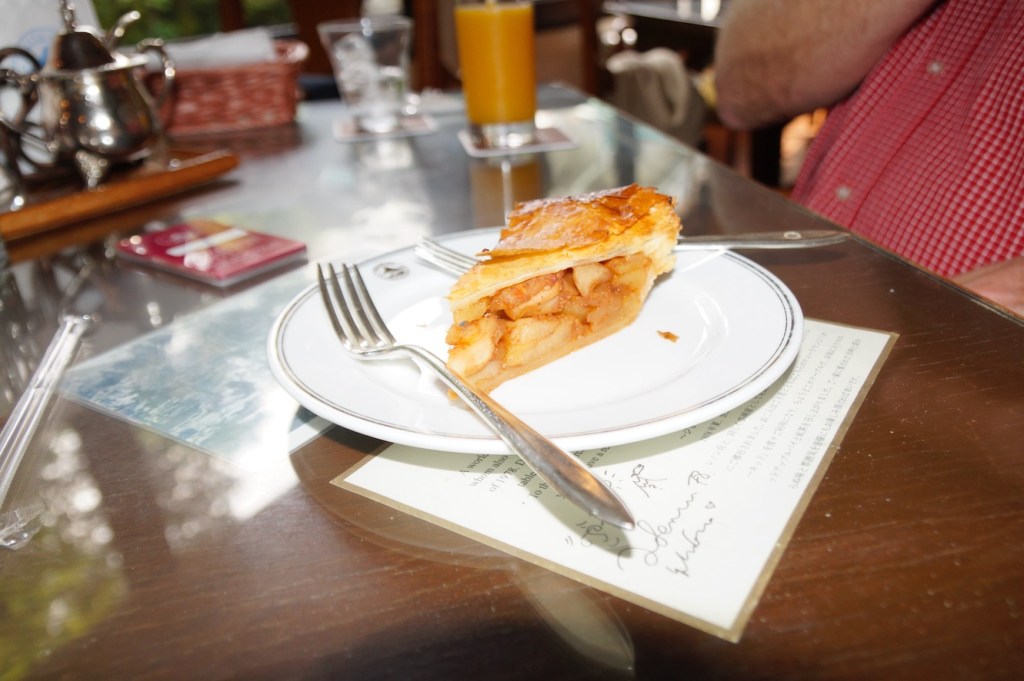
What I yearned for was an elegant, stylish classic old hotel like Japan’s 1800’s Fujiya in Miyanoshita, Hakone. Style and history overload, and a big wow factor. Fujiya’s famous customers have included Charlie Chaplin, Helen Keller, Dwight Eisenhowser, Douglas MacArthur, and royals from around the world including King Charles. I have visited for morning tea, sampling the apple pie favoured by John Lennon when he was a guest with Yoko. But the Fujiya is beyond my accommodation budget. Could I stretch to a room in its cheapest Forest Wing rooms – built in the 1960’s? At more than $600 Australian a night in a building younger than me, it’s not what I desire! To stay in the original historical parts of the hotel remains a ‘when I win Lotto’ wish.

So, during the pandemic I began searching for another historical hotel in Japan – one also with history and style – but one that I could afford. And that’s how I ended up at the Gamagori Classic Hotel. It is nowhere near as grand as the Fujiya. Much smaller, but still – as its name implies – a classic.

THE BEGINNING
The hotel opened 1934, though its roots go back to 1912 with the previous hotel on the site.

BASEBALL AND A FAMOUS SPY
The hotel quickly became the place to go for the wealthy and the influencers of the day. That opening year, guests included a team of American baseball All Stars on tour in Japan including legendary players Babe Ruth and Lou Gehrigg. More than half a million Japanese turned out to welcome the team when they arrived in Tokyo.

At the Gamagori, Babe Ruth – as famous in Japan then as Shohei Ohtani is today – and his wife had Room 26, Lou Gerhig and his wife stayed in Rooms 1 and 2, and Jamie Foxx – the baseballer, not the actor – was in Room 21.
Also staying at the hotel was team catcher, coach and WW2 wartime spy, Moe Berg. You might be familiar with him through the book and the film ‘The Catcher was a Spy’. Moe had already explored Japan a few years earlier, and returned with the team in ’34. The tour aimed to promote peace, good will and understanding in the increasingly tense political times of the 1930’s. But Moe was ahead of the game – apparently was already doing a little spying, often leaving the team to go off on his own with his movie camera, capturing information that subsequently was used to plan air raids on Japan.

Moe fired my imagination. I am a fan of the Scottish novelist John Buchan, and his books The Thirty Nine Steps and Greenmantle. Moe would have fitted in well in either book! To stay in a hotel where Moe silently crept through the hallways – icing on the cake for me!

Within a decade of opening, the hotel was struggling. It was confiscated in 1944 for use as a Japanese Army hospital, and after the War, was confiscated by the USA Army. The Gamagori finally reopened to the public late in 1951, but by 1952, it seems to have closed again. I haven’t been able to find out the details, but it had reopened by 1955, with the Crown Prince (later Emperor) of Japan, Akihito visiting. In 1957, his parents, the Emperor and Empress stayed for two nights.
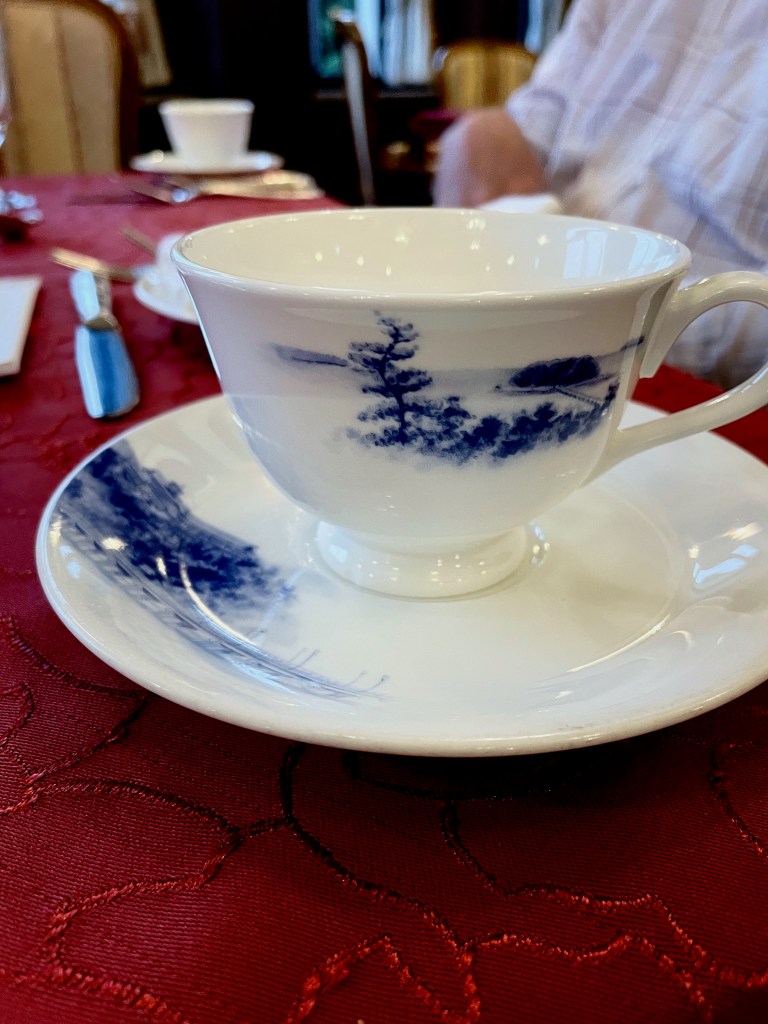
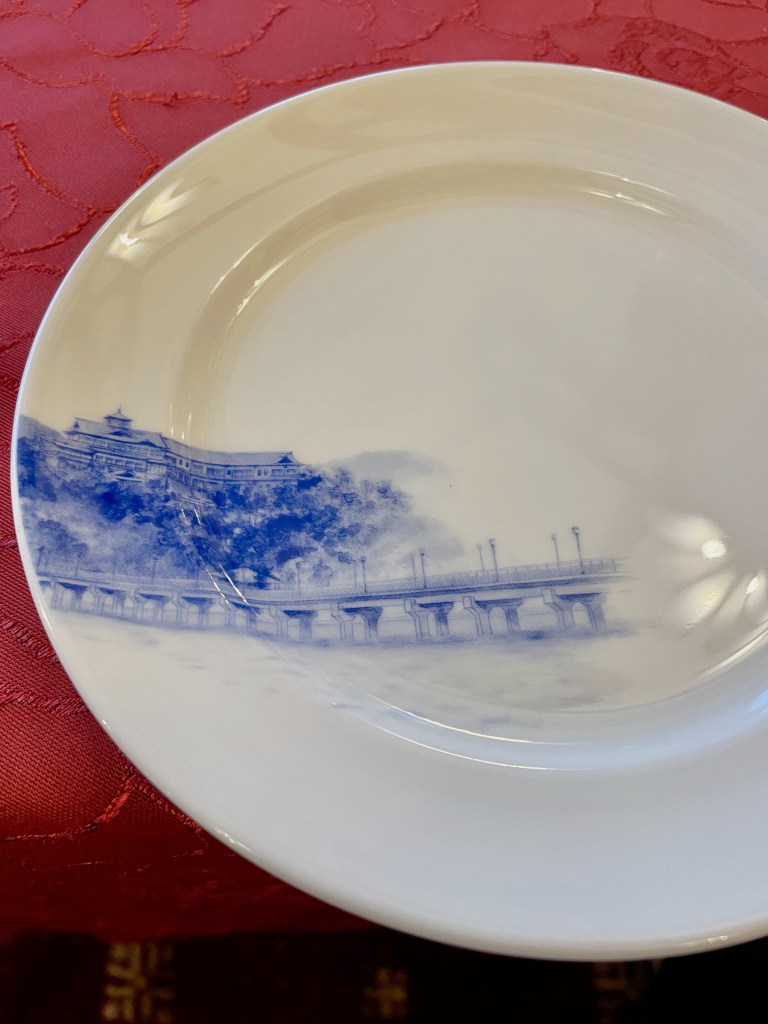
In 1965, the Crown Prince stayed once more to attend a major yachting contest. Gamagori is a big yachting area, by the way. Mounted outside the Gamagori Railway station is Japan’s first entrant in the America’s Cup.

By ‘66, the hotel once more closed its doors, as other areas of Japan became more popular, and flash new accommodations offered more modern amenities and in house onsens. It was brought to life again with a new major shareholder. But its days as a major tourist hotel continued to wane. In 1980, it was sold to Gamagori city for 1.95 billion yen. In 1987, it was sold back to private ownership.

Today, the Classic Gamagori is registered as a national tangible cultural property. It has never regained its early glory days, despite retaining its elegant character, but it does attract a steady stream of mainly Japanese guests. It also appears to have a strong connection with International Rotary.

The ‘Aichi Now ‘official tourist site describes the Classic Gamagori hotel as a place “offering an experience of an authentic elegant atmosphere of days long gone by.” And indeed it does.
The Hotel has several dining options including a café terrace offering panoramic sea views.
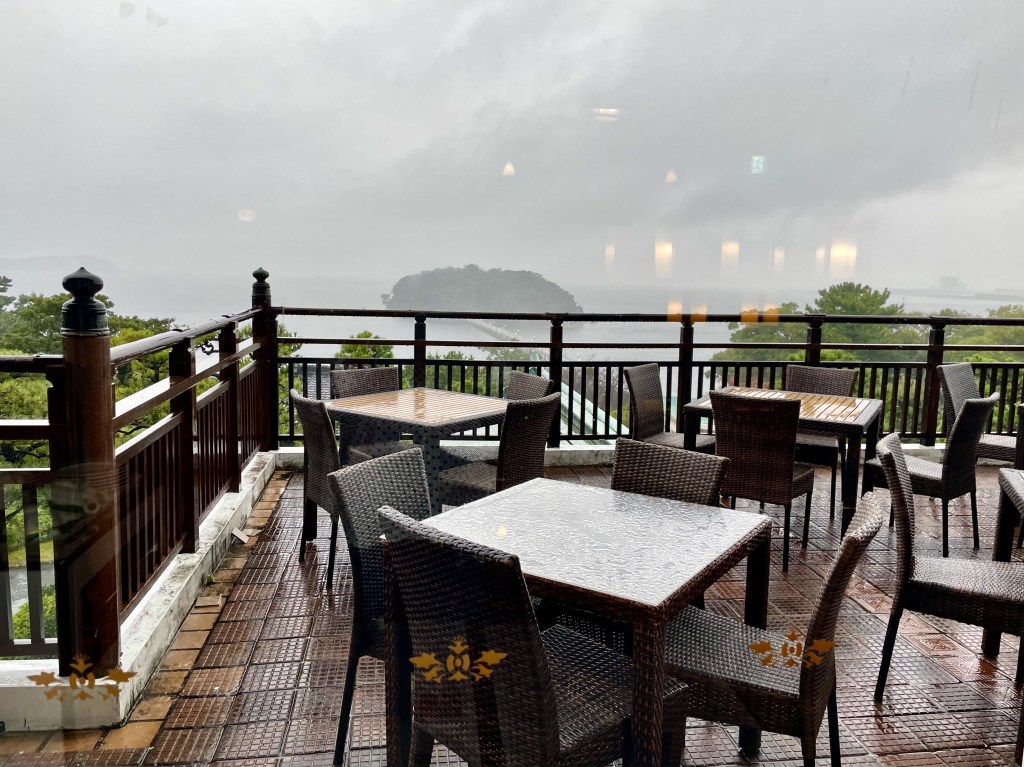

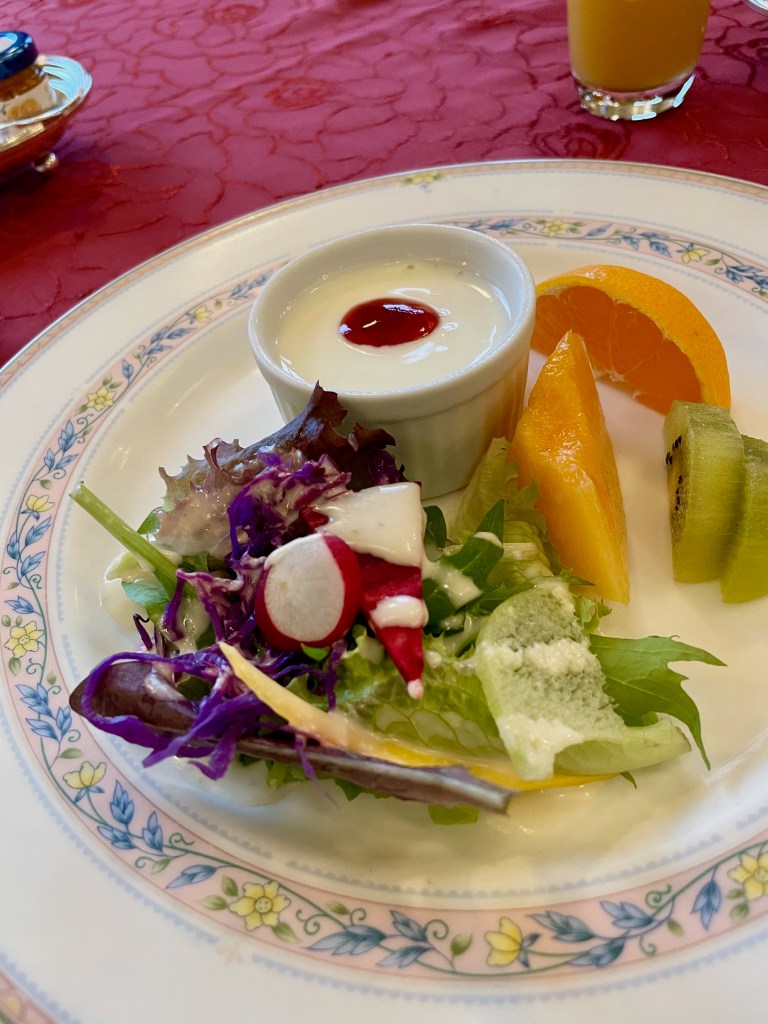
French seafood dishes are served in its main dining room, while teppanyaki steak and seafood specialties are offered at restaurant Rokkakudo. Restaurant Takeshima serves traditional Japanese kaiseki multi-course dinners. Rooms come with sea or mountain views. Our twin mountain room with ensuite was simple, but comfortable. And our tariff included silver service breakfast. Of course, I would have loved to have stayed in one of their luxury digs, the Emperor’s digs, or even the room where Mo stayed. Oh, for a free upgrade! One should always continue to dream!


Would I return to the Gamagori Classic? Absolutely. We were only booked for one night, and would love to stay again to explore the Gamagori area more. It has lots to offer including a City museum, a seaside Literary Memorial Museum, a beautiful marina, a ‘fantasy museum’ where visitors walk through an undersea adventure in four mini theatres made from 55 million seashells, cruises in the Bay, boat races, onsen hot springs, the Takeshima Aquarium, a local fish market, plus seasonal festivals.
THIS IS THE THIRD STORY ON THIS TRAVEL BLOG FROM OUR NOVEMBER 2023 VISIT TO JAPAN. MANY MORE TO FOLLOW SOON HIGHLIGHTING PLACES WE VISITED OFF THE BEATEN TOURIST TRACK.
YOU WILL FIND MORE OF MY PHOTOS ON INSTAGRAM AT aussieboomer1

 Travelling Therese
I love the dreamy outdoor captures over the water. Such a stunning place. The hotel is mighty fancy – breakfast looks fabulous and fancy. No rice & pickles served?
LikeLiked by 1 person
It is a very calming and beautiful view over the bay. The hotel has a 1930’s charm – a bit weary, as I mentioned in the story – needs some update money spent on it. But then that would probably take it out of my budget reach. Our twin room was fine at just under $300 australian dollars including a silver service breakfast. No ..no rice or pickles at breakfast! LOL! Seemed to be a lot of French wine available, so I think their menu is French influenced.
LikeLiked by 1 person
It is always a tricky balance of charm, comfort & price. It does look a lovely place – it reminded me some of the Fujiya Hotel in Hakone which we visited decades ago.
LikeLike
[…] Therese’s Japan’s Gamagori Classic Hotel: a spy and a baseball: whisks us off to stunning historical […]
LikeLike
I’m not sure if you have read these two stories of mine centred in Singapore .. a bit of history there too .. you might enjoy them… https://travellingtherese.com/2022/06/08/singapore-still-fascinating/
LikeLike