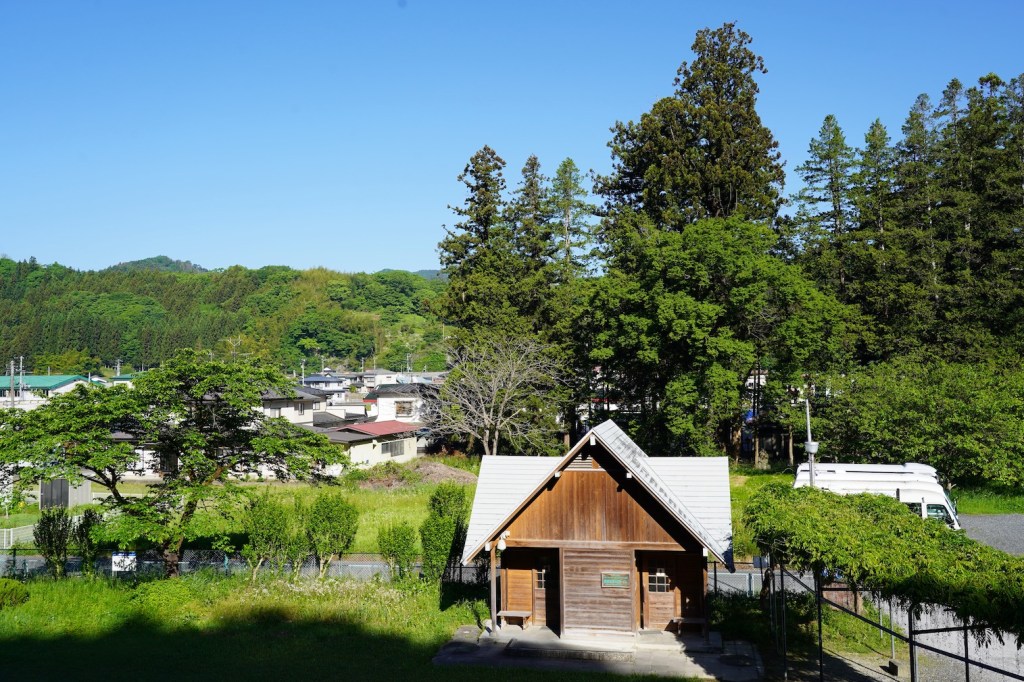
Enjoying the simple pleasures of a small country town in Japan came about because the country’s famous reliable railway system let us down in the prefecture of Iwate – about a three and a half hours’ rail journey north of Tokyo.
MJ and I are massive fans of rail travel in Japan. Rail is our principal mode of transport there. But it’s not quite true to say their trains are always on time, always there for you. Because nothing is infallible. There’s been a string of Shinkansen delays in the last year. On our journey we faced train schedule interuptions – firstly because something had fallen on overhead wires and secondly because a car had crashed onto a railway crossing. We took these in our stride, and were able to reach our destinations on both occasions a few hours later than planned.

The third incident was much more than a delay, and torpedoed our travel plans! Trackworks caused a week of major service cancellations for a small country town called Higashiyama-cho, about a half an hour’s train ride from the centre of Ichinoseki city in the south of Iwate. You could catch a train very early in the morning and return late in the day – but nothing was running in between. Something we didn’t discover until we got there!
However, in one of those delightful twists of fate, our ‘train deprived’ time introduced us to the joys of a Japanese country town, enabling us to discover simple pleasures off the beaten tourist track.
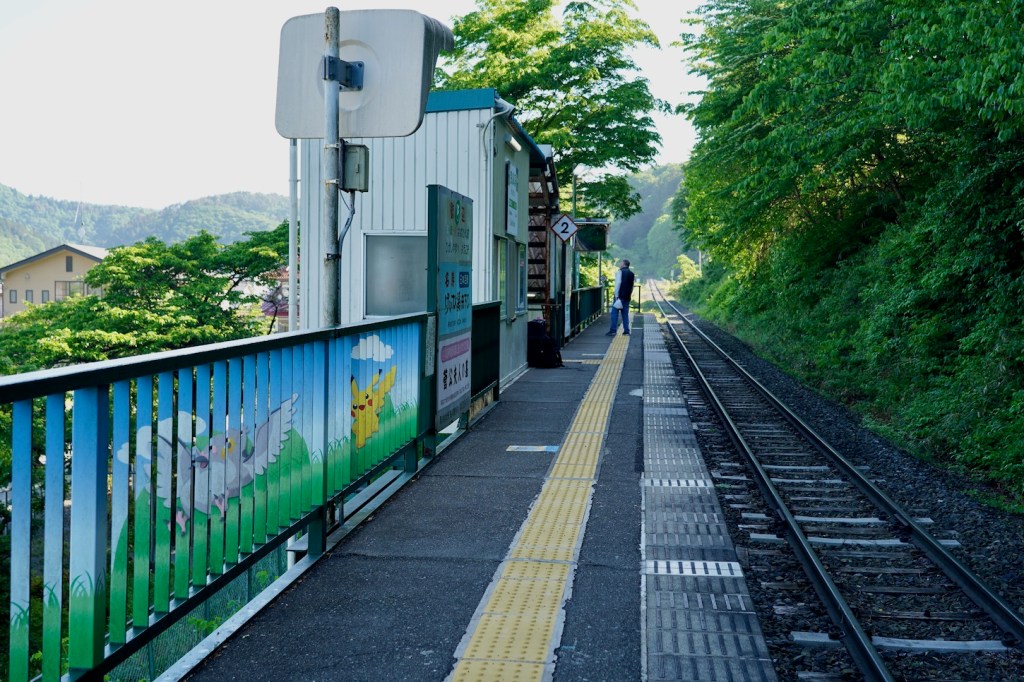
We headed by rail to see Japan’s spectacular two kilometre long Geikikei Gorge, designated a National Place of Scenic Beauty and Natural Monument since 1923. In 1927 it was selected as one of the 100 Landscapes of Japan . For most people, Geibikei is a half day visit on a bus tour or by car. At weekends, many come by rail to experience a Pikachu-themed train that runs between Geibikie station and Ichinoseki – a collaboration between the Pokemon Company and Japan Railway.
We had decided to stay three nights to see the gorge and to use the small town surrounding it as a base to visit other Iwate attractions.
I should have suspected something was up with the railway services when we arrived in Ichinoseki to find we had a 3 hour wait for our connecting train to Geikikei Station – just over half an hour away on the JR Ofunato line. I’d heard the service was infrequent, so I failed to query the delay. While waiting, we even wandered into the Ichinoseki tourist office outside the railway station and had a good chat about where we were heading. No other tourists in sight anywhere! So you’d think they might have mentioned the train situation.
Most visitors refer to the town as Geibikei. After-all, that’s what its decaying one-platform train station is known as. But in fact, the town goes by a different name of Higashiyama-cho. There’s further confusion about this town with internet references that locate it in Ichinoseki city. Which officially it is. But it’s a good half hour train ride away from the Ichinoseki city railway station, and you are very definitely in the countryside!
Higashiyama-cho was created by the merger of several villages in the 1950’s, and later brought under the Ichinoseki banner. Which of these original towns surrounds Geibikei station, I’m unsure – but my limited research indicates it may have been Nagasaka. The ancestors of the family that owns the guesthouse where we stayed arrived here in 1699! They are probably still regarded as newcomers as people have been in this region from somewhere between the 7th and 9th century.

On our first morning we did the Gorge boat tour – excellent. Worth the effort to get there! We boarded one of the first boats out early in the morning to beat the onslaught of day tourists, soon to arrive in endless tour buses. So, by mid morning, the gorge was done, and we were wondering what else we could we do in Higashiyama-cho, with no trains out to explore nearby areas. On the face of it, the town offers little for a tourist. So we began to explore, walking the streets, crossing the river, crossing back, walking, walking and discovering!
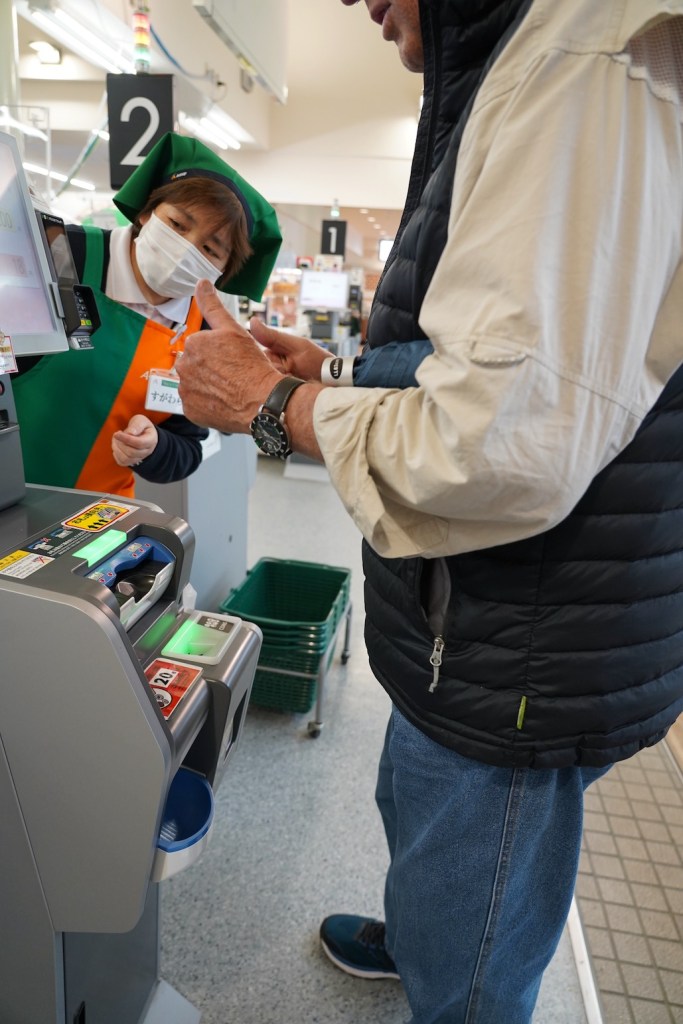
We spotted a Co-op supermarket – run, I presume, by the community. We are very familiar with convenience stores in Japan, but not supermarkets. So trawling the aisles, checking out the products and prices available to Japanese shoppers was new for us, and a lot more interesting than I would have anticipated. Of course, we didn’t pass the chocolate aisle without making some purchases. It was challenging working out how to pay, but a kind assistant helped us out!
We wandered alongside a rice paddy being planted out by a farmer on a rather fascinating machine. I’ve seen a lot of rice paddies in Japan, usually from a train or a plane, but rarely up close. We sat down on a grass bank overlooking the paddy and spent a good half hour watching the farmer at work, gaining a greater understanding of rice farming. I was amazed at how well the machine did in moving through mud and water.

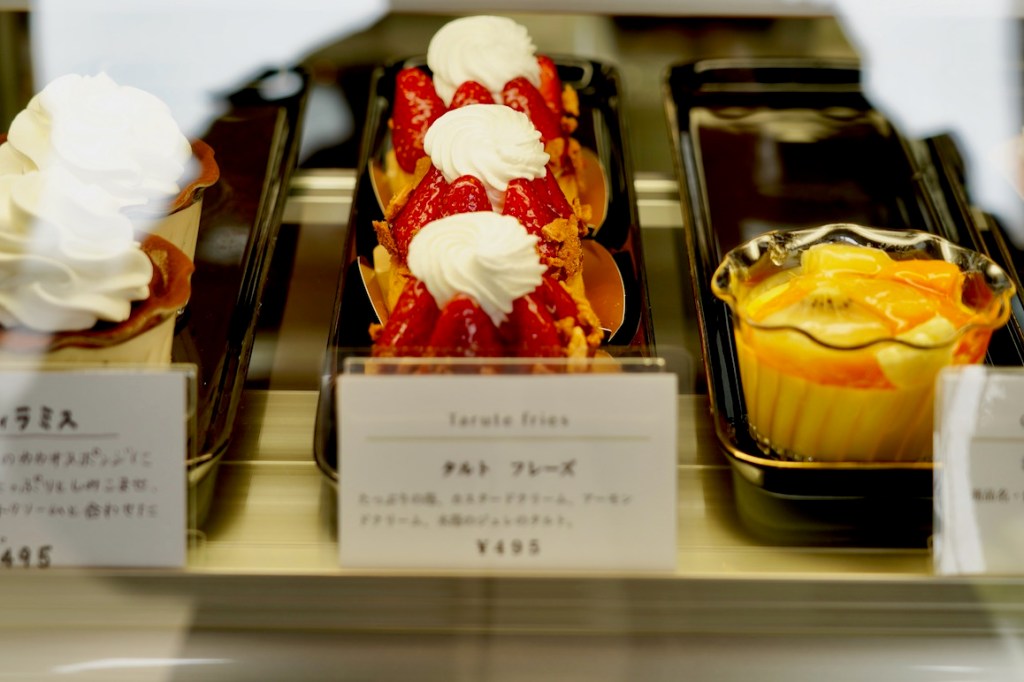
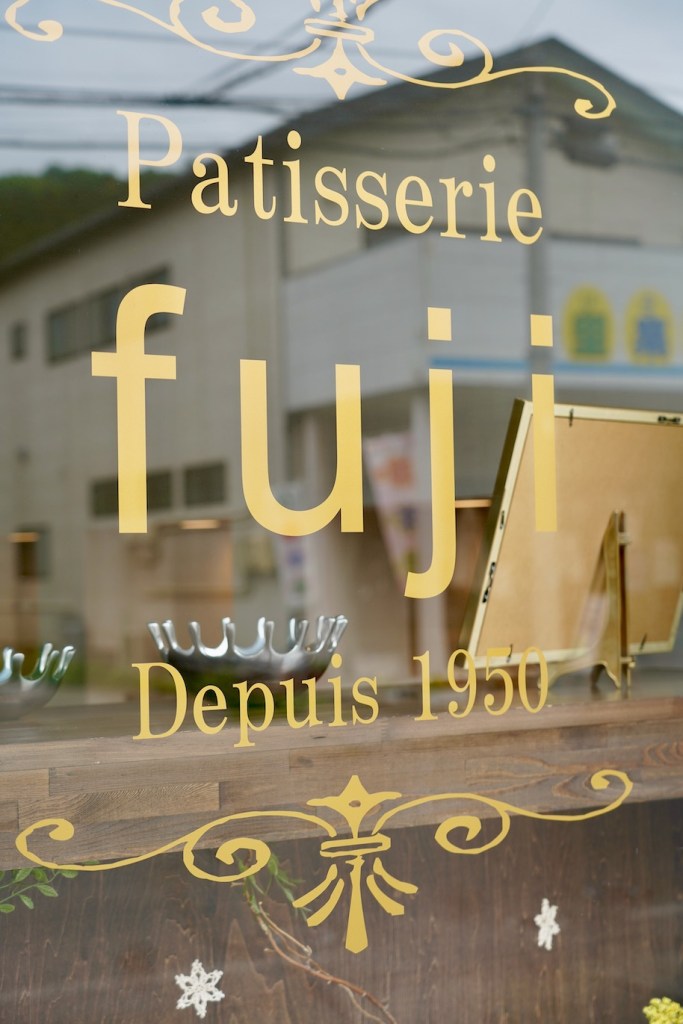
We checked google maps for somewhere to eat, and it told us there was a French patisserie nearbye. Surely not. We seemed to be in a regional backwater, the streets very quiet, lined mainly with houses. As MJ remarked “I could have kicked a football down the street and hit no-one!” But suddenly there it was – ‘Patisserie Fuji’ – a high end desert shop heaven that, according to its sign, has been operating since before I was born! Indeed, we felt it must be a mirage. We were the only customers, although to exist for so long, it must have a loyal support base with refined tastes. There were delicate French style pastries, macarons, cakes, biscuits and gelato. All superb. The shop only offered takeaways – beautifully packaged to take home, of course. We splurged and took our unexpected treats back to our guesthouse to enjoy.
We were in super relax mode by now, so MJ took an afternoon nap and I hit the streets again with my camera. I do love wandering.
I spotted an elderly woman tending her front garden, and she beckoned me over, pointing to her beautiful plants and giving me the nod to photograph them. She then directed me to her backyard where there was another exquisite garden discovery. She was very proud of that garden, and so she should be. Carefully planned and nurtured. Neither of us spoke each other’s language, but we understood each other and the joy that nature can provide with some love and care.

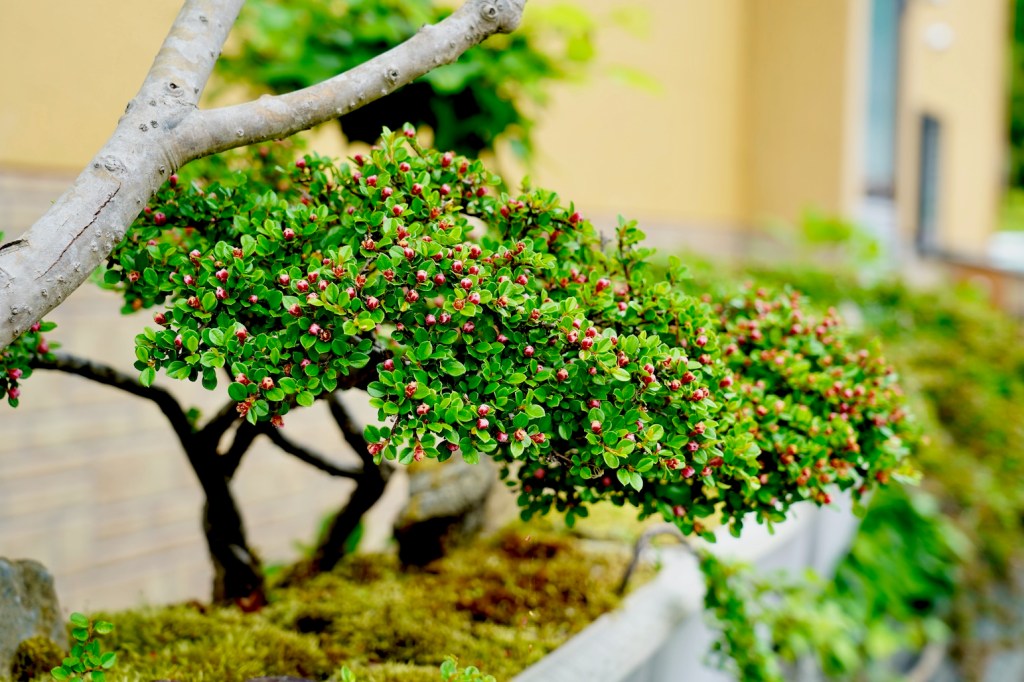


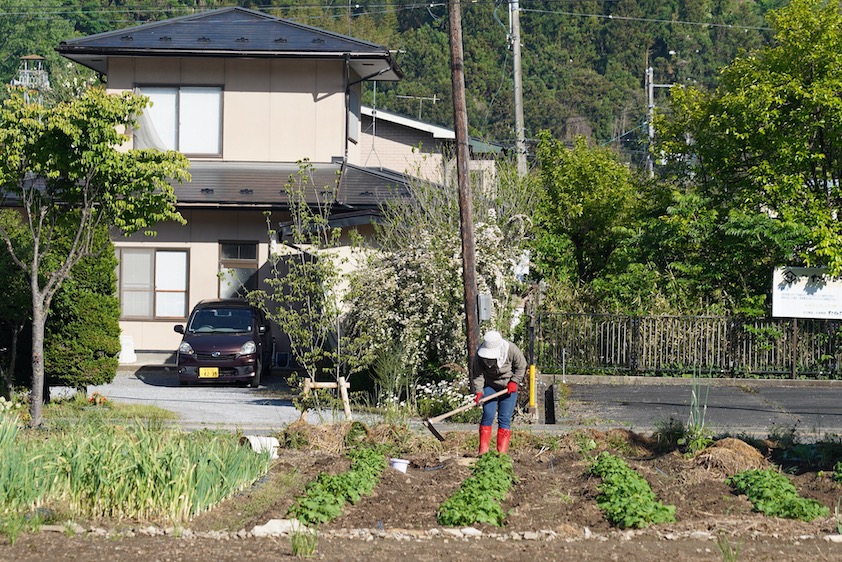
She wasn’t the only good gardener in the town. There were many wonderful home gardens to view on my stroll, and plenty of vegetable patches that gave me a good indication of what people ate here!
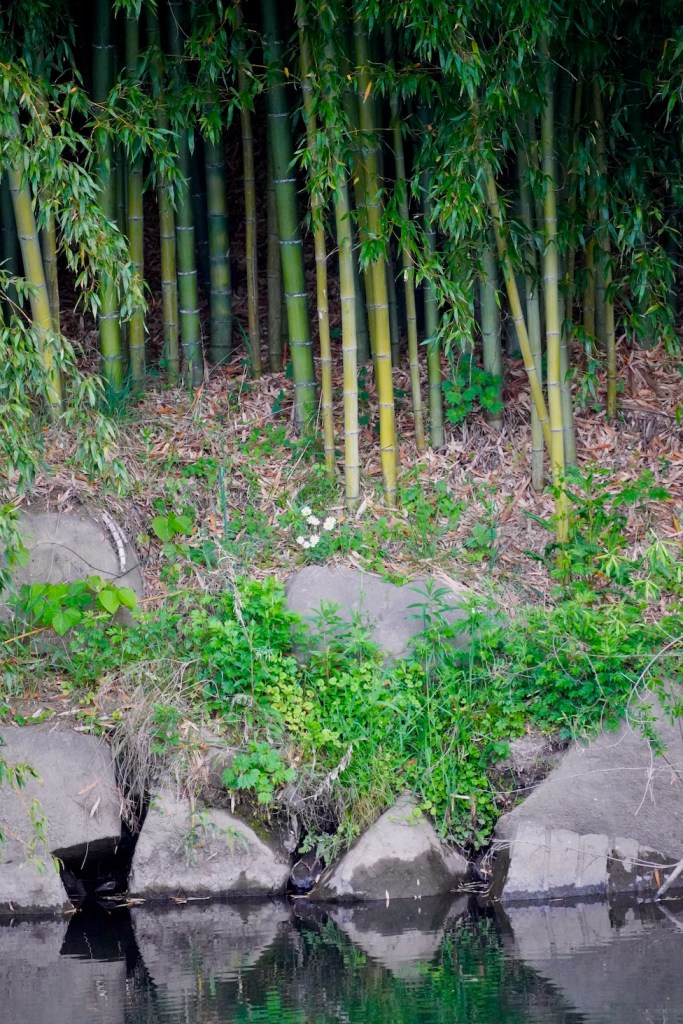
The seeds of many flowers had spread to verges and along the river bank – an array of flowers, running wild, but so beautiful!


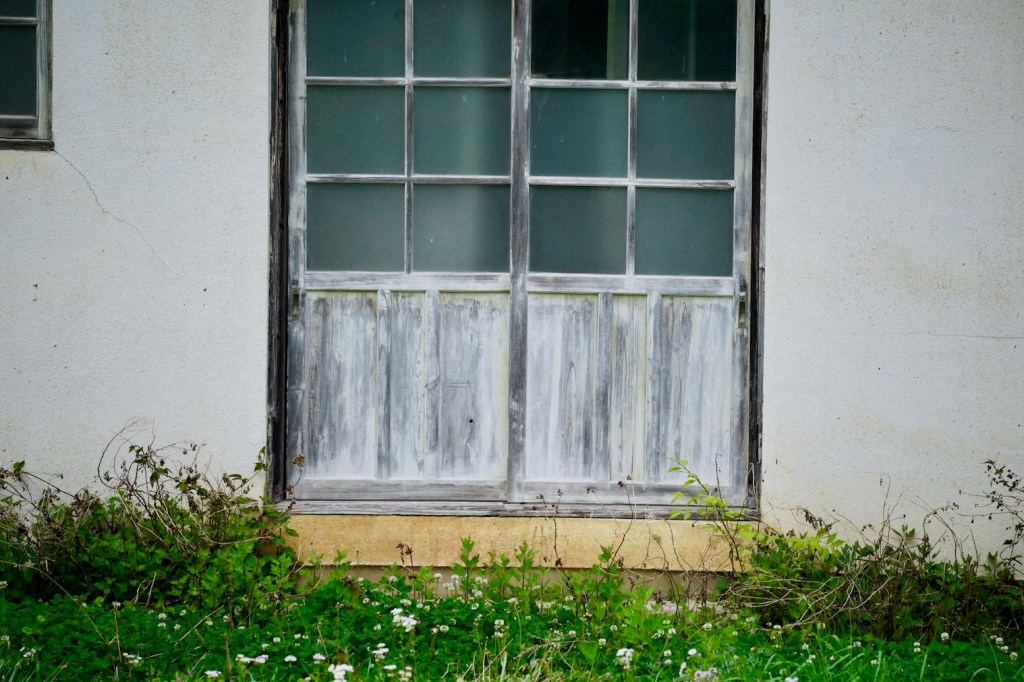
I love looking at architecure – and I had plenty to see in this town from modern homes to old abandoned ones.

Later, MJ joined me for a stroll along the river, spotting bamboo cutters at work on the opposite side, and water birds having fun. White wagtails seemed to be in abundance! MJ was also delighted to spot a Meadow Bunting!


Crossing the river, we saw a few statues on a bridge. I’m not sure who she was, but google translate’s interpretation of the signs near her suggested she was welcoming. She may have been Benzaiten, the patron goddess of music and I stand corrected if I’ve got that wrong.


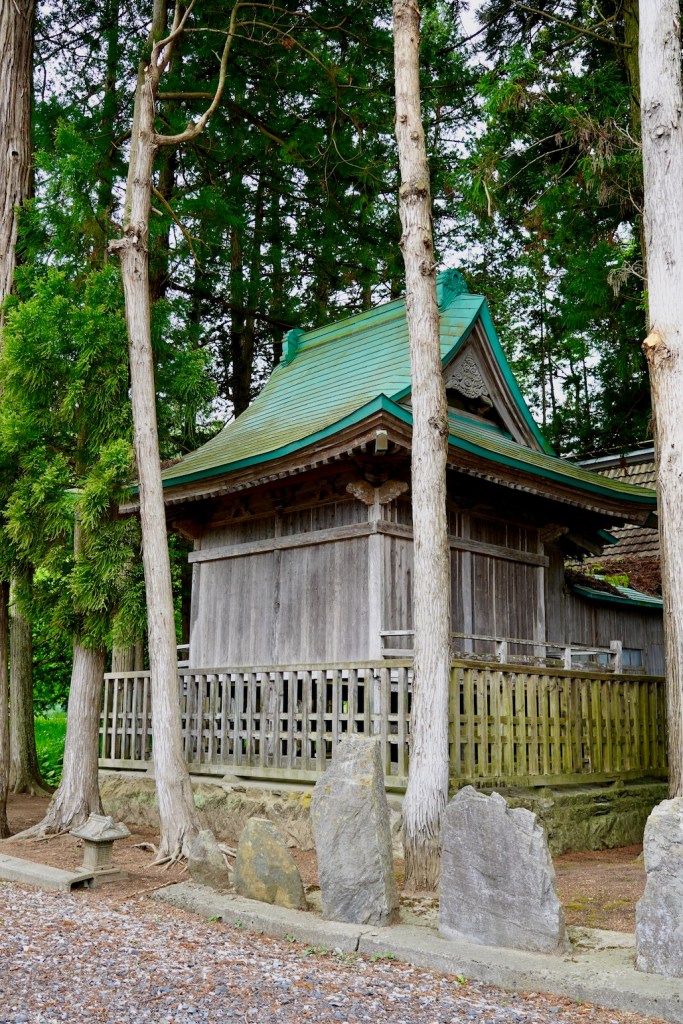
There was a shrine – or was it a temple? We weren’t too sure. We came across a little complex hidden amongst tall trees in the heart of the town, and it looked quite old. There was no one else there. A place where you felt the urge to take a moment to thank whoever is up there for bringing you to this lovely town.


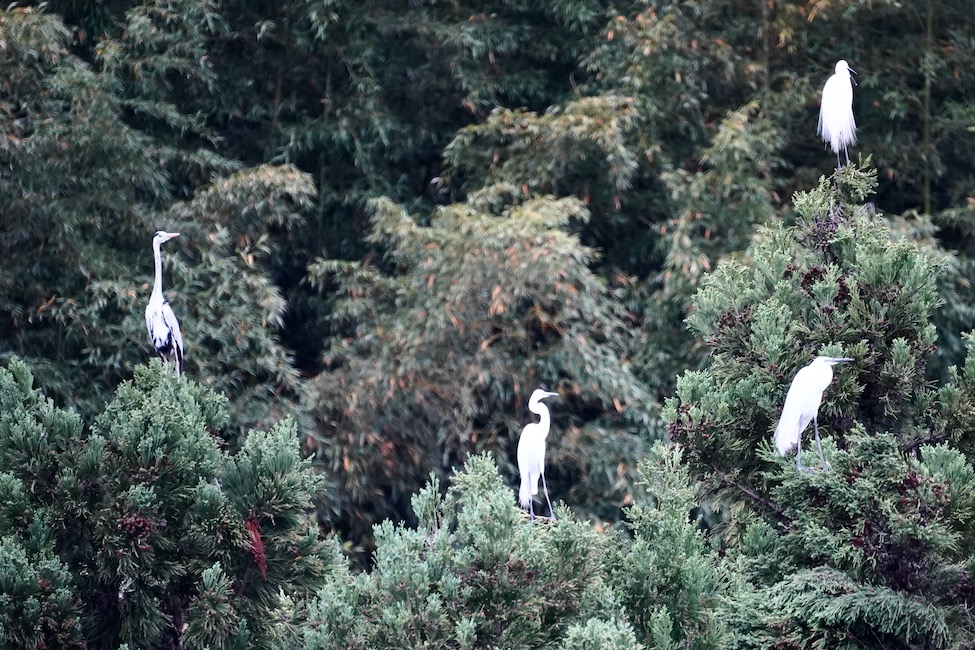
The evenings brought a special treat – hundreds of grey heron and great egrets massing on trees high on the hills overlooking the river – a bird spotters paradise. They were some distance from us, and my lens strained to capture them as they flew back and forward, resting in the treetops, some battling each other for a comfy perch. Perhaps it’s best I failed to photograph them well. It was an incredible sight – if not a little noisy. If word got out, it could attract tourists in droves, spoiling the ambiance of a Higashiyama-cho evening. Shush – don’t tell anyone else!
In the morning, we were awoken early by bird song – a tiny bird – I couldn’t identify him – but he was chirping enthusiastically. Not a classical calming little guy. More rock and roll. Get up and have another great day!


A day trip I had planned from Higashiyama-cho was to the historical town of Hiraizumi, famous particularly for two temples – Motsuji Temple and Chūson-ji. It would have been a simple trip had the trains were running. I fell in love with this place because of a poster I’d seen earlier on our journey. It was advertising a festival there, and I was so excited when I found out it was near Higashiyama-cho.
We were assured by our guesthouse host that we could get there using a Geikikei bus, but we were not so confident. Perhaps we could get there, but could we get back? Nothing ventured, nothing gained – so we found our way to what we thought was the town’s bus office. It wasn’t, and I suspect no western tourist had ever gone inside. Chairs throughout the big office swivelled in our direction, and faces filled with confused smiles at our arrival. No-one spoke english, but with google translate in action, we were directed back to Geikikei Gorge where we were assured we would find the direct Geibikei-Hiraizumi bus we needed. A timetable was produced, and we told we could definitely catch a bus back in the afternoon. One lady even kindly escorted us down the street to point us in the right direction.

At the gorge there were big empty tour buses and a trio of tour bus drivers sitting on a step, having a morning break. Google translate again. None of them were our bus driver, but they ushered us to a small bus stop at the end of a little alleyway, where they indicated by pointing at their watches that our bus would arrive soon. It did not look like a place where you would catch a bus! But they were insistent. A paper sign pasted onto a pillar provided a bit more information. Lucky it wasn’t a Tuesday – doesn’t run then. Lucky we had cash too – no cards accepted! Pay later? When we get off the bus!
Right on time, a weeny teeny bus arrived and took us on an amazing journey around mountains, tunnels, valleys, and tiny villages via very interesting back roads to our destination. We were the only passengers! It turned out to be one of the highlight journeys of our Japan trip!


Our small bus fares would definitely have not paid for the journey’s petrol or the driver’s wage! We did manage to catch the return bus – this time there were two more passengers – local ladies returning to Higashiyama-cho after a day’s outing.
I will write about our time in Hiraizumi in an upcoming story.
Higashiyama-cho gave us an unexpected breather on our planned Japan itinerary – a place where we went off script with time to stop and smell the roses. To meet kind people who welcomed and helped us with a smile. A chance to take a local bus on a wonderful ride and to embrace the unexpected. We will never worry again if Japan railways fails us. It was a gift when it came to Higashiyama-cho – a little town we remember with great fondness.
See my other stories on – Gorgeous Geibikei Gorge, amazing meals at a guesthouse with a difference and an outstanding Shrines and lakeside garden in Hiraizumi.
Don’t forget to check out on photos on Instagram – Aussieboomer1

 Travelling Therese
I have been fascinated with the Hiraizumi area for quite a while. Believe it or not, Hiraizumi rivaled Kyoto at one time in terms of wealth and population. A branch of the Fujiwara family came to the area from Kyoto. Apparently they intermarried with the local aristocracy, many of whom were Emishi. Gold was discovered and Hiraizumi became wealthy. Emishi were likely related to the Ainu of Hokkaido, but it’s not clear who they were. The matagi of Akita Prefecture are said to be descendents of the Emishi.
Although they paid homage to the emperor in Kyoto, the Northern Fujiwara basically were their bosses for about 100 years at the end of 11th century to the end of the 12th century. That all came crashing down when the Minamoto family conquered the area. Hiraizumi never recovered.
LikeLiked by 1 person
I agree .. our little bus trip through this area revealed lots of interesting little places. I definitely would like to return one day and explore more.
LikeLike
If you really want to get off the beaten track, look into the Kunisaki Peninsula in Oita Prefecture. There is something called the rokugo manzan. It’s like Indiana Jones stuff
LikeLiked by 1 person
Looked it up â¦interesting, but I would have to roll back many years – sadly past my prime for that, especially with my crook knee. T
Sent from my iPad
>
LikeLiked by 1 person