
Never heard of it? Chances are, if you have been to Japan, you may have been there. Not as Enzo – that barely lasted as a whisper in history. But as Hokkaido and its delightful southern harbour city of Hakodate.
I finally made it there in May last year (2024) during my sixth trip to Japan. I travelled by Shinkansen through a tunnel under the sea between the islands of Honshu and Hokkaido. And frankly, after just four days there, I didn’t want to leave. For someone who is not that keen on cities, that says a lot about beautiful Hakodate.
In essence, it is unlike any other Japanese city I have seen, full of interesting architecture, great food, harbour sights, an international flavour and unique history. In my four days, I barely scratched the surface, and I want to return!

Hakodate is a very walkable city with cute trams if you’d rather ride. It’s difficult now to visualise the city in battle mode – but around 150 years ago it was the last desperately fierce Samurai stand against the Emperor’s Imperialist forces.

In 1868, Shogunate Samurai, battling to preserve their lifestyle, chose Hakodate for a last brave effort in the Boshin War with the Meiji Emperor’s forces.
Although technically answering to the Emperor, Samurai in effect had ruled Japan for 700 years via Shogunates. But after Japan’s forced opening to the world by the USA – check out the story of American Navy Commander Perry’s threat to destroy Edo (Tokyo) – political forces moved to regain the Emperor’s powers. Late in 1867, the last Shogun Tokugawa Yoshinobu resigned, and eventually he was rewarded with the title of Prince for his services to Japan.
But some samurai refused to give in and continued to fight, becoming known as rebels. After a fierce battle in Aizu Wakamatsu, Fukushima, they fled to the northern island of Hokkaido in the hope of establishing their own little country, separate from Japan.


One leader arrived in Hakodate with the remnants of his navy and a handful of French advisers in the winter of 1868. They formally established the Republic of Ezo on Xmas Day that year, and tried to gather international recognition from foreign legations based in Hakodate, including the Americans, French, and Russians.
Their little nation didn’t last long. The new Imperial Japanese Navy was hot in pursuit and by spring, May 1869, Hakodate saw a fierce land and sea battle, with a decisive win for the Imperial Navy.
My visit to Hakodate was partly inspired by Samurai hero, Hijikata Toshizo, who went to Hakodate stating ” I am not going to battle to win. With the Tokugawa government about to collapse, it would be a disgrace if no one is willing to go down with it. That is why I must go. I will fight the best battle of my life to die for the country.“

Hijikata was a noted Samurai Vice Commander and man of many layers – brave, intelligent, loyal, complex and a tough hardline leader. Known for his handsome looks and taller than the average Japanese at the time, he was also a poet and reportedly had many lovers. He could be uncompromising when it came to upholding samurai customs, even ordering a friend to commit seppuku – suicide by sword, considered honourable among the feudal Japanese samurai class. He was also known to have cried openly at a mate’s funeral.
I saw his photo in Aizu Wakamatsu in Fukushima prefecture in 2023. The photo caught my eye because of how strikingly modern he looked. He was dressed in mid 1800’s western clothing, cutting a dashing figure with knee high leather boots and his sword by his side. If he walked by me in a t shirt and jeans, he definitely would not have looked out of place in 2024.
I think he’d be more a chambray shirt and chinos Country Road sort of a bloke!

Toshizo’s story is interesting, and well worth checking out. He was a farmer’s son, and unusually became a Samurai, rather than being born one. His family keeps a museum in his old family home on the outskirts of Tokyo at 2-1-3, Ishida, Hino-shi. It’s dedicated to his memory and includes many of his personal items. There is a museum website in Japanese. Opening hours are limited.

Did Toshizo survive Hakodate? Sadly not. A bullet hit him in the abdomen while riding his horse leading his men in battle. It shattered his back and killed him. He was only 34.
Today he is legendary – one of Japan’s most famous and romantic Samurai figures and he has become part of modern japanese culture, featured heroically in films, television, manga and anime.
I’m sure the Aussies amongst you will want to know if Australia’s young tennis champion Rinky Hijikata is related to the great warrior. I don’t know. He certainly demonstrates fighting spirit on the court!
My visit to Hakodate was a lot more happy than it was for Toshizo Hijikata! Some places you warm to as you get to know them. Some, it’s instant love. Hakodate seized my heart immediately.
The Shinkansen from Japan’s main island of Honshu delivers you to a station in the country side outside of the city, so you switch to a regional train for a short ride into Hakodate station. It’s an easy exchange. To date, that’s as far as the Shinkensen goes in Hokkaido.
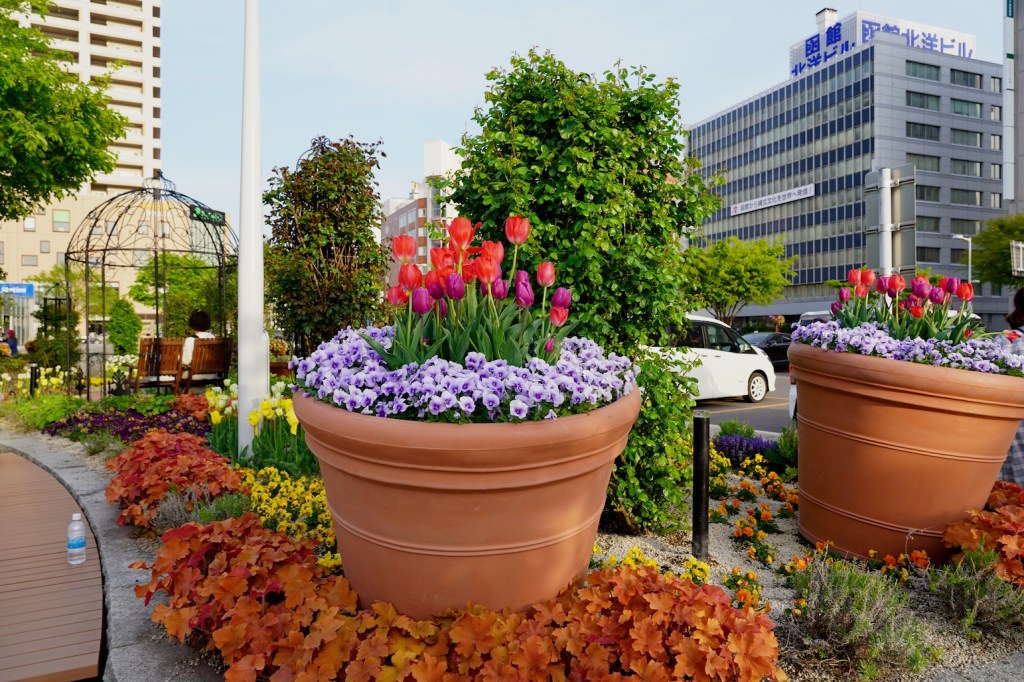
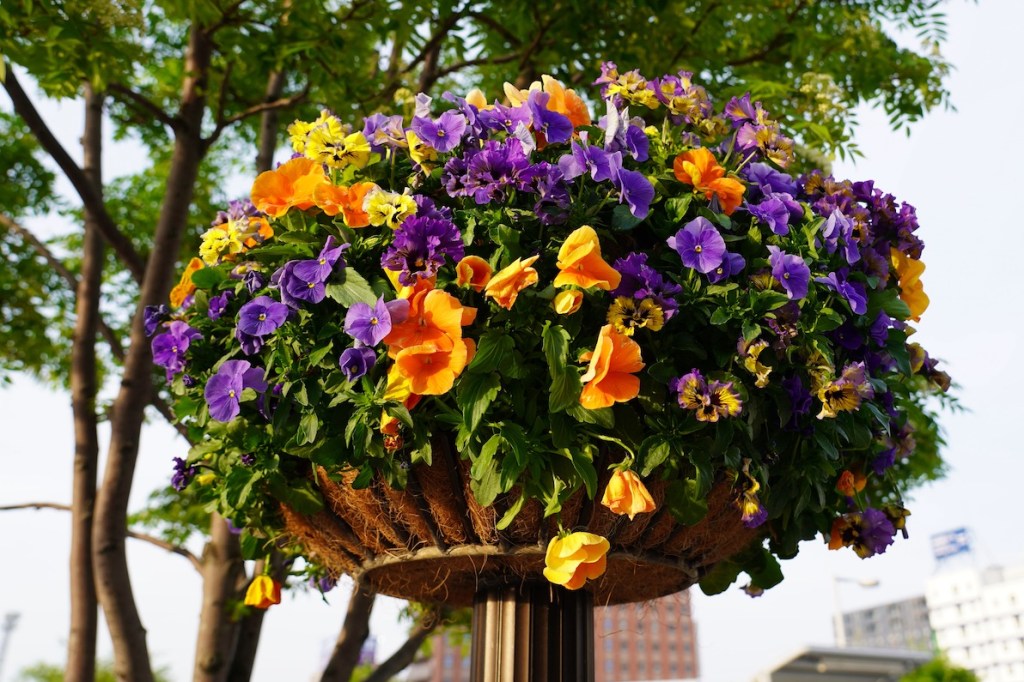
The city station opens out to a massive square, full of impressive flower displays on our spring arrival – a young busker on hand with a sweet voice in song.

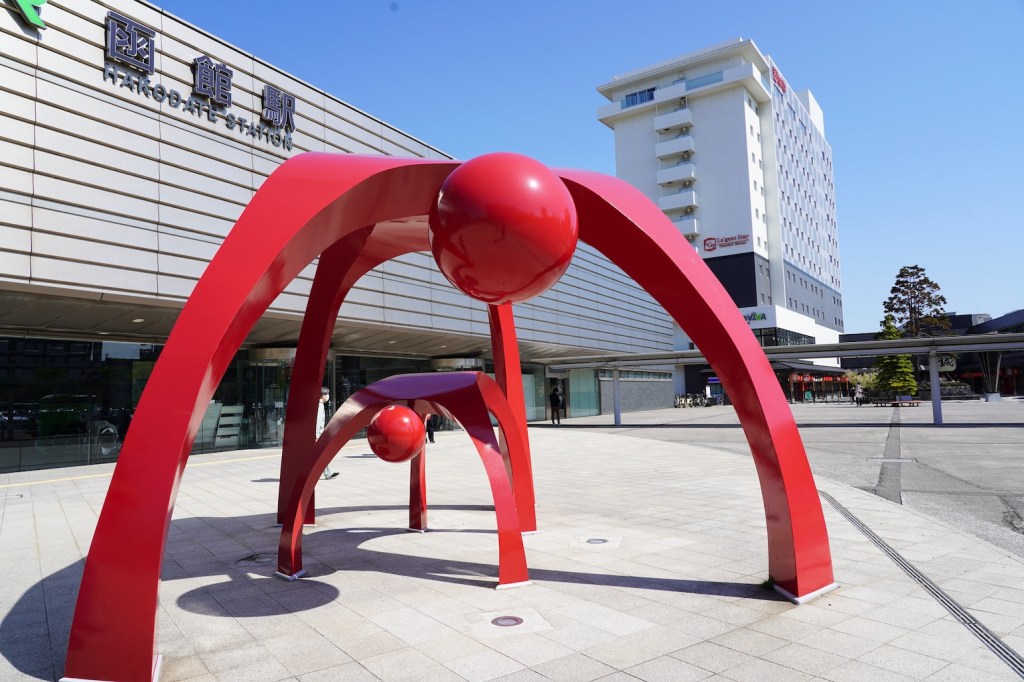
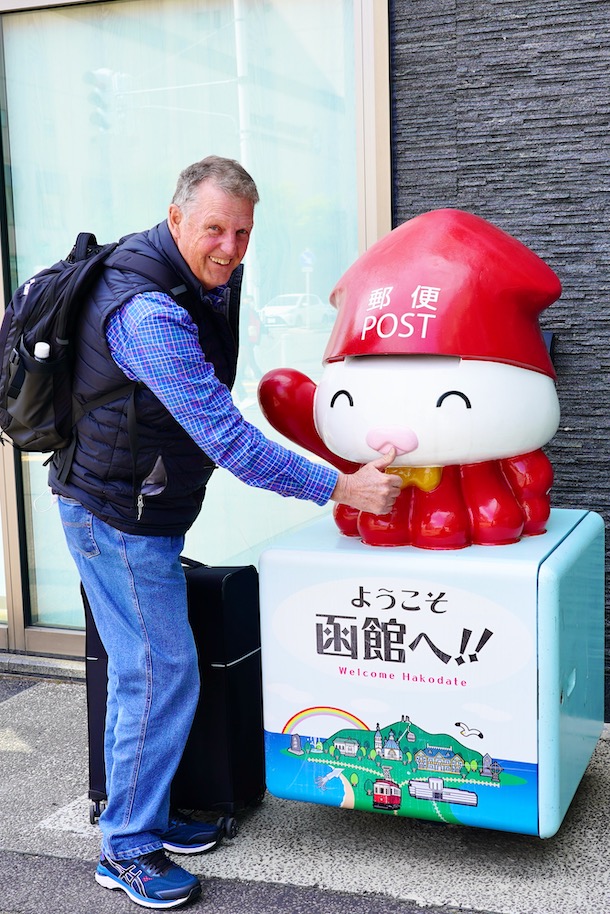
A huge red sculpture, representing a parent and child, dominates the view as you walk out of the station, heralding that this is going to be a very special and interesting city! This feeling is enforced by a unique post box near the exit of the station.
After dropping our luggage off at the hotel, we ambled back to the station to gather information from the tourist office there, and were diverted by a colourful festival promotion getting underway outside by a group from Aichi Prefecture in Northern Honshu! And what a show it was, with huge sails of lanterns being balanced by men and women – some by their shoulders, others on their forehead! A great start for our visit!


Hakodate offers excellent transport options for the tourist. The nicest are the trams, which run frequently throughout the day, and take you to most of the main tourist attractions. There are attractively priced one day, 24 hour, and tram and bus combined passes.
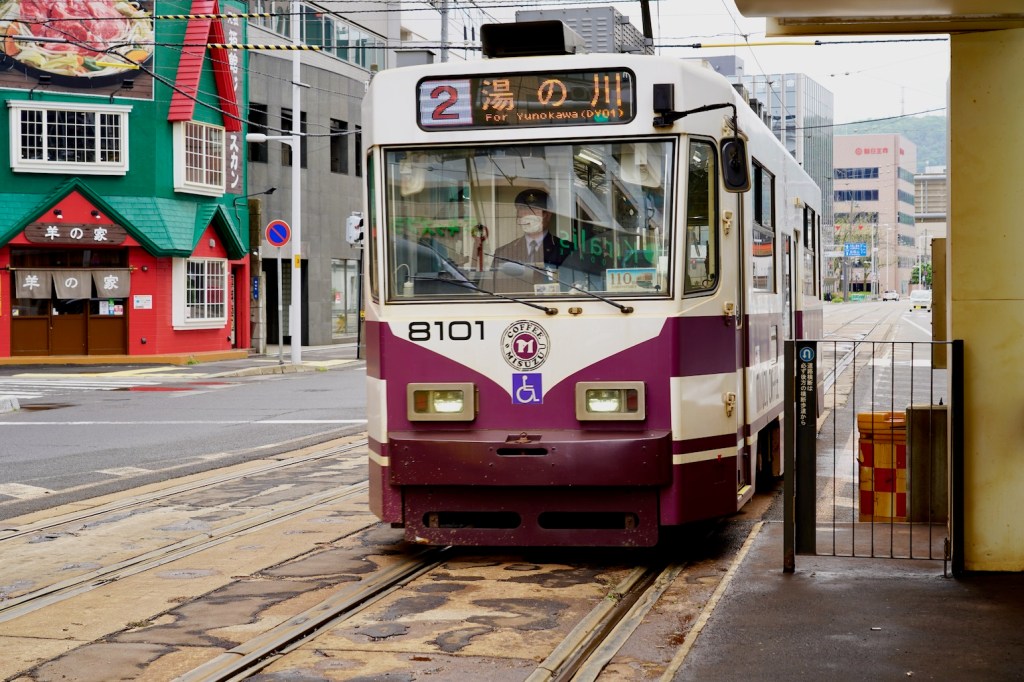
We preferred to walk in the central city area, around the delightful foreshore and its famous Motomachi district that was once home to the city’s international community including the British, Russians, French and Chinese in the 1800’s and early 1900’s.
Hakodate was one of the first ports in Japan to welcome foreign trade. There are wonderful examples of early architecture – some beautiful old homes – here. Many places of interest are uphill – and if you are reasonably fit, it’s doable.

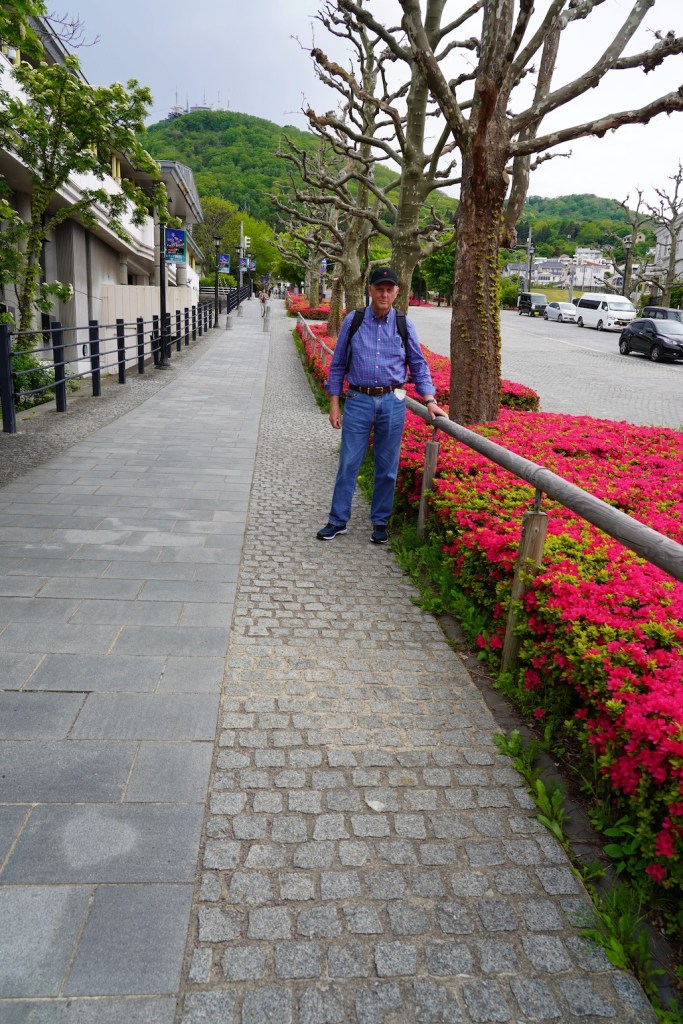
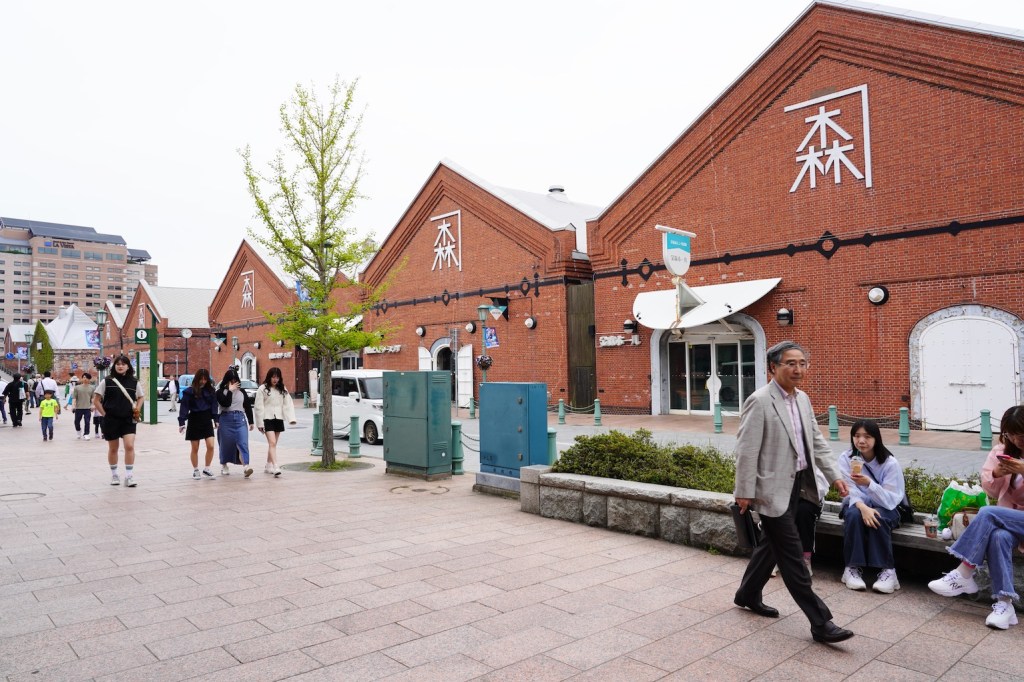

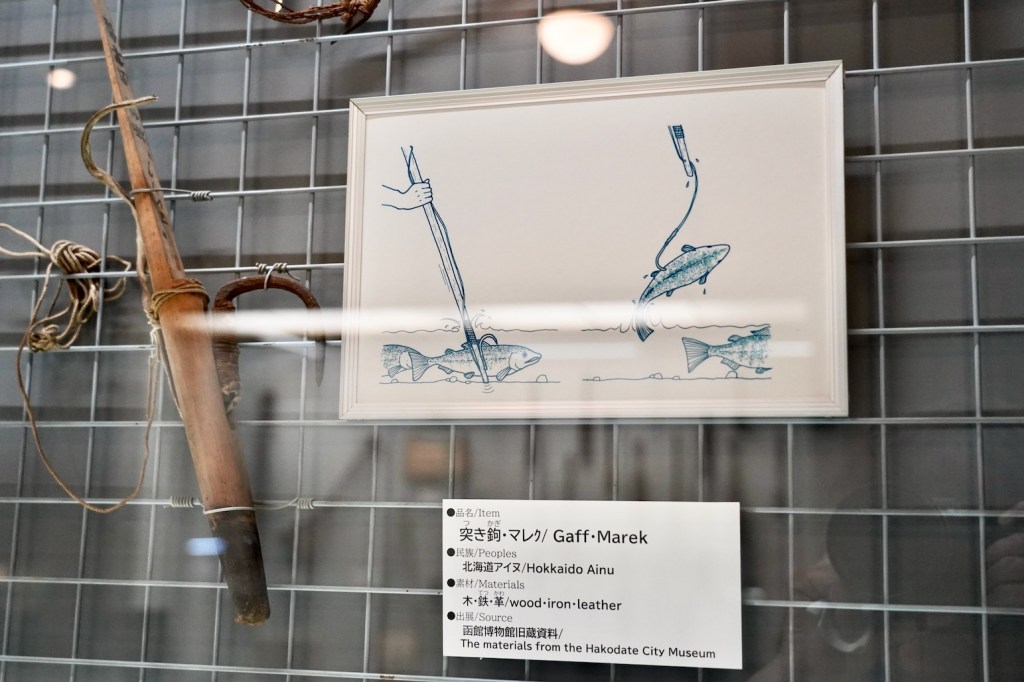
There’s a lot to see in Hakodate. One place on our ‘must’ list was the Hakodate City Museum of Northern Peoples. This mainly focuses on Ainu, an indigenous people on Hokkaido, culturally and physically distinct from Japanese.

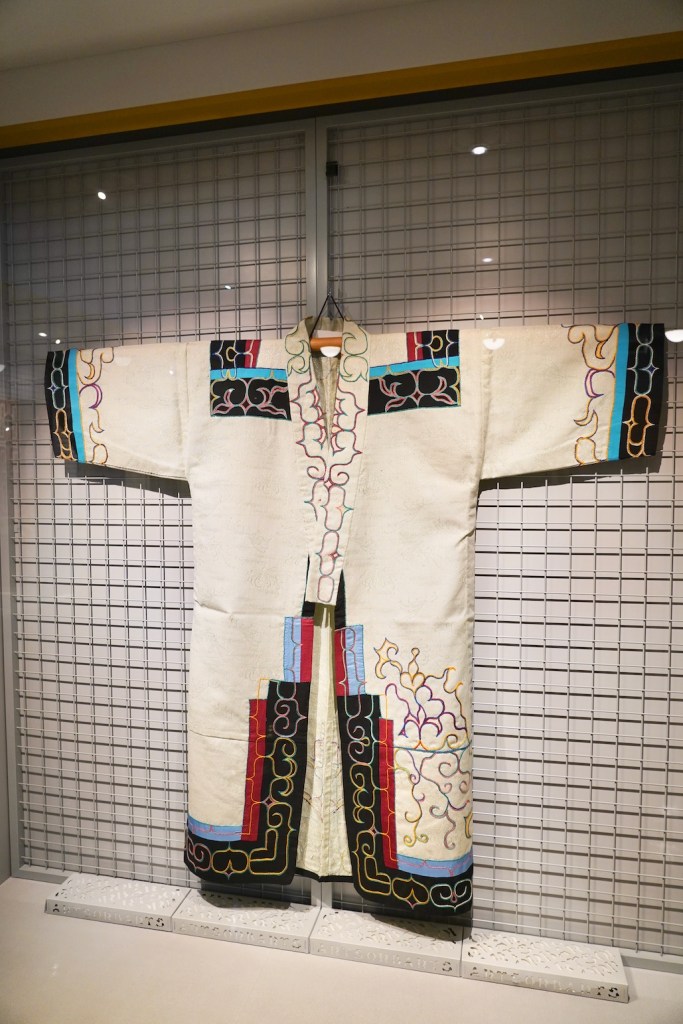
The museum is housed in an old 1926 bank building, that has retained some interesting aspects of its working life including marble arches and rooms with beautifully hand crafted 1920’s glazed tiles where the bank entertained VIP’s.


This museum features spectacular exhibits of everyday items used by Northern peoples, including many Ainu folk crafts and objects that have been designated Important Tangible Folk Cultural Property of Japan. We were very surprised to see no other visitors when we were there! I can’t fathom why not as other nearby attractions had plenty of tourists.

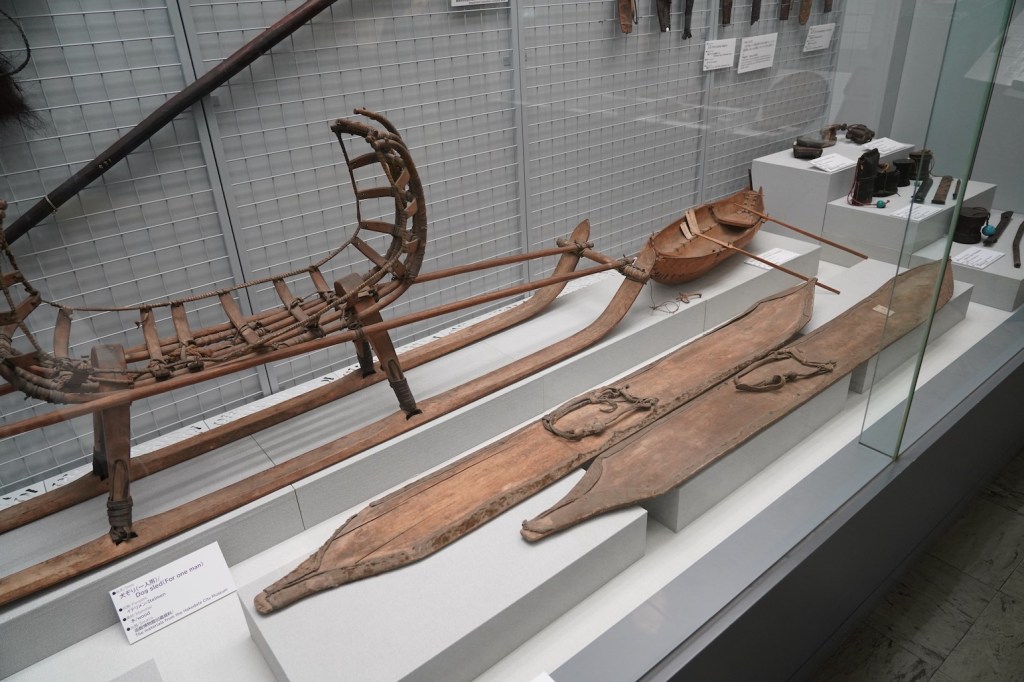
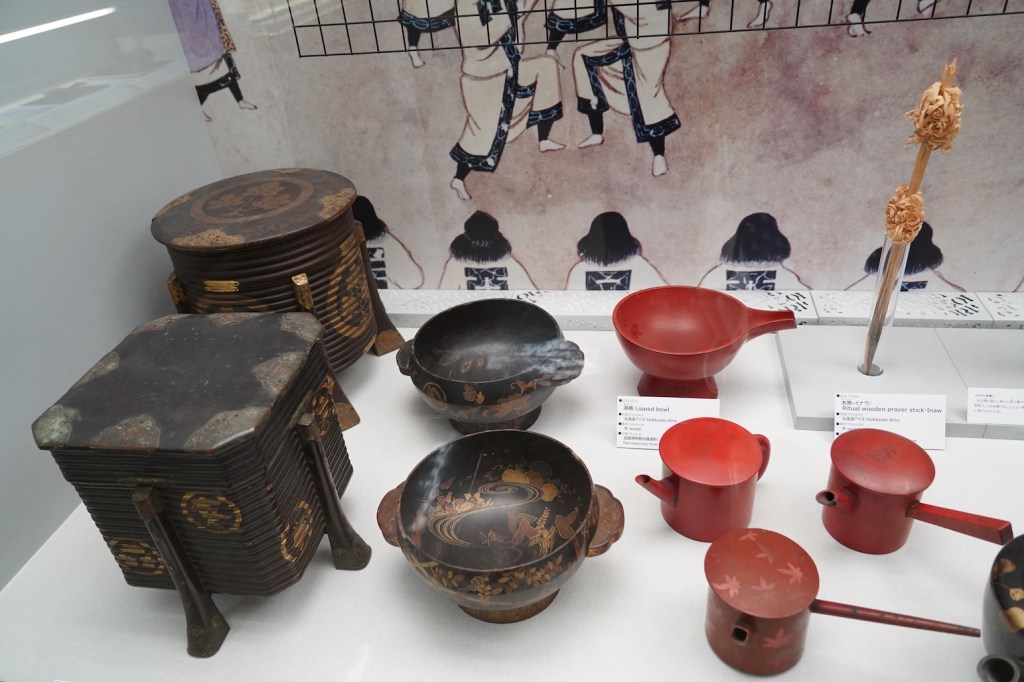
I highly recommend the Museum. It only cost 300 yen to get in (ie: about $3 Aussie dollars). You can combine admissions to several places administered by the local council, making entries cheaper.
The local council offers joint tickets for two or more facilities including the Hakodate City Museum of Northern Peoples, the Hakodate City Museum of Literature, the Old Public Hall of Hakodate Ward, and the Former British Consulate of Hakodate.
I’ll tell you more about those in Hakodate – Part 2 – coming up later this month. Plus a visit to a beautiful National Park a short train ride from the city centre!
ANY QUESTIONS/COMMENTS ON MY BLOG STORIES, PLEASE FORWARD TO ME. LOVE TO HAVE FEEDBACK!
 Travelling Therese
Very interesting. A country on my wish list. You make me want to visit even more.
LikeLike
Thanks. It is definitely the most interesting country I have visited, on many different levels. We are off back there again soon exploring new territory, so I’m pushing to finish writing up the May trip. There is some pretty interesting wildlife there too. Some good bird life. I can imagine you getting into the wilds of Hokkaido to explore!
LikeLiked by 1 person
I must do it. Hokkaido in winter is special as Steller’s and White- tailed Eagles congregate.
LikeLiked by 1 person
There’s a national park half an hour by train from the center of Hakodate that’s great for birding. I got a photo of a woodpecker there to my delight. Plus the city itself has a lot of green spaces for birding. But it would be good to get into the north of Hokkaido..on my wish list.
LikeLiked by 1 person
Thanks for all the info. Much appreciated.
LikeLike
With fresh seafood, a star-shaped fort and breathtaking views Hakodate looks like a very charming port city with lots to see and do. Definately a destination worthy of a place on my forever growing and evolving travel wish list. Thanks for sharing, and have a good day 🙂 Aiva xx
LikeLike
Charming is the right word to describe it! Keep it on your wish list. I have another story coming up about a national park only a half hour’s train ride from the city.
LikeLiked by 1 person
I look forward to reading it 🥰🥰🥰
LikeLike