
Hakodate, the southern most city in Japan’s Hokkaido island, is such a special city that our four days there in May 2024 deserved more than one blog story. In part one, I described the beginning of our wanderings in the city in my story: You will find that at
The Republic of Enzo – Where?
https://travellingtherese.com/2024/09/12/the-republic-of-enzo-where/
The story continues:
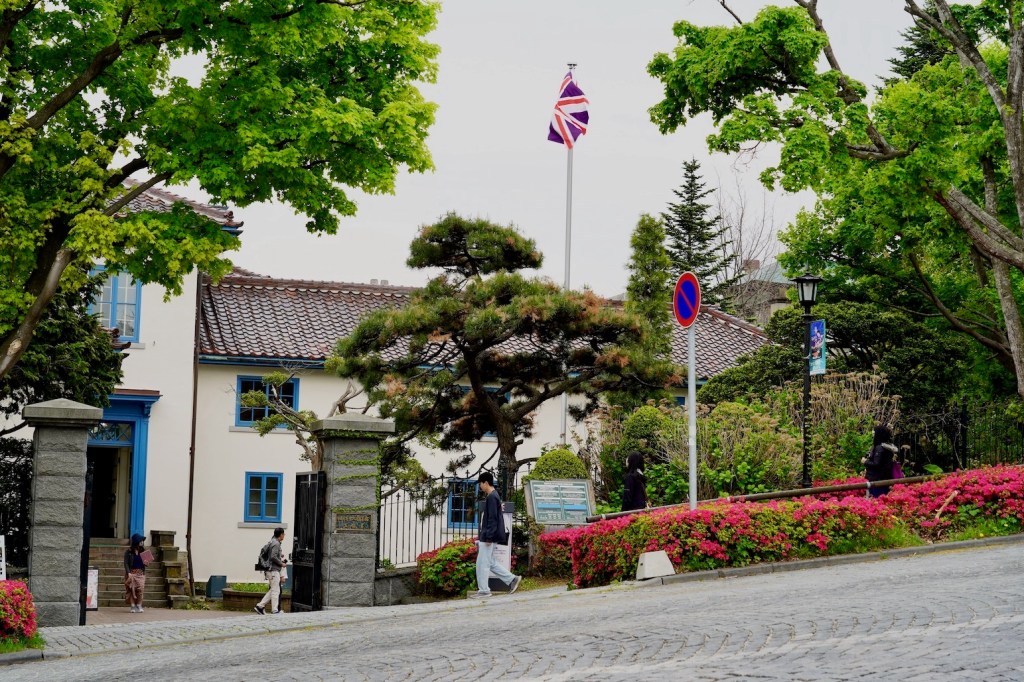
We moved onto the old British Consulate – a building half way up a steep hill. It was used by the British from 1913 to 1934, and today includes an elegant cafe where they offer high tea and ice cream. I liked the building, but was personally a little disappointed because I thought it was the consulate building that took in my 1800’s travel hero Isabella Bird when she arrived in 1878 after a treacherous sea voyage across from Honshu. Regular readers of my blog will know that I have followed her footsteps in some of my travels in Japan. I recommend her book ‘Unbeaten tracks in Japan’. It’s still published and available!

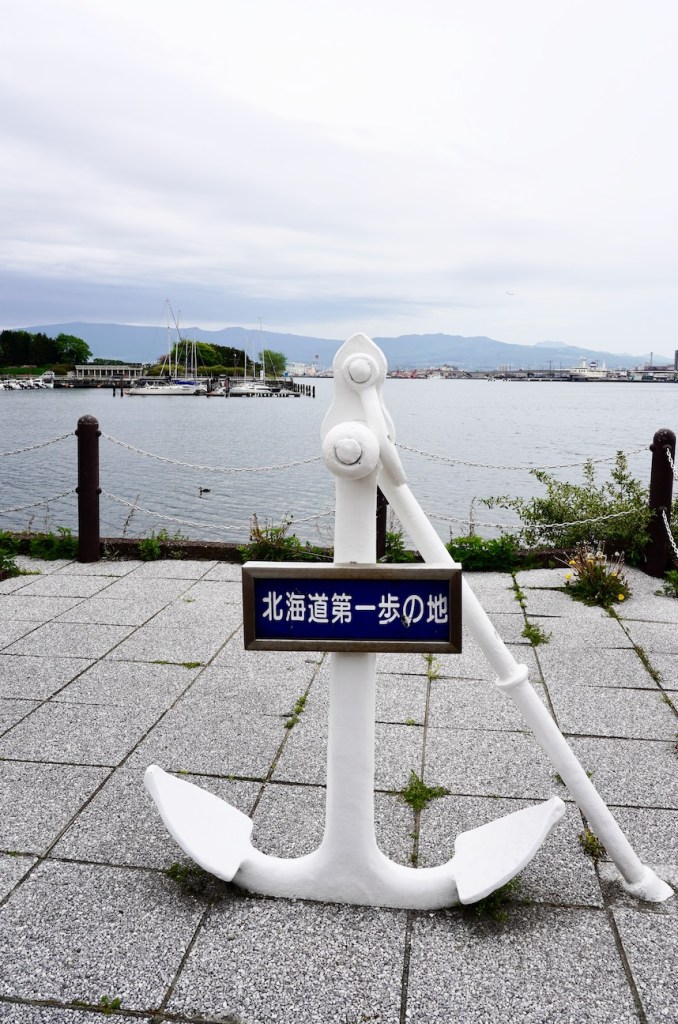
I did wander down to the foreshore to see where the intrepid Isabella first stepped ashore, drenched by freezing waters from stormy seas! My train arrival via an undersea tunnel was much less adventurous! I’m sure she would never have imagined a future quick tunnel access by train from Honshu to Hokkaido.
The Seiko Tunnel is the second longest tunnel in the world, after the Gotthard Base Tunnel in Switzerland. It is 53.8 km long- with just over 23 kilometres under Tsugaru Strait seperating Honshu and Hokkaido.

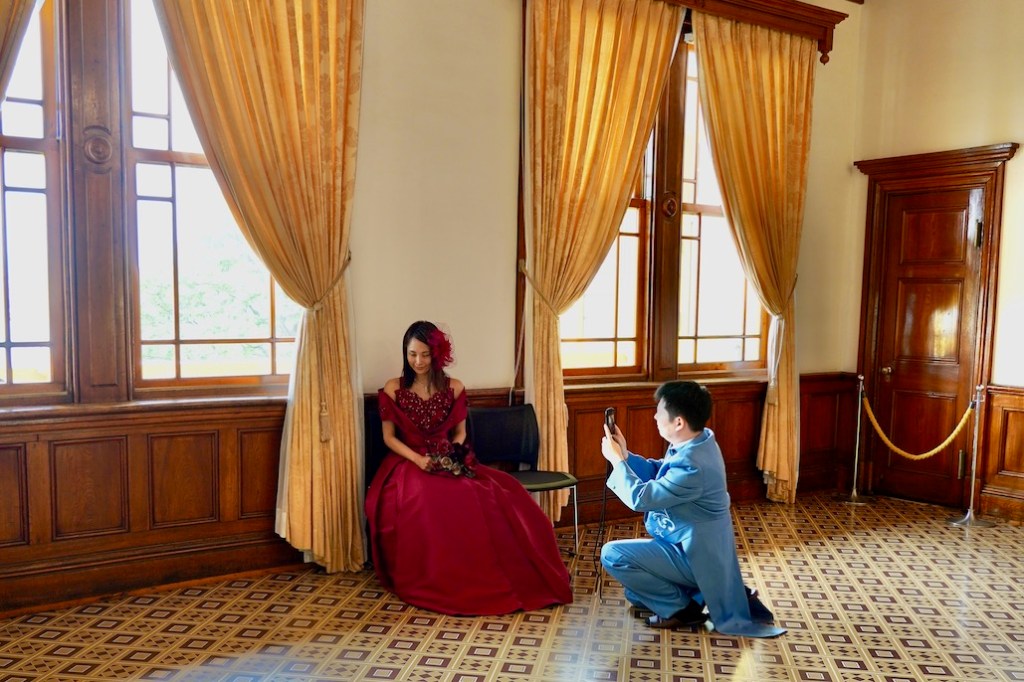
From the British Consulate, we climbed further up a steep hill to Hakodate’s old public hall, built in the colonial style and opened in 1910. It’s a grand fusion of European and Japanese design of the time. There were plenty of tourists here – though we saw no western tourists. Imperial family visitors once used the public hall’s elegant guest rooms. The impressive main hall is still used for concerts and other special occasions. We noted some visitors had hired costumes for their photo shoots! An instagram photo or two!



The balconies at the old Public Hall offer superb views of Hakodate’s bay. One warning though – it’s one of those ‘off with the shoes’ places, and I found it a bit treacherous on polished, slippery wooden floors, particular the stairways.

Onwards: After surviving the challenge of the floors, we ambled slowly back across town towards our hotel, watching out for somewhere to eat en route. And we lucked in! We aren’t travellers who seek and book restaurants for our trips. We eat when we feel hungry, and hope there is something good we come across! Mostly that has worked out.

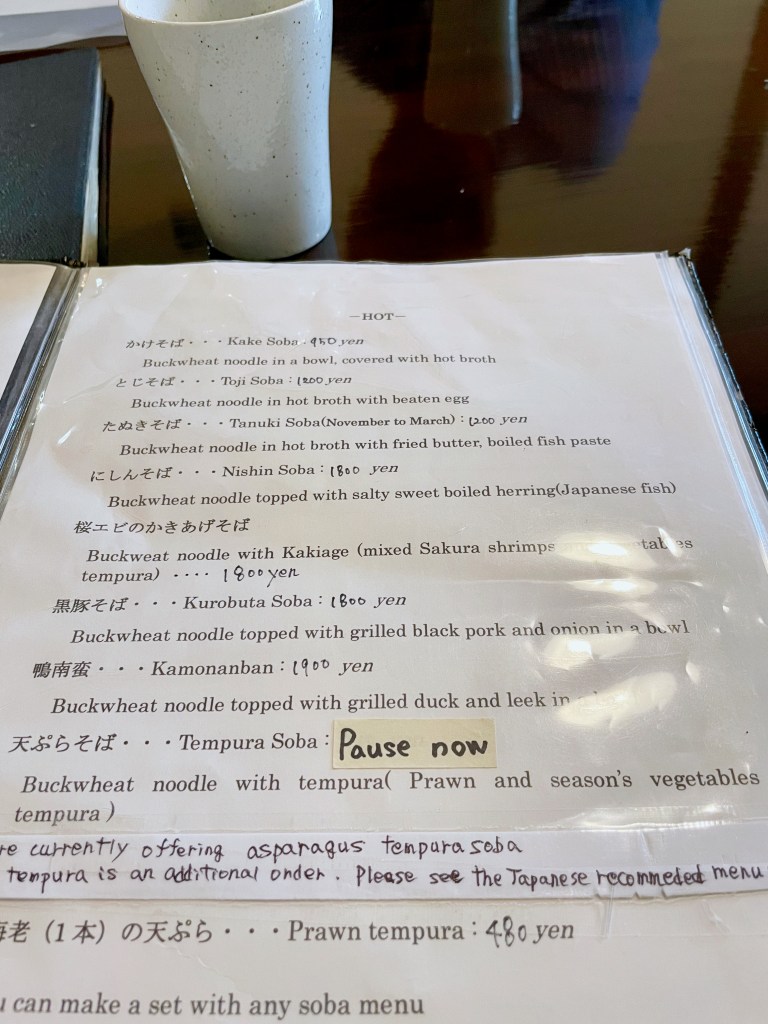
On this occasion, we found an excellent traditional soba restaurant – Sobasaisai Kuruha – housed in a renovated old Japanese home. They serve delicious handmade buckwheat noodles, with some very tasty accompanying dishes. And, they have an English menu, which is always a plus for us! The staff were very kind. You will find the restaurant at Hokkaido Hakodate-shi Motomachi 30-7.
There’s plenty of variety when it comes to food in Hakodate. I hoped to eat at Restaurant Gotoken that has a 140 year old history. Originally back in 1879, it was famous for its Russian food, bread and cakes. The main old building is very retro, and still apparently serves an excellent curry! Sadly we ran out of time. Next visit! We did enjoy an excellent evening meal at a Korean barbecue restaurant that specialised in lamb – a meat that is a little unusual in Japan. And we had breakfast sets every morning at a little bakery cafe – Petite Merveille Patisserie – near the railway station, that also happened to make fabulous Japanese puddings and some great cakes!


We discovered a multitude of other interesting shops as we wandered Hakodate’s popular Motomachi area and the area around the railway station, including local hand made leather goods and other Hokkaido handicrafts. I found one shop full of exquisite music boxes, made in Japan, including many funky designs for children! Yes, I bought the grandson one with a ‘don’t overwind’ instruction. At two, he will definitely test its quality!

Strangely, I came across another photo of the Samurai warrior Hijikata Toshizo tossed amongst packets of smoked potato crisps in a foreshore souvenir shop. It was from the same photo of him I’d seen in Aizu Wakamatsu six months earlier.
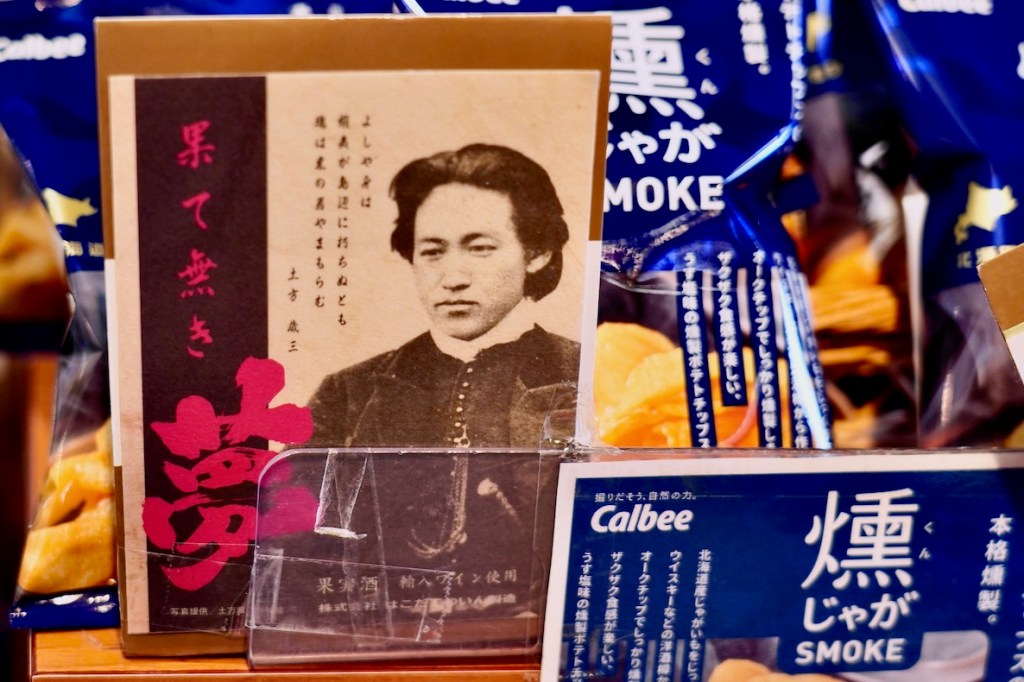
I have no idea how his photo was there, or why – one of those strange things in life. It appeared to have been provided by a family member for an advertising promotion. Maybe to help fund the museum honouring him in Tokyo? Google translate came up with a variety of translations of the writing accompanying the photo, including one where he praised the beauty of Hokkaido. I’m not sure which translation was correct. Hopefully, a Japanese speaking reader might clarify it for me (please please).
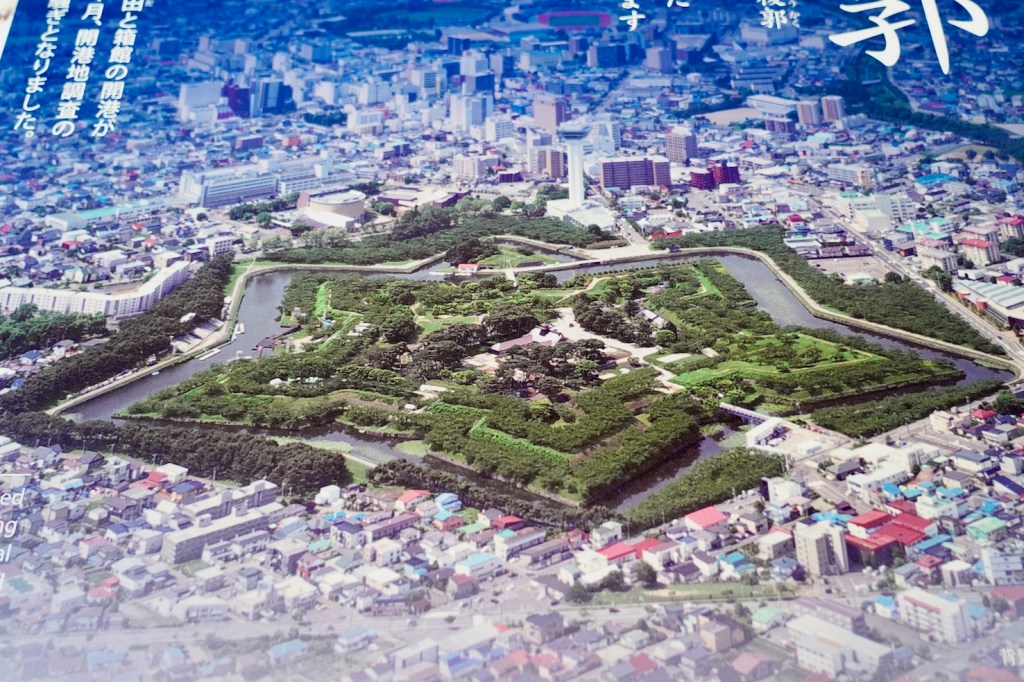
On another day, we travelled by bus to Hakodate’s famous Goryokaku Fort, designated as a national special historic site, and fortified by the Samurai warriors as they prepared to fight the Imperialist Forces. No one knows where Hijikata Toshizo’s body was secretly buried, but it’s believed he may be here. There are a number of memorials to him in Japan.
Several of the Samurai leaders of the Hakodate battle ended up in prison for a few years, and went onto enjoy successful careers in business and Government. The Vice Commander of the Shogunate Navy, Enomoto Takeaki became a Government Minister.
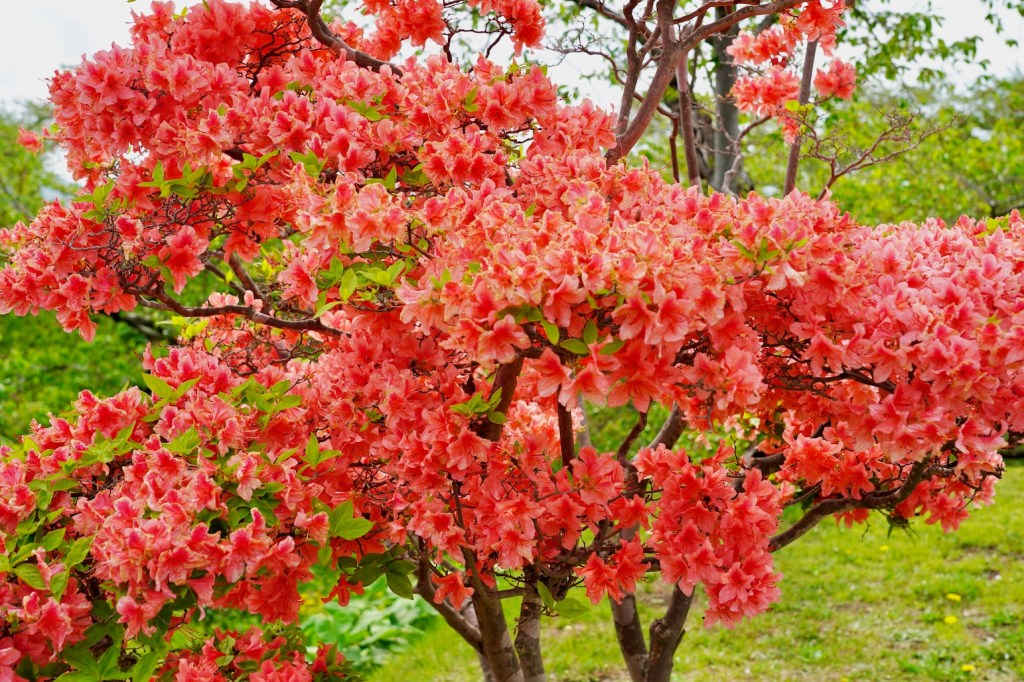
Apparently, Goryokaku is a wonderful spot for cherry blossoms in spring. But I have to say, November was pretty spectacular there. We were treated to autumn leaves, azaleas and wisteria. You can go to the top of Goryokaku Tower for a magnificent birds eye view of the huge star-shaped fort.
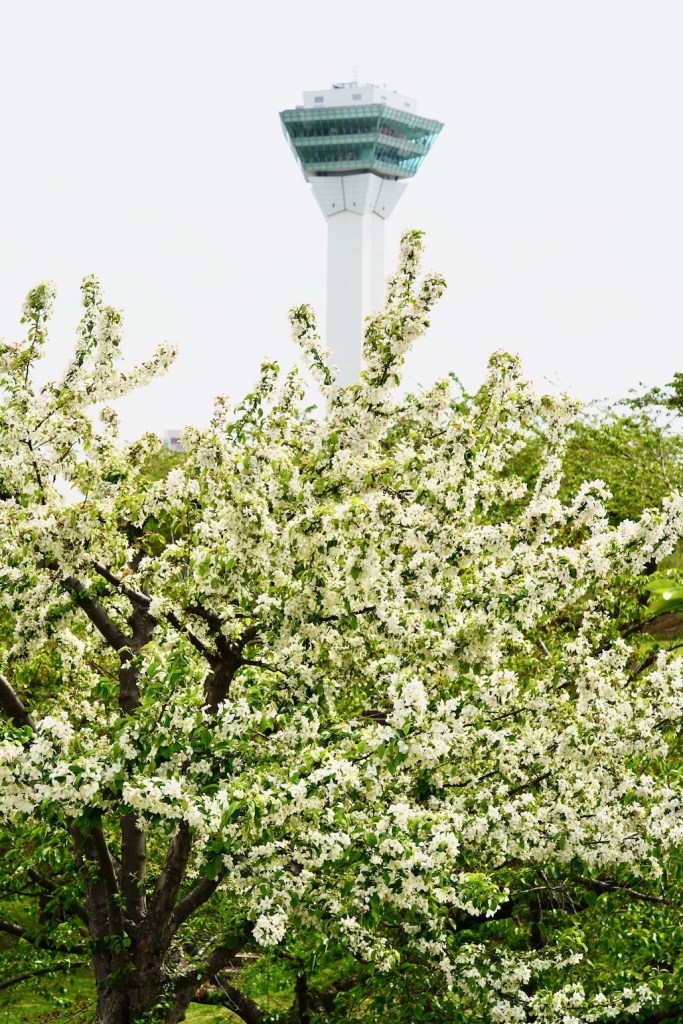
The fortress was modelled on medieval European fortified cities, and originally included more than 20 buildings. I thought it would be near the foreshore, and was surprised to find it well inland from the harbour. Work to build it began in 1857 to protect Hokkaido in case another nation invaded. The American threat to destroy Edo (Tokyo) a few years earlier was not taken lightly. It took seven years to complete, and was designed to protect in battles using guns and cannons. Ironically, the threat eventually came from within Japan – the fortress was taken over by Samurai soldiers and became a principal site of the civil war land battle between the Samurai, claiming the city for their Republic of Enzo, and the Imperial troops determined to retain it for Japan. Most of the buildings were dismantled by authorities in 1871, and by the early 1900’s, it had been converted into a public park.
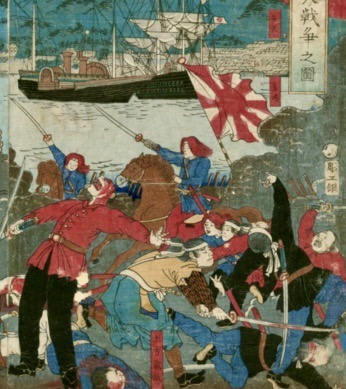
While swords were used by the Samurai in the battle, they also used more modern weaponry such as guns and cannons. Many of the higher level of troops wore French and British uniforms, while other troops wore traditional samurai clothes.
This wasn’t always reflected in imagery after the battle that portrayed it in a more romantic way. The painting below from the late 1800’s supposedly shows Hijikata Toshizo, in yellow, in battle. But it’s unlikely that this is what he wore.

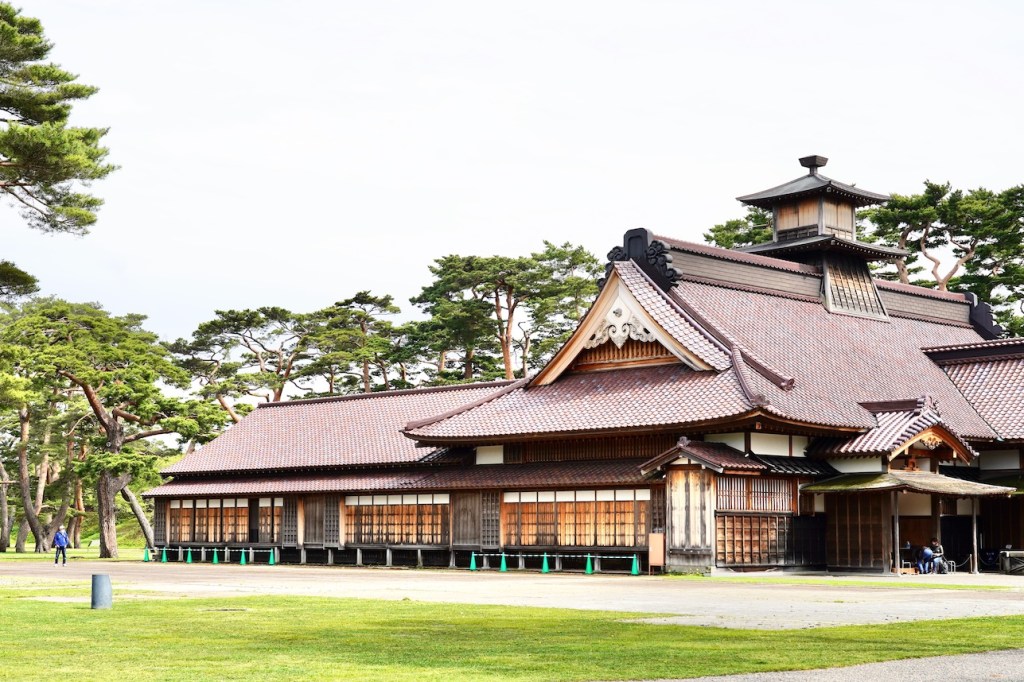
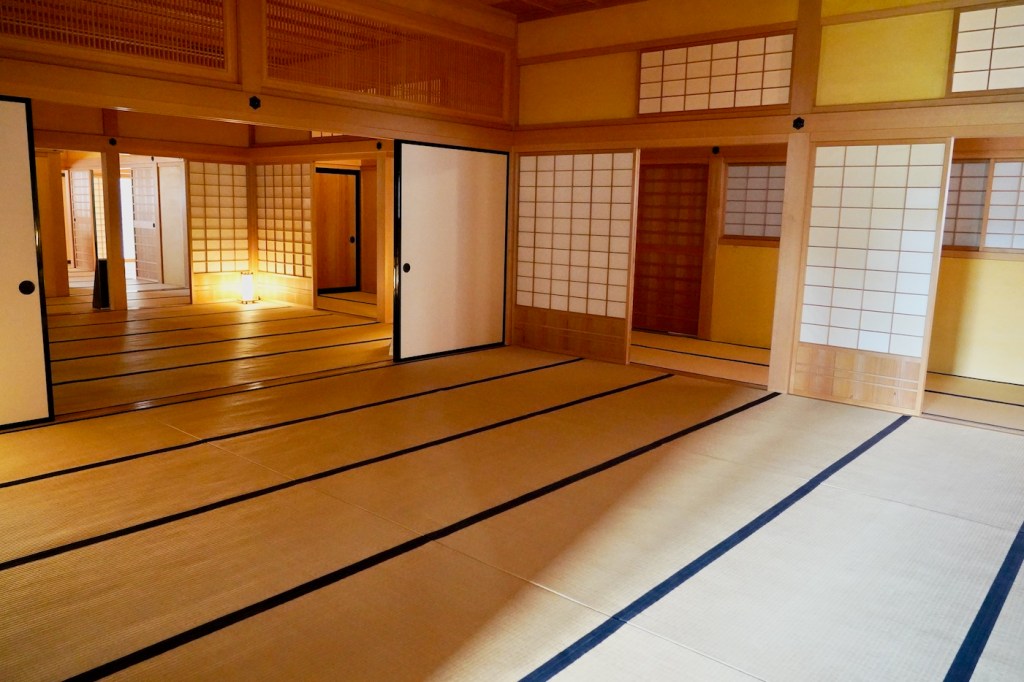
Some stone walls and steps still survive, along with a notable building in the Japanese style that I recommend paying the small admission fee to view. It’s the former Magistrate Office – a partial reconstruction of an original building where the Shogunate‘s officers once ruled over Hokkaido. The office was rebuilt using traditional methods and it is an excellent example of 1850’s Japanese architecture.
I must, at this point, mention ‘Bill’ – a young USA tourist we met en route to the fortress. I found his Hispanic name difficult to pronounce, so he said that it was William in English. In Australia, that usually becomes Bill. So that’s how we remember him – young ‘Bill’, an intrepid and throughly nice young traveller who overcame his fear of travelling alone to visit Japan. He explored the fortress with us, took our photo for us and remains in contact via his Instagram photos. He loves the popular sights in Japan, but also is brave enough to venture off the beaten track seeking more unknown places. It’s the encounters with interesting people like ‘Bill’ on our travels that we cherish the most.

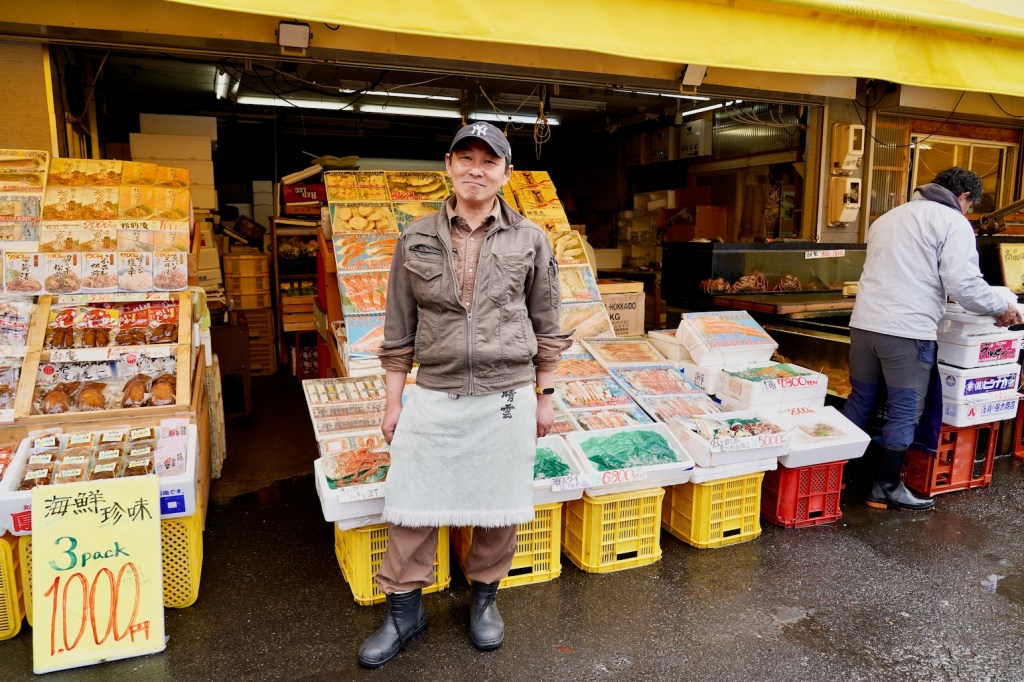
Did I mention the Hakodate fish markets? Being a port city, this market is excellent for seafood and it is a big attraction for both locals and tourists. The market also includes a good selection of fresh local produce, and there’s cafe spaces to eat there. It’s a short walk from the railway station.

I took this photo of a paddle pool keeping crabs alive at the fish markets for our toddler grandson! He loved it!

giant crab at the Hakodate fish markets!


At night, we had a beautiful sunset view from our hotel over the harbour. You can take a chairlift to nearby Mount Hakodate for views over the city both during the day and at night. It’s more of a big hill, rather than a mountain, and it can get very crowded with tourists. We passed on it, given the hotel views we had of the city.


Did I mention Hakodate beer? Honestly, you are just going to have to visit Hakodate and try for yourself!

One of the very special days we enjoyed in Hakodate was when we headed out of the city to the nearby magnificent wilderness of the Onuma Quasi-National Park. Isabella Bird rode up here on a horse by herself on a daytime jaunt in 1878. I was delivered by train right into the park. It’s only a half hour journey from Hakodate’s railway station. But that’s another story for another day! Coming up soon in my next blog story.

 Travelling Therese
Awesome place and thanks for sharing.
LikeLike
We thought so..would love to return to explore more one day. One more story from that visit to Hakodate to go – visiting a national park close by. I’ll write it up in the coming week.
LikeLiked by 1 person
Looking forward. I will be in West Papua 😁
LikeLiked by 1 person
I will be looking forward to your photos. Have a great time – Stay safe!
LikeLiked by 1 person
Thank you very much, Therese.
LikeLike