
I thought I was being clever. Avoid the tourist crowds in Kyoto by entering a lottery for tickets to see an ancient Imperial palace garden that only allows in small groups for guided tours.
Too clever for my own good really! My visit to the Katsura Imperial Villa in November 2024 turned out to be a rushed affair, and I was swept out the back gate before I knew it.
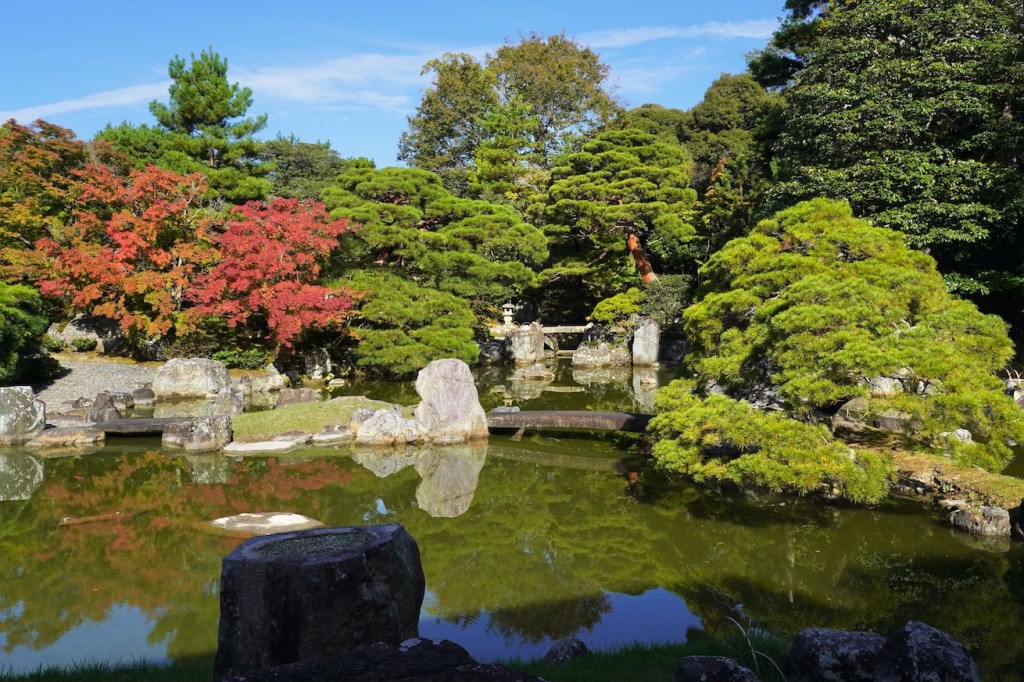
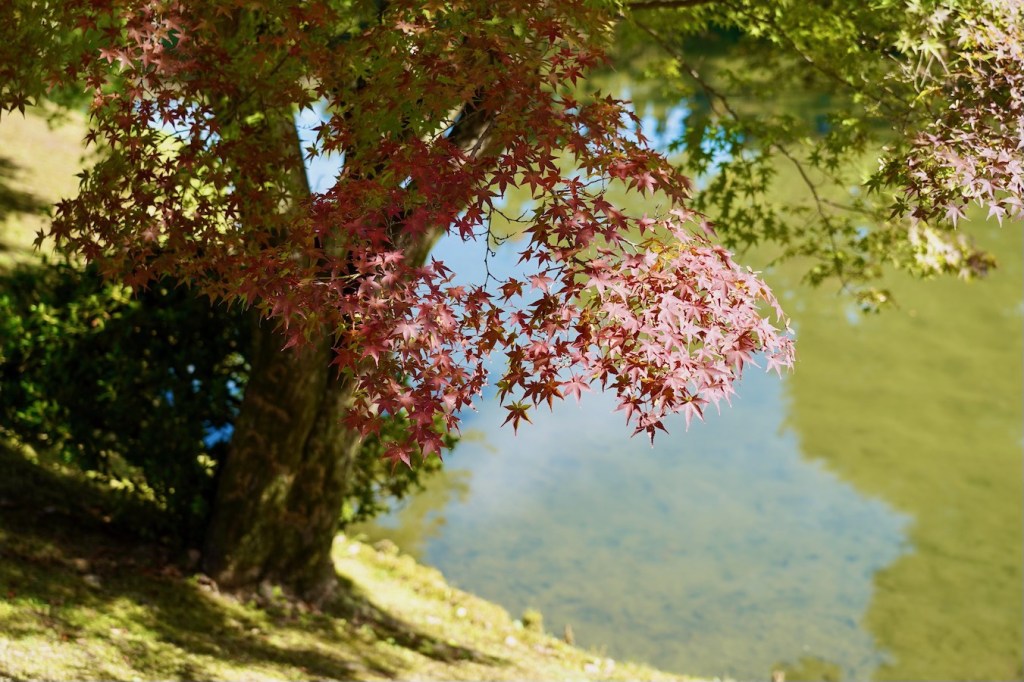
Katsura is a breathtaking place with Japanese traditional gardens and garden buildings including four elegant tea houses, all much as they were in the 1600’s – meant for peaceful ambles and opportunities to contemplate and soak in the ambience.
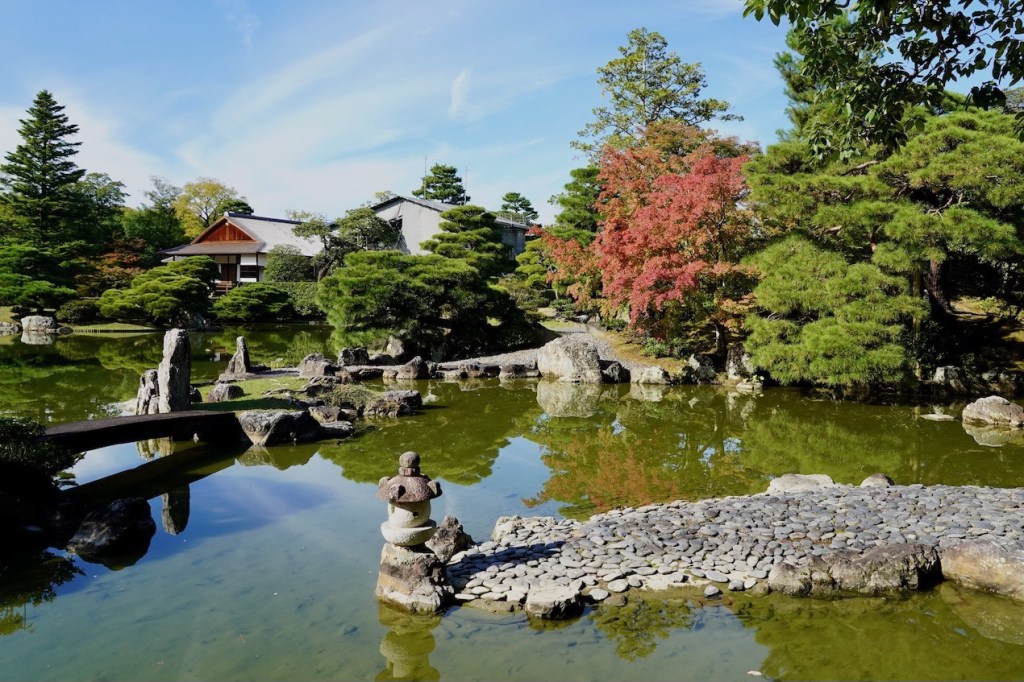
Not though for the modern day tourist visiting on Imperial palace staff guided tours! For me, it was more like an obstacle course – lots of stepping stones, small steeply arched bridges to cross and stairways to tackle. All while dealing with a special identification badge and a translating machine both hanging from my neck, buttons to press on the machine for a running commentary, snapping quick photos with my camera and, most importantly, trying to manage my ability to keep up with the tour, while not tripping over or tumbling into the garden’s mirror like waterways.


The Katsura Imperial Villa was built as a detached Palace for Prince Hachijo Toshihito in the 1600’s He was a fan of ‘The tales of Genji’ – that famous novel set along the south bank of the Katsura River, and when he obtained land in the area, he built a villa modelled on passages from the book.
By 1631, he had developed the site enough for the villa to be called a palace. Today the villa and gardens are nationally recognised as an Important Cultural Property of Japan, highly valued for its exquisite gardens and the architecture of its buildings.
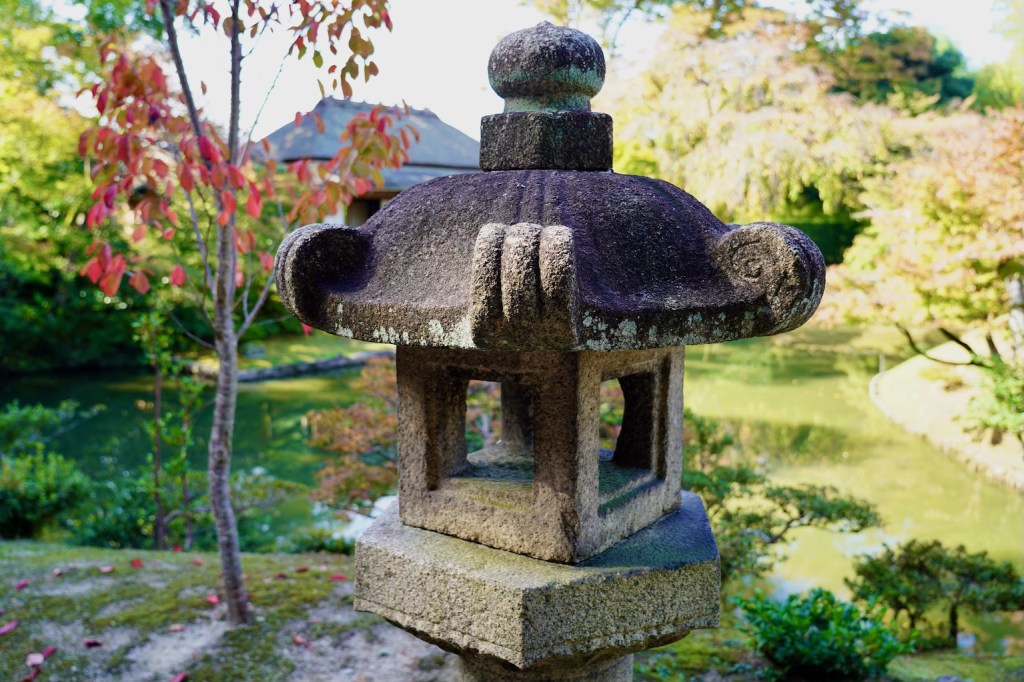
The Katsura Imperial Villa is still managed by Imperial household staff. Visits can only be made by appointment only, mostly for walking tours, guided by Imperial staff. English guided tours for foreign visitors are given special time-slots. It becomes a little more complicated in that places on these walks are awarded by lottery on busy days! There are opportunities to join a tour without a booking, but only for Japanese tours, and if there is a space on a group tour available.
I was convinced I had hit upon the ideal plan to see one of Kyoto’s most famous sites, without going shoulder to shoulder with the tourists hordes the city has become infamous for since Covid.
I painstakingly filled out a special form online to register MJ, a travelling friend and myself for an English tour, several months ahead of our November 2024 visit. And within days, I had a reply back from Imperial Household Agency confirming that my request for a tour was accepted by drawing lots! Lucky lucky!
The cost was a mere 1000 yen each – around $10 AUSTRALIAN. The Agency informed me that the Villa was a 20 minutes walk from KATSURA station (Hankyu railway), or 15 minutes walk from bus stop KATSURA RIKYU-MAE. We opted for a taxi to ensure we didn’t get lost! It’s important to be on time. No late entries permitted.
I’m fairly certain that I applied for an English tour, though perhaps I stuffed that up in selecting my preferred timeslot. My application was in English, and my address was Australia. But, there was no English guide on our tour. Instead, on arrival we were given little machines that provided a commentary in English through headphones as we followed a Japanese speaking guide. You push various buttons aligning with numbers en route to tell you what you are seeing. Not ideal!
I noted a small shop with quaint gifts, each with the Imperial crest, while we waited for our tour to begin. I hadn’t seen these gifts anywhere else, and I thought I would come back to to buy a few things at the end of the tour. Never presume!
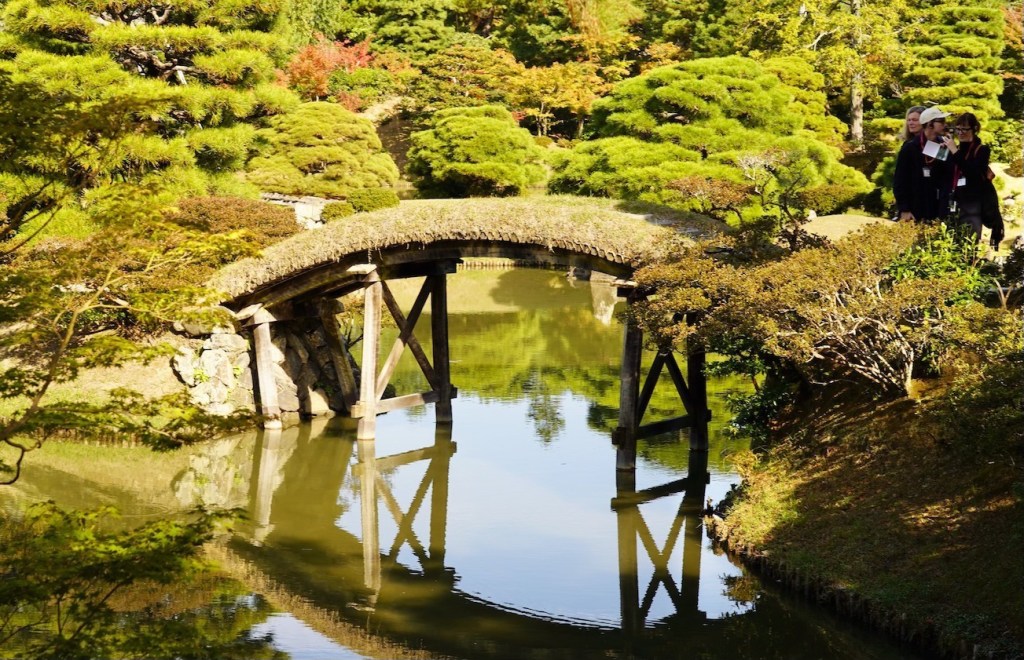
The Villa and its grounds are impressive. You can’t enter any buildings, but you can see into some of them as you are led through the central gardens.
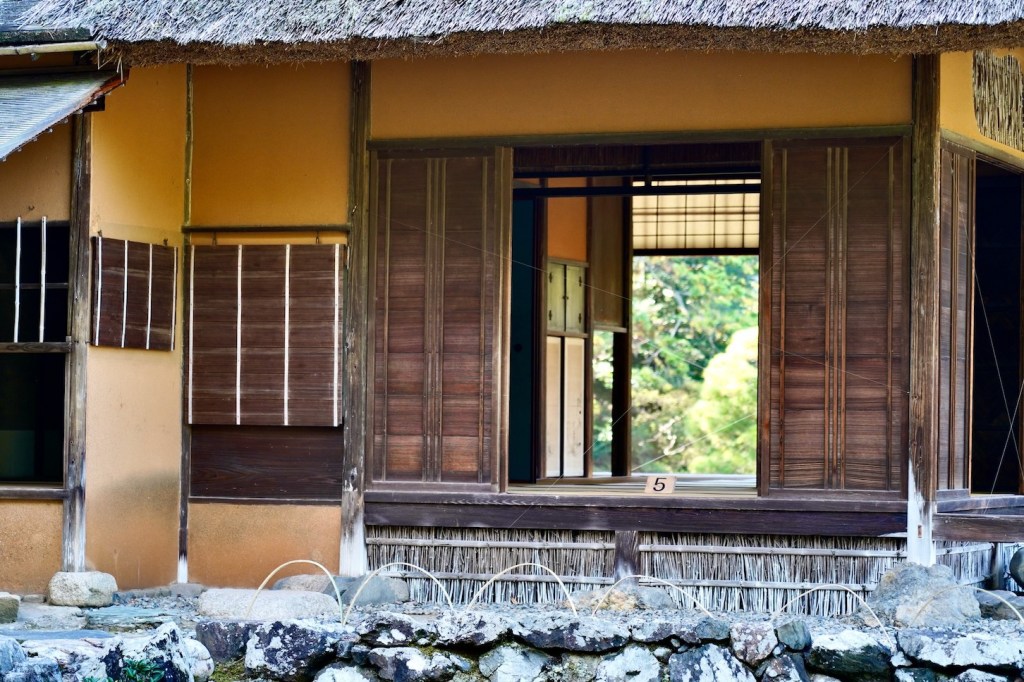
You follow a path about one kilometre long, with a lot of stone hopping and tricky little bridges with stairways. Up and down hill stairs too. To be fair, the Katsura website warns that it won’t be easy, detailing “stone bridges without handrails, large steps and small hills. Please note you will be walking on unstable ground”.

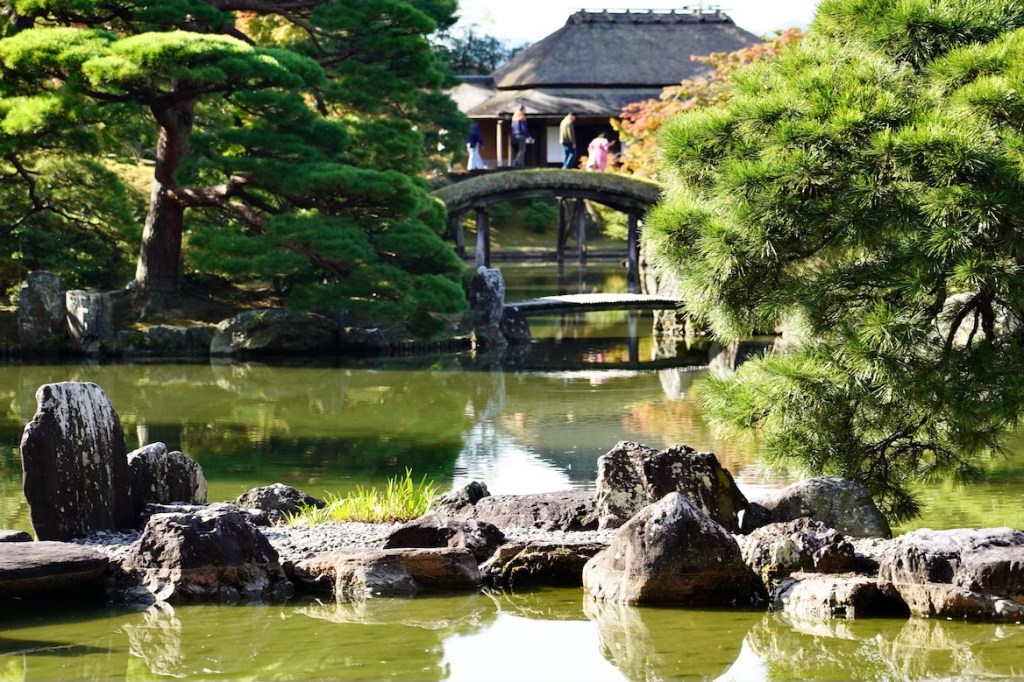
The gardens were spectacular. But was I naive in thinking I could tackle a walk through it with my impaired knee? It certainly was more challenging than I expected, and I was kept busy in what seemed like one big frenzied juggle – trying to take in what I was seeing, achieving some decent photos, pressing buttons on the little guide machine to ensure the commentary matched where I was at, listening to the commentary, trying not to trip over garden stones or fall in the water, and keeping pace with everyone else on the tour.
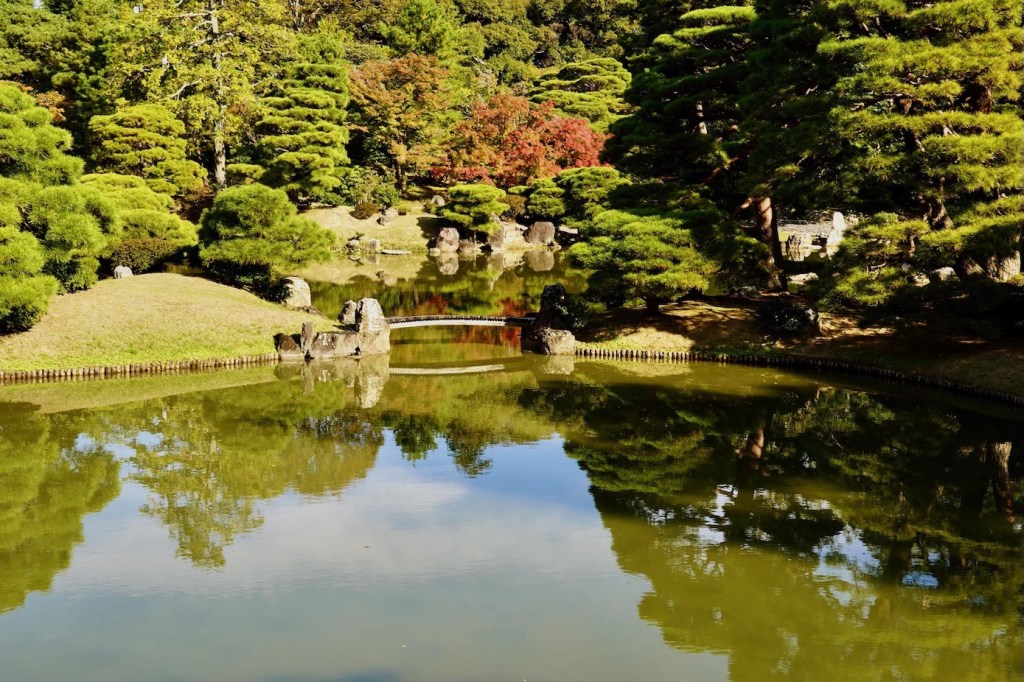
Katsura is a place where zen flourished – meditation and insight both at the heart of its peaceful gardens. I approached Katsura with this in mind, ready to embrace zen. To find a little peace within myself. Unfortunately, despite being in one of the world’s most beautiful and immaculate gardens, I felt more in a slight panic at ensuring I could stay the course and complete the walk safely.
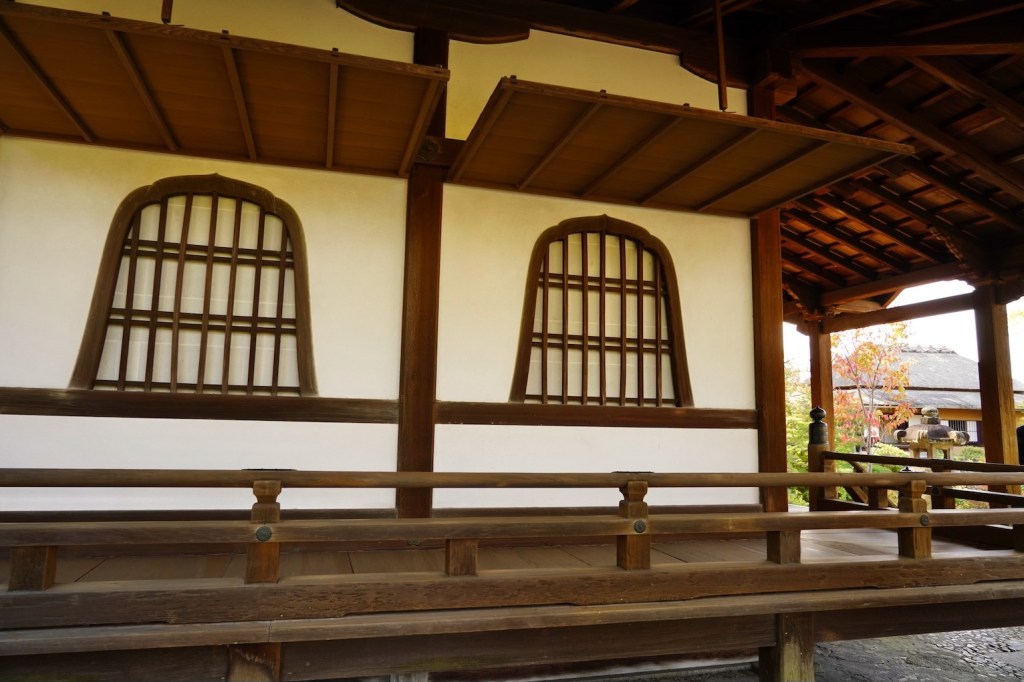

Our group stopped at various points in the garden, including the tea houses, where our guide seemed to delight the Japanese speakers with some funny stories. Nothing funny coming from my droll machine commentator. I had no idea what he was saying – it certainly seemed a lot more than was coming from my machine. These machines are also provided in Chinese, Korean, French and Spanish. I noted other blank faces amongst the foreign visitors, when those who could speak Japanese were finding humour in the group leader’s commentary.

A few times I pressed the wrong number on the machine and was told about an entirely different place in the garden than where I was! No wonder I became confused!


The garden was picture perfect, but there was little opportunity to line up good photos. It was point and shoot at everything, hoping to capture something decent.

The bridges are narrow – very much one person at a time. I trailed behind MJ, clutching his hand to keep my balance as we crossed. My camera dangled at an angle from the other hand, one finger hovering over the ‘take a photo button’, clicking away at random. My eyes were concentrating on the path ahead, not on what I was shooting! I was surprised afterwards how many photos worked out with my new ‘blind’ approach to photography.
Eventually, we came across a tiny doorway, and through it, our little machines were suddenly taken from us and we were quickly ushered towards another small gate – the way to a loo stop, Imperials gardens shop? No – we were suddenly, with breathtaking speed, off the property! Out you go – tour’s over!

You couldn’t go backwards! Another tour was already underway in our wake! I barely had time to catch my breath.
Remarkably, I did manage to get some decent photos. Thank you Sonya7iii! A good reliable workhorse. I can look at the photos now at leisure, see what I didn’t quite take in at the time, and get a little more enjoyment from the gardens. Even perhaps a few simple garden design hints for my own garden!

Oh, to be the Prince and his guests, able to sit back and relax in his little tea house, overlooking the water – soaking in the garden outlook, while no doubt being served a little chilled sake and tasty morsels. Maybe on his own, reading a book, and occasionally looking up to enjoy the view. Apparently, he took a very active role in the garden, planning and developing it. Did he actually pick up a shovel and dig? Did he get down and weed? Who knows! But we do have him to thank for this Kyoto gem.

The main residential buildings don’t have the charm of the garden tea houses – from the outside, at least. Perhaps they are glorious inside. The Prince definitely seemed to like stepping stones! Perhaps he was one of those blokes who didn’t like people walking on the lawn?

I did note a huge stone slab for visitors to leave their shoes before entering the main buildings. Not us, of course. Imperial visitors!

Do I recommend a visit to the Imperial villa? Yes. Absolutely. It does have a stunning garden and I think it’s worth the effort – if you think you can manage the trail through it.
But don’t expect an idyllic amble. Or a chance to sit back and enjoy your outlook. Know that you cannot take your own time viewing it. You have one hour in this garden paradise, so keep all your senses sharp. Follow the leader, keep up, don’t dawdle. Wear decent shoes. High heels and flip flops (thongs to Aussies) definitely wouldn’t do! Nor is it wheelchair friendly.

And double check that you can book a tour with a leader speaking your language if possible. My ‘push the button and you are now by the bridge’ machine drove me into frustration plus territory.
Message for the staff: What about a little sitting area where people could relax at the end of their tour and enjoy a final view of the gardens – and please, access back to the shop with all those little Imperial crested souvenirs!
I visited three other major Japanese gardens during my October/November visit to Japan this year – all unique in their own way. With one, you didn’t actually go into the garden – you viewed it mainly from behind huge windows. The garden was designed for an Art Gallery and presented as an artwork to view. My visit to Japan wasn’t meant to be a garden tour, but reflecting, I guess it turned out that way a bit! More about those other gardens in my blog in the New Year. Meanwhile: Enjoy the festive season!
 Travelling Therese
Not reading your story, I would have thought it to be very tranquil and lovely place. Your pictures are beautiful despite your struggles 😊 Maggie
LikeLike
I read your story. What an incredible place. Why were they rushing you?
LikeLike
next tour starting as ours was finishing…they don’t like too many people in the gardens at once…
LikeLike
It looks like a beautiful place for a wander. It is a shame that they rushed you and did provide an English guide.
LikeLike
I love all of your articles but particularly enjoyed this one.
LikeLike
Ha ha .. my travel stuff ups lol! I did achieve my objective .. no crowds LOL!
LikeLike