
A fellow blogger, writing up tips for first time independent travellers, asked me for input. I meant to write a few paragraphs, and ended up like a penning a babbling brook!
So, for all you travellers considering tackling Japan for the first time – here’s some of my thoughts on planning your trip.
Definitely go to Japan! The sooner the better, because you will almost certainly want to go again! It’s an amazing place, with surprises around every corner. Food, scenery, interesting people, and wonderful experiences. And don’t be scared! I’m coming up to 73, and recently completed my seventh trip to Japan – all self planned and organised. Hubby has responsibility for maps and working out routes to hotels, places of interest, etc.
Keep your trip simple. Japan is a very easy country to travel independently as long as you do your homework and have clear ideas about what you want to do on your trip. Don’t follow the crowd where you are likely to encounter over tourism and find yourself shoulder to shoulder with other visitors. There are so many excellent alternatives.

A tour or an independent trip?
It is much cheaper if you travel independently in Japan, rather than on a tour. And you are more likely to engage with local people if you are travelling independently. It’s easier than you might think, and you will get to know Japan more intimately if you do it yourself.
Two couples we know well travelled with a major international company on a 17 day tour of Japan in the spring of 2017, following an almost identical route and at the same time as my husband and I on our 21 day self planned independent trip.
That trip cost us around five thousand Australian dollars each including airfares, while theirs cost twenty thousand Australian dollars each (not including airfares). Certainly, they stayed at more glamorous hotels and ate at more high end restaurants than us – but their trip seemed to be more a whirlwind postcard look at Japan, with guides escorting them throughout most of their days.

They ate mostly at tour chosen restaurants, and had little contact with Japanese people outside of the tourist industry. They were accompanied by tour guides on most of their days, including through railway stations. This led to them having little appreciation of how to tackle the railway systems themselves or how to order a meal in a restaurant. Interestingly, one couple afterwards asked if they could accompany us on our next independent trip to Japan.
Tours definitely suit some people. Independent travel does require much more effort, but for me, it’s worth it. It’s a little like choosing to look through an art gallery or rolling up your sleeves to take an art appreciation class.
There’s plenty of opportunity to do little half day tours at various locations as independent travellers (i.e.: HATO buses near Tokyo station have an excellent one hour familiarisation tour at around $25Australian).

I would add here that I have a serious knee problem. So, sleeping Japanese style on futons has become difficult in recent years. However, more agile and younger people can find much cheaper and quite interesting accommodations if they are happy with futons and share toilets/bathrooms. We have found these types of accommodation immaculately clean and very enjoyable on past trips.
My guidelines
1: Good research is the cornerstone for my trips to Japan. I personally put in months of research before a trip, and find it an enjoyable task. The more research you do, the better prepared you’ll be. And the better your trip will turn out. Word of mouth is also very useful. So connect up with others who have already been to Japan for advice and tips.
2: Don’t try to do it all on your trip – decide on some base locations for your first visit. We like to stay no less than three nights in each place – more if time allows. The train system in Japan is so good and you can plan many worthwhile day and half day trips from a base. Much better than carting luggage everywhere.
3: Don’t be overwhelmed by the big cities such as Tokyo. Simply choose where you want to go and explore there. If you went to New York, London, Paris – you wouldn’t expect to visit every suburb. Personally, I love both Tokyo and Kyoto – I’ve done my research and have discovered some great places to go where I don’t find a lot of other tourists.

In Tokyo, I suggest you investigate the Sakura tram. One day passes are available for under $8 Australian, and you can hop on/hop off throughout the day. The Sakura tram provides a brochure with lots of interesting places to visit along the route. And you won’t find many other tourists doing this. https://www.kotsu.metro.tokyo.jp/eng/services/streetcar.html
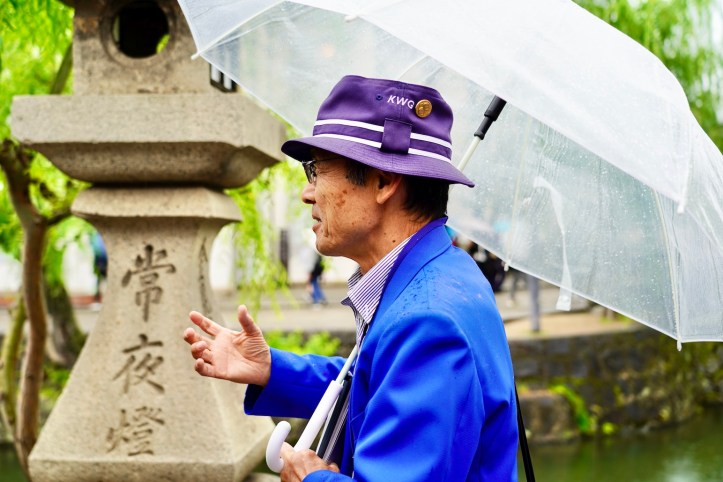
4: Free volunteer guides. Many places in Japan have volunteer guides who are free or available for a nominal fee. They are often retired professionals keen to show visitors their local areas. They are not certified guides, but are usually very enthusiastic and friendly. On our 2024 trip we had two free guides to ourselves – a retired businessman and a retired teacher. Just google your place of interest with free guides: i.e. Kurashiki free guides.
5: Local tourist information centres: Many regional areas of Japan have their own tourist information centres and have good websites in English. These are great places to check out. Many have emails if you want further information.
In Tokyo, we have regularly used the Nihonbashi Information Centre for inexpensive guided walks and other interesting local activities.
Note: there is a tourist centre near Nihonbashi bridge, but the information centre is a few minutes’ walk up from the bridge). It’s walkable from Tokyo Station (around 20 to 30 minute walk). I cannot recommend them highly enough for the assistance they have given us on various visits to Tokyo. They do reply to emails in English, and they have assistants on hand who can speak English and other languages.
https://www.facebook.com/nihonbashi.information
RESEARCH:
We get an abundance of great ideas for our Japan trips by watching the Japanese Government television station NHK World in English. I understand it’s also available in other languages in other countries.
In Australia, we watch NHK World free via Apple TV. You don’t have to have an apple subscription – just buy one of the small Apple boxes – around $200 Australian – and connect to your television. We also watch it by chroming from the NHK World free app. I highly recommend NHK.
We access very useful pamphlets, booklets, maps etc from the Japan National Tourist Association.
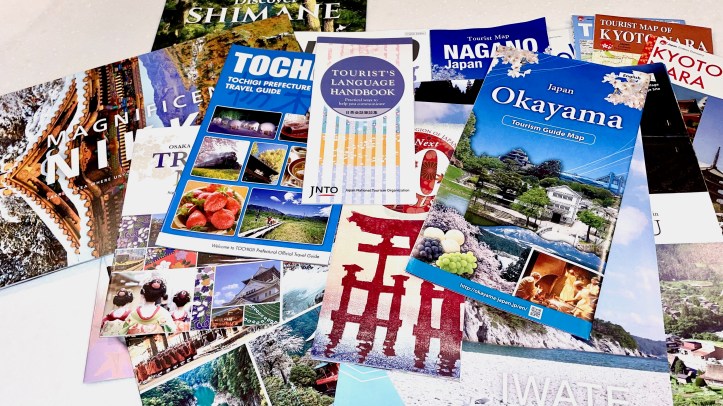
In Australia, it is based in Sydney, and its website is at https://www.japan.travel/en/au/
The website has an abundance of good information, and is particularly useful for the lesser known regional areas. You can email them and request information on specific areas or items of interest, and they will snail mail out to you. I love getting the big brown envelope in my letter box full of information. Check if there is an office in your country.
Travel blogs: I get a lot of information from reading other people’s travel blogs, and talking with other Japan travellers.
Our trips: Many ideas for our trips come from our previous trips or from talking to people who have been to Japan. If your area has a local Japan Association, touch base.
We learn as we go. By the time we get home from a trip, we already have an idea of where we would like to explore next!

Media: I read two Japanese media sites in English most days via the Internet: the Mainichi and Japan Today. These increase my knowledge of Japan, and creates a much greater awareness of the country I am visiting.

BOOKS TO INFORM YOUR JOURNEY – There are many books that will enrich your knowledge of Japan, its culture, history and people. These are a few of my favourites.
UNBEATEN TRACKS IN JAPAN by Isabella Bird – an English woman who travelled in Japan in the 1800’s – the first white person many villages had ever seen. She is my travel icon and her journey in Japan inspires the itinerary for some of my own travels there.
GLIMPSES OF AN UNFAMILIAR JAPAN by Lafcadio Hearn – Also informs and inspires my Japanese journeys. Last year I visited Matsue in Shimane prefecture for the first time, because Hearn had lived here and written about the area. It’s now one of my favourite places in Japan. A wonderful place I might have missed out on if I hadn’t learnt about Hearn.
SHOGUN by James Clavell – yes, that award winning and excellent tv series. But do read the book! Clavell did meticulous research, and his story closely aligns to history. It is based on real events and real people, and is an enjoyable way to learn about some of Japan’s Samurai period history.
THE ONY GAIJIN IN THE VILLAGE by Scottish writer Iain Maloney who in 2016 moved to live in a rural village in Japan with his Japanese wife. I loved this story – plenty of good humour – a very enjoyable read.

BASE LOCATIONS
This depends on your interests. But generally, for a novice traveller visiting Japan for the first time, I advise Tokyo, Kyoto and Takayama in Gifu prefecture as three main bases. Matsumoto in Nagano prefecture is also an excellent base if you have time. It’s become one of my favourites.
You can reach many other areas from these bases such as Nikko – day return trip from Tokyo; Osaka from Kyoto -they are only about 15 minutes apart via the Shinkansen: Hiroshima from Kyoto – it’s a long return day trip, but I’ve managed it.
Takayama: You could stay here a week and see something completely different every day within this small city or further afield on half day or day trips. A delightful place – very walkable, with an old samurai shopping area, an excellent morning market with local produce, a vibrant local arts and crafts industry and many other local attractions. Unfortunately in recent years it’s become very popular, and accommodation expensive.


Takayama’s excellent train and bus system makes it easy to visit other places on day or half day trips such as ancient thatched roof villages, double decker gondolas that take you 2,200 metres above sea level in a spectacular mountain ride, cycling on an old railway in the mountains, guided leisurely cycle rides with an excellent little company in the country side, picturesque neighbouring Hida Furukawa, a day trip to Toyama and its excellent glass museum, a day trip to the stunning national park at Kamikochi, local waterfalls, and much more. You can access Takayama by the Hida Express train from Nagoya – en route between Tokyo and Kyoto. This particular journey is a very scenic train trip – one of my personal favourites in Japan.
A direct Nohi bus service is available between Takayama and the Kiso valley old Samurai towns of Magome and Tsumago on the other side of the Alps. It used to run before Covid, and it’s been a long time returning! About $90 Australian for the return journey. There’s enough time between arriving and departing to do the 8 k trek between the two towns, something I highly recommend – see my story; https://travellingtherese.com/2023/01/22/nakasendo-%e4%b8%ad%e5%b1%b1%e9%81%93-the-hike-2/

Matsumoto: Another city that could suit the first timer and you can easily link with Takayama. There’s an excellent public bus route through the Alps between these two small cities. It only costs around $40 on way, and is a nice change from the trains. Matsumoto is also a very walkable city, with a nice restaurant area near the railway station for an enjoyable night life. It has one of the most picturesque original castles in Japan, along with some excellent museums, shops and a 300 year old miso brewery that offers free tours. In winter, the castle has a spectacular light up night time show that should not be missed.
There is another famous castle, Himeji, on the train route between Kyoto and Hiroshima, but it’s become one of those over-tourism spots in Japan, packed with visitors, and the price is going up to around $50 per couple to enter it. Matsumoto is much cheaper, and I personally like it better.

From Matsumoto, Japan’s famous Kiso valley is easily accessible on a half day or day trip – I recommend the wonderful 8 k walk between Magome and Tsumago. Stay overnight in a traditional inn in Tsumago if you can! One of the best experiences we’d enjoyed in Japan! You can also access on a day trip from Matsumoto the outrageously beautiful KAMIKOCHI mountain area.

Warning: Wear a bear bell on all walks in the wild. Bears are a very real threat in the wild, even on popular tracks and in National Parks. Japan also have snakes and wild monkeys. Be alert, be aware.

While I’m on warnings, be aware that Japan is a major earthquake and volcano zone. We always ensure we know our emergency exits in our accommodations, and have a clear idea of emergency procedures in Japan. We carry small headlamps with us, and our important papers – passports, etc – are always at hand in small backpacks that we would grab if we needed to evacuate. Note that it is illegal to go anywhere in Japan without your passport. Do not leave it at your accommodation.
MONEY: We like to carry a reasonable amount of Japanese yen with us. Japan has become more credit card friendly since covid, but cash is still needed – especially in small shops/cafes and in more regional areas. In Australia, there are a variety of good agencies to buy cash, other than from the banks, so I suggest you look around for the best exchange rate.
Imagine arriving in Tokyo, and there’s an outage that prevents you accessing cash easily. Yes, I know of this happening.
Imagine too that you are caught up in an emergency on your travels, and all communications are down. A cyber attack or simply a systems failure. An earthquake or flood. Or even a theft from your digital wallet. Handy to have some yen to buy food and other essentials.
I stress again that it is the law in Japan that overseas visitors carry their passports with them at all times! In an emergency, you might not be able to get back to your hotel readily. So don’t leave these essentials in your room safe! I know of a young man who did leave his air tickets and passport at his hotel in Kanazawa when he visited Takayama on a day trip. The 2024 Noto earthquake happened that day, and he was not able to get back to Kanazawa for some time. His postings appealing for help were panic ridden! Easily avoided had he kept his essential papers with him.

Travel experience has taught me to always have options/backups when it comes to currency.
A friend travelling with us in 2024 had her credit card hacked in Australia the day before leaving, and did not realise until she arrived in Japan.She had the card cancelled immediately, and luckily had both Yen cash and a backup card.
So – we carry Japanese yen, and also have credit/debit cards and debit cards to pay by credit or to access more cash at ATMs (generally at convenience stores or post offices). We ensure that our cards do not carry transaction fees. So, examine your own situation with this.
Generally, most of our accommodations have been prepaid before we arrive in Japan. We also in the past have always purchased a JR rail pass – they are very convenient, but they have become much more expensive in the past year, and may not suit a first timer travelling in a limited area. Check to see if there is a regional pass that might suit your travel plan. Happy travels!!

Day passes. We always check to see if a locality offers day bus or/and train passes. You can achieve great savings with day passes, and many areas offer them. Many towns also have special buses taking passengers to their main tourist highlights. Check the local visitor/tourist bureau.
PLANNING THE DETAILS: We avoid the ‘over tourism’ spots – there are so many other great alternatives, even within Tokyo and Kyoto – two big centres for tourists.
Everyone will have their own way of planning a trip. I have folders on my computer and within my mail system where I put copies of our accommodations reservations and notes on each location we plan to visit: i.e: reservation folder, locations folder. And yes, I type out an old fashioned itinerary. Many travellers these days use special itinerary planning on line apps, and find them very useful – in fact, they can be quite amazing planning tools – but they aren’t my thing.

All important items such as reservation confirmations are on my email system on my phone/iPad – and also shared with my husband for his phone. I still print out our reservations, airline tickets and my location notes and carry them in a light plastic folder. They get discarded as our trip progresses. Again, my penchant for backups when travelling.
Location notes remind me of the attractions that we may wish to visit, and details of how to get there. They are basically suggestions for us. We are very open to changing our plans if we hear of something interesting en route. Some attractions seem to move from one trip to another when we don’t get time to check them out!

ACCOMMODATIONS: We mainly stay in business western style no frills hotels, paying attention to how big a room is. How many times have I heard travellers complain how tiny their hotel room was! Did they not check before they booked?
Accommodations in Japan can have minuscule rooms. You’ll be practically sleeping on your luggage! They usually list the size of rooms, and if they don’t, then email them. I have also emailed for information about the size of the beds. Is their idea of a Queen bed my idea of a Queen bed?
We personally choose not to go below 18 sq, with a basic ensuite and Queen or twin beds. It’s enough to be comfortable. Hotel rooms usually have a tiny fridge, hairdryer, and reasonable quality toiletries made in Japan. They will often have a luggage rack, though strangely only one even if two people are sharing a room. We often ask for an extra one, and the hotel supplies them. Japanese hotels don’t generally have irons in the rooms, but you can ask for one at reception. They do almost always have trouser presses (took me a while to figure out what they were).
I always check Trip advisor to see what other people are saying about an accommodation, and I have had recommendations from other trip bloggers and from friends.
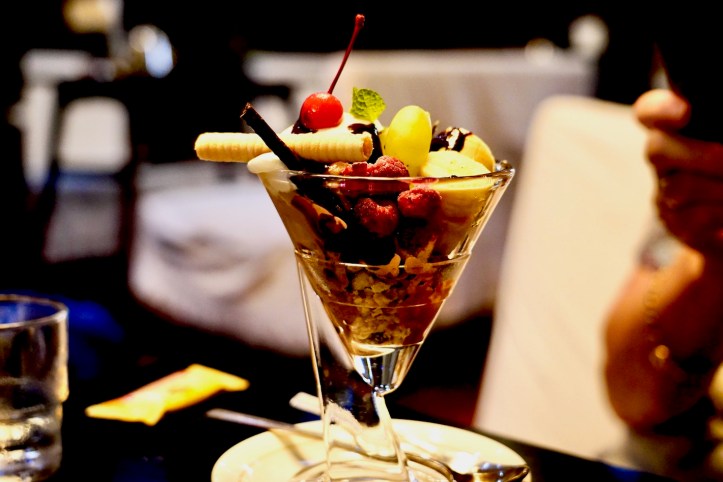
We rarely eat breakfast in a hotel, unless we think it’s a good deal, it’s Japanese style accommodation with some meals included or we know there’s no breakfast cafe within cooee. Mostly, we go out in search of a breakfast café. Easily done in the cities, less so in regional places. . We overcome this by buying breakfast items at convenience stores such as yoghurt, juice etc and keeping them in our accommodation fridge. In Japan, fridges tend to be very small, but they aren’t filled with hotel supplies they hope to sell you! They are empty and ready for you to fill with your goodies.

We do try to include at least one ‘character’ Japanese style accommodation and one ‘treat accommodation” on our trips. With Japanese style accommodation, share toilets and bathrooms are often the go. No worries. In my experience, they have always been immaculate with lockable doors.
BOOKING ACCOMMODATION; We mostly use Qantas hotels online. It’s backed by Expedia. If a hotel can’t locate your Qantas booking, ask them to see if there is an Expedia booking in your name. It’s only ever happened twice for us, but worth mentioning.
As Qantas Frequent Flyer members, we access some great deals. It’s the one area Qantas hasn’t let me down. You do not have to be flying Qantas or be a FFlyer to book on its hotels site. But being a FFlyer does get you the best deals.
I also book some accommodations directly. And I use the Japanese booking site JAPANICAN. It’s very reputable. Some hotels in the regional areas only take bookings through JAPANICAN. I also sometimes use booking.com.
So: when I am looking to book an accommodation, I check the direct price, Japanican, Qantas hotels and booking.com – I also check reviews.

It’s worth noting that by booking accommodations myself, rather than through a travel agent, I was able to easily and quickly get full refunds when I had to cancel a 2020 Japan trip because of Covid travel restrictions.

WHO DO WE FLY WITH: We have flown with both Japan Airlines (JAL) and Air Nippon(ANA) ECONOMY class. Both are excellent – and far superior to Qantas these days (so sad to say that as an Australian) My 6.2 (188.976 cm) husband has leg room in Economy with both ANA and JAL! And we’ve found the meals and service to be very good.
ANA offers direct flights from Australia – around 9.5 hours from PERTH to TOKYO. ANA also offers direct flights from some of Australia’s eastern states. Look out for their BLUE sales – return trips were recently down to $940!
ANA often includes a free flight within Japan. They also have recently introduced flights to Osaka via Tokyo from Perth, with a free stop over available in Tokyo.
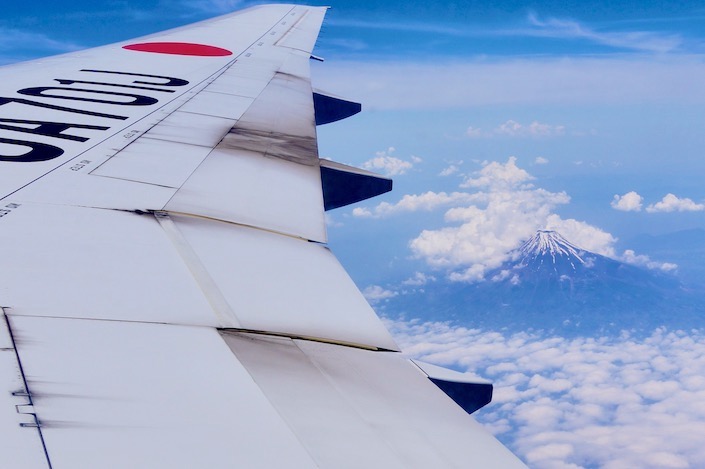
GOOGLE TRANSLATE
The big game changer since we began visiting Japan is translator apps. We use the free google translate app on our phones to have conversations with Japanese people, and to read signage, labels, etc. It’s very easy, even for techno nerds like us. We find many Japanese have a translator on their phones too.
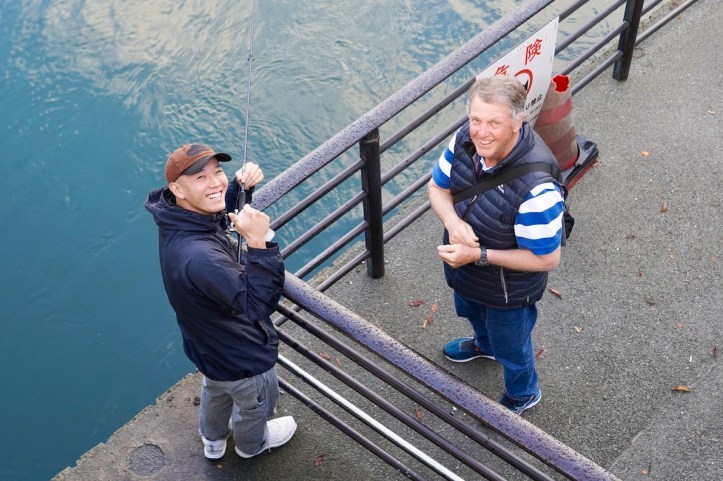
Yes, my fishing mad husband can now confidently wander up to a fisher and ask about their luck, using a translator! I have seen him embark on many fishing conversations using his google translator. There are times I curse the translator because I can’t drag him away LOL!
GOOGLE MAPS
My husband has responsibility for sorting google maps – we always do google walks from railway stations to our accommodation in new places before we leave home.
When we walk out of a railway station, we feel familiar with our surroundings and confident of finding our way to our accommodation. We like to book accommodations within walking distance of a railway station if possible. Taxi lines outside major stations like Tokyo can be very long!
Note that some more remote accommodations offer free shuttle buses or pickups at stations. Worth checking!
If we do need to take a taxi, we ensure our destination is written in both English and Japanese to show the driver.
PLEASE LEARN SOME JAPANESE WORDS AND PHRASES.

We do not speak Japanese. But we have found it useful to learn some words and phrases such as please, thank you, excuse me, sorry, where is a toilet, good morning, good evening, please go ahead, etc. We have probably learnt around 60 of these.
These are all very accessible by goggling to hear pronunciations. Japanese people do appreciate your effort. It is of no use saying thank-you in English if the person you are speaking to doesn’t understand English.
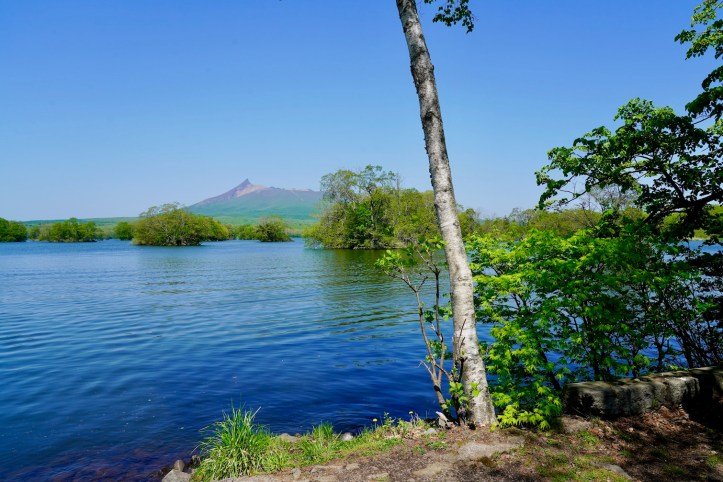
OVER TOURISM: There has been a lot of media lately about over tourism in Japan. Places crowded out with tourists – elbow to elbow! The good news is over tourism is restricted to a handful of places – mainly in Tokyo, Kyoto, Osaka and Hiroshima. There are great location alternatives where you may be the only westerners.
If you simply must visit a highly popular place, then make the effort to get up at dawn to see it or go early evening/night when the crowds are less dense. In Takayama, it’s shoulder to shoulder at its popular morning markets. But be there as they are opening, and there’s a lot less people.
One very under rated place in Japan is Matsue in Shimane prefecture. A few years ago, it was assessed as the least visited prefecture for sightseeing and leisure by international tourists on Honshu. I can’t imagine why! This region has abundant attractions for the visitor. It even has an IRISH festival!
Matsue is a very historical, interesting and walkable city, with an excellent tourist bus system that takes you to the main tourist sites. It is one of the most interesting places we have visited in Japan, with a beautiful castle, surrounded by a tranquil moat system that you can explore by boats. It has a delightful river, and can boost some of the best sunsets in Japan. And the journey there by train is very scenic.
WHEN TO GO TO JAPAN: My preferences are the Japanese spring and autumn. Both are good times to visit with a lot to offer. If I was a snow bunny or perhaps longing for a sparkling white Xmas, I might consider winter. My son assures me some of the best skiing in the world can be found in Japan, with its abundance of resorts. Avoid the most popular ones if you don’t like crowds. There are plenty of lesser known, but excellent ski fields to discover and enjoy. There are many other wonderful winter attractions in Japan, as long as you are prepared for the cold. The 2024/25 winter in Japan has been fairly brutal in many areas, with some public transport cancellations and delays because of heavy snow conditions.
Summer: No, no no – not for me! And I would never suggest it for you! Don’t entertain a summer trip unless you enjoy oppressive humidity, at times above 70 per cent, and very hot weather. Throw in the fact that summer in Japan is also typhoon season, causing floods and possible transport delays. There are many interesting festivals over the summer if you can endure the weather. I can take high temperatures, but not stifling humidity.
Mistakes: I have made them – we all do – the best laid plans and all that! Go with the flow, accept them, and look to your back up plans and strategies. Sometimes my mistakes have ended up leading to me to what’s turned out to be highlights of my travels!

In my travels – Japan and elsewhere – I am very much in tune with this thought from Japanese mountaineer, photographer and writer Naoki Ishikawa –
“A traveler is always a foreigner, requesting permission to step into the local community. I want to show the people there as much respect as possible. That’s why an attitude of actively interacting with local culture and striving to understand it is very important.”
I hope you gained a little insight from this article. I welcome feedback and questions. If you are not subscribed (it’s free), just email to Theresesayers@hotmail.com.
 Travelling Therese
You really should write a guidebook!
LikeLike
I feel I’m getting to know Japan well, and always happy to share my experiences there. Off soon to explore more new territory on Hokkaido and northern Honshu. Still writing up the last trip lol!
LikeLike