
Is it a little crazy that my travels in Japan are influenced by people born in the 1800’s? My regular readers already know I greatly admire the explorer and writer Isabella Bird – 1831 to 1904. I have visited many of the places she explored in Japan, and last November (2024) I continued to follow her trail when I returned to Japan.
The other person who informs my travels in Japan is the Irish/Greek Journalist/writer Lafcadio Hearn, known also in Japan as Yakumo Koizumi. Born in 1850, he died the same year as Bird.

You can look up Hearn for yourself. His is quite a story. He was a fascinating character, with an incredible and very interesting history. Hearn is still celebrated both in New Orleans where he lived for many years, and in Japan, where the city of Matsue in Shimane prefecture maintains the home he lived in there for public viewing.
Matsue also holds an annual Irish festival on St Patricks Day! You cannot visit modern day Matsue without becoming aware of the presence and spirit of Lafcardio Hearn. Shimane prefecture is very tied in with Japanese mythology. So it’s not surprising that there is an affinity with the land of leprechauns and fairies.

I learnt so much about Japan, its myths and its legends through Hearn’s books, still popular today. In particular, I recommend his ’Glimpses of an unfamiliar Japan’. I also recommend the free Hearne walking map of Matsue.
I chose to visit Matsue simply because Hearn wrote so lovingly of the Shimane area. He sparked my curiosity. I thought the city might be packed with foreign tourists. It wasn’t – just a sprinkling of Japanese and other Asian visitors, and a few western tourists! A survey a few years ago showed that Shimane was one of the most least visited prefectures by tourists in Japan. I think of myself more as a traveller than a tourist, but I cannot understand why any visitor to Japan would not include Matsue on their itinerary.
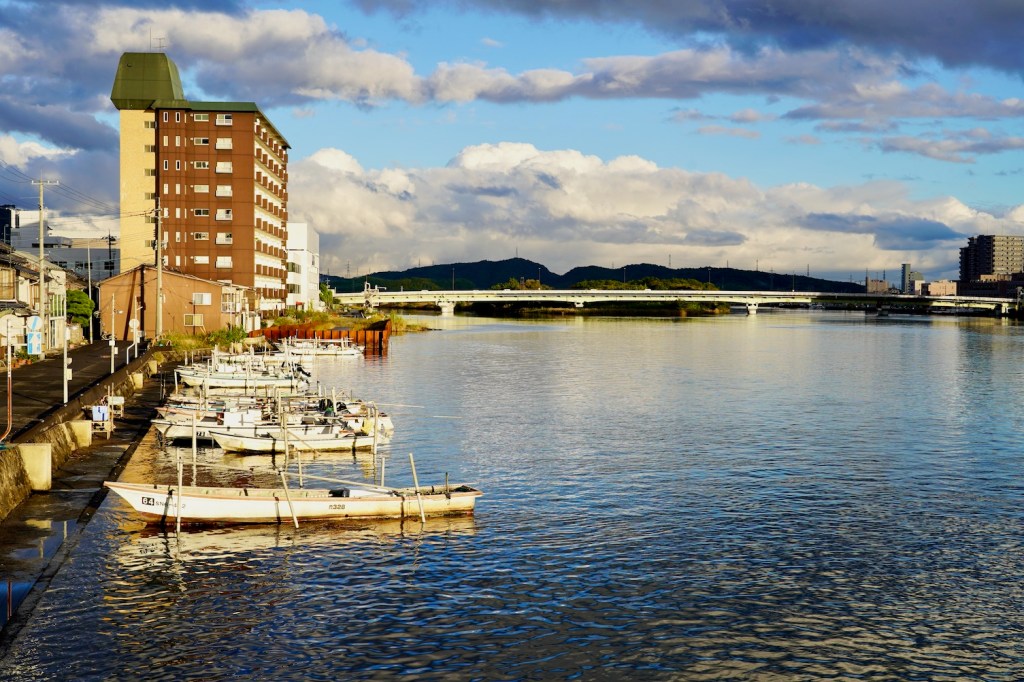
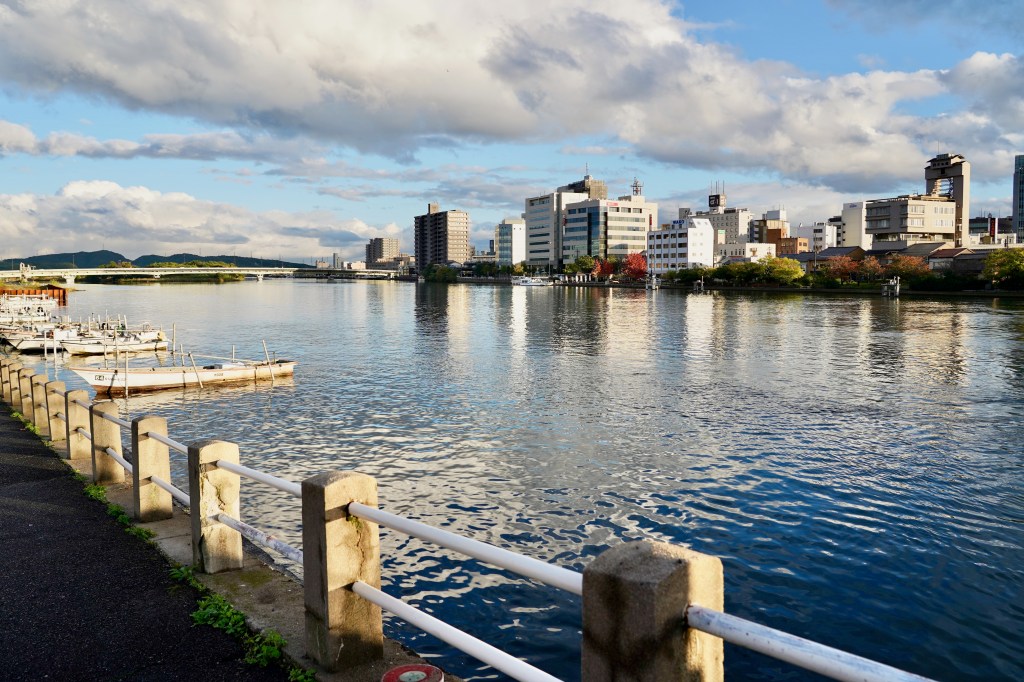
It’s a lovely and very walkable compact little city with attractive waterways, preserved samurai areas, interesting vistas, and the best sunset I have seen to date in Japan. Matsue also provides excellent services for visitors, and is a good base for exploring the rest of picturesque Shimane.
The small, but very elegant Matsue Castle, completed in 1611, is one of only 12 remaining original castles in Japan. It is one of the country’s few largely intact 17th-century castles, and it has a magnificent bird’s eye view of the city. There’s a large park surrounding it, known for Jozan Inari Shrine’s fox statues. Across from the castle moat is Shiomi Nawate street, lined with Edo-period samurai residences and some excellent shops!
Reaching Matsue is an effort, as it’s well off the usual tourist track. You need to travel firstly to Okayama, and from there ride the Limited Express Yakumo that winds through central mountain regions of Honshu to Shimane prefecture. The train is new, introduced in early 2024 and the first new model on the very scenic route in 42 years. It has replaced an old train that apparently rattled along with such a sway that passengers often became ill.
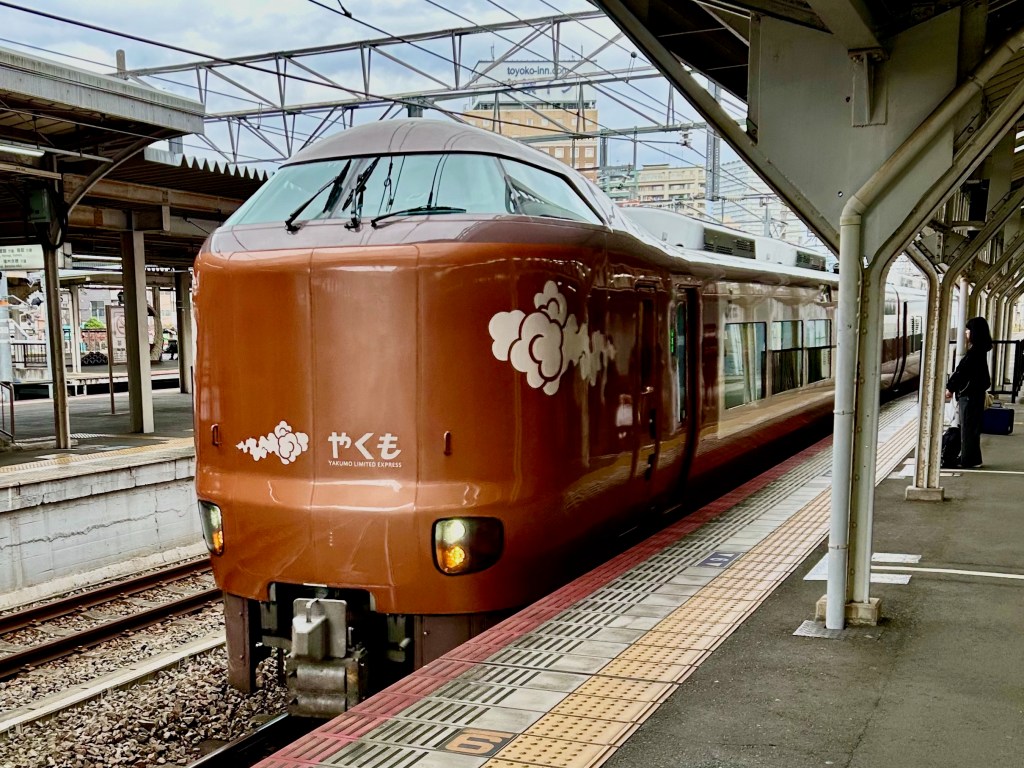
I loved its nice big windows, comfy seats and roomy design. It even features special areas for wheelchair passengers.
Matsue railway station is full of interesting cafes and other shops, and just outside is a tourist information office with english speaking staff. Within walking distance are a variety of hotels and an area with very cool restaurants and nightclubs.

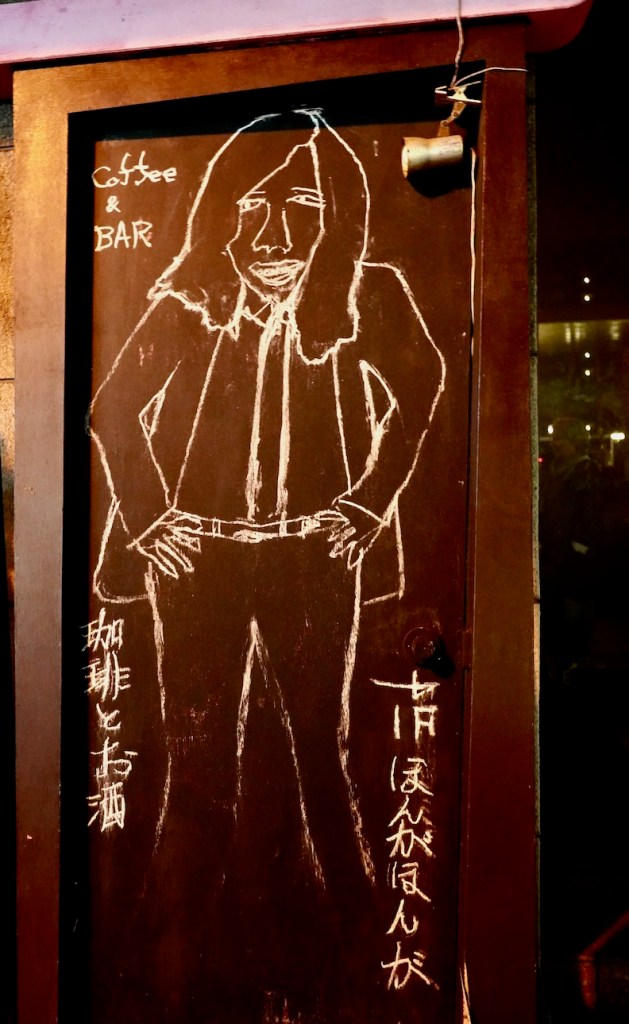
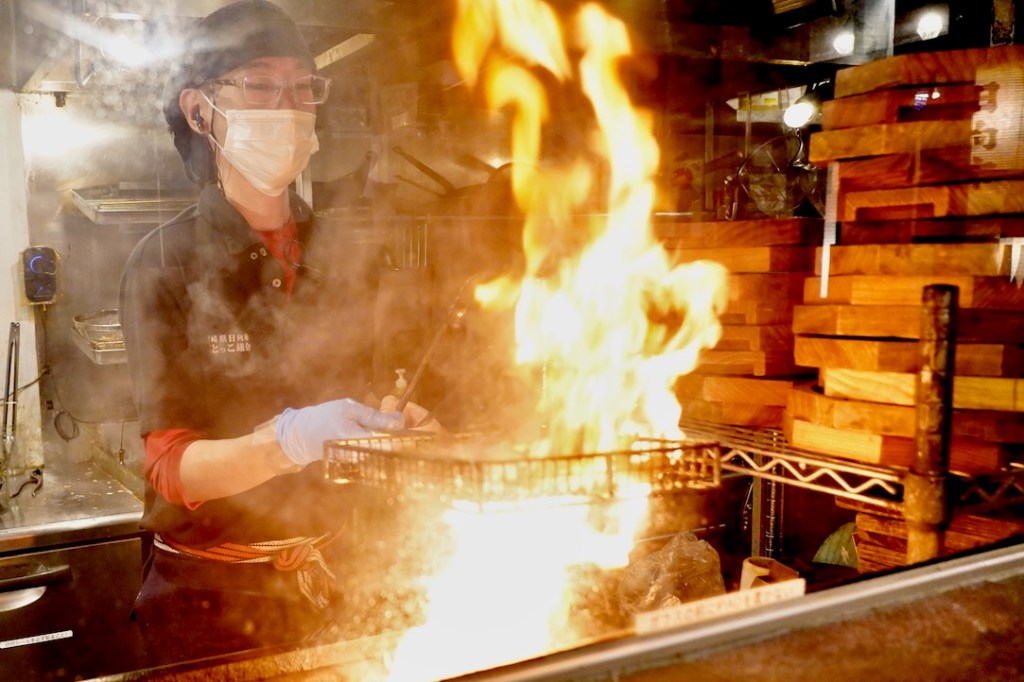
Matsue also struck me as a great foodie destination. We had some excellent meals and tasty treats here.


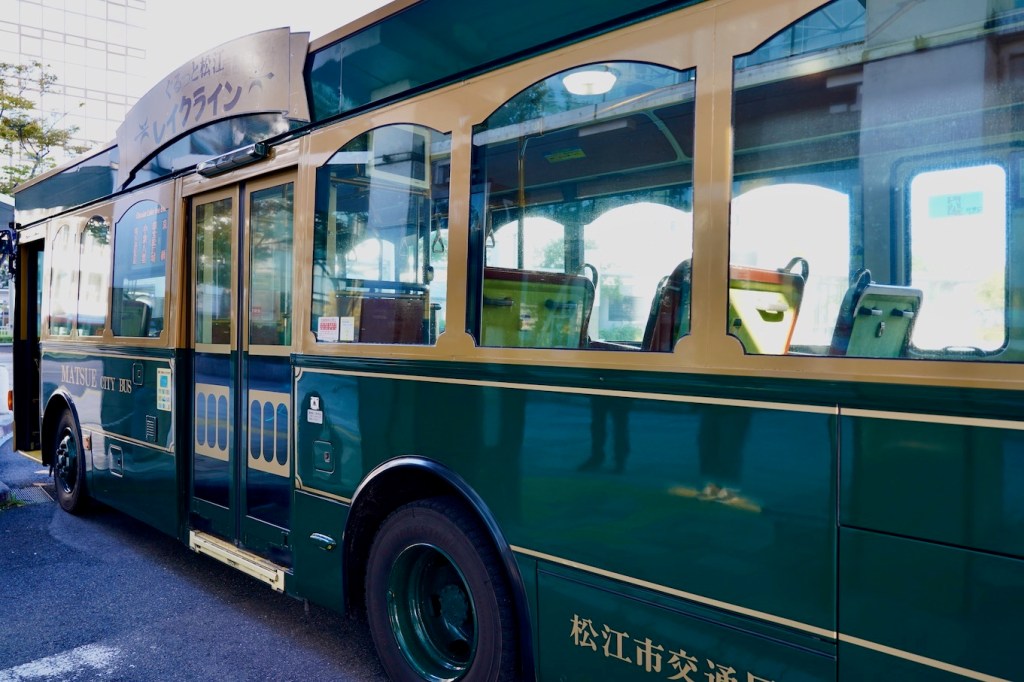
You can easily walk from the railway station to Matsue’s gorgeous river and city centre. It’s only one kilometre to the east of beautiful Lake Shinji – the fourth largest lake in Japan – and two kilometres from Matsue Castle. But should you prefer to ride, there is an excellent tourist bus service with an all day hop on hop off ticket for under $6 Australian. It takes you to all the major Matsue sights.
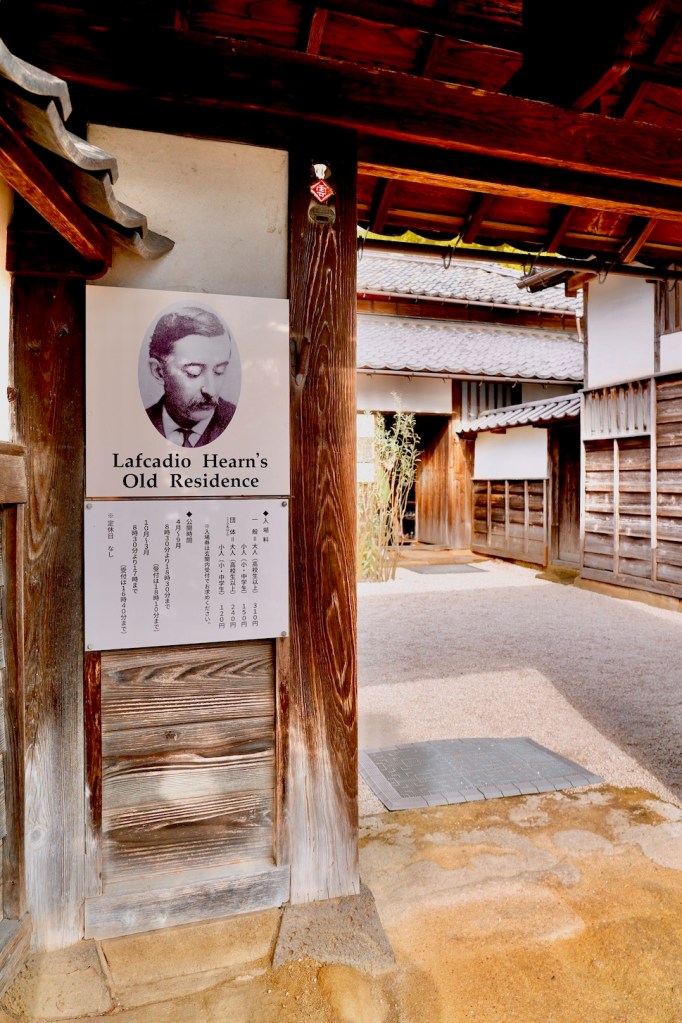
Number one on my list was to see Hearn’s home in his last five months in Matsue, as well as the adjoining Herne memorial museum that displays original handwritten scripts and more than 200 other items. He met his Japanese wife Koizumi Setsuko in Matsue. She was the daughter of a local Samurai. It happened that a special exhibition about her was being held when I was there. I couldn’t have timed my visit better if I had tried!


I had previously read opinions that this was probably a marriage of convenience, arranged so that he could reside in Japan. Well, that opinion was so far off the mark. This was clearly a great love story, and a wonderful working partnership. Setsuko contributed greatly to his work, and I wonder if his books would have been so successful without her help.
I was so glad I saw the exhibition as it totally changed my impression of Setsuko and their marriage. Their correspondence whenever they were apart were love letters. They were very close partners.
Setsuko was no quiet little fragile 1800’s Japanese flower. She was clearly a very strong minded woman and a good match in intelligence with Lafcardio. I can see why they would have been attracted to each other.
Seksuko had been previously married, and her young husband had run off because apparently he couldn’t stand the poverty of the area. She hotly pursued him, crossing the country to ensure they got a proper divorce. Good on her! Remember – this is back in 1800’s Japan!
She worked closely with Lafcardio on his books, translating for him and bringing him ancient folk lore stories. She also worked hard to maintain his legacy after his sudden death in Tokyo (EDO) at just 54 from a heart attack, and she wrote a book herself about him.

Lafcardio and Seksuko had four children together – three sons and a daughter – and a handsome, accomplished lot they were too. Their love of family comes through strongly in the exhibition. Hearne had a lonely and rather awful childhood, sent to an elderly Irish aunt to be raised. So it’s easy to understand how much the family he had with Seksuko would have been so important to him.
Although his time in Matsue was fairly short, the city is proud that it was Lafcardio’s first home in Japan, and they celebrate every year with its St Patrick’s Day festival, featuring traditional Irish music and céili dancing. Of course, you will find an Irish pub there!
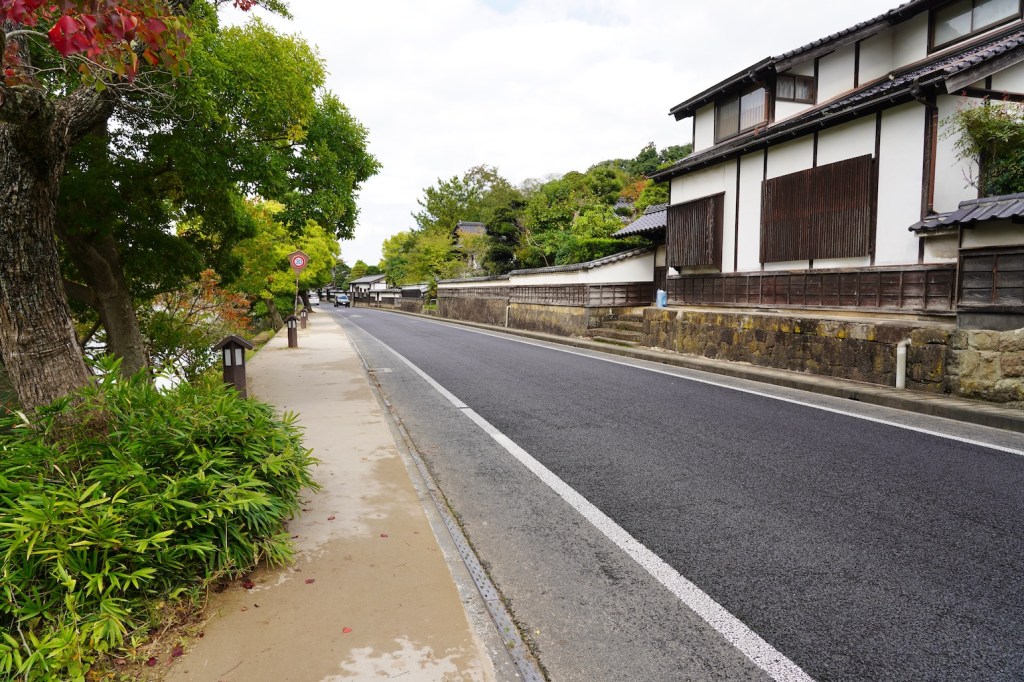
The Hearn home looks out to one of the moats surrounding Matsue castle, and is preserved by the city as a museum. Not a big home, but relaxing, with a calming spirit. His desk is still there, and it’s easy to imagine him sitting there, Pondering, researching and writing his books.
On the waterways
We explored the castle moat and other waterways around the castle by a tiny boat. If you are going to do a waterways ride in Japan, this is the place for it! The waterways are much as they were when first built, and they presented one of my most unusual experiences in Japan. The boats pass under many ancient and very low bridges – so the rooves of the boats have to be lowered – so low that passengers end up lying flat on the bottom of the boats! A little claustrophobic, but tremendous fun. Our singing boatman would break out into song under some of the bridges that offered great acoustics.


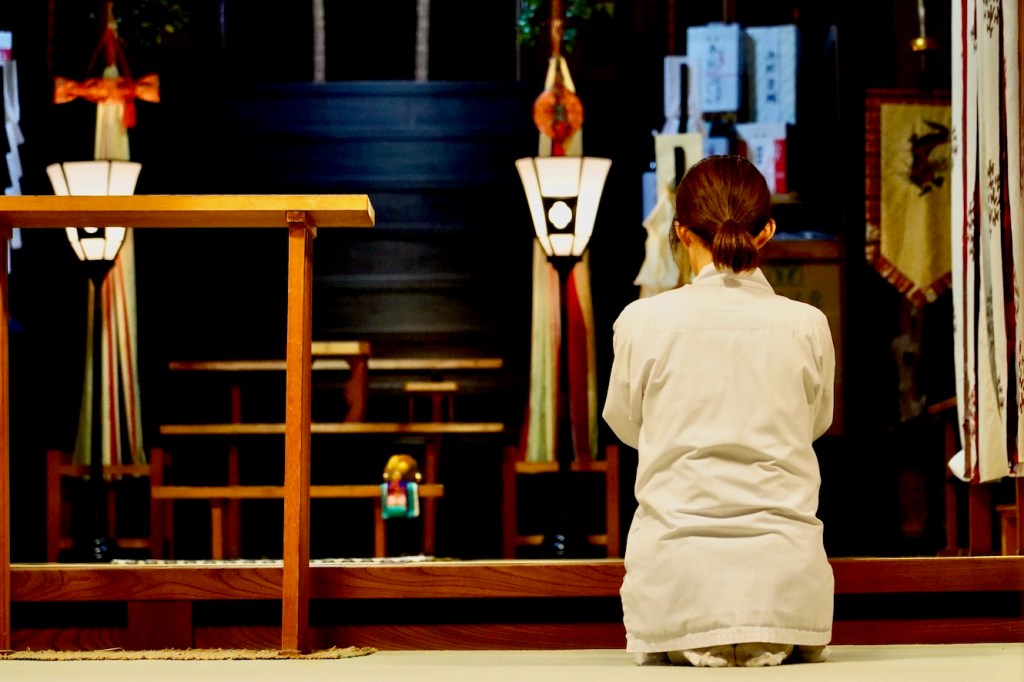
There is so much to explore in Matsue. On one early evening stroll, we came across an ancient temple – hundreds of years old. And we were the only visitors there, though we saw women who I presume were nuns.

Ambling along the riverside pathways, I temporarily ‘lost’ my hubby MJ. When I looked back down from a bridge, I spotted him in animated conversation with a young fisherman! Google translating, of course! Neitheer spoke each other’s language, but that didn’t stop these two fishers from chatting! MJ was reliably told that the river has plenty of fish!
I have recently been refused accommodation at a small family run inn in Nagano prefecture for our 2025 visit on the basis that we don’t speak Japanese. It was a missed opportunity for us and, I think, for them. I understand and respect their decision, but with google translate, gestures and the effort we put in with our small Japanese vocab of about 60 words and phrases, we would have managed fine, and perhaps they might have got to know a couple of old Aussie travellers with a great appreciation of Japan. There you go. I’ve vented on that. It’s the first time it has happened to us, so I was a bit wounded. I’ve found another place instead. Same language problems, but with the attitude – if you are happy to give it a go, so are we.


On the day we visited Matsue castle – with its eagle eye view over the city – preparations were underway for a concert featuring ancient songs and dance. We lucked in on the rehearsal! There was also an impressive chrysanthemum display by the castle walls.


There were so many things to see and do in Matsue – old samurai residences open to the public, excellent museums, and ancient temples. One of our highlights was lucking in on the famous Matsue sunset over Lake Shinji. It is in Japan’s list of one hundred best sunsets, and it did not fail us. There are many vantage points, but we chose the beautiful Shimane Art Museum – the hop on hop off bus delivers and picks up from here. It can be quite crowded as people leave after the sunset, but the ride to most hotels is fairly short.

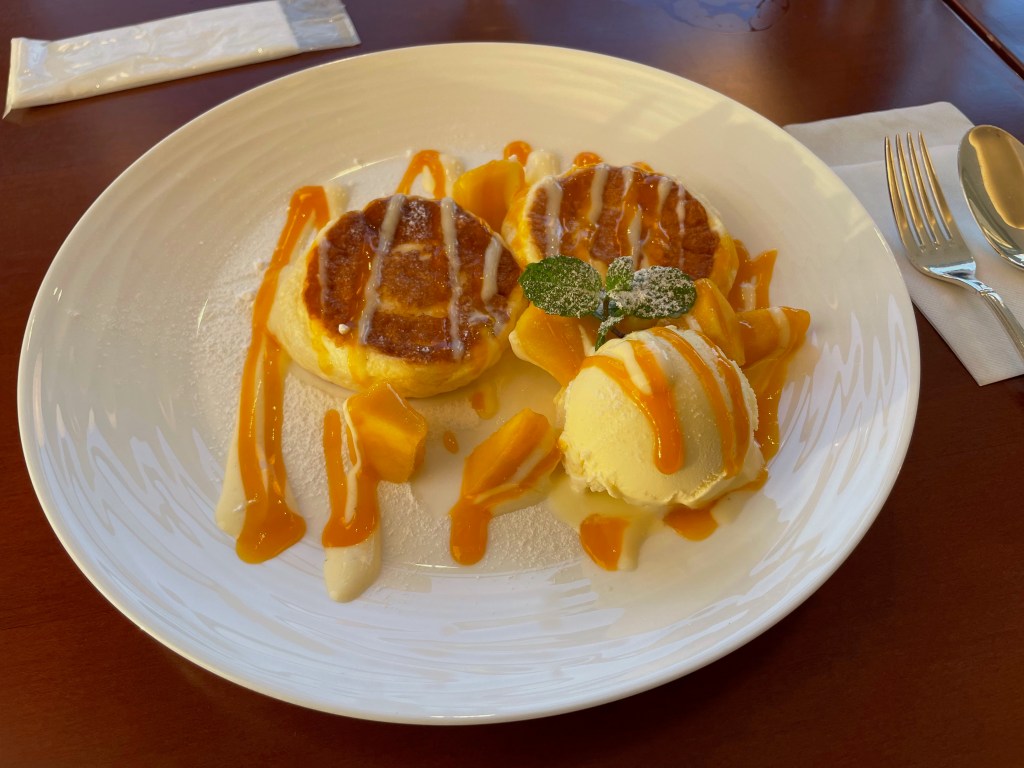
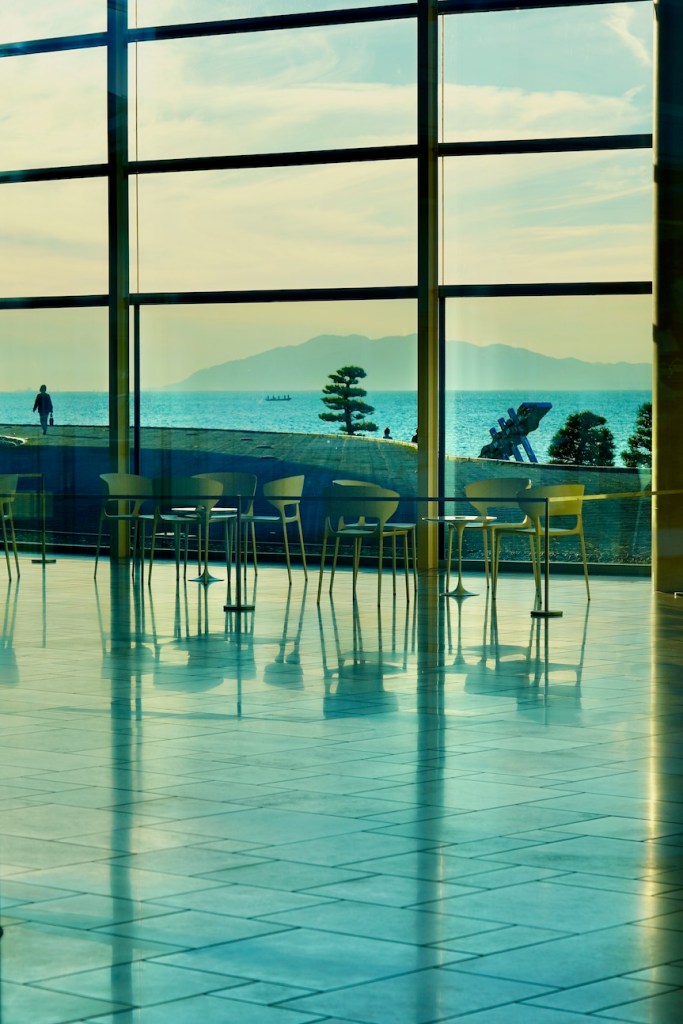
Waiting for the sunset, we enjoyed a late afternoon tea in the Museum cafe. There was a small crowd of onlookers gathering along the shoreline – nothing overwhelming as people spread out to watch from various view points – some with picnics. There also was a smattering of quite good buskers, adding to the happy and relaxed atmosphere.

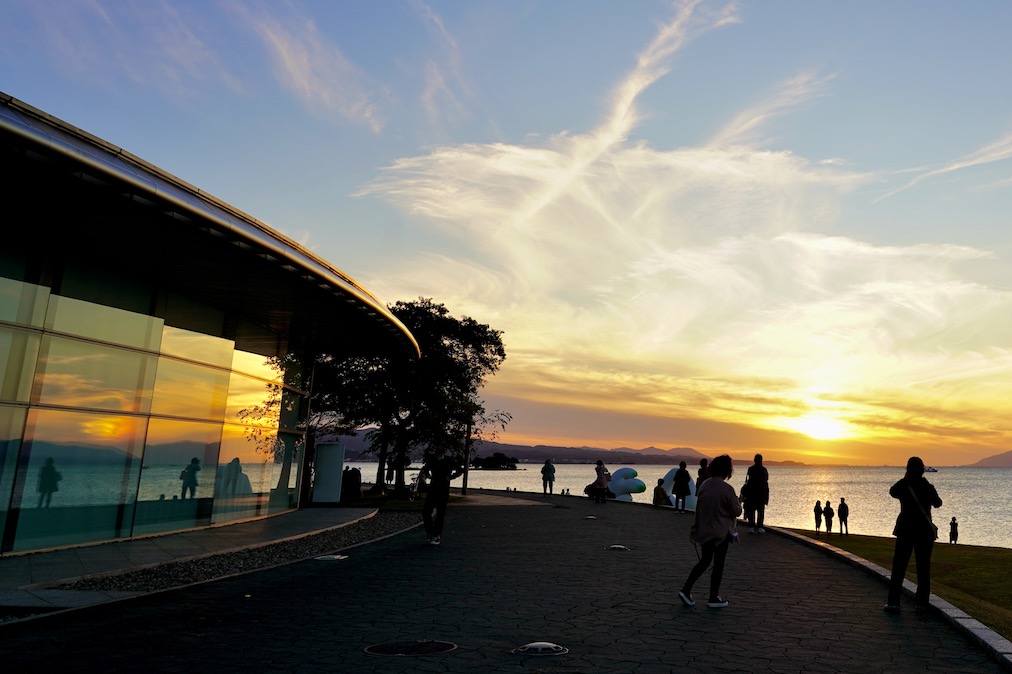


And then the sun went down – it was so incredibly beautiful, it lingers forever in my memory bank!
Another Matsue must is to travel out about an hour from the city to view the award winning gardens at the Adachi Museum of Art. You take a local train to the town of Yasugi to join a free shuttle bus to get there. It’s quite different from any garden I have seen, as you mainly view it through large windows. No garden walks here! It’s worth a blog article in itself which I posted up on May 3 (2025).

I only had three days in Matsue, enough to whet my appetite for more. I feel a strong need to return so that I can further explore the city and the prefecture of Shimane. It’s a place where I think I happily could spend a whole Japanese holiday in Shimane.
IF YOU ENJOYED MY STORY, PLEASE LEAVE A LIKE – OR EVEN A COMMENT – TO ENCOURAGE ME!
 Travelling Therese
Wow, what an adventure! You checked all the boxes in Matsu. That Lafcardio-such an interesting fellow.
LikeLiked by 1 person
They both were very interesting people who have left their mark in history. We have actually got more boxes to tick in Matsue/Shimane, so we hope to go back there possibly next year.
LikeLiked by 1 person