
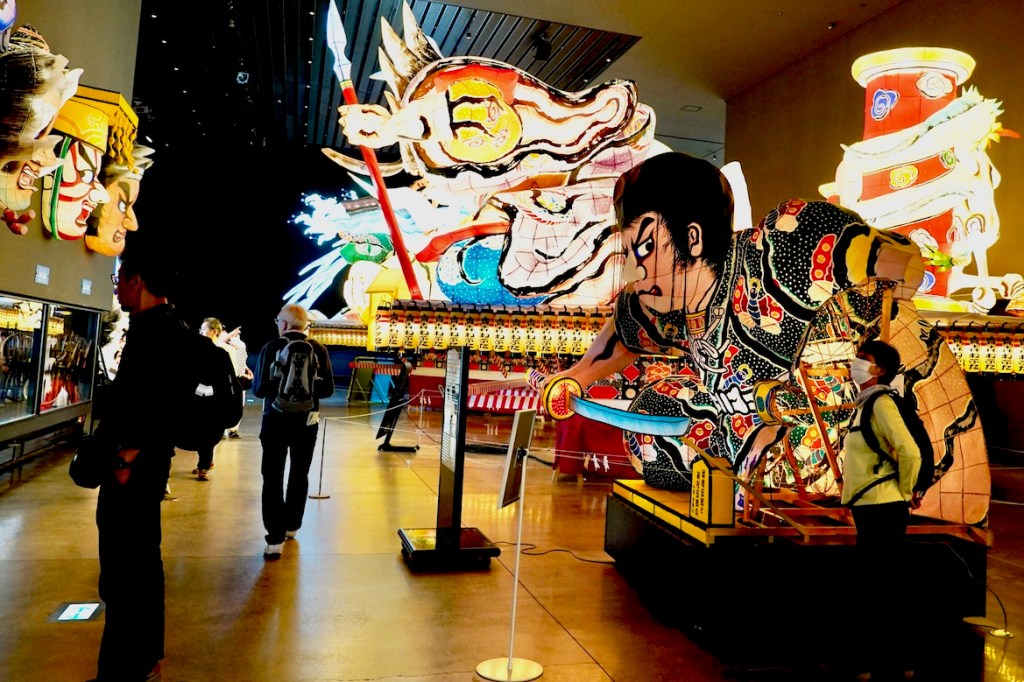
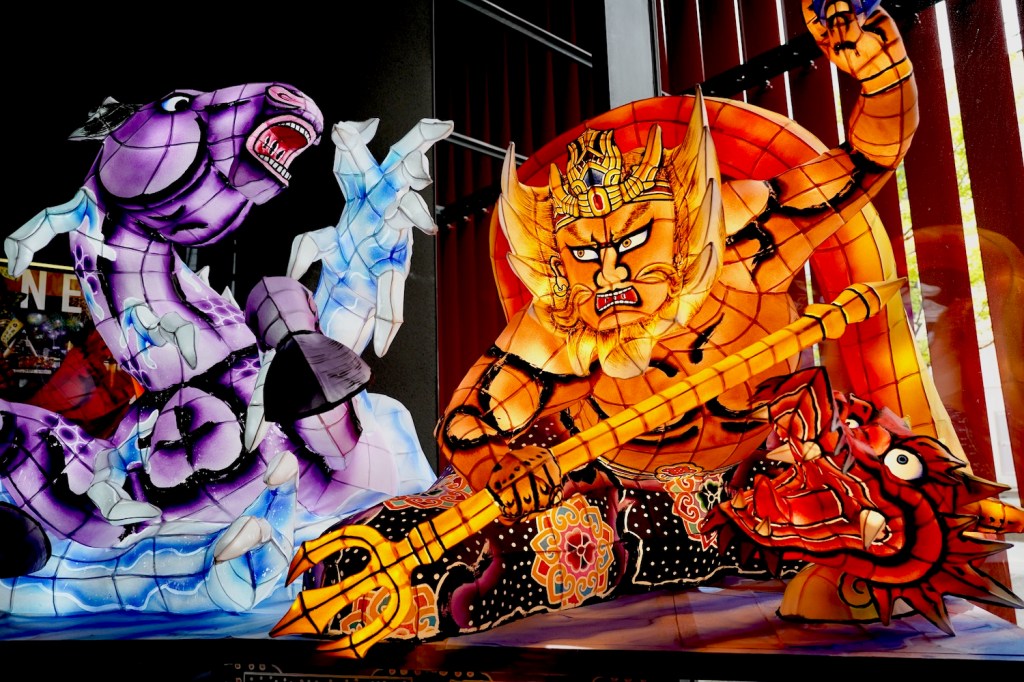
They are big, brash, colourful, overwhelming and they will stun you. They are unlike anything I’ve ever seen before. Massive Japanese Festival floats – 9 meters wide, 7 meters deep and 5 meters high – dominating and overpowering – evidence of what talented craftspeople can do with paper, wire, patience and an abundance of imagination.

In this age of AI creativity, these Japanese washi paper and wire giants, from Aomori on the northern coast of Honshu, stand strong for good old fashioned human creativity and ingenuity. They will take your breath away in their magnificence.

Every August as part of Aomori’s five day famous Nebuta Festival these sumptuous and glorious floats are pulled through the city streets in night parades, accompanied by energetic dancers and enthusiastic musicians. Most floats resemble ancient warlords, historical and folklore figures and old Kabuki Japanese theatre characters in early days. They are pulled along by Festival teams, and more than 3 million people turn out every year to see them.

Once the Nebula Festival is over, most floats are pulled apart to be remade or redesigned for the next year’s Festival.
I don’t like being in Japan for its summer heat and humidity. And I have an aversion to massive crowds. So the Nebula August Festival, while tempting, was never doing to make it onto my itinerary.
But this year I did the next best thing, arriving in Aomori in early May as rows of tents went up for teams to design and put together the floats for the upcoming 2025 Festival.
And I had the opportunity to see some of the floats that have been preserved from past Festivals and put on show at at Aomori’s remarkable Nebula Museum Wa Raise, on the main foreshore of the city.
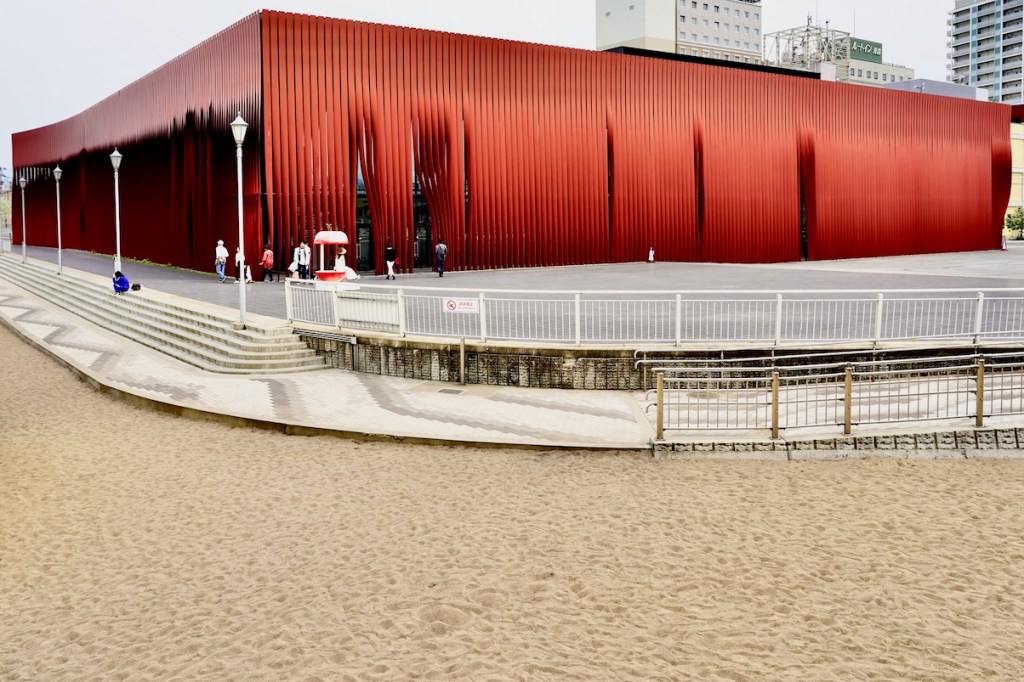
The Museum building is unique, covered in red metal slats and designed by Stephanie Forsythe and Todd MacAllen from Molo, a design and production studio based in Vancouver, Canada. Molo’s website says that the couple worked with the city over several years to develop a building to preserve and enrich the Festival’s heritage. They definitely achieved a distinctive landmark for Aomori.
“Inspired by the patterns of light and shadow created by Aomori’s beech forest, and the expressive lines of Hiroshige’s woodblock prints, Aomori Nebuta House is shrouded with 820 steel ribbons. The ribbons, handcrafted and enamel-coated in the deep red of local lacquerware, are uniquely positioned and twisted to create unexpected views, passageways and obscurities.” MOLO.
This outstanding exhibition hall houses the equally outstanding Festival exhibits. It’s very central on the main Aomori foreshore, and it is a building you can’t miss. Though whether people identify it as the Nebula Museum is another thing. The signage is discreet, and I did meet a couple of young Americans who wandered past it, admiring it, but not going in because they didn’t know what it was. We enlightened them, and they thankfully had enough time left on their visit to return and see it. We also ran into a couple of Sydneysiders, on a day visit from a cruise ship in port. They too asked about the ‘red building’. And we urged them to go inside! I was beginning to feel like a tour guide!
Hopefully, they appreciated the advice because ‘inside’ is a treat – a chance to get up close and personal with some of the magnificent festival giants. The building’s two storey design leads you gently through a tunnel where you can view festival videos and read more about the Nebula floats and history.
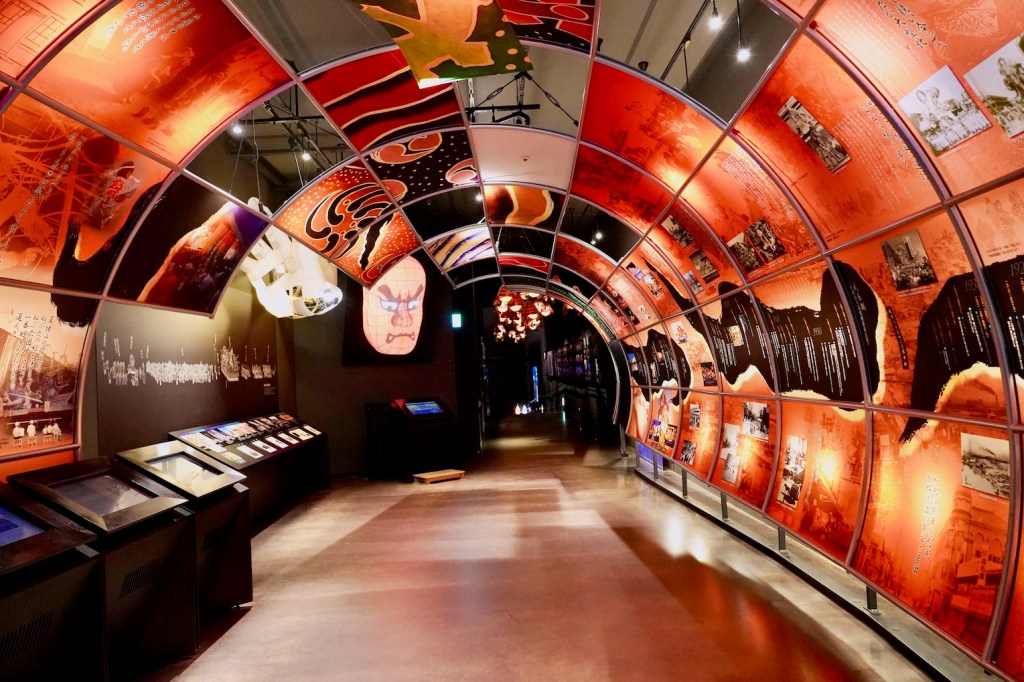

Then you come out onto a platform overlooking the main exhibit area. The ceilings are black and discreetly lit to ensure the exhibits stand out. And they definitely do – staggeringly impressive. Splendid. A feast for the eyes. First, I took in the blaze of colour before me. And then came the challenge of absorbing the array of designs in each float.


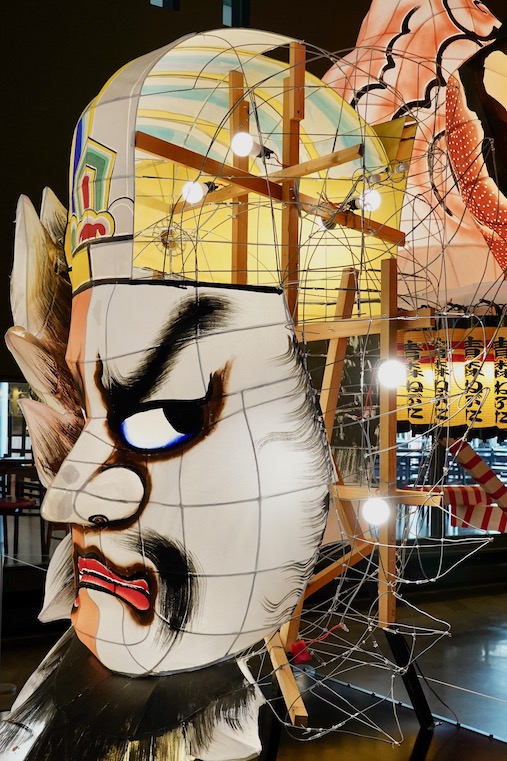
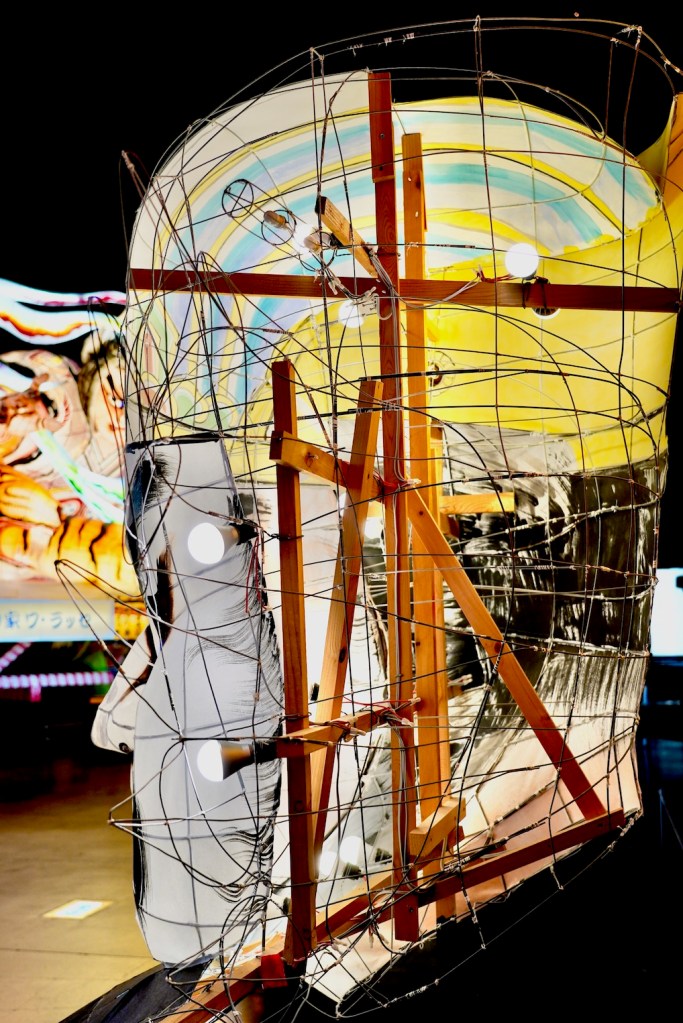
Some exhibits show you the insides of the float figures, providing a better appreciation of how the paper and wires are used for their construction.
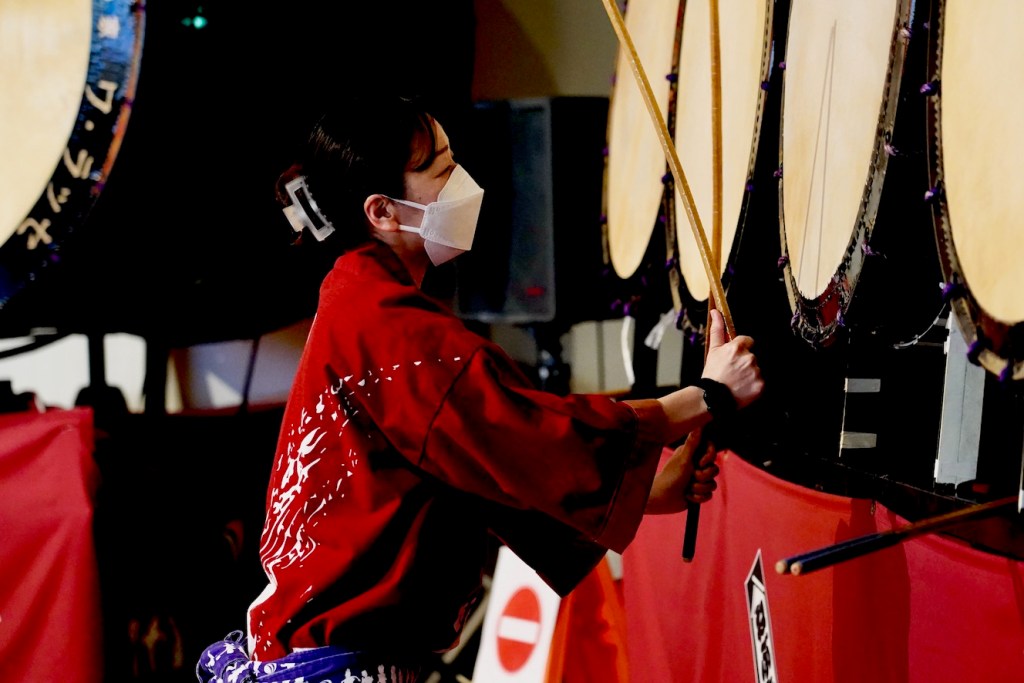
Music and dance feature in the annual festival, and both are offered art the Festival Museum, with an opportunity for the public to take part, learning dances and how to drum. When we visited, drumming, flute playing and dancing was underway, adding a festival tone to the Museum.
You also have the opportunity to try pulling one of the floats – well, at least pose for a photo! There was no way MJ and I could pull one along!

After enjoying the Museum, we moved along the foreshore where a big tent land is erected every year in early May. There’s around 20 tents there, each an enclosed workshop for the creation of new Festival floats.

Many of the tents have small clear plastic windows where the public can peer in to see them at work. I found the windows difficult to photograph through, so I was kindly allowed to poke my camera through a tent flap to take a few photos of teams already hard at work towards the 2025 Festival.
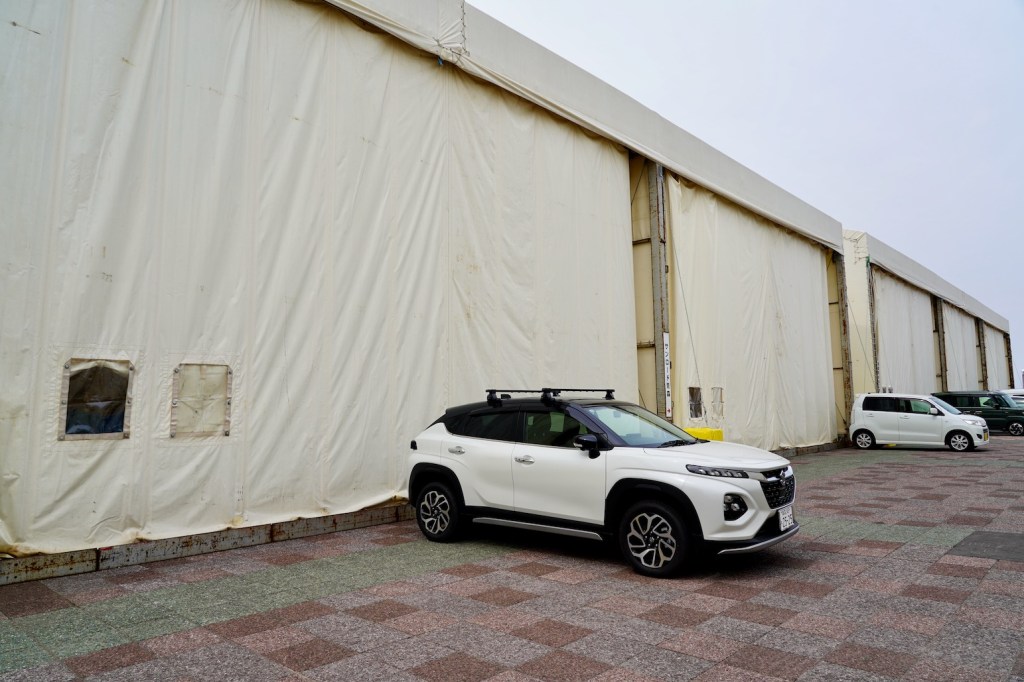

First design drafts are completed during winter, and by May teams are ready to work on the structures with wood and wires within the tents. Eventually light bulbs are put inside and the wire structures are covered with traditional Japanese paper ahead of completing patterns with melted candles, paints, sprays and black charcoal ink.

In days gone by, candles were used – but as you’d imagine, that led to unwelcome fires. There was a change to light bulbs after WW2. However, the celebration still retains the reputation as one of the best Japanese fire festival.

https://www.nebuta.jp/warasse/foreign/english.html
Aomori is easily reached by the Shinkansen from Tokyo, and by local trains. I have more Aomori stories coming up soon from our May visit this year (2025). Including how getting stranded by a suspended mountain ropeway led to one of the most magic days of our trip!
Don’t forget I have photos on Instagram: http://www.instagram.com/aussieboomer1
 Travelling Therese
Impressive, Therese! That would really be something to see.
LikeLike
Very special and very creative…
LikeLiked by 1 person
Japan oozes creativity and culture. Thanks for sharing.
LikeLike
😁 That’s the spirit, Therese. Until we go we must keep going, exploring new places and enjoying the most of life.
LikeLike
Waouh this is incredible.
LikeLike