UPDATE JUNE 2025

I read yesterday that the latest figures for 2024, released by the Kyoto municipal government, revealed that 8.21 million foreign travellers stayed in hotels within Kyoto City during the year. It was the largest number ever, and a massive 53.2 percent increase from 2023. Enough to put you off visiting Kyoto – which would be a big pity because it offers a lot beyond the most popular attractions.
I’ve been visiting Kyoto since 2002, so admittedly I’ve already been to the postcard/instagram sites! But I have also developed strategies to avoid the crowds. Research what else is interesting, get up early well before breakfast and even consider evening visits!

Higashi Honganji: One way to beat the crowds is to rise before dawn and be there before everyone else. I did this with Higashi Honganji, the mother temple of the Shinshū Ōtani-ha branch of Jōdo Shinshū (Shin Buddhism) that you will find very close to the Kyoto railway station. In fact, if you look out from the rooftop garden at the station, you’ll get a bird’s eye view of it – (yes, there is a rooftop garden – keep going up the escalators in the main central hall, and then up some stairs and you’ll find this delightful place)

This expansive and beautiful temple complex covers about 23 acres. It only took me about seven minutes to walk there from Kyoto’s rail station just before dawn. I was aiming to get a few photos of dawn light on Higashi Honganji, and was surprised to find its main buildings not only open, but with a service underway in one of the halls. Little circular holes in the doors enabled me to look in to check it out before entering.
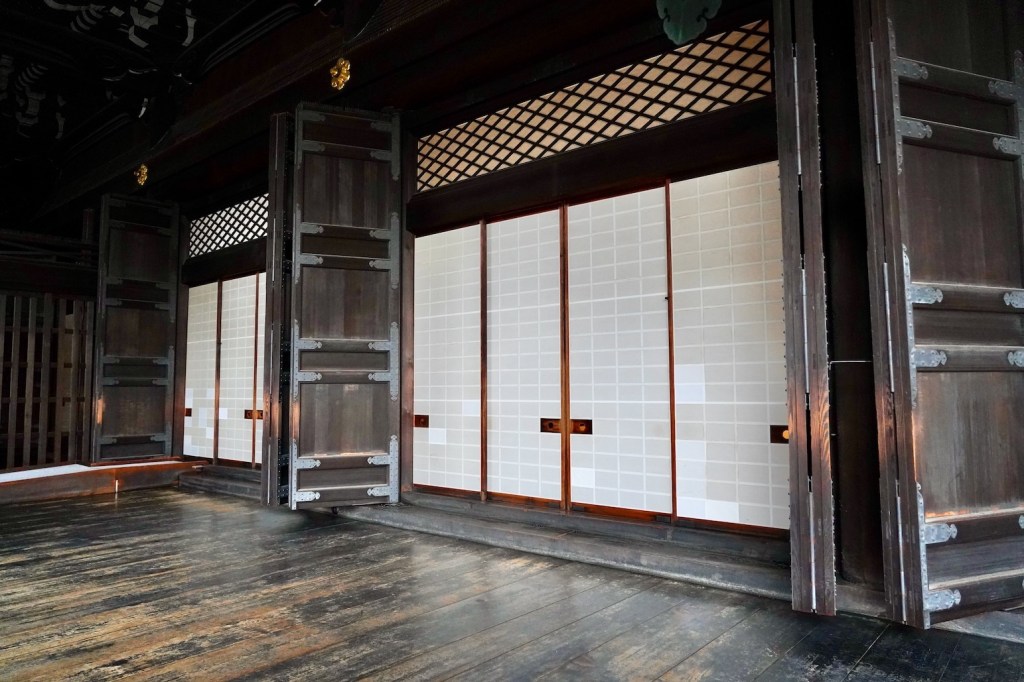

Leaving my shoes outside -as you do – I tip toed inside in my socks to join a tiny handful of worshippers for my first real Buddhist experience. They appeared to be all locals. I was the only westerner, and felt a bit like a shag on a spit post. Luckily, the worshippers were deep in prayer and didn’t seem bothered by me. Some were sitting on chairs, others were sitting on the floor – a line up of monks was before the alter deep in prayer and chanting intensely. I contemplated the floor, but had visions of creating a disturbance trying to get up again! So, I quietly took a chair and observed.
People came and went during the service. I suspect some had popped in for some contemplation en route to work. I have no idea what the monks were chanting, but I emerged from the service with a wonderful feeling of renewal and peace. Sorry – no photos. With so few people inside the hall, I felt very conspicuous as the only non Japanese. Taking photos with my Sony camera would have made me more so. And no doubt, it wouldn’t be appropriate anyway without permission.

Head for the hills! Yoshimine-dera: The other way to avoid crowds is to find lesser known, but equally interesting and historical temples and shrines. And they are there – particularly if you head for the Kyoto hills. You just have to know about them – which is where good research comes in – and be prepared to take a little effort to reach them.
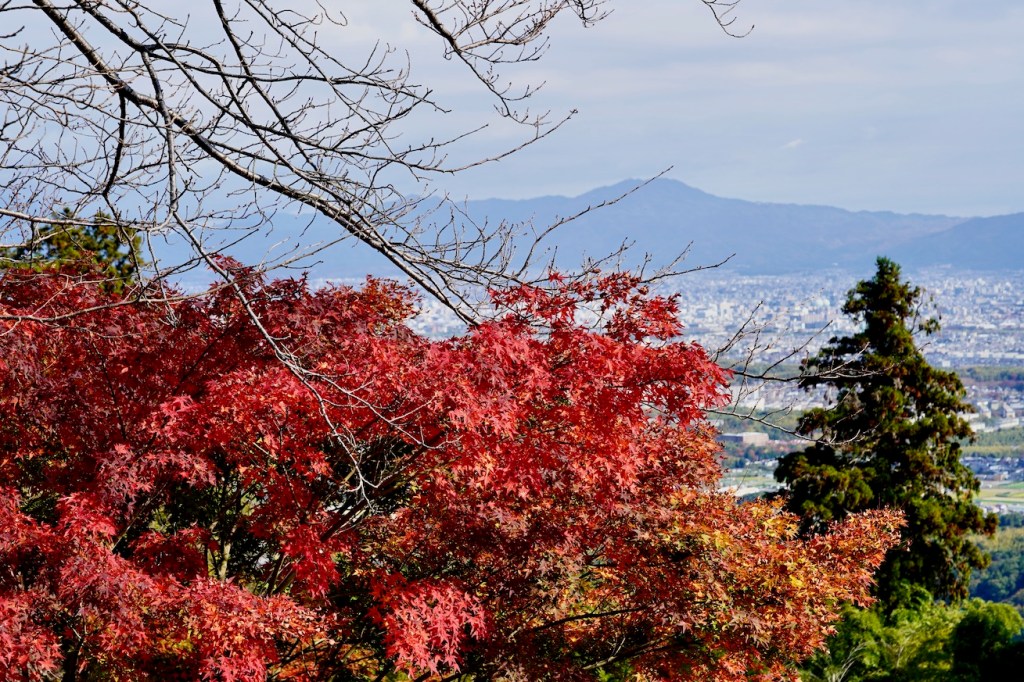
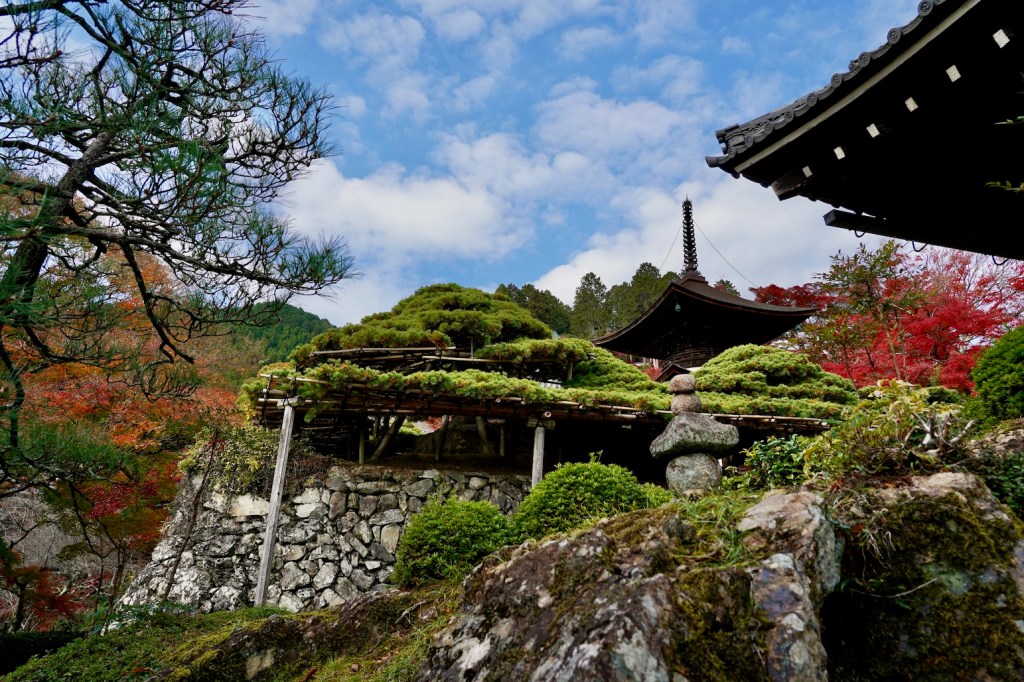
Yoshimine-dera, established almost a thousand years ago in a spectacular location in the western Kyoto hills, is one of those hidden gems. Note that you will need your walking shoes as there is a lot to explore at Yoshimine-Dera. The temple grounds cover almost 25 acres (10 hectares), with many buildings. So be ready to explore in a very peaceful environment.
A monk named Gesan established Yoshimine-dera as a private temple retreat in 1029. He certainly knew how to choose choice real estate. Set on a mountain side in lush forest overlooking Kyoto, it provides outstanding views of the city.

The Temple gained royal patronage in 1034 when Emperor Goichijo Tenno designated it as an Imperial shrine for protection of the state, and gave it the name Yoshimine Temple. It continued to enjoy royal patronage, with some Princes residing there after taking Holy Orders. You can see some of their graves if you take the right path.

When visiting, ensure you check out the Kannon statue carved by Gesan and a Kannon statue given to the temple by Emperor Gosuzaku in 1042.
About 400 years after Yoshimine-dera was built, it was largely destroyed in a war, but was rebuilt in 1621. So, still pretty ancient!
One of the temple’s most supportive patrons was Keishoin, the mother of the fifth Tokugawa shogun. You will see evidence of her influence in some of the buildings in the grounds. And you’ll see her statue.
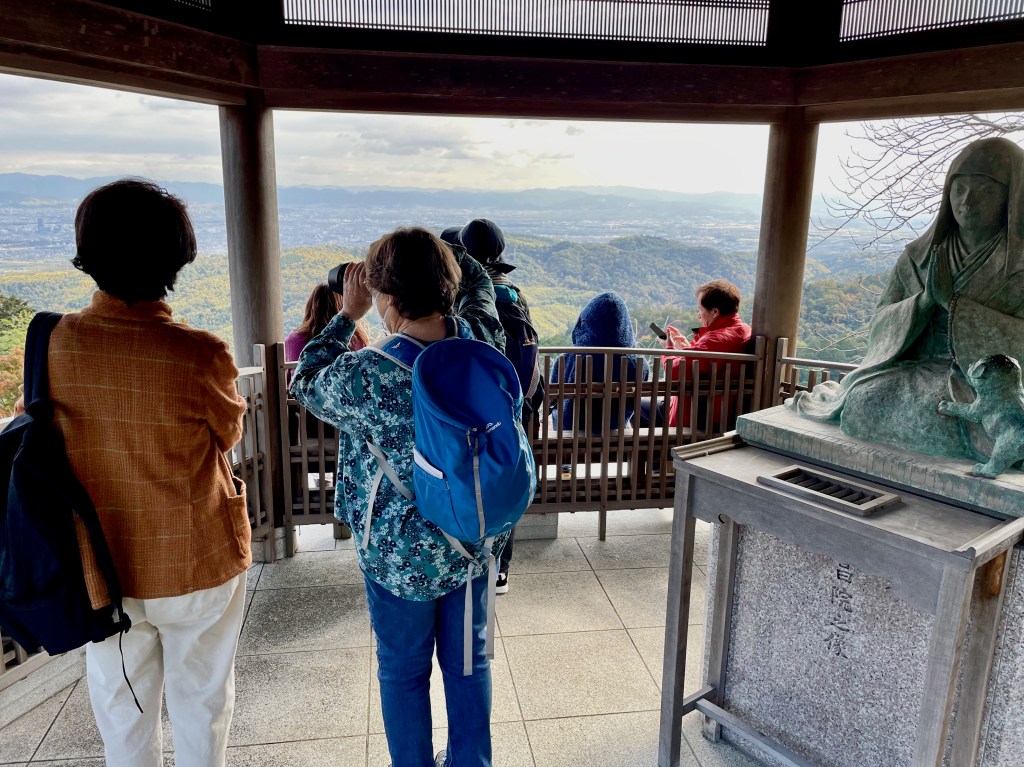

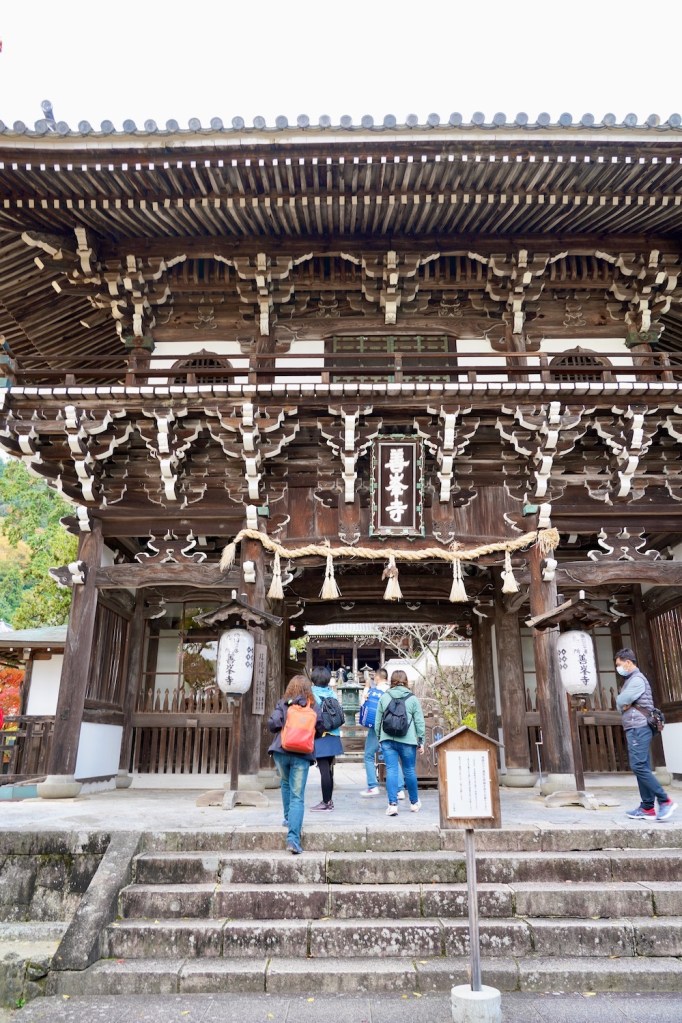

There are many pathways to follow, including a pilgrims path. You may see pilgrims visiting in straw hats and clad in white as Yoshimine-Dera is the twentieth of the thirty-three sites on the Saigoku Kannon Pilgrimage, a route connecting temples in the Kansai area that worship the ‘bodhisattva of compassion’.

To reach Yoshimine-Dera, MJ and I travelled a short way by local rail from Kyoto station to the small suburban JR Mukomachi station, where we met up with a local guide and friend, Hiromi. No Hiromi – there are buses and taxis (see my train/bus directions towards the end of this story).
We asked Hiromi to take us somewhere that locals love, but is not on the radar for most foreign tourists – uncrowded hidden treasures! And she certainly delivered. So, if you can find yourself a personal guide, put the same request. It’s worth the effort and money.

Yoshimine is about 30 minutes by bus from the Mukomachi railway station. Take water and perhaps some snacks with you as while there are a few shops at the temple bus stop, there is no cafe within the temple grounds.
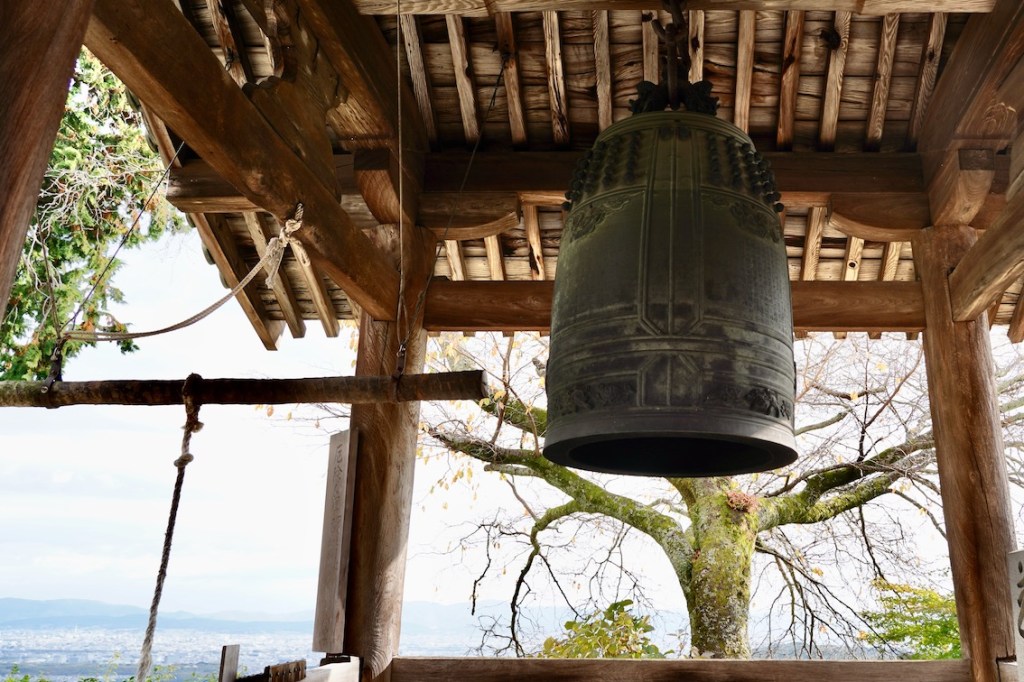
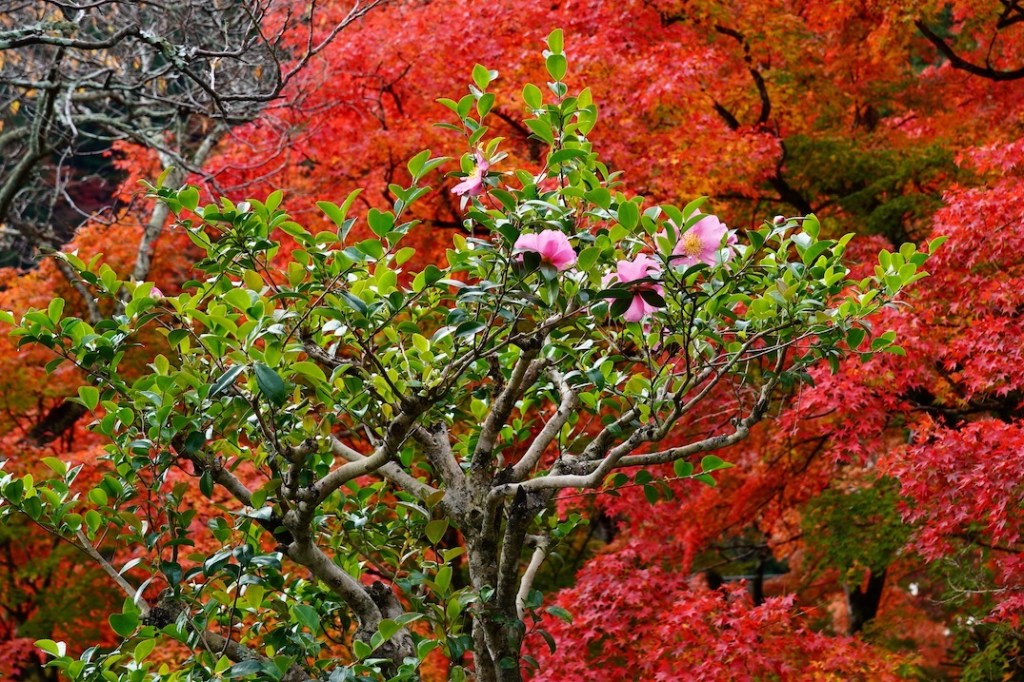
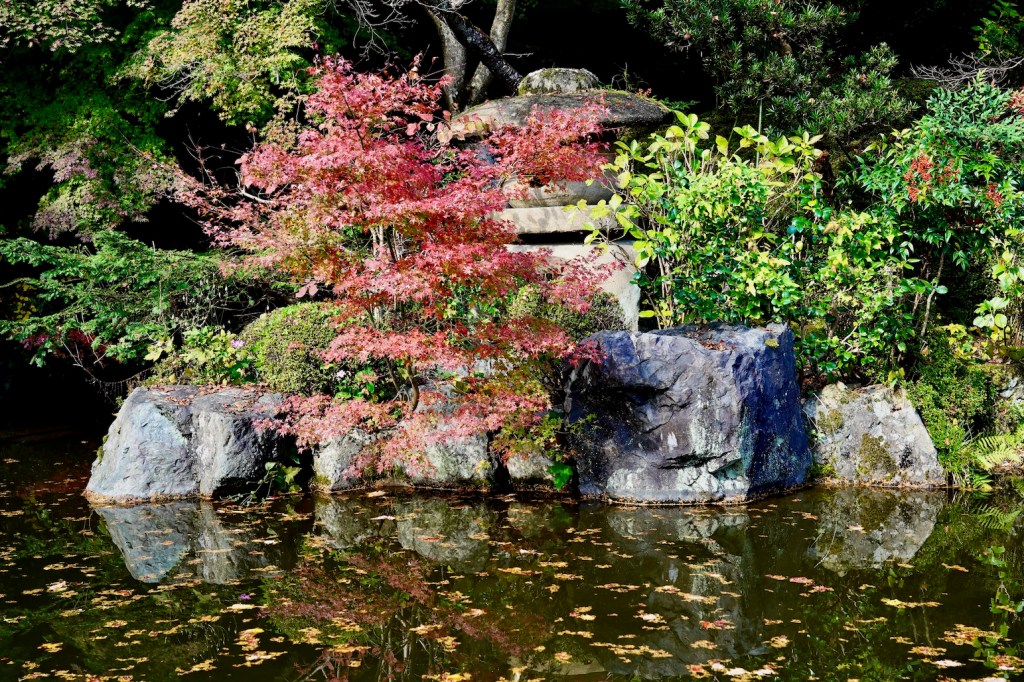
We wandered around the temple grounds on a weekday in November, and we saw no other western visitors. Nor was Yoshimine-dera overcrowded with other visitors, despite being an exquisitely beautiful weather with breathtaking autumn scenery. I’m told in other seasons you will see spectacular displays of hydrangeas and wisteria. Not forgetting cherry blossom season. There are more than 100 cherry blossom trees in the temple grounds. It’s a photographer’s paradise with few people to get in the way of your shot.

Yoshimine-dera is on the opposite side of town to the much more famous Kiyomizu-dera Buddhist temple that attracts massive crowds. I have been to both, and while I loved Kiyomizu-dera, Yoshimine-Dera rates pretty highly in my book too. In fact, some might find it better because of its magnificent and very natural setting high above Kyoto.

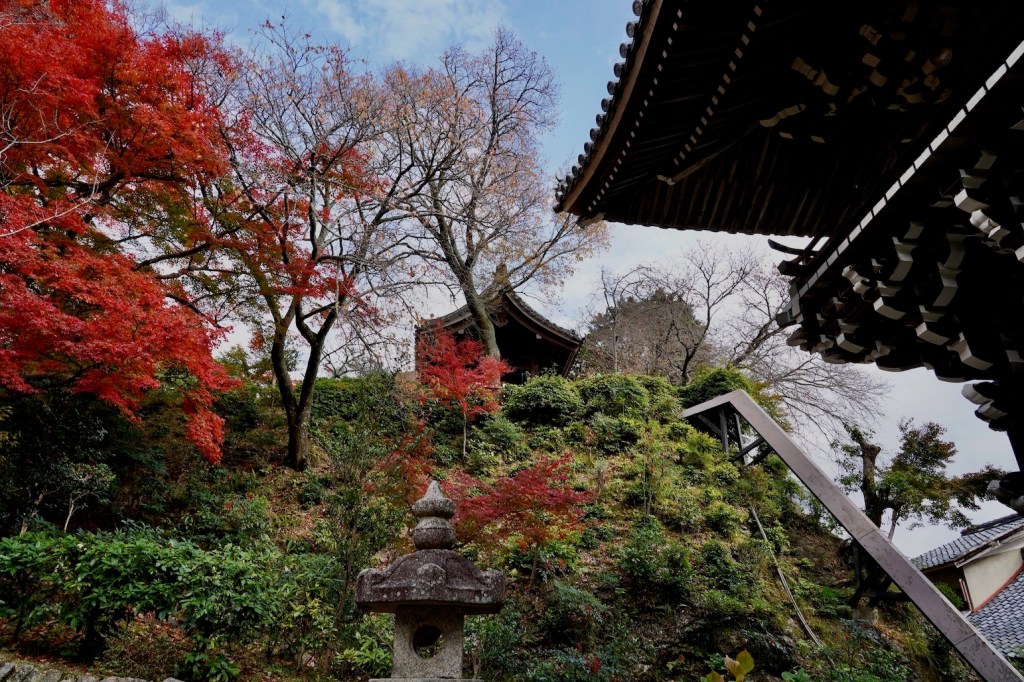

Autumn colours surrounding the temple were absolutely glorious for our visit. The forest was ablaze in deep red and golden leaves in one of the best autumn displays we have seen in Japan.
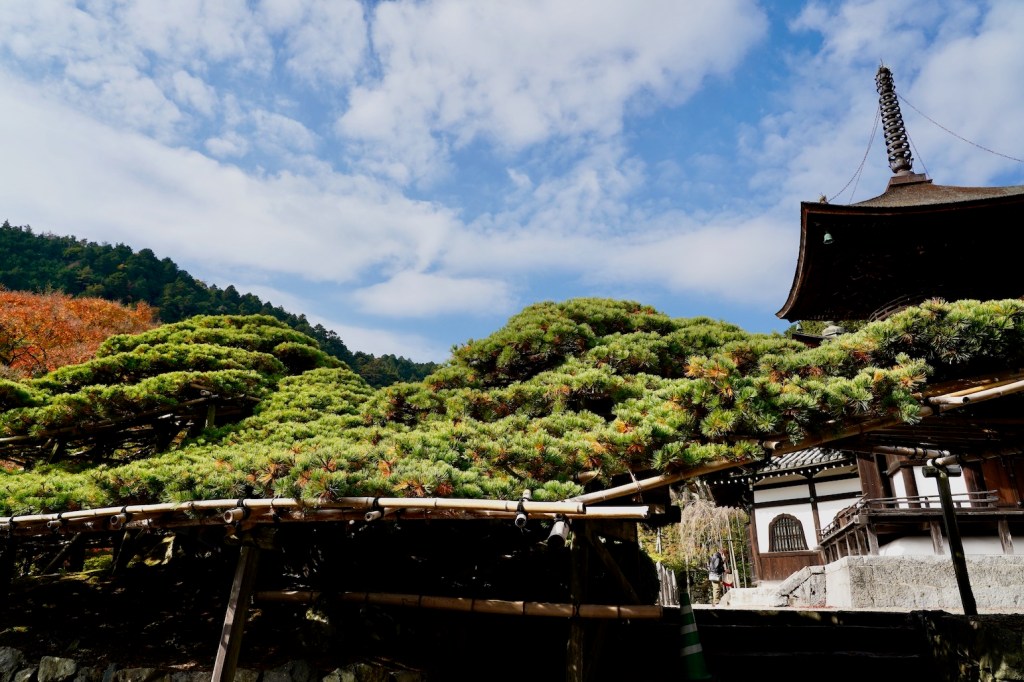
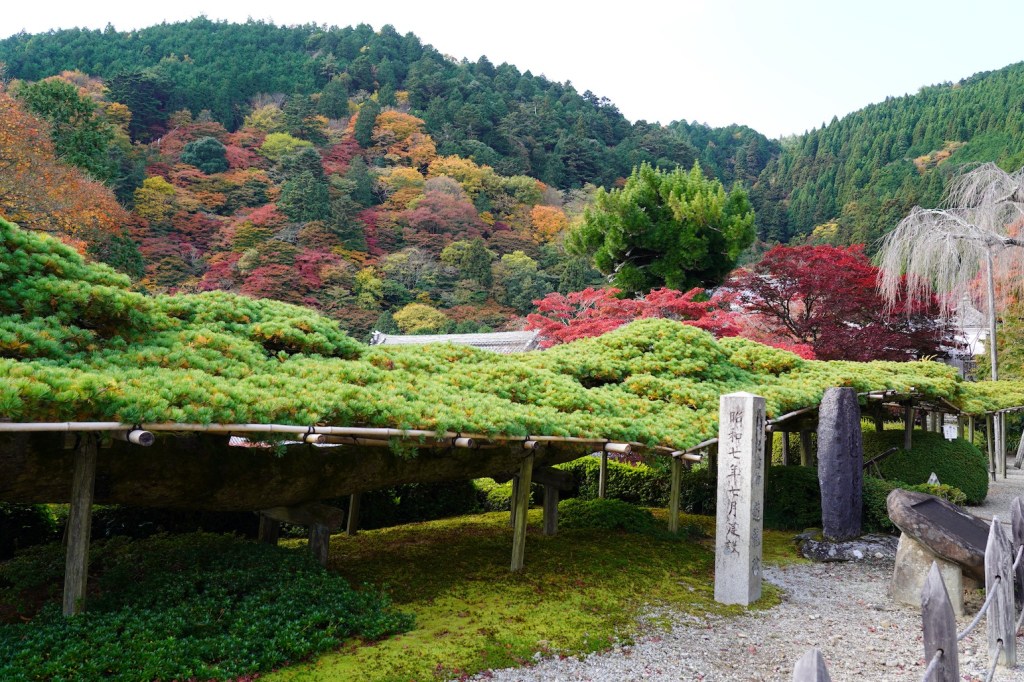
One ancient tree in particular stands out like a long green ribbon in the shrine grounds – I doubt you’d see anything like it elsewhere! It is ‘the Gliding Dragon’ – a 600 year old white pine tree that is only 2 meters tall, but 40 meters wide. It runs mainly prostrate on an impressive bamboo trellis. Work to shape it began around 600 years ago. Definitely a tree that needs a drone photo to accurately portray it. No drones allowed though! Some years ago, the tree was damaged by disease, and lost some of its length in pruning repair work. It was looking quite healthy when we saw it. The tree is recognised as a national treasure.

You’ll find some of the latest images of Yoshimine-Dera on its instagram site: https://www.instagram.com/yoshiminedera_since1029/

More on how to get there: From Kyoto Station take a JR Kyoto Line train to Mukomachi Station (180 yen, 7 minutes) or a Hankyu Line train from Shijo Kawaramachi Station, Shijo Karasuma or Shijo Omiya to Higashi-muko Station (20 minutes, 220 yen). From both stations take the #63 or #65 bus to Minami Kasugacho, the last stop. The bus journey takes 20 minutes and costs 270 yen. Bit of an uphill walk from the bus stop to the entrance. There will be plenty of uphill slopes as you progress around the temple grounds. Not wheelchair or stroller friendly.
Yes, it is off the beaten track and it takes a little effort to get there. But, for MJ and myself, it was worth it.
From Yoshimine-Dera we moved onto Ōharano Shrine, about 15 minutes away by taxi (around 1,500 to 2000 yen) or private car. It’s another uncrowded gem. You can easily do both in a day.
Read about our highly enjoyable visit to another less heralded Kyoto treasure – Ōharano Shrine and a soba noodle lunchtime treat at a cafe in its grounds
There’s also a story about our visit to Kyoto’s Silver Pavilion – the message here is GO EARLY!

 Travelling Therese
Fantastic photos of some awesome places.
LikeLike
It’s a story I originally wrote last year, but it seems to be one of the most popular stories on my travel blog.. I guess people search Kyoto and come up with it. So I thought I should update it, especially given the latest figures re foreign tourists. As we headed north of Tokyo on our May trip this year, we didn’t go to Kyoto. But we were there in November last year. Figures show most tourists are only going to Tokyo, Kyoto, Osaka and Hiroshima – and then within those cities, only to certain areas. Which is a great pity as there is so much more to see there and in the rest of Japan. If I lived to 100, I think I’d still be discovering places! That’s a thought – A letter of congratulations on my 100th from the King (we aussies still get them) plus a Japan travel voucher. No doubt in my wheelchair by then. But hey .. got to keep rolling along LOL!
LikeLiked by 1 person