
Is it unforgivable that my outstanding memory of the beautiful Japanese town of Otaru in Hokkaido is a desert treat? MJ and I shared 12 of these little beauties – the rare and delicious Japanese desert sweet called Panju.
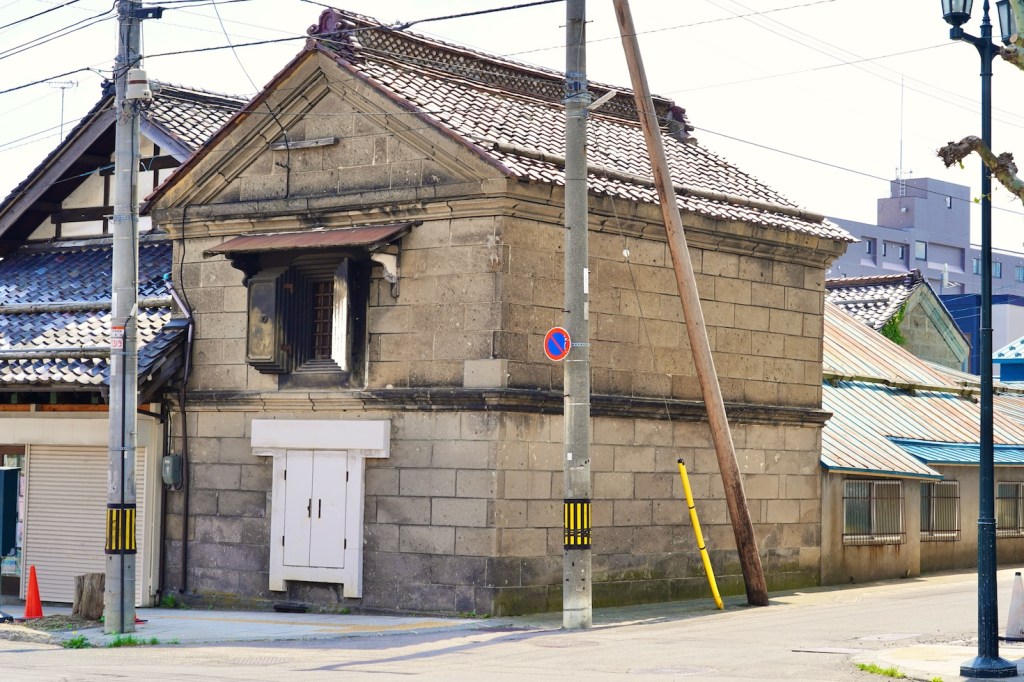
Otaru overflows with architectural history – canal warehouses, traditional Japanese storehouses and exquisite grand buildings in the western style infused with unique Japanese influences and craftsmanship. They date back to the early days of Hokkaido’s colonisation byJapan in the late 1800’s when Otaru developed as a major port for Japan.The most prominent buildings have signage in english detailing their original use. Today they are home to museums, galleries, restaurants, cafes, breweries, shops and craft workrooms.

But it was Panju that stands out in our memory – a delectable sweet we discovered in an elegant building constructed in 1922 to house the Otaru branch of the Mitsubishi Bank. It must have been a very grand bank, designed in the greek/roman style with six massive arched pillars that still stand tall along one side of its exterior.
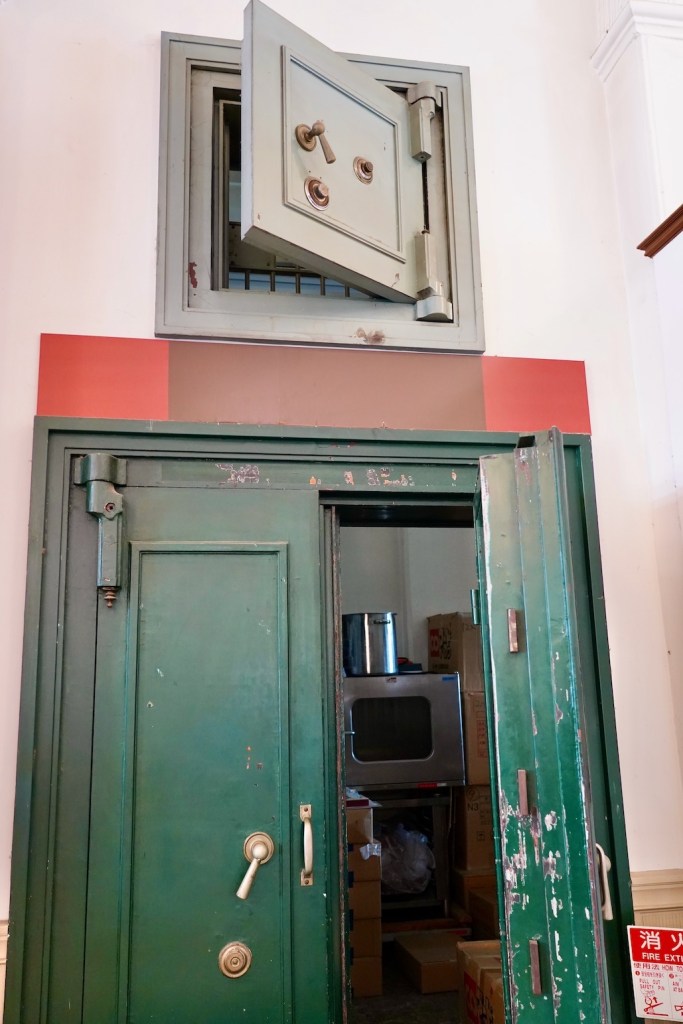
Inside you will find that two of the bank’s safes are still there – the lower one seems to be home to kitchen equipment now. The small top one presents a puzzle – what was it used for and how was it accessed?

The building is now home to the Otaru Canal bus Terminal and its ground (called ‘first’ in Japan) floor includes a sales area for local produce including an extensive range of quality Hokkaido wines.

Importantly, for lovers of sweets, there’s also the Kuwataya company that makes panju at its in-house cafe. The aroma as they bake panju will electrify your culinary senses, and your culinary soul will light up when you taste panju.
The sweet is legendary, but rarely available. The Otaru Tourism Association says it was developed in the Taisyo era (1912-1926) as a substitute for expensive bread. PAN means bread – and the JU relates to traditional Japanese sweets. Originally it was filled with sweet red bean paste, but these days it comes with a extensive variety of fillings from chocolate, cheese and custard to a green tea flavoured interior.

Whilst Panju may have tasted like bread initially, it now seems to be made from a waffle like dough. Certainly it smells like waffles when you walk into the building!
We had never come across panju before during our seven visits to Japan – not surprising as it’s mainly associated with Hokkaido and Mie prefectures. Apparently, it’s also now popular in Ashikaga in Tochigi Prefecture, just north of Tokyo. I have no idea how such a delectable sweet seems to be only known in these areas, all so far apart.
Initially we bought six to share between us for morning tea – but leaving Otaru some hours later we didn’t need any persuasion to return for six more!

In between our Panju servings we explored the historic port town. It is only just over a half hour train ride from Sapporo – a very scenic ride mostly along the coast. In recent years Otaru has become a tourism hot spot, so I debated going there because, as my regular readers know, I like to keep away from crowds. But we did go – on a weekday and taking an early train. It was busy, but not crazy. And our wander around Otaru was very enjoyable.
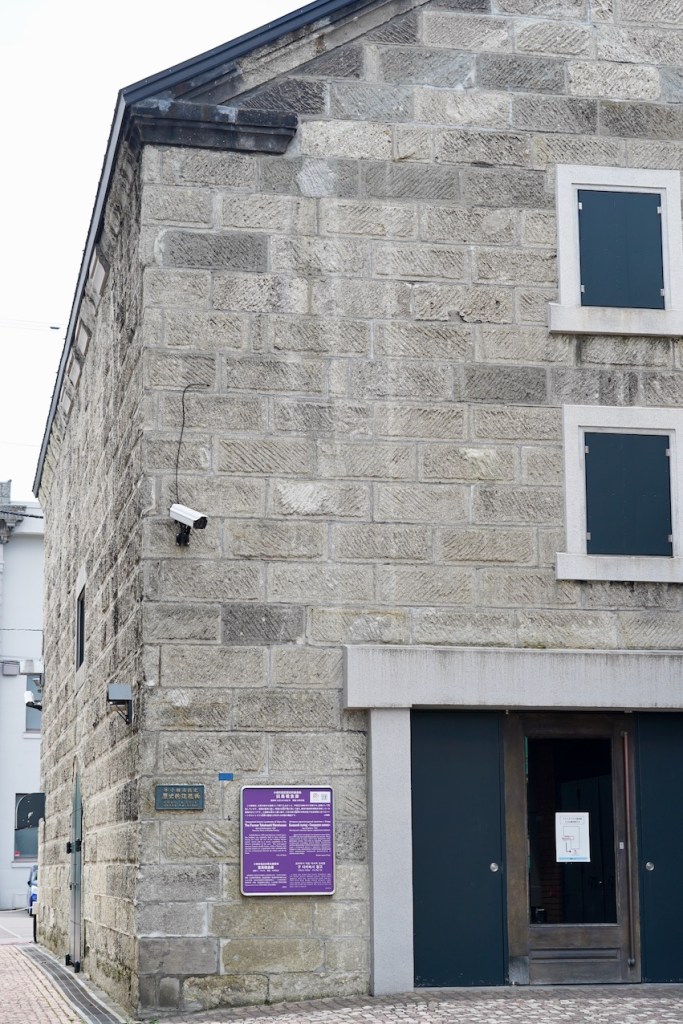

There also was a feeling of nostalgia for me because the old brick, wood and stone warehouses lining Otaru’s canal reminded me of the 1800’s Georgian stone Salamanca Place warehouses near the docks in Hobart, the capital of my birth Australian State of Tasmania. In both cases, the historic warehouses and other significant 1800’s buildings were saved by robust public campaigns facing off with developers.

In 1960, the historic Hobart warehouses were due be demolished as ‘dilapidated rat infested hovels’. Around the same time, in Japan, the Otaru canal had developed a similiar reputation. It was no longer needed and was falling into ruins with scattered damaged boats, rubbish, and foul smelling water. By 1970 plans had been made to fill the canal in for the expansion of a nearby road. The public campaign did not save the whole canal, but part of it was allowed to remain with its warehouses renovated and given new uses. Today the warehouses in both Otaru and Hobart are showpiece attractions for both cities, attracting visitors from around the world.


There’s another link between the Salamanca Place warehouses and Japan. I recall seeing the Japanese tuna fishing fleet regularly calling into Hobart in the 1970’s. There were no Japanese restaurants in the city in those days, and few of the fishermen could speak English. So, to provide them with a place to relax and feel at home during their Hobart stay, a Japanese Seamen’s Club was opened in one of the Salamanca Place warehouse buildings.


Wandering around the Otaru warehouses, we entered one that is now home to a German restaurant for lunch. Very spacious with lots of atmosphere, and very popular. It was pumping out loud German music and to us it did not suit the area. So we left, finding our meal in another historic building that served excellent Japanese curry and some wonderful deserts.


Given that we planned to buy more panju, we didn’t order desert. On reflection, it was foolish of us as we were in one of Otaru’s most famous desert restaurants known particularly for its outstanding cheesecake. I didn’t know about the restaurant’s desert fame until after we left. Fortunately, I did have a taste of the cheesecake from a staff member offering samples!

This particular building had a cafe, bar, shop and a small, but excellent exhibition paying homage to Otaru’s early days. It included some wonderful old photos of the the town and the canal.


Another lovely feature is a public walkway along the route what was Otaru’s first railway track. The 1.6 kilometre walking path takes you through Otaru’s historic banking and commercial districts. In May, it was lined with lilacs, tulips and other beautiful flowers


Note that it is the only railway path you should be on as a pedestrian. Earlier this year a Chinese woman stepped onto an active rail line in Otaru to snap a photo with her phone and died when she was hit by a train. There have also been problems with tourists stepping out onto roads into traffic to take photos!

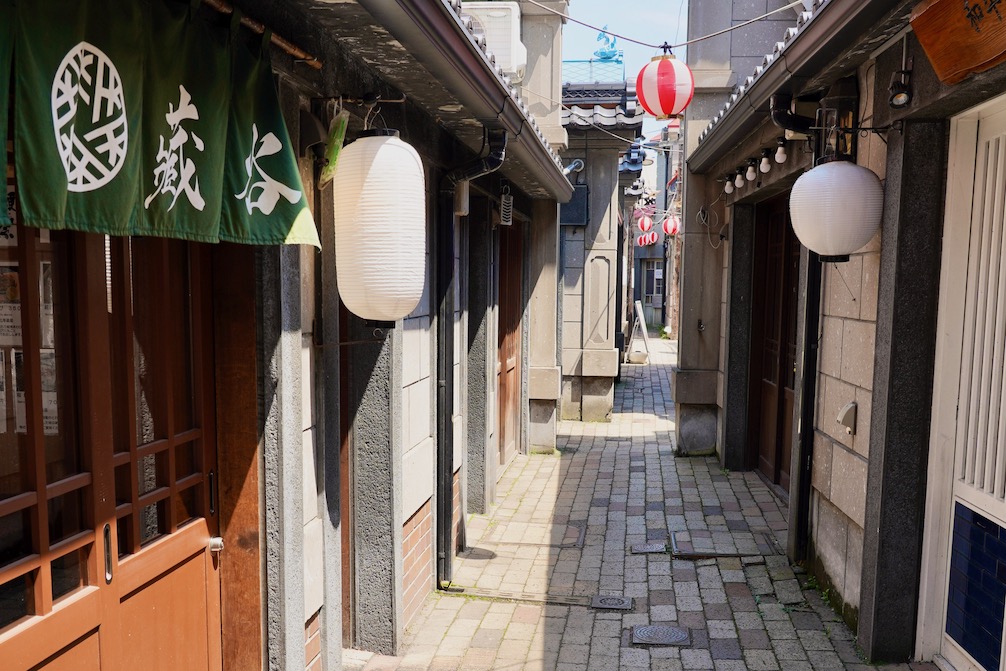
Otaru is a very walkable place with lots to keep the visitor interested, including lovely vintage Japanese style buildings housing tiny bars and restaurants.

We ran out of time and missed out on some attractions, including a ropeway that takes you to the top of a nearby mountain for a view over Otaru and its coastline vista.

Don’t forget to walk down to the main foreshore – just a few minutes from the canal. You can take ferry cruises from here.

You can, like us, go on a day trip to Otaru from Sapporo. Though after visiting, I think it would be extra special to stay in the town after the day tourists and bus trips leave so that you can enjoy it quietly in the early morning and evening light.


 Travelling Therese
The sweets look so delicious 😋.
LikeLike
Soooo good! I can’t find any recipe for them… I might experiment with a waffle mixture .. they smelt like waffles.
LikeLiked by 1 person