
If I was able to host a dream dinner party – the one where you can invite anyone you like from the past or the present – I would invite my favourite Samurai Lord – Date Masamune. I might even ask him to lend a hand in the kitchen because he was reputedly somewhat of a Master Chef. In the 1600’s Masamune personally drew up menus for his guests and was a dab hand at creating new dishes. He famously remarked that “People with no understanding of food are the owners of narrow minds.” This man was a serious foodie!

Masamune was fearless when it came to wielding his sword in battle and brutal in dealing with family and enemies who threatened him. Masamune lost an eye after contracting small pox as a child, and was regarded as a weakling by his mother. She believed he was unsuited to lead the clan when his father died, and reportedly served him a meal laced with poison to make way for his younger brother. He survived his mother’s murderous attempt, sent her into exile and killed his brother. He was still only a teenager. Shakespeare would have had fun with this family – a worthy sequel to HAMLET.
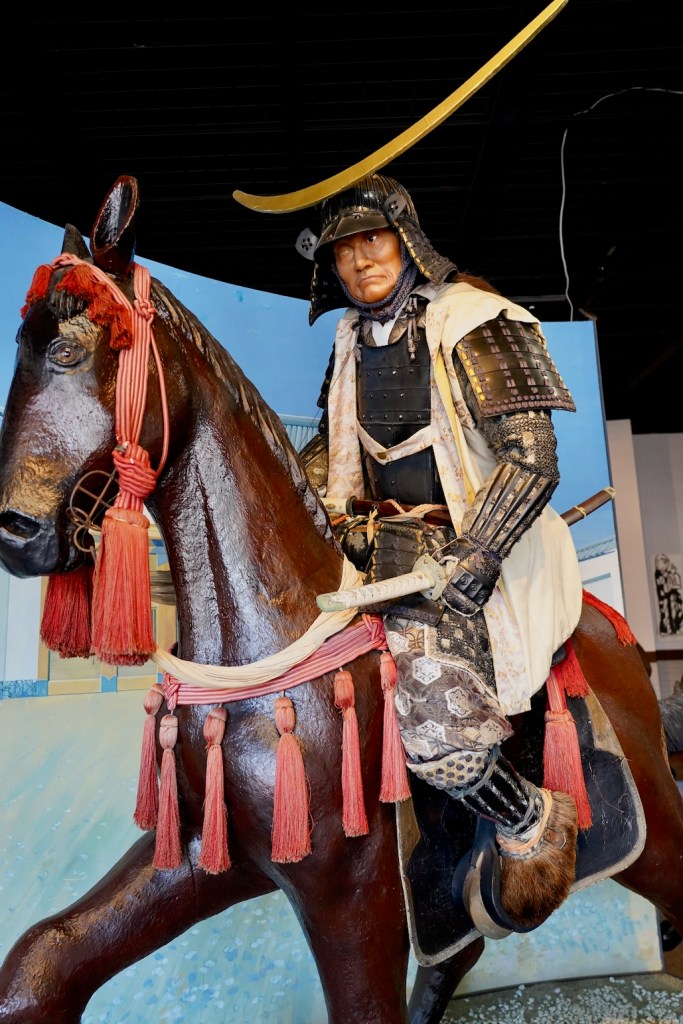
The Date Masamune script intially ran as expected for a fierce Samurai warrior. But once he established his power and reputation as a Lord, he displayed other intriguing facets of his character. It soon became clear this was a highly intelligent man who proved very caring of his people, working hard to improve their lives.
Masamune was also a progressive thinker, a man ahead of his time – open to foreign technologies and international trade, and with a great interest in Western culture and customs. This was at a time when the Samurai central leadership wanted Japan closed off to the rest of the world. He also supported Christians until rulings from the central Samurai powers made it too dangerous to do so. However, it is said his daughter was a Christian, and you might be safe in presuming he continued to help them where he could.
He quietly funded the building of a ship to sail to Europe on a diplomatic mission to Spain and the Catholic Vatican in Rome, aiming to established trade relations, and he ensured some of his Christian acquaintances were aboard his ship to escape Japan. The ship was called San Juan Bautista (St John the Baptist) and it was one of Japan’s first Japanese-built Western-style sailing ships. She crossed the Pacific in 1614 with a Japanese diplomatic mission of 180 people.

Masamune took a personal interest in revolutionising agriculture in his domain, introducing innovative waterway systems to improve farming and attract more farmers to his region – systems so effective they remain in good use today.
And he was a greenie – a lover of trees – ordering them to be planted throughout Sendai, a new city he was establishing. He wanted it to be a city of trees – and today – more than 400 years later it is still famously known as that.

In May this year, I went Sendai – 362 kilometres north of Tokyo – about an hour and a half by Shinkansen. It’s a city with a very cool vibe, and I liked it a lot. Masamune would be amazed at Sendai’s growth and no doubt pleased. His presence and influence remains with trees lining the streets, and his image everywhere from statues to cafe drink coasters. He is also still well represented in movies, manga and anime.
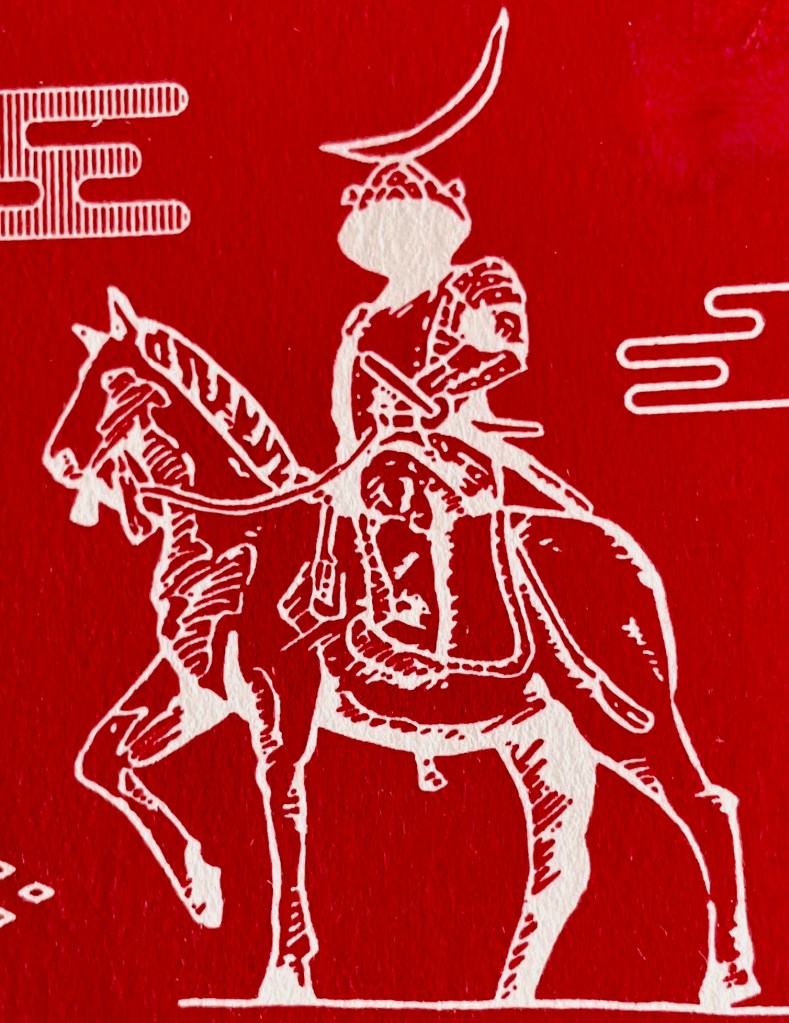

Masamune certainly knew how to pick the best real estate for his Sendai home. He built his castle high on Mount Aoba, with magnificent views over the city. In a forgiving mood, he brought his exiled mum back to enjoy its comforts in her old age.
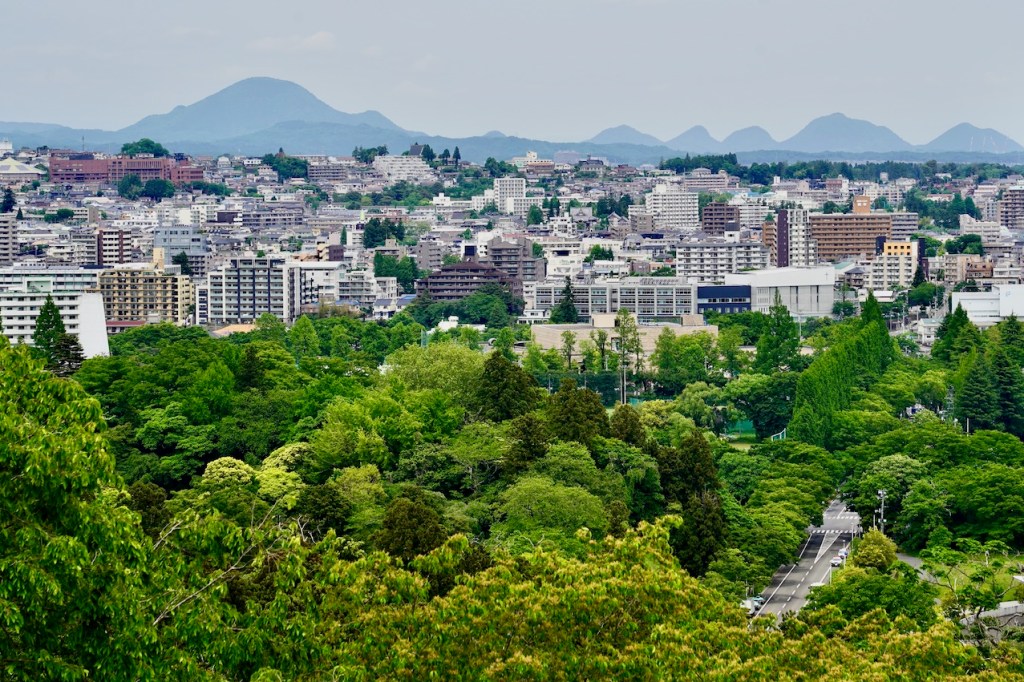


The castle suffered a massive fire in the late 1800’s and WW2 bombing in 1945. All that’s left are remnants of the outer stone walls and a guard tower. The site swarms with tourists eager to see where the castle was and to enjoy city views.

A giant statue of Masamune in full armour on his war horse stands tall, an impressive reminder of the great Lord who reigned here once. The statue at the castle doesn’t show him wearing his eye patch. He ordered that all images of him after his death never show the patch and lost eye. He was famously known as the one-eyed dragon of Sendai. Perhaps he didn’t like the nickname and hoped it would be forgotten after his death. Vain or a sensitive soul at heart?

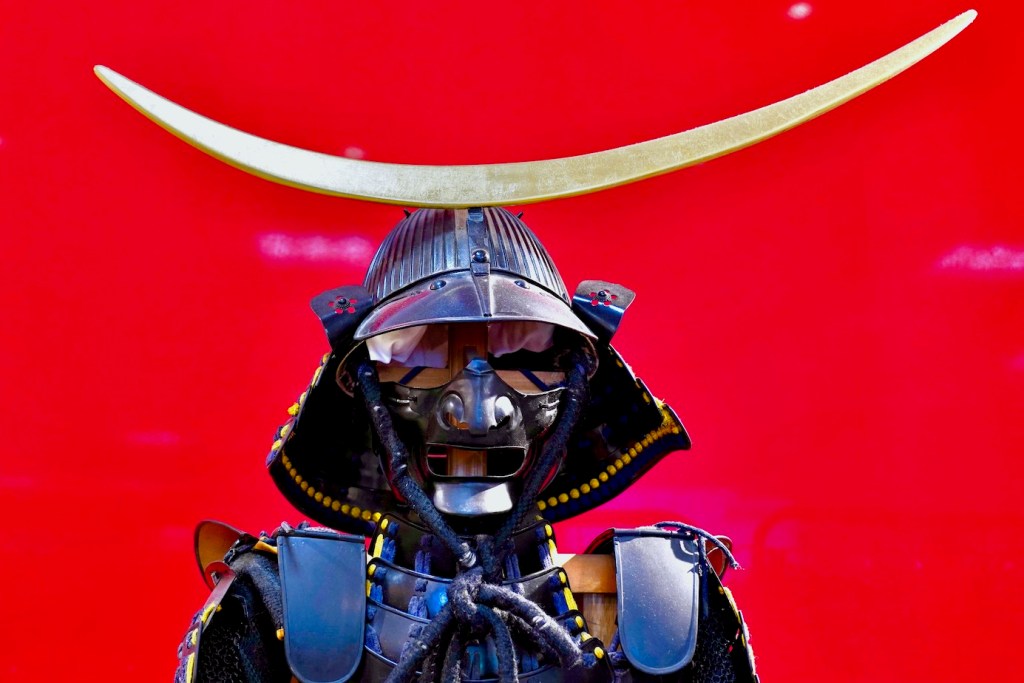
If you are not familiar with Masamune, it’s when looking at the statue that it might occur that you know him more than you thought you did. His warrior helmet is probably the most famous Samurai helmet in Japan – a distinctive crescent moon shape -the emblem of the Date clan – adorned with a large golden crest featuring a stylised dragon. Take another look and something else will be jiggling around in your brain. Yes, this is the helmet said to have inspired the design of the Darth Vader helmet in Star Wars.
I travelled to the castle site on a special tourist retro bus called the Loople Sendai that the city runs from the main railway station. An adult day ticket costs under ten Australian dollars, and it stops at many of the city’s main attractions. Sounded great. MJ and I turned up early for the first bus only to see a massive queue ahead of us. We waited for about 15 minutes before the bus arrived. It was quickly packed with people ahead of us in the queue and was off on its route – without us.

We had another 20 minutes standing in line before a well dressed attendant herded us into the next bus – we were like squashed sardines in a retro tin can. It was not pleasant. Riding up on Masumane’s horse would have been less challenging and probably less dangerous.

We estimated the little bus had seats for 16. They were tiny – better suited for children. Not that you had much a chance to get one – the bus was quickly filled with standing room along the aisle packed with mostly middle aged to elderly tourists. Including us! There’s a lot of corners on the route, so we swayed back and forth, desperately hanging onto whatever we could grasp. I felt life and limb were at risk, and wondered how the retro buses met safety standards.

Later in the day, still following the tourist route, I did manage to get a seat on the Loople bus. My short legs barely fitted in the narrow space to the next seat in front. I’m only 5 foot 2 and the space was so tight it was a challenge to extricate myself from the seat when leaving.
A note to Sendai officials – tourists don’t need a fancy cute little retro bus that fails to meet passenger needs. A bigger and safer bus with proper seating would be most welcome. That’s my only gripe about Sendai, because I loved Masamune’s city.
We visited the Samurai Lord’s burial site at his Zuihoden Mausoleum up another hill in Sendai. You approach on foot along a majestic avenue of tall cedar trees and many, many steps!


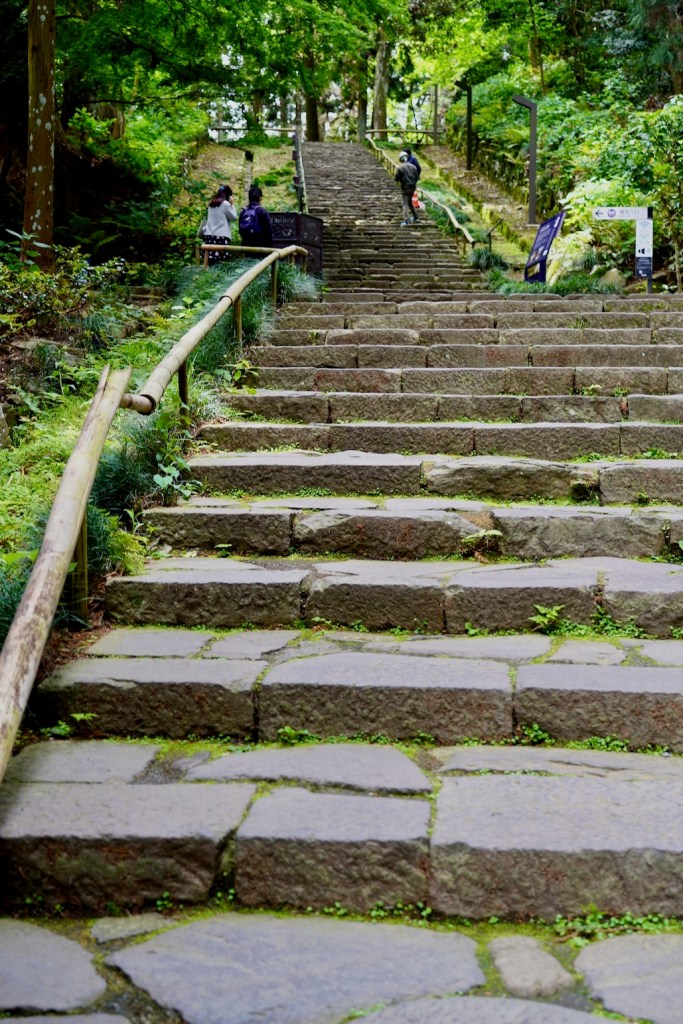
Masumane’s mausoleum is exquisite – well worth the effort to get there. The original was destroyed in the WW2 bombings, but faithfully restored in the 1970’s to the original design. The restoration was a valuable opportunity to dig down into the grave where his coffin and more than 30 grave goods were discovered. The body had been well treated for preservation, so today we have a good idea of what Masamune looked like. He stood at 159.4 cm – the same height as me! The average height for a man then was around 5 foot, so he wasn’t regarded as short.
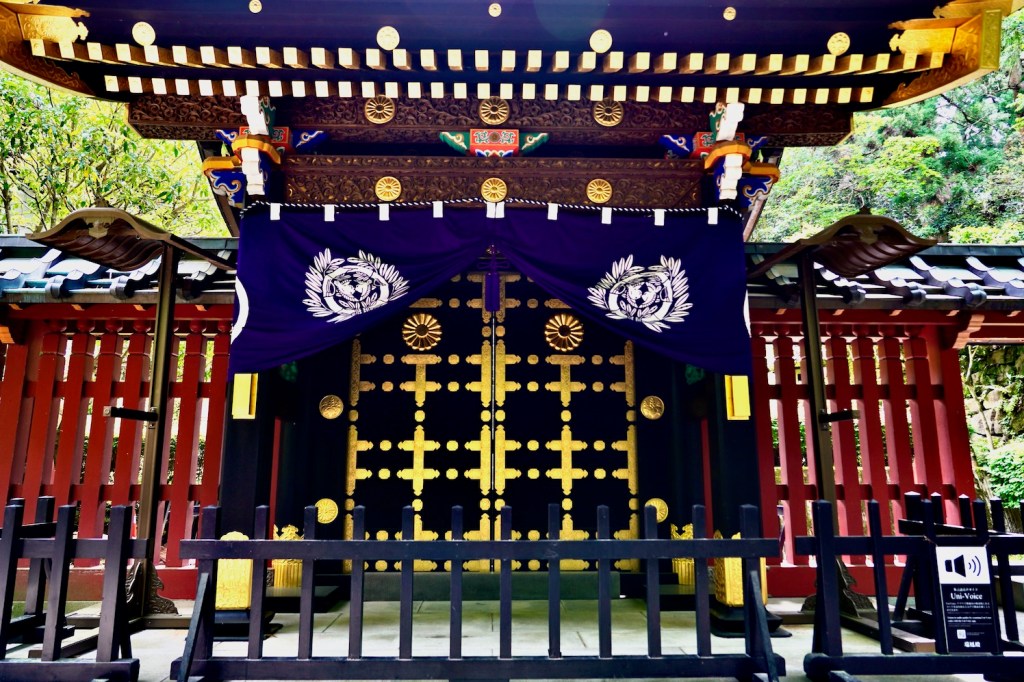
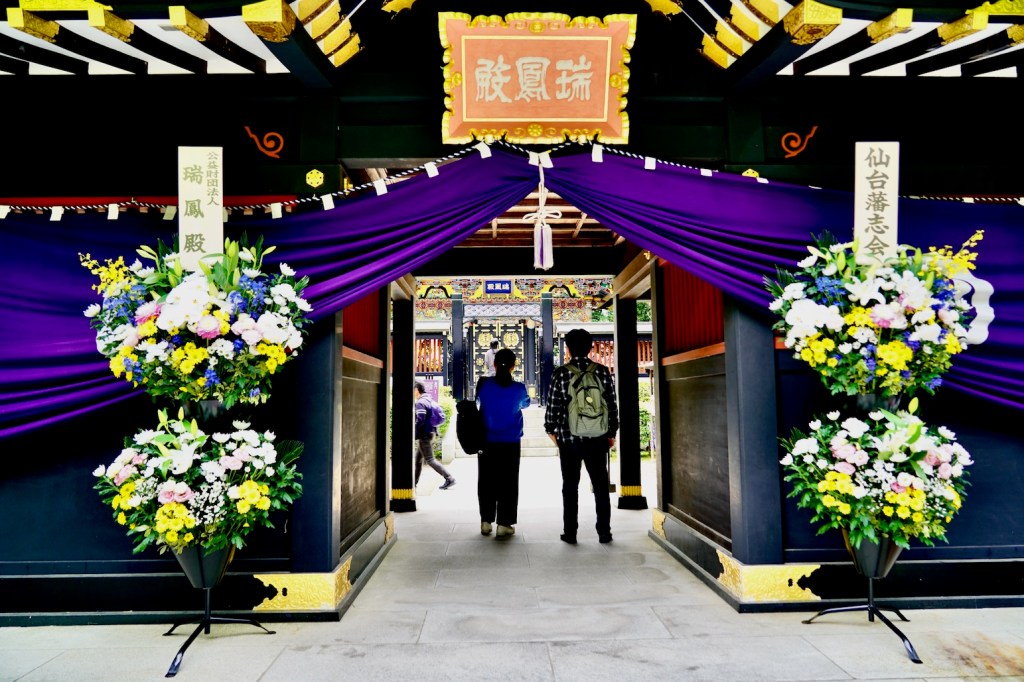

The grave items found from the tomb included his armour, a sword, a gold brooch, stationeries including ink and brushes, and a tobacco pipe. These are on display at the Sendai City Museum. I would have liked to have seen them, but the retro buses met sailed on past the museum on an express trip back to the station. We had no idea why as it was still in the middle of the day. I suppose that with our all day ticket to ride we could have boarded another retro bus to go back to the museum, but we weren’t game to tackle the Loople again!


The whole forested area around the mausoleum is a beautiful place to wander, and you will find other impressive Date family graves and interesting features. They include ornate mausoleums for Masamune’s son and grandson. I confess I didn’t explore as much as I would have liked. With my crook knee, just getting to Masamune’s resting place was challenging – though worth it. And I was mindful that I still had a lot of steps to navigate on the way back down the hill!


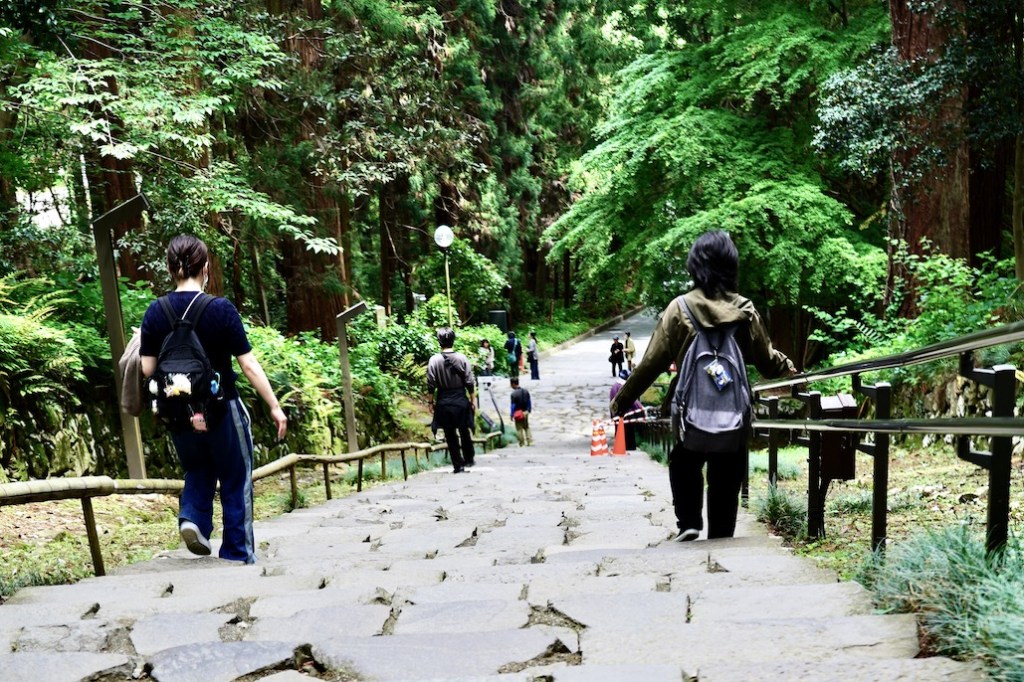
We did come across a large cenotaph on the hill. It’s a monument to the victims of the Boshin War (1868–1869), Japan’s famous civil war that restored rule under the Emperor and ended the Tokugawa shogunate, and along with it the Samurai lifestyle. Sendai initially cooperated with the Imperial Forces, but fell from favour when it spoke up in defence of nearby Aizu.

I should mention the excellent Sendai railway station that features reasonably priced quality hotels, shops, restaurants, cafes and even a market for Sendai local produce that includes delicious apple juices and apple pies. There’s also a few department stores close by.
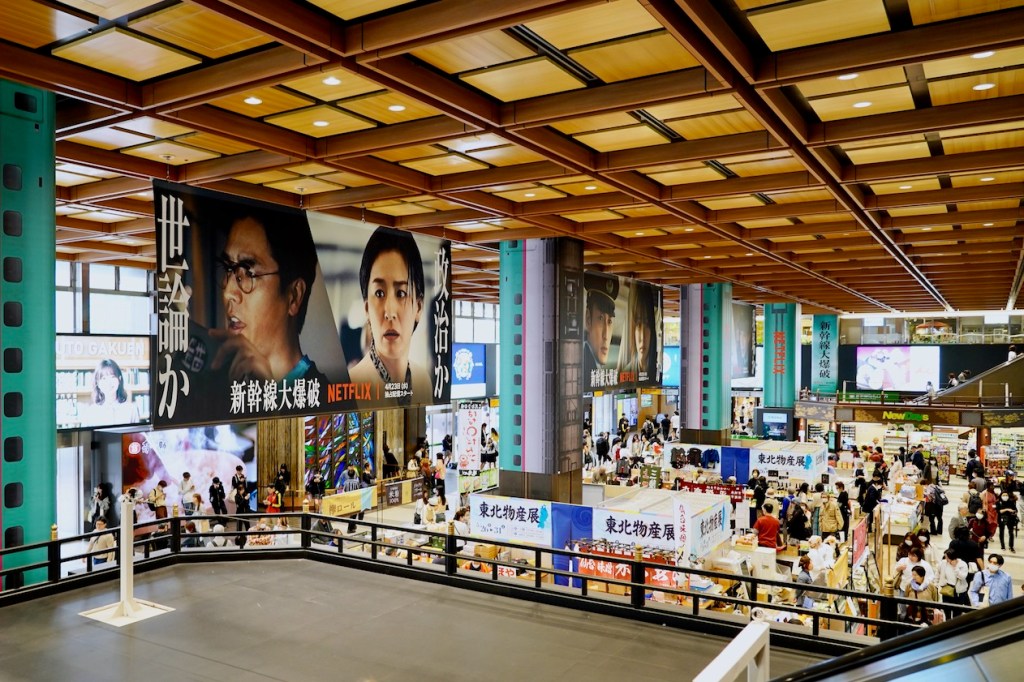

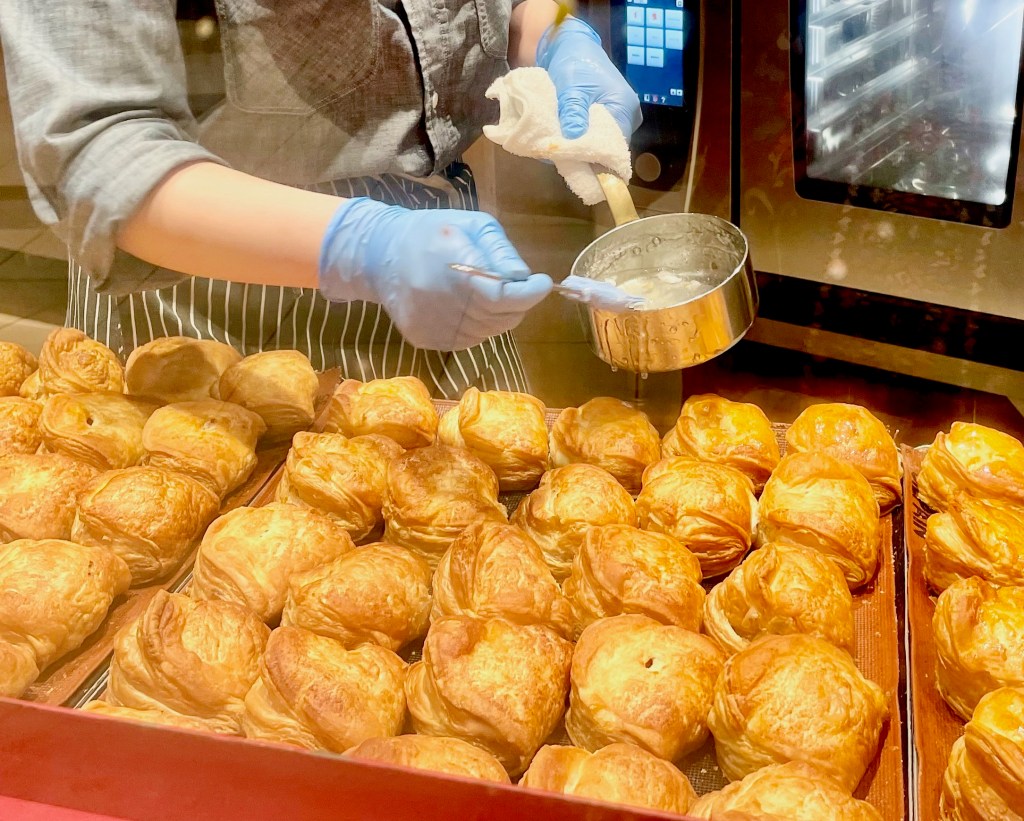
Sendai station services both Shinkansen and regional trains. We took a regional train out to enjoy a few days at nearby Matsushima Bay where Masamune had a coastal retreat. There’s an excellent small museum there with special waxwork exhibition about Masamune’s life.
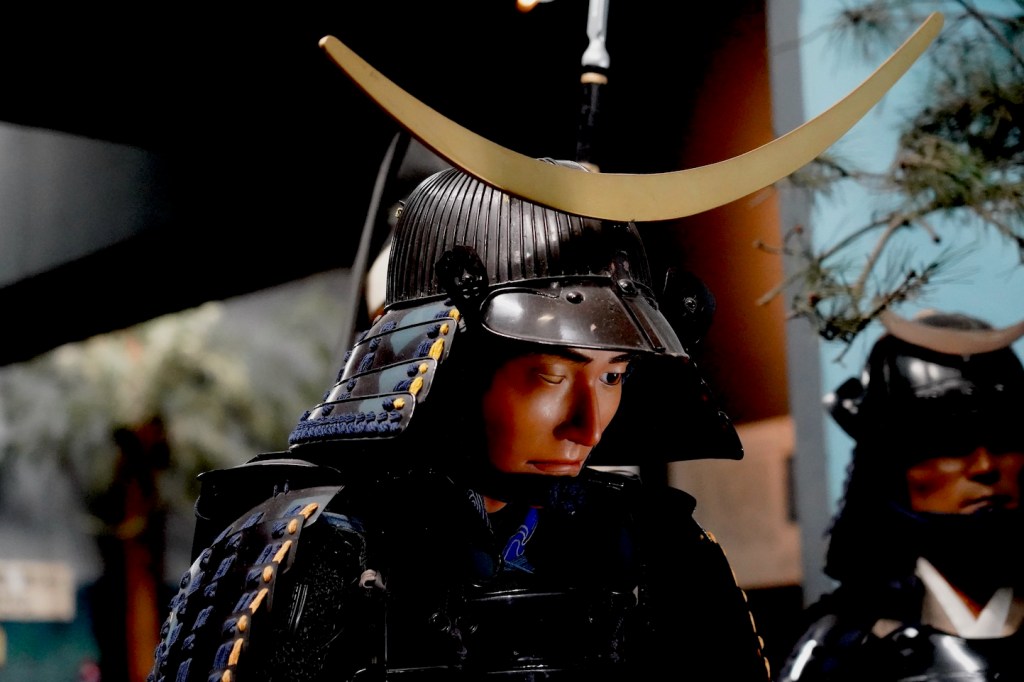
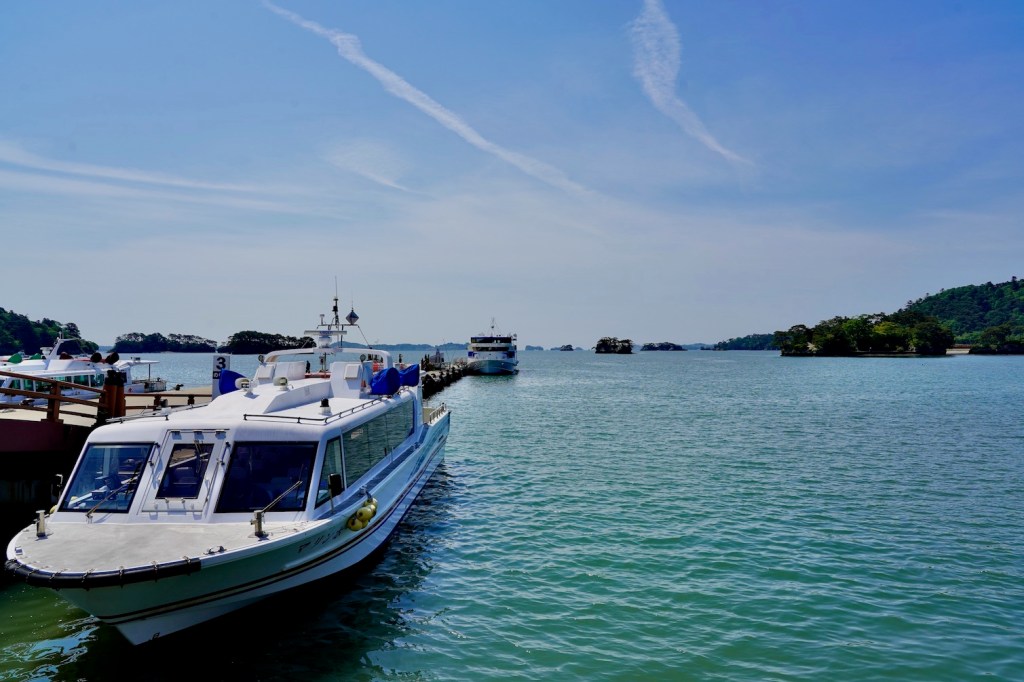
You can easily visit Matsushima on a day trip from Sendai, though I recommend staying a night or two. Masamune loved the area, actively promoting local projects to develop the area. You continue to feel his influence there.
Matsushima bay is considered one of the most scenic coastal areas of Japan. I’ll be writing about my visit there in coming weeks.
IF YOU LIKE MY STORY, PLEASE LEAVE A LIKE TO ENCOURAGE ME!
 Travelling Therese
I want those apple pies !!
LikeLike
I want to return for more! What I can’t convey is the aroma! Wonderful!
LikeLiked by 1 person
Terrific travelogue, Therese!
LikeLike
Thank you. One of our favourite places – and I find Date Masamune a fascinating person.
LikeLiked by 1 person
Thanks for sharing. An amazing experience. Superb photos.
LikeLike
[…] I went to Matsushima because it’s rated as one of the three most beautiful bays in Japan, and because it was the favourite seaside holiday of Sendai’s famous Samurai Lord Date Masamune – see my earlier story about him : https://travellingtherese.com/2025/08/29/sendai-dinner-date-with-date-masamune/ […]
LikeLike