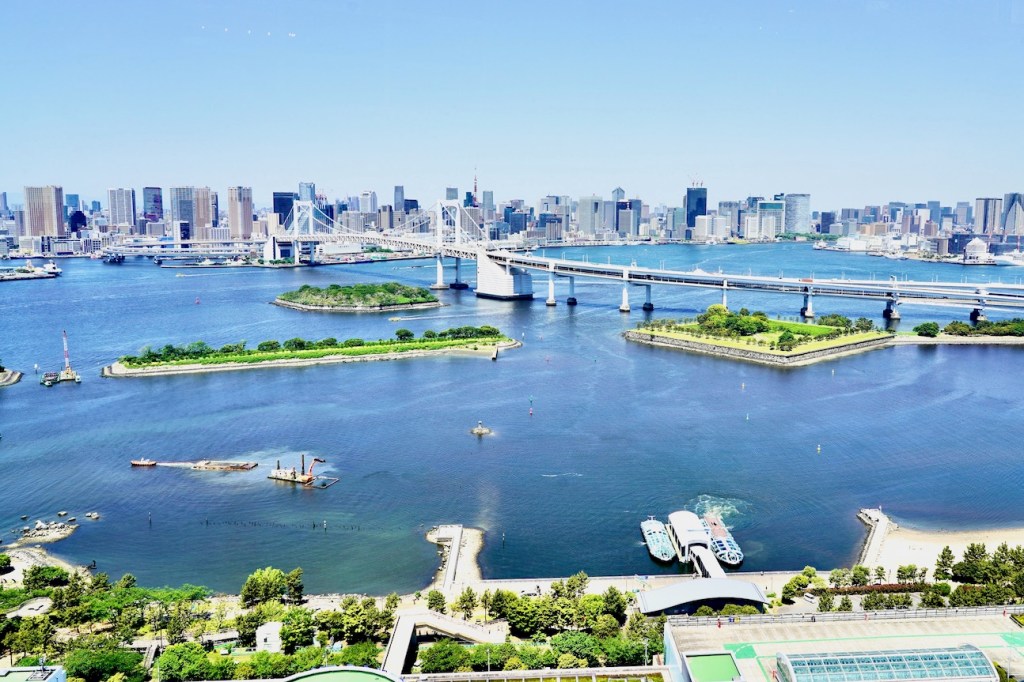
I used to think of Tokyo as an overwhelming grey concrete metropolis with a rather nice mountain in the background and a famous, but horrendously busy road crosswalk. We’ve all seen the photos, haven’t we? That impression was before I visited there!
Because in reality, Tokyo is a beautiful water city that evolved from a tiny 12th century coastal fishing village called Edo. Under Samurai direction, the city – still known as Edo – began evolving in the early 1600’s. Edo means ‘estuary’ – the estuary of Tokyo Bay. As the world got to know Edo, it was compared with Italy’s Venice. Edo – the Venice of the East. You see it in old woodblock prints of the city after Samurai expertise saw the city grow from the fishing village, expanding into surrounding wetlands, marshes or swamps.
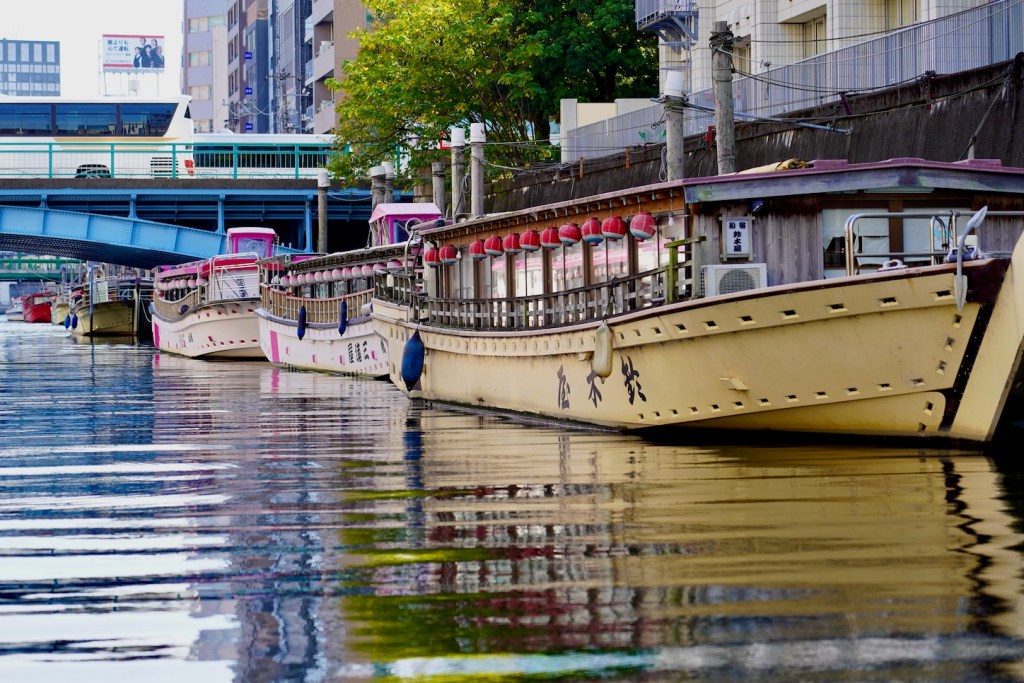
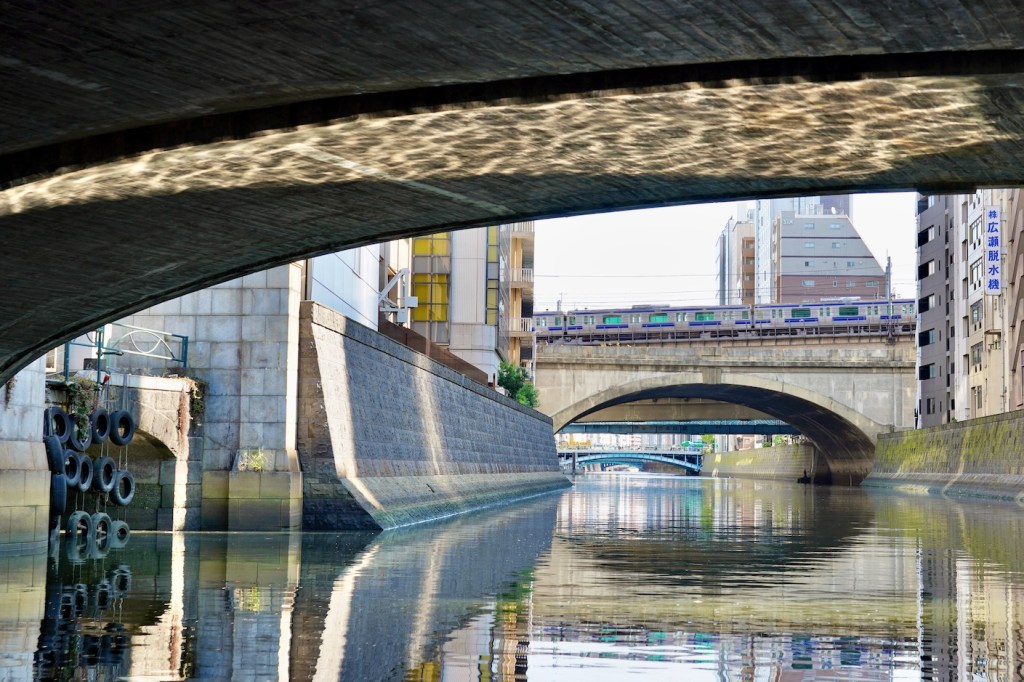
The city of Edo was built on a river delta. Land reclamation and clever engineering saw it develop into the Tokyo we know now – with hidden rivers and old waterways that still influence the city’s layout.
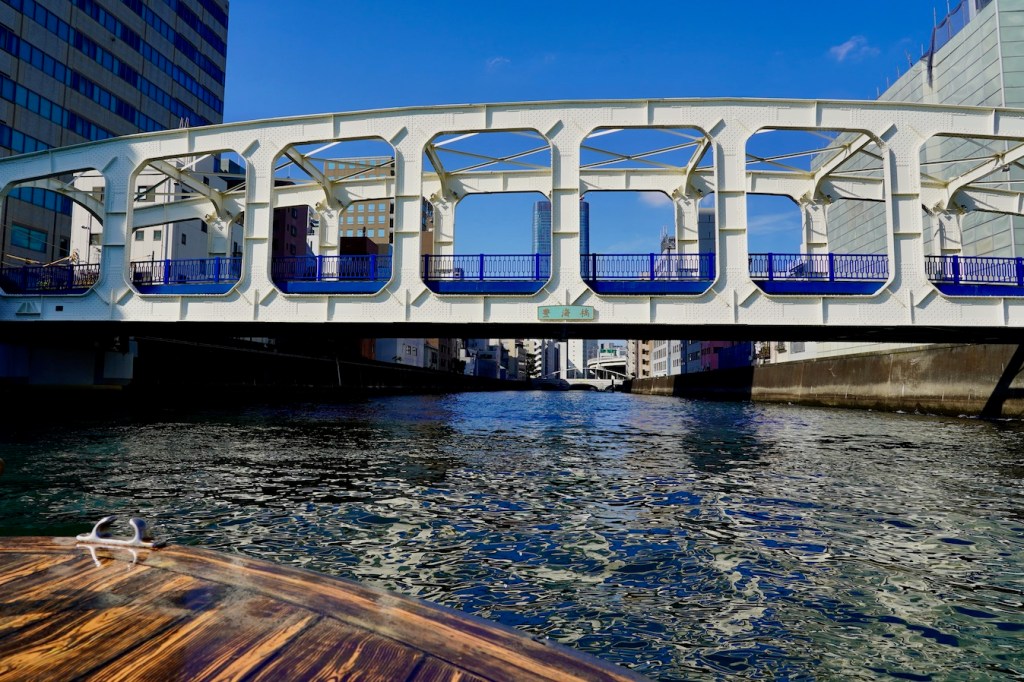
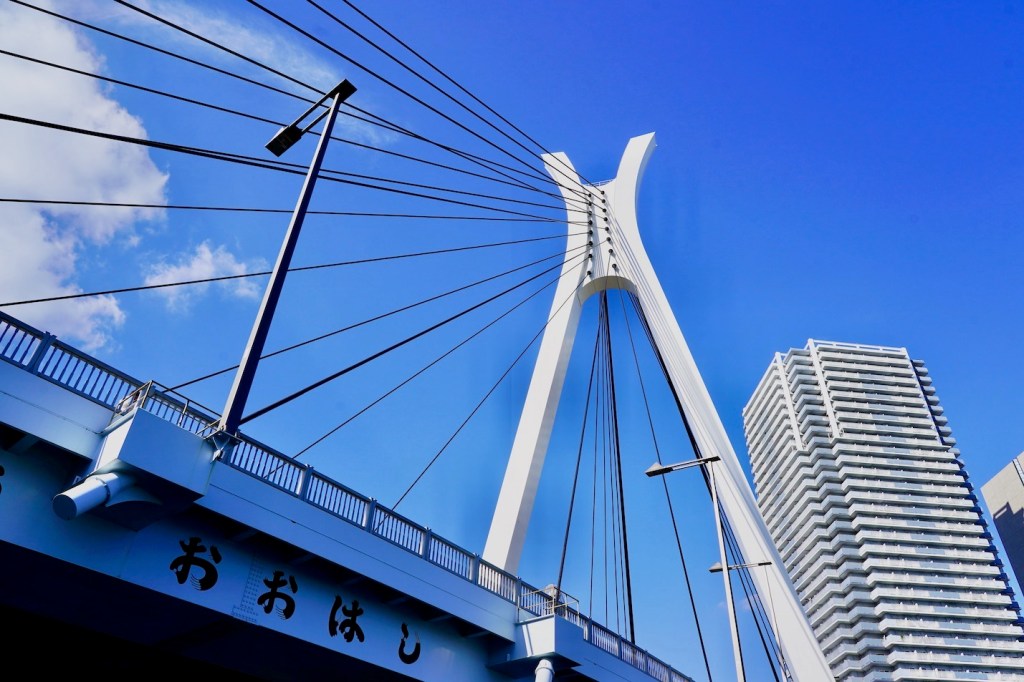
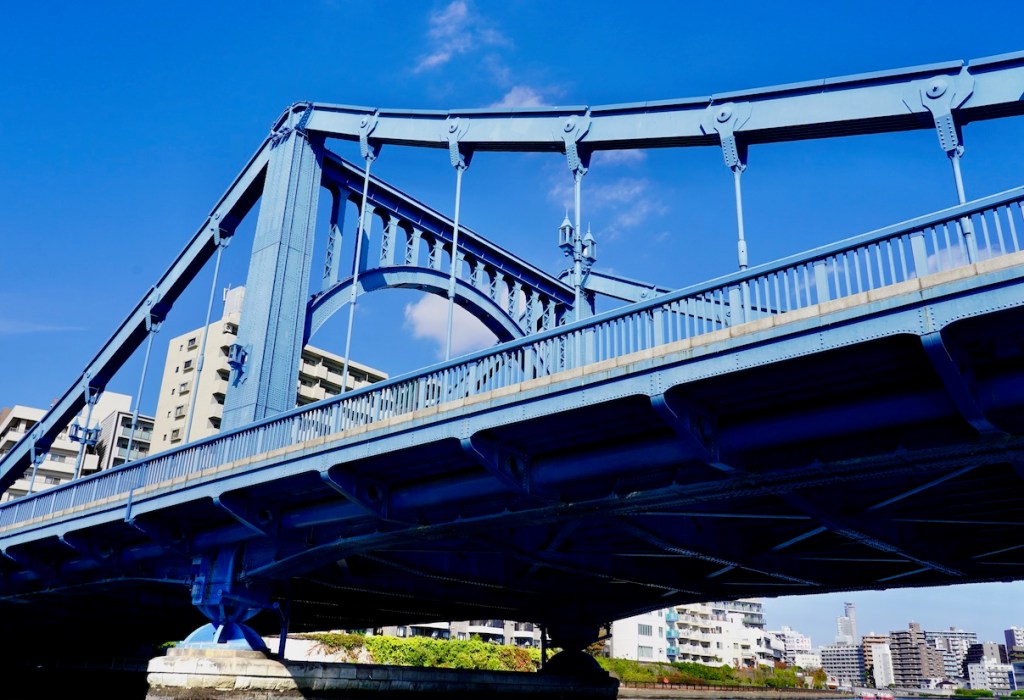
Today Tokyo features more than 100 rivers and charming canals – some original, some man made. And bridges – lots of colourful architecturally beautiful bridges! And each with their own special history.
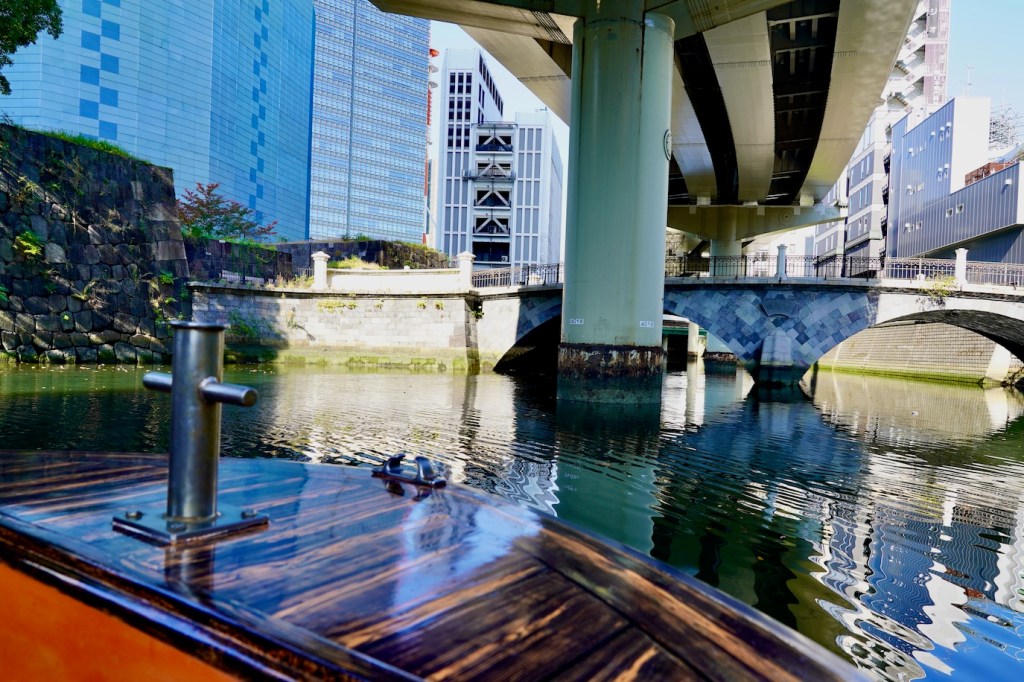
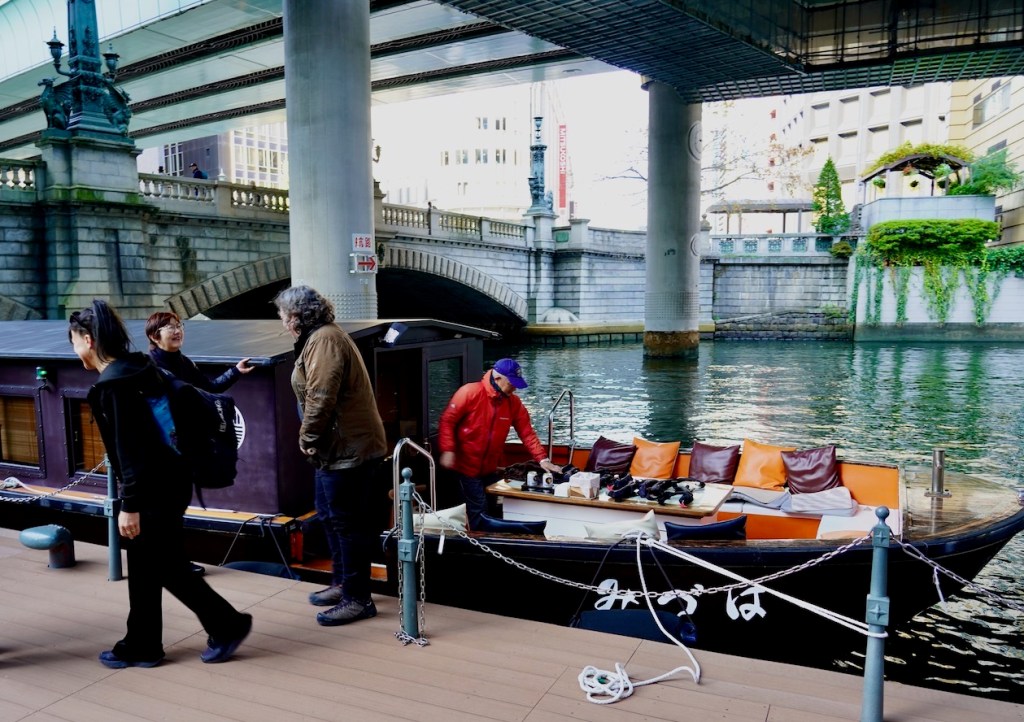
You can explore the old Edo/Samurai network of rivers by boat, and I finally did this last November. A 90 minute cruise with Riverboat Mizuha in what looks like a tiny old wooden boat. It’s actually a modern boat designed to give the feeling of old times. Perfect.
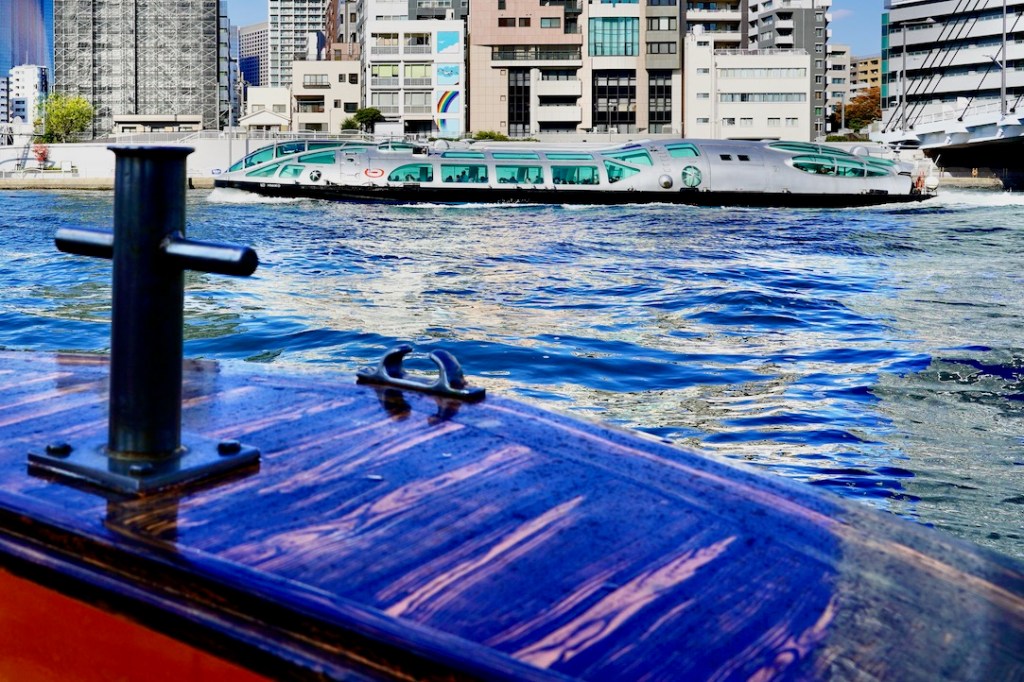
There are many cruises available in Tokyo – some to explore, some for dining experiences and some to party on. For a surreal experience there’s the futuristic Himiko that I spotted plying the Sumida River. It was the first futuristic vessel produced by anime master Leiji Matsumoto. and it runs from Azuma-bashi Bridge in Asakusa to Toyosu via Odaiba Marine Park. The streamlined metallic silver body was inspired by a spaceship. Very cool!
Himiko is vastly different to the cruise vessel I chose. I specifically wanted a small group boat with an english speaking commentator – a more simple sailing that would give me a feel of ancient Edo. I found it with Riverboat Mizuha, taking me through a network of waterpaths excavated 350-400 years ago.
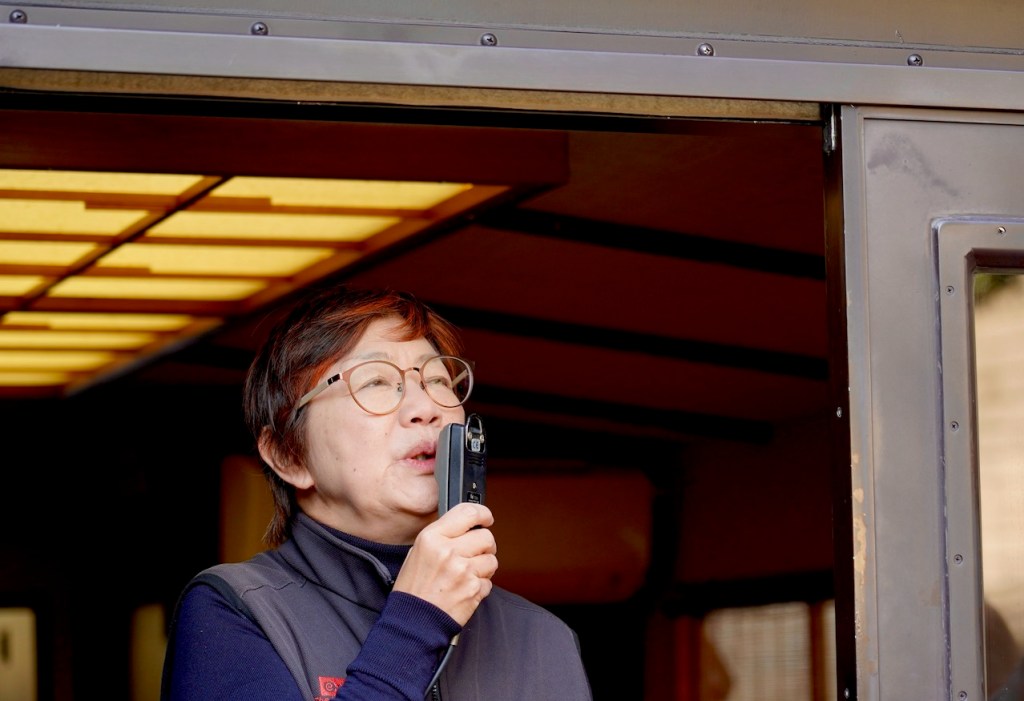
Riverboat Mizuha is owned by the irrepressible Miso Sato, who followed her dream to provide a cruise that would enable people to ‘touch Tokyo culture inherited from the Edo era’ – ‘another face of Tokyo from a different perspective showing how Tokyo has evolved utilising old heritages of the Edo era’. She’s achieved that with Riverboat Mizuha – naming it after the goddess of water “Mizuhanome” in Japanese myth.
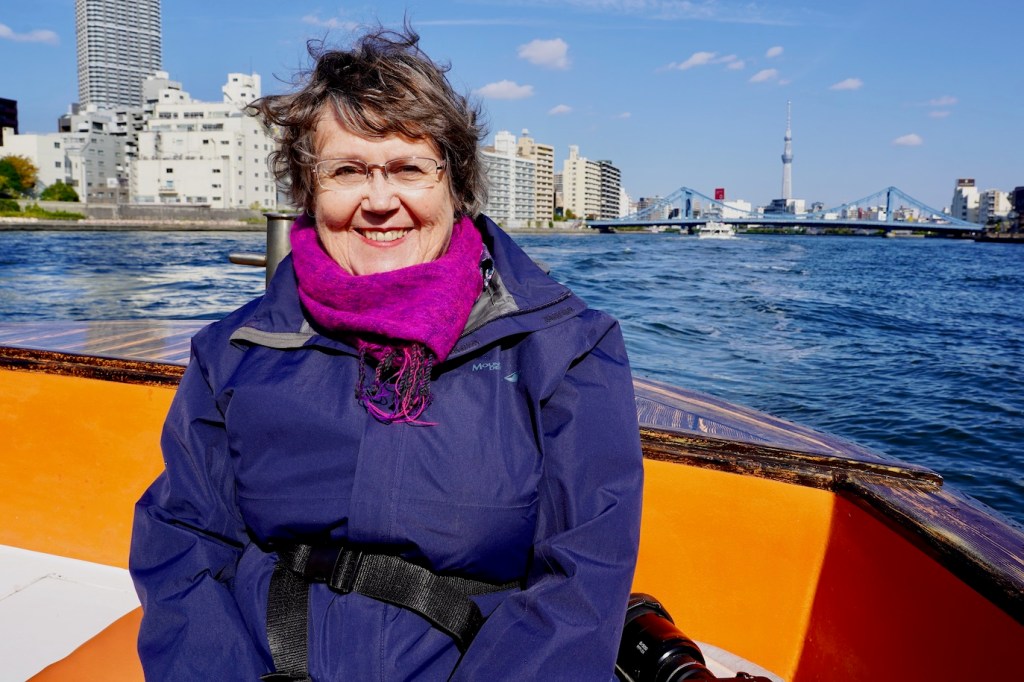
I tried unsuccessfully a few times over a number of visits to Japan to get on board. The first time I couldn’t get a sailing that fitted with my itinerary. The second time, a year later, I was booked, but heavy rain saw the cruise cancelled. Finally, in November 2025, I snagged it – beautiful weather and places on board for MJ and myself.
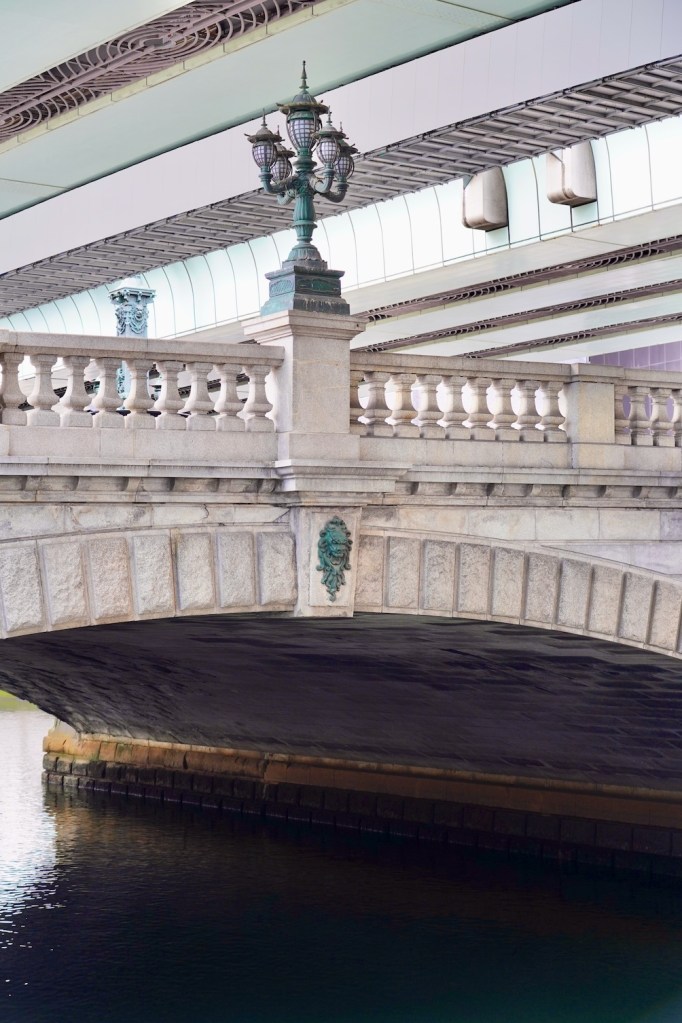
We joined the cruise at the ancient Nihonbashi bridge, a ten minute walk from Tokyo station. The bridge was originally wooden – built in 1603. For centuries it served as the starting milestone from which all distances in Japan were measured. The current 1911 stone bridge is overhung by the elevated concrete Metropolitan Expressway (Shutoko) – a motorway built in the lead up to the 1964 Tokyo Olympics. Locals weren’t happy with how the motorway ceiling over the bridge turned out. Eventually they began campaigning to have the oppressive canopy removed to reopen the bridge and Nihonbashi river to the sky. When I first heard of the campaign, I didn’t think it stood a chance. But finally it’s happening with work now already underway to replace it with a new traffic tunnel under the river, scheduled to open by 2036. The full removal of the elevated motorway is expected by fiscal 2040.
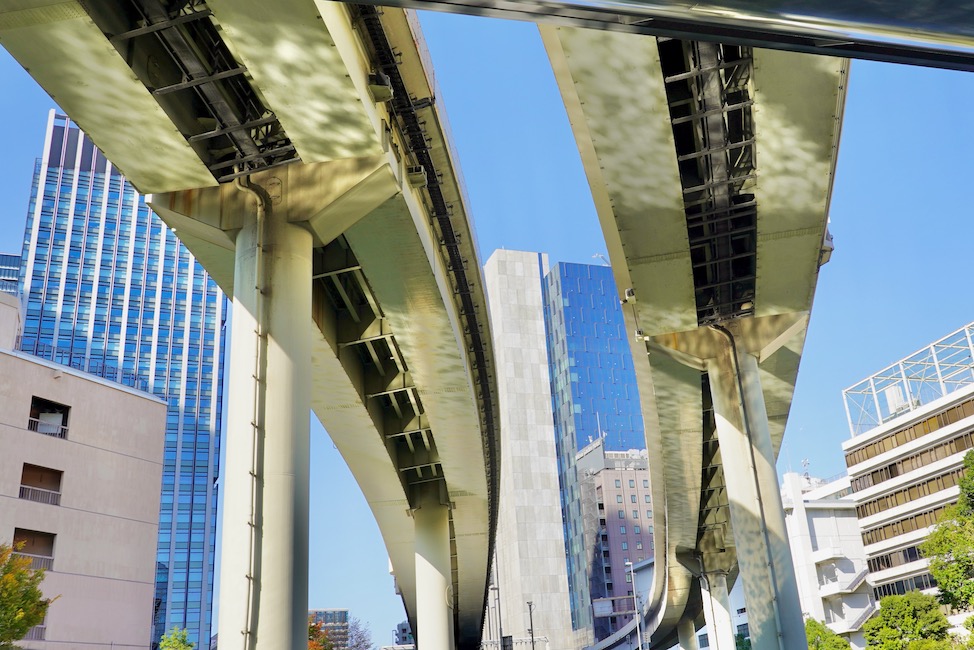
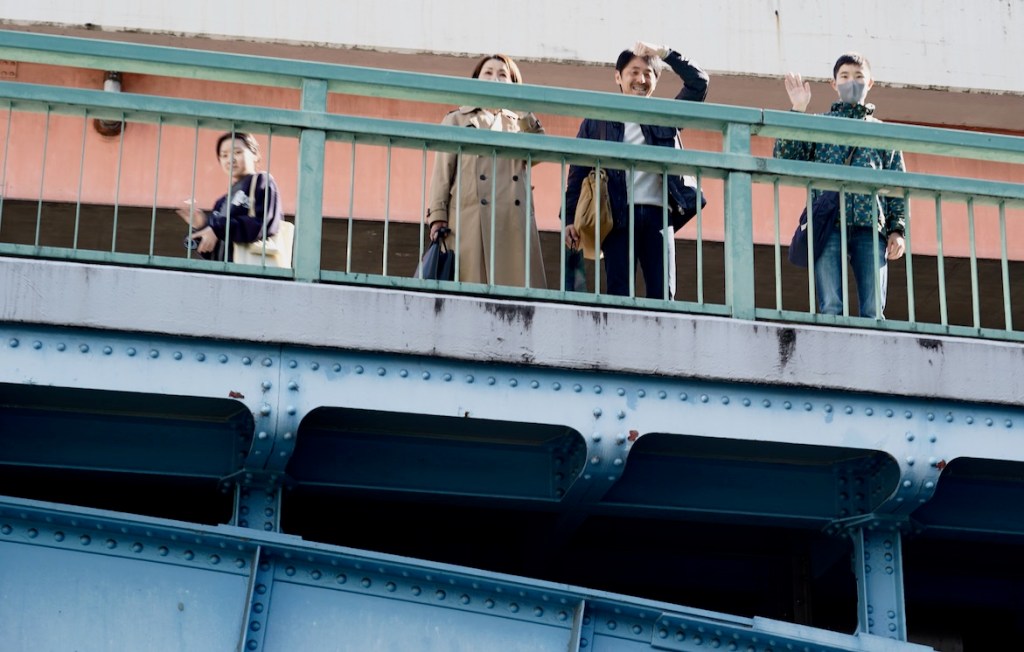
Arriving at the small Nihonbashi pier overshadowed by the motorway, Miso Sato warmly greeted me with a big smile. “You’ve made it finally,” she remarked. “I have indeed!” – like the bridge campaign, persistence and determination had paid off. The cruise was everything I expected and more.
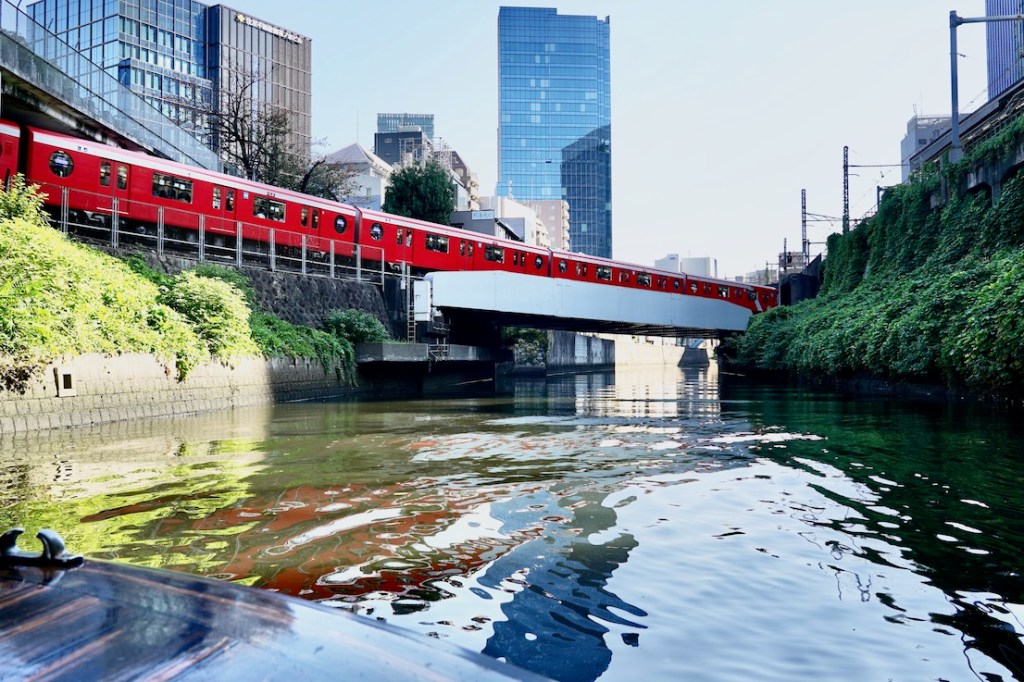
A feature is cruising along the famous Kanda River. Back in Edo times, the Kanda River was rerouted to pass through Ochanomizu and today it runs under the tracks and platforms of Ochanomizu Railway station. You can achieve great views of trains crossing here over the water. In fact, you see a lot of trains darting back and forth as you explore the old river systems.
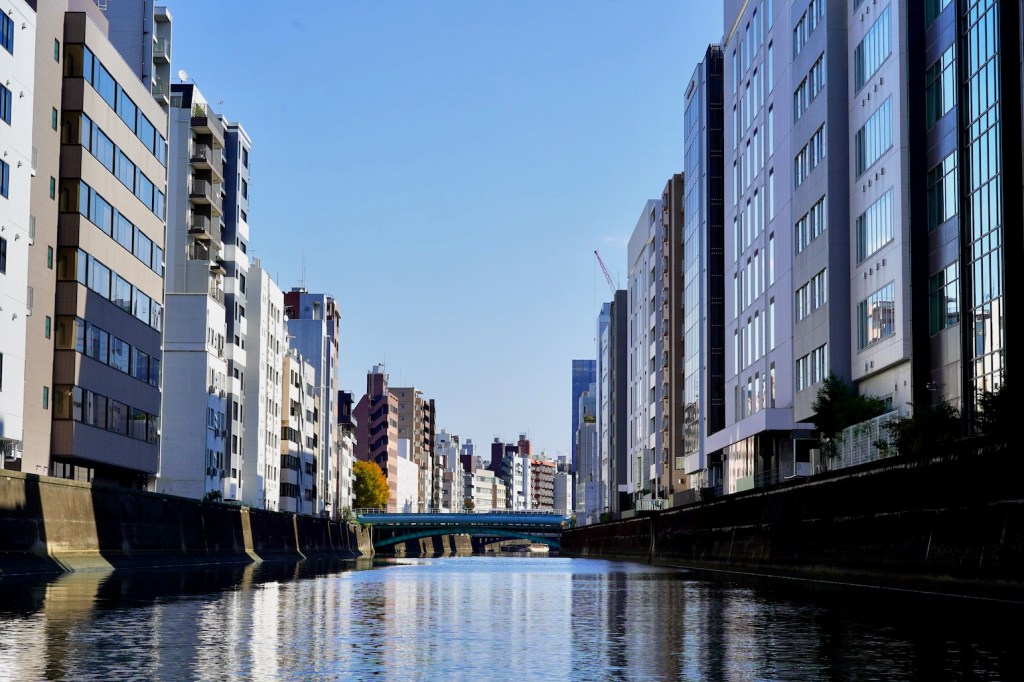
Many commodities came from across Japan to Edo by sea, and were transported inland to the city’s centre by the Samurai Shogun’s brilliant network of created waterways. Some today are hidden between buildings from general view. There is even one that runs through Shibuya station. You can’t see it within the station, but it’s there in what looks like a big ventilation/air conditioning shaft.
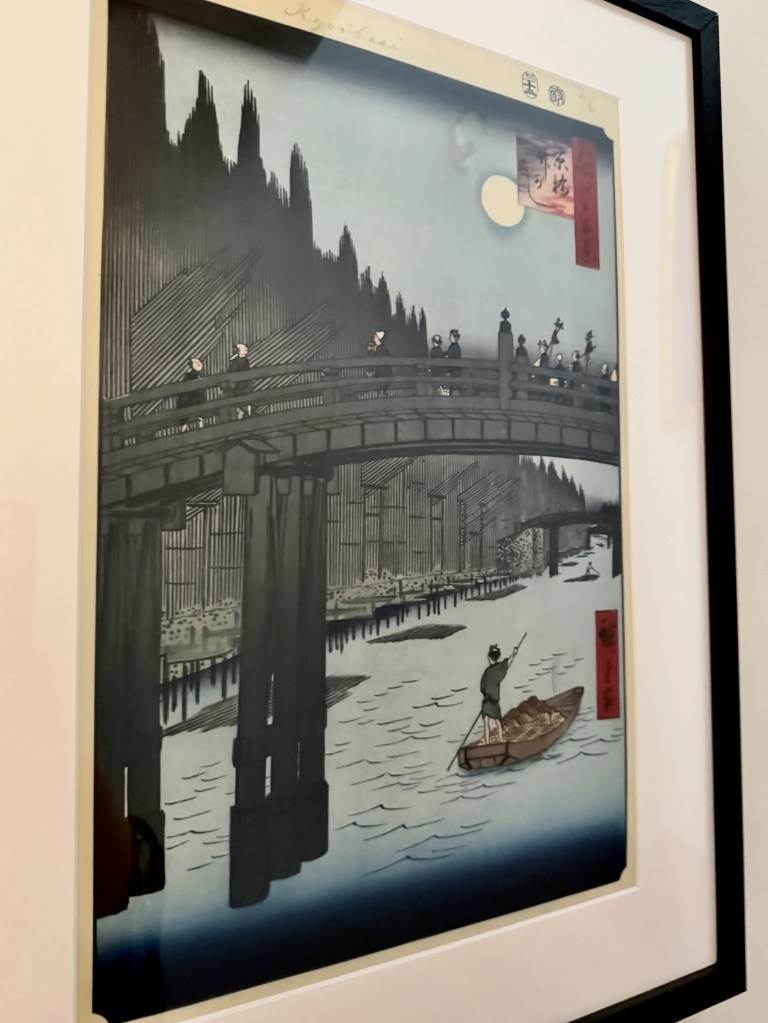
Between Nihonbashi and Ginza is the Kyobashi River – filled in and buried underground in the rush to modernise Tokyo ahead of the 1960’s Olympics. It was lined with bamboo forest and a major river route for the transport of bamboo. A copy of a famous woodcut print of it now hangs in my home.
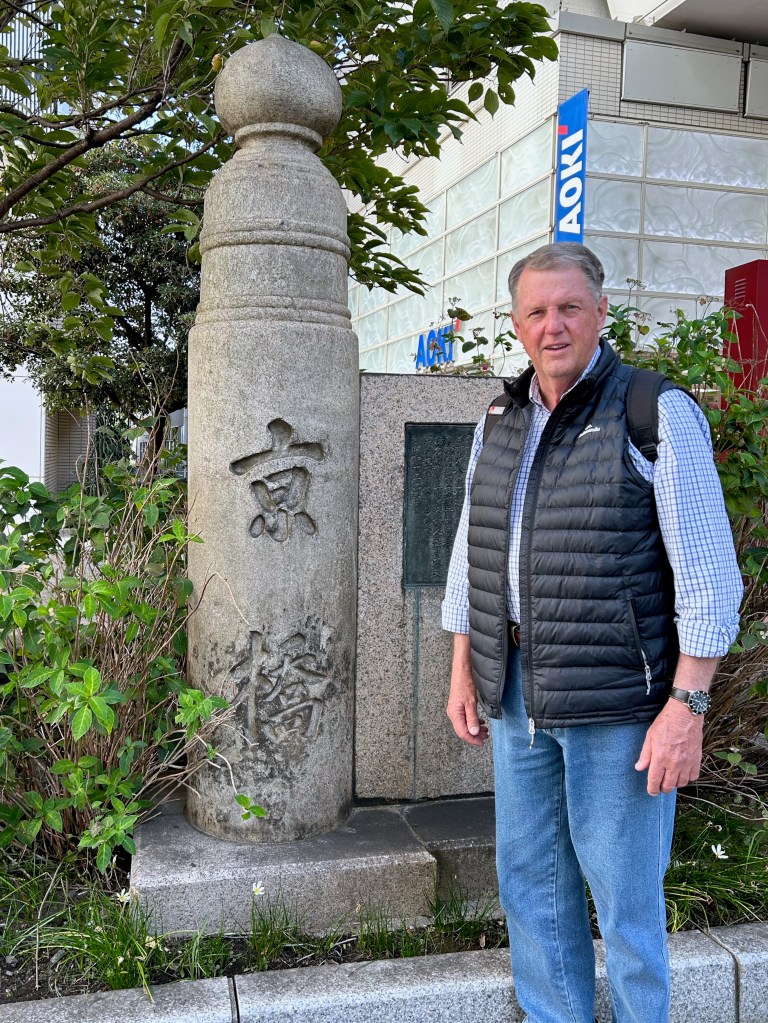
Two granite pillars from the Kyobashi bridge still can to be seen at the intersection of Chuo-dori and the Tokyo Expressway near Ginza. Look for the little police station. There has been talk of raising the river again and a visionary concept plan has been produced – but so far it has come to nothing. This is not to say it won’t happen one day.
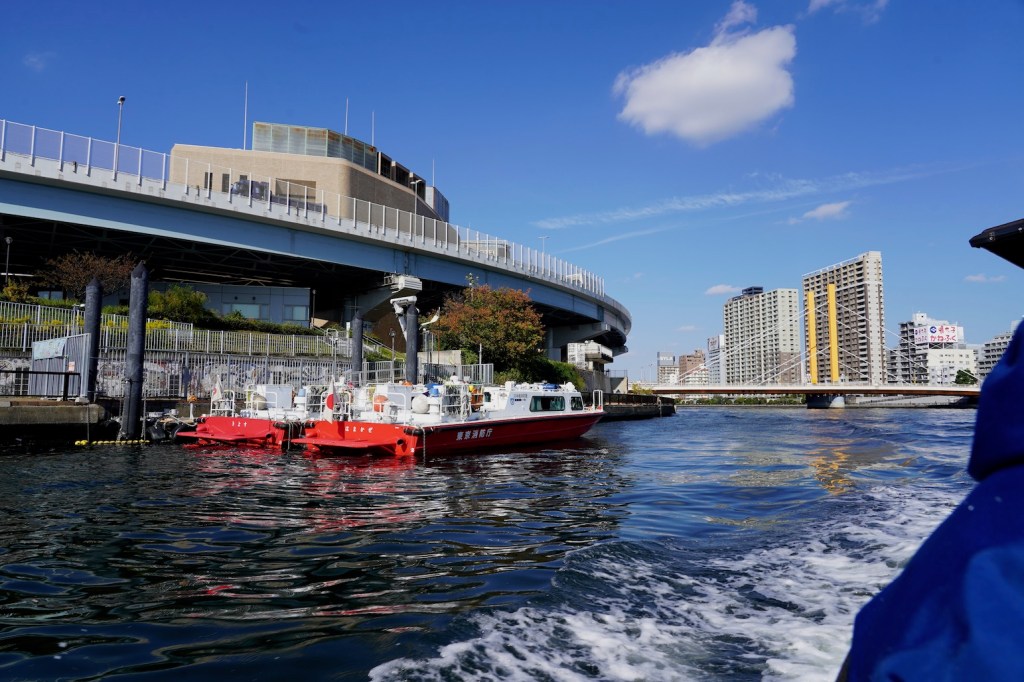
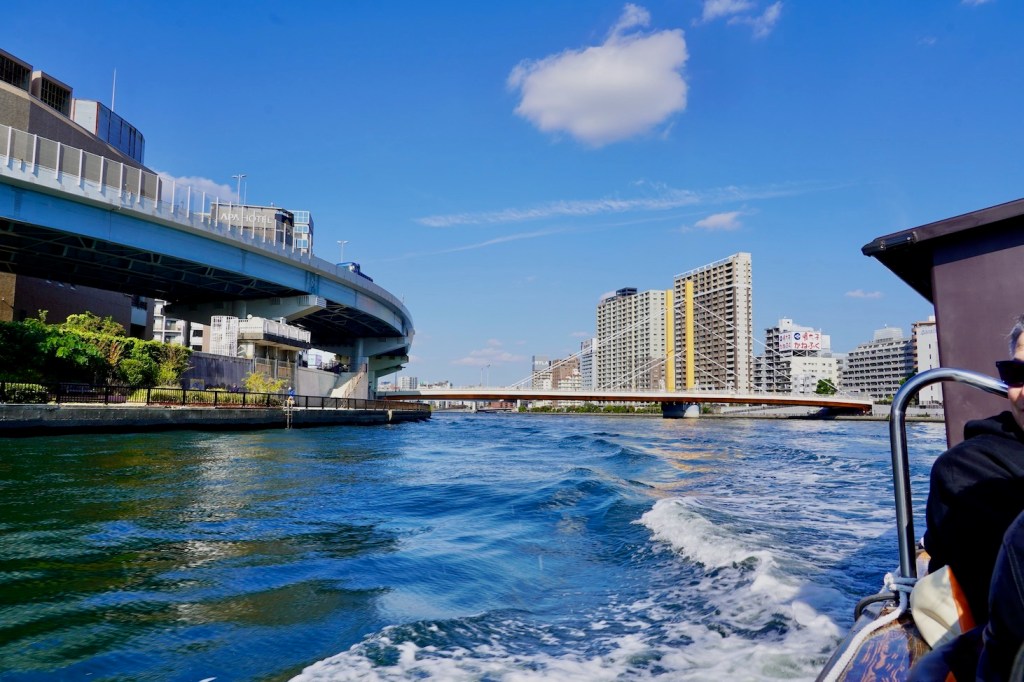
Our cruise eventually brought us out to the beautiful Sumida River – a little choppy because of other boats, but our vessel was well designed to handle it .
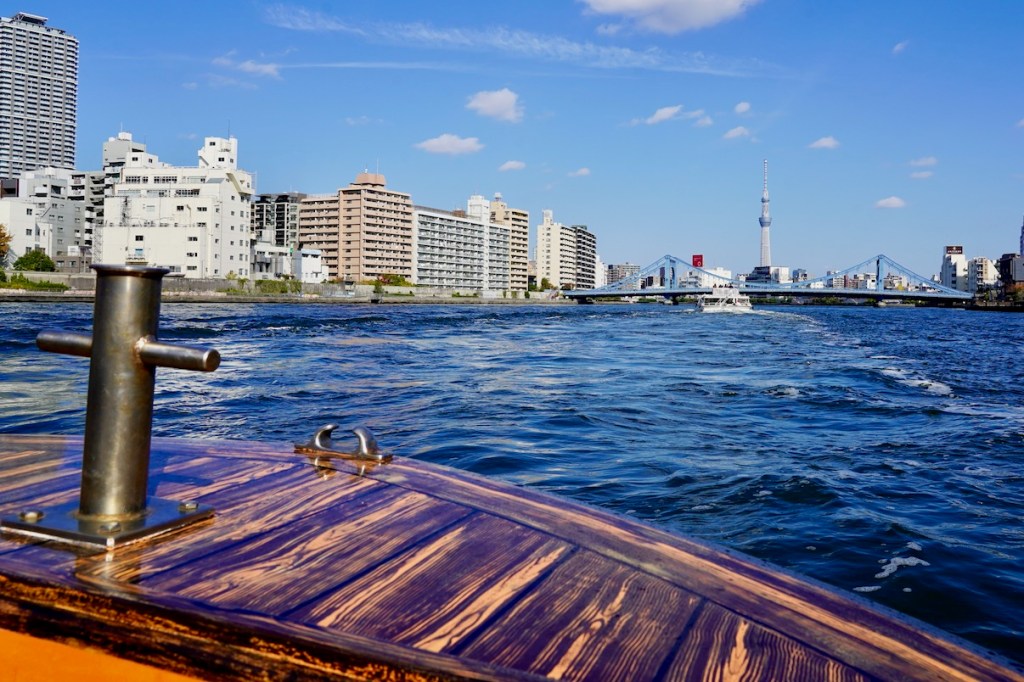
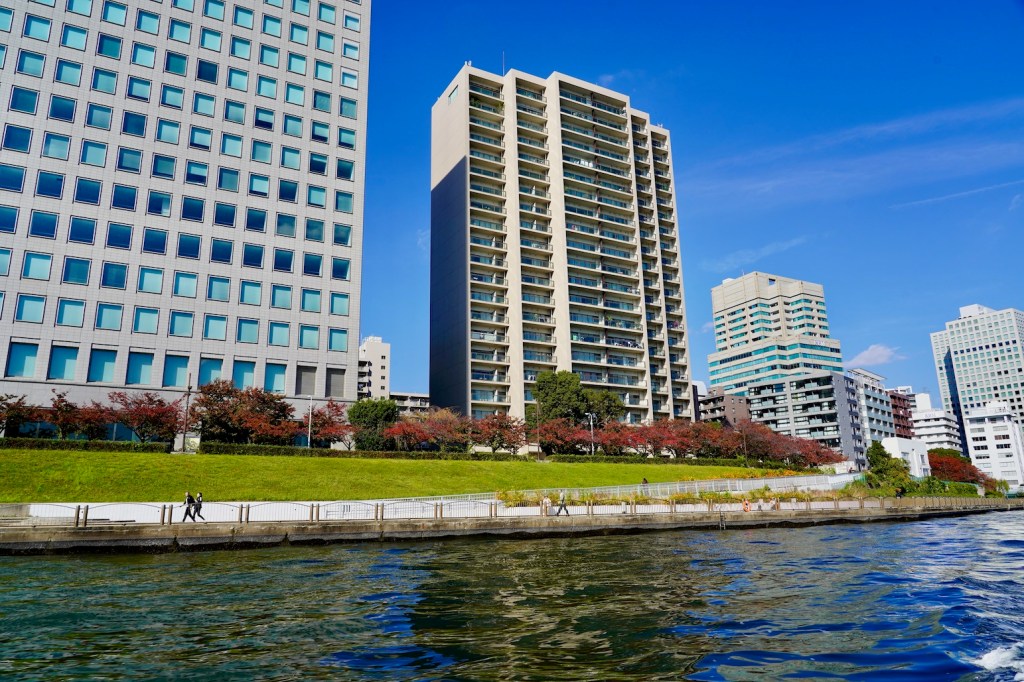
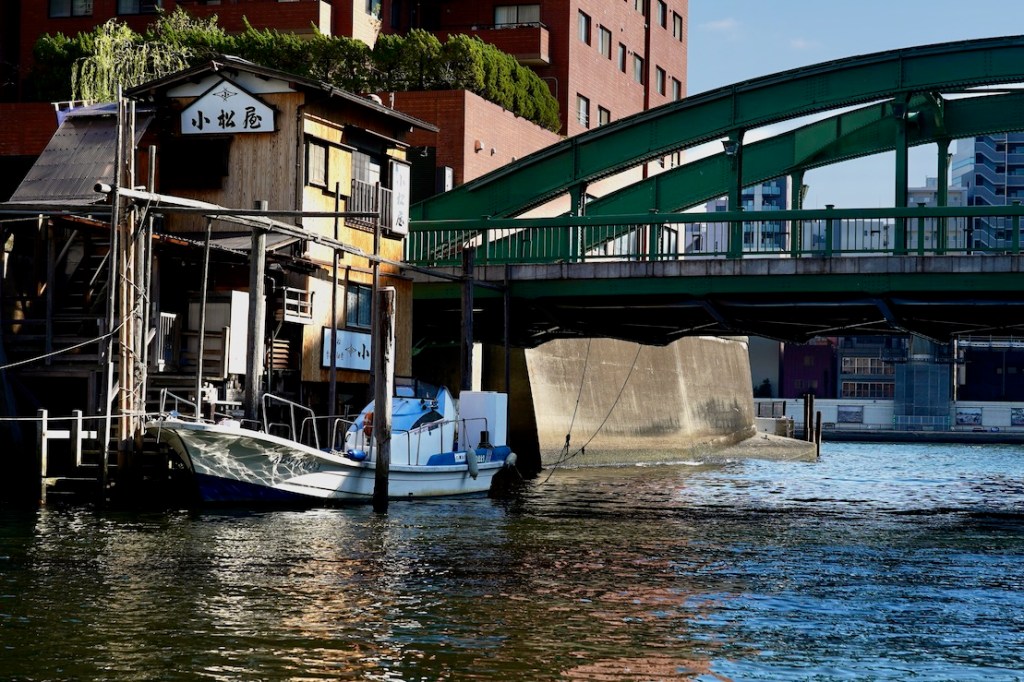
The Sumida River is lined with walkways and worth exploring by foot. We did this a few years ago and it was a very pleasant wander. Until I got caught short with no toilet in sight! Eventually, turning into the Kanda River, I spotted a small shop – Yanagibashi Komatsuya – that I had previously seen featured in a programme on NHK World TV. It sells shrimp tsukudani – a traditional Japanese side dish. In my panicked search for a toilet, I reasoned that the owner would know where a loo was. Surely many tourists had found him after the NHK programme. Hopefully, he would offer the use of his loo to this desperate Australian. But no luck – only a blank look to my frantic entreaty in my very poor Japanese ‘Toire, toire?’. The owner looked puzzled – my pronunciation might have been way off. Embarrassed, I retreated hastily, hurrying along the riverside path continuing to search. A little way ahead I saw a restaurant and in critical need by now, I tried my luck again. “Toire, toire?” Fortunately they understood, pointing me to the back of the dining room.
Not only was it a very welcome toilet, but a most unusual one. An attraction in itself! It appeared to have been built inside a small cave, which didn’t quite make sense being in a restaurant alongside the river. We hadn’t had lunch, and I thought we should reward the restaurant’s generous use of their loo by eating there. However, they indicated that the kitchen had just closed. I thanked them and resolved to go there on another occasion. I haven’t kept that promise yet, but it’s still on my list to do.
Riverboat Mizuha does have toilet facilities aboard. Good to know!
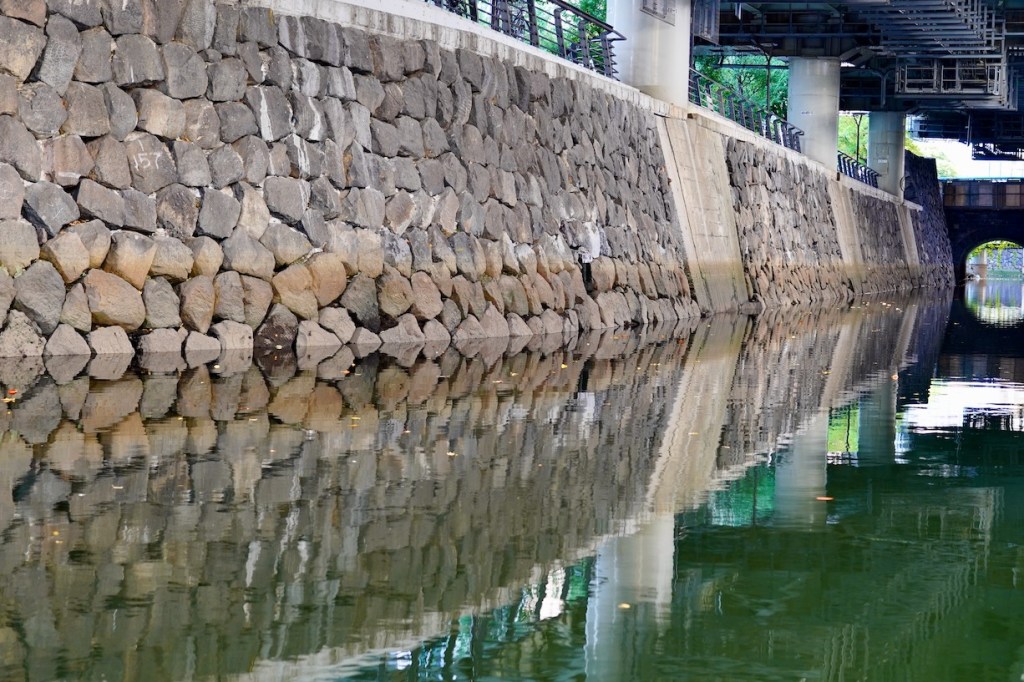
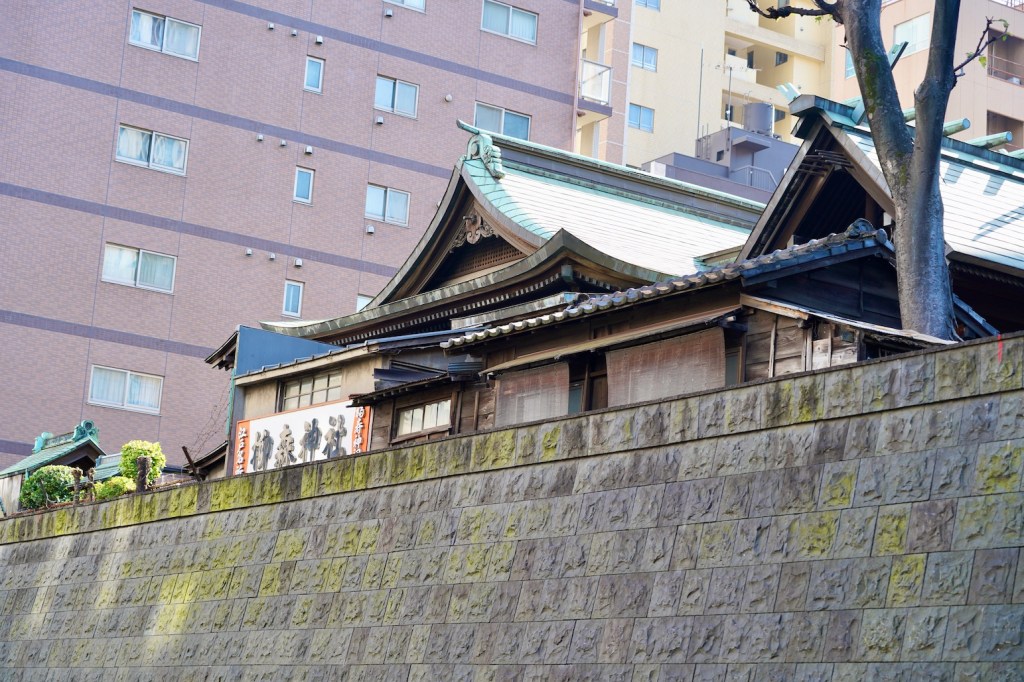
Along the way, we cruised close to some of the ancient stone walls of the outer area of Edo Castle. Some were in their original state – others had been reconstructed using the original stones. Who were the better stone wall craftsman? Definitely the men of the Edo area – their work was so expertly and neatly done – still a work of art today!
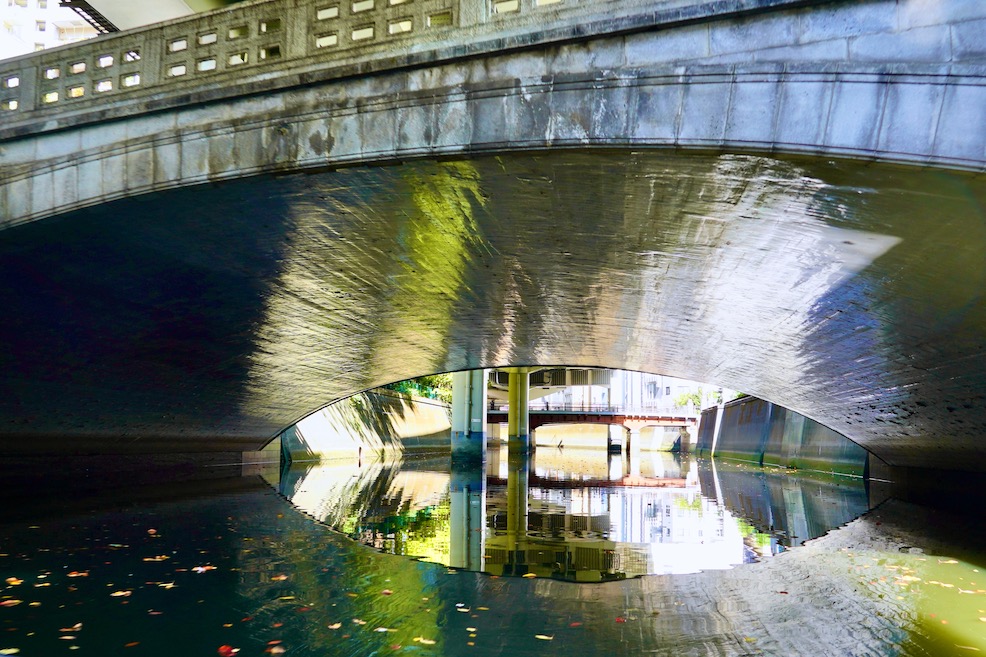
We passed under many bridges on our 90 minute cruise – and learnt some of their varied history as we proceeded.
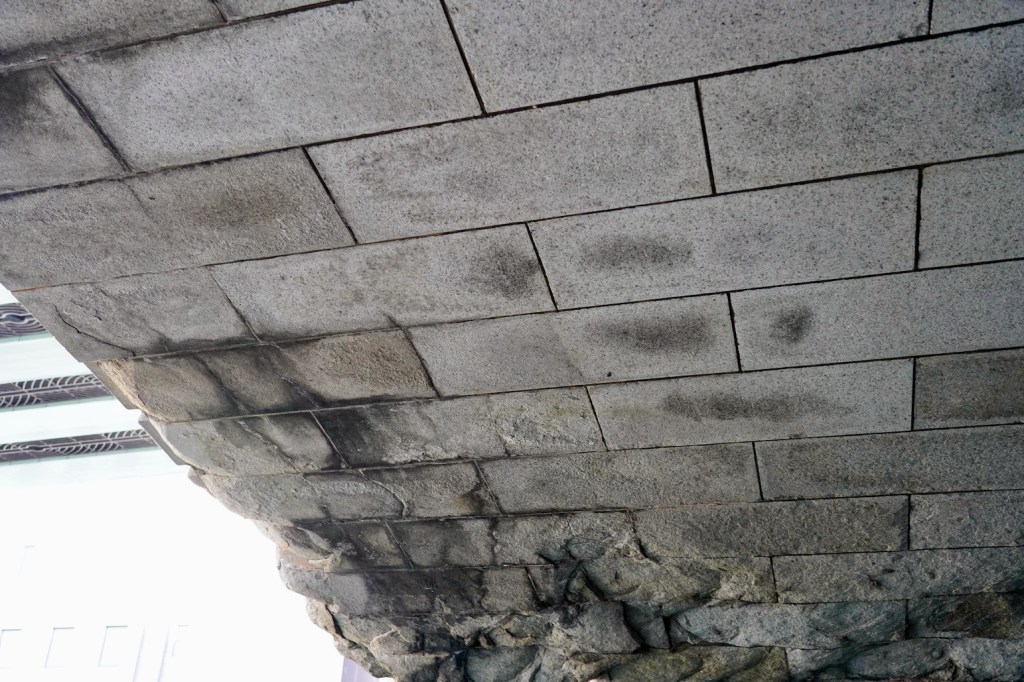
You can still see scorch marks underneath some bridges from the firestorms created by the WW2 bombings. People tried to shelter underneath bridges, but drowned, burned or suffocated. The main pillar of the 1928 Kototoi Bridge over the Sumida River has deliberately been kept in its scorched state as a historical reminder.
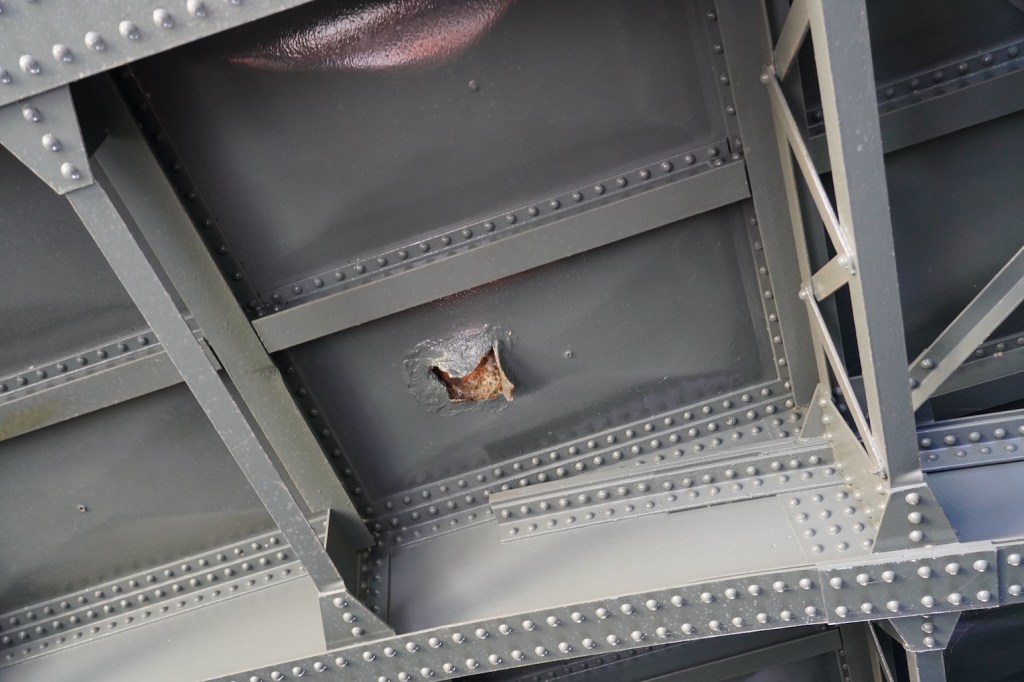
On the cruise, you can also see a pockmarked hole – the impact mark left by an incendiary bomb.
The Nihonbashi area was heavily targeted during the heaviest bombing – the “Great Tokyo Air Raid” on March 10, 1945. Most of the surrounding district was burned to the ground – though the stone Nihonbashi bridge survived.
Many bridges also were scenes of massive tragedy in the Great Kanto earthquake of 1923. A total of 362 bridges were destroyed, and another 70 badly damaged. Most resulted from the massive fires that followed the quake. Even steel bridges were affected because of wooden floors. Many people seeking refuge on the bridges were trapped and died. There were however bridges, such as the Shin-ohashi Bridge over the Sumida River, that saved many lives during the fires.
It’s good to know that reconstructions incorporated earthquake and fire resistance in their bridge design.
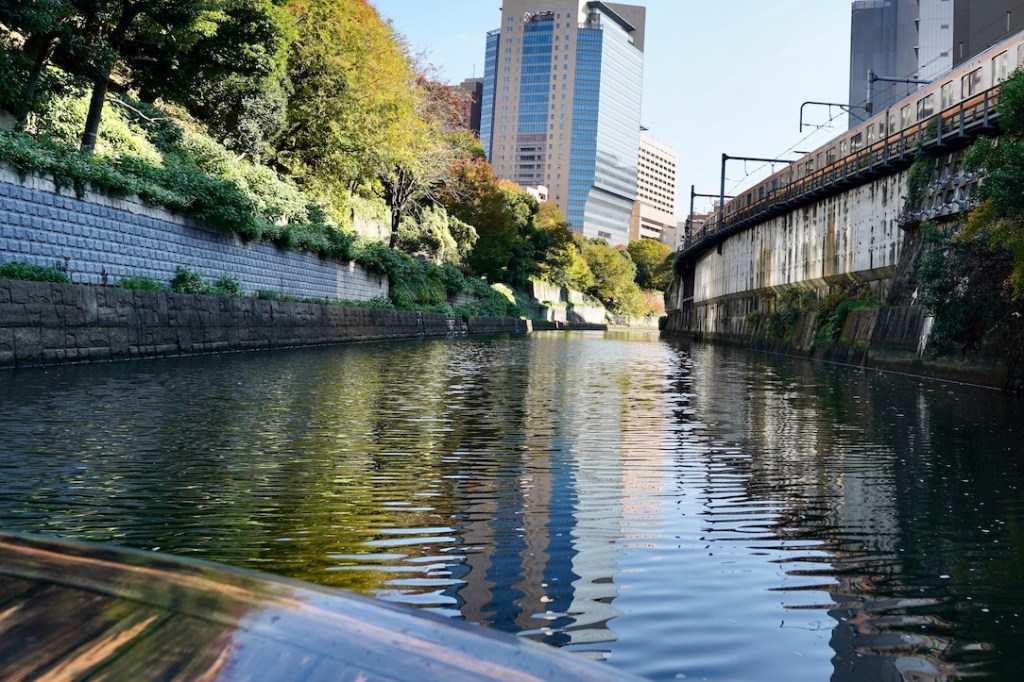
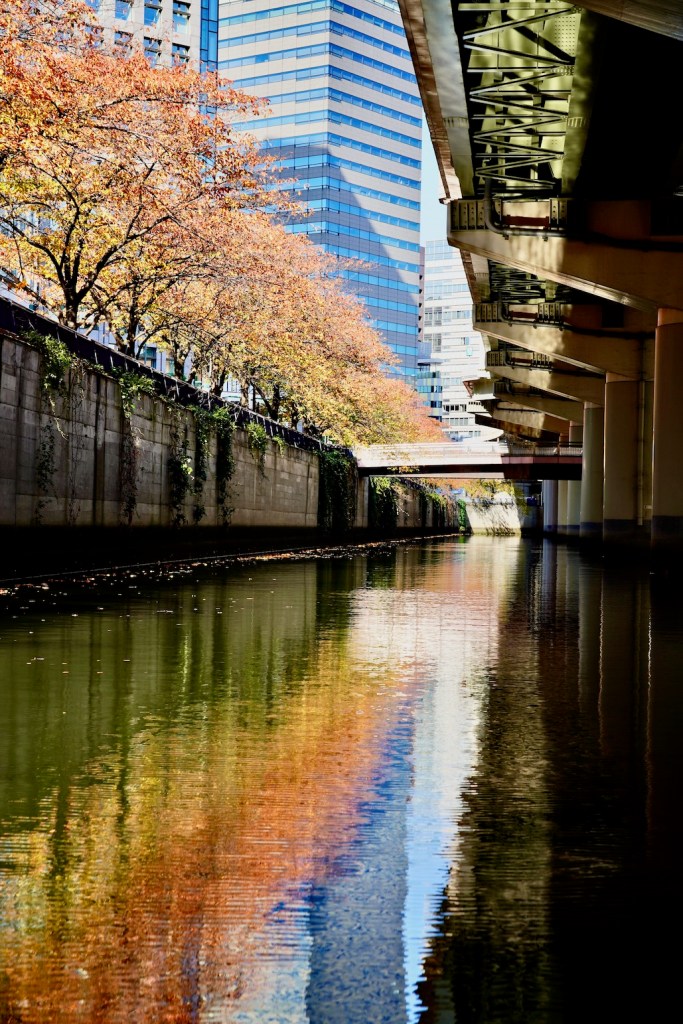
These tragic histories seemed a world away as we enjoyed our very pleasant sailing on the Sumida and other smaller rivers, often side by side with trains.
I highly recommend a Tokyo cruise – and if you are looking for a small boat cruise, then definitely book Riverboat Mizuha. It offers a varied cruise programme, including shared boat cruises like the one I took. The company also offers whole boat private sailings for groups of up to 12 people. I was able to organise and pay direct with the company from Australia. Emails were quickly responded to in English. Super easy! I had a little trouble processing my credit card on their site, but was able to use PayPal after emailing the company for assistance. I also was refunded for the cruise cancelled because of rain.
https://www.funaasobi-mizuha.jp/english/
 Travelling Therese
Nice! 😊
LikeLike
Hi Therese,A very happy New Year to you and MJ. So enjoy all your blogs thank you for posting. Kind regards,Pamela.
LikeLike
Thanks .. glad you enjoy
LikeLike
Love the way you transport us there with your excellent photos and vivid descriptions.
LikeLike
Hoping you receive this feedback as have had problems with the site you may get it three times or not at all). I love the combination of excellent photos with clear and vivid descriptions. It transports me to another world!
LikeLiked by 1 person
THANKS… What I hope to achieve.
LikeLike
This river view of Tokyo is not one of have experienced before. Your captures and writing paint a very surprising and beautiful city.
Our family was talking just the other day about places in Japan we would like to revisit, and Tokyo was rather low on the list. But after viewing and enjoying this post, I think I might change my mind!
LikeLike
Thanks for your comment. I think there are many sides of Tokyo that visitors miss. You may have already read these stories of mine of some of the things I have done in Tokyo on previous trips. See below. One of the problems now in central Tokyo is the soaring price of accommodation. So on this last trip we based in Yokohama where the rooms were larger and the prices much lower. Taking a Shinkansen only took 20 minutes into central Tokyo ..local trains a a bit slower. The price is easily covered by the huge difference in accommodation costs. https://travellingtherese.com/2025/06/09/narita-more-than-an-airport/
LikeLike
I love your perspectives – thank you for sharing them. Your blogsite is a treasury of memories & inspiration for travel.
LikeLike
I follow your runs etc in Singapore – encourages me to revisit some day. First visited in the early 1970’s staying on Orchard Road. A lot has changed there since then!
LikeLiked by 1 person
Indeed a great deal has changed. In fact, I sometimes get turned around when we venture to a neighbourhood we haven’t been to in a while. The face of Orchard Road certainly is much altered.
I feel disloyal saying this, Therese, but with Japan venues aplenty, I would find it difficult to recommend giving those up for a visit where.
LikeLike
We have always enjoyed Singapore.. often a stop over en route to and from Japan. But we now have direct flights, so haven’t been for a few years.
LikeLiked by 1 person
I hear you. So many places now have nonstop service so the way we travel has changed so much
LikeLike
It was a special place
LikeLike