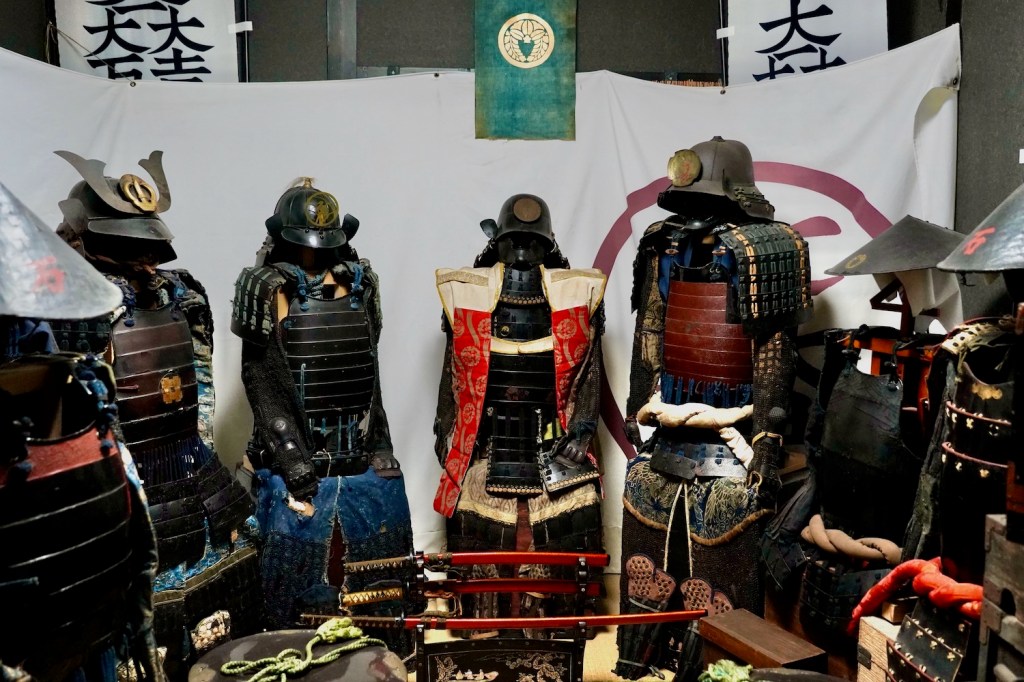
It was the most tiny museum I have seen. But, as the saying goes, good things come in small packages. And this one in Japan’s Gifu prefecture on Honshu was exceptionally good – packed with restored original authentic samurai armour and other samurai artefacts. And insightful when it came to the intricacies of Samurai war.

The privately run Samurai armoury museum can be found in the small town of Sekigahara on Japan’s famous Nakasendo trail linking Edo (Tokyo) with Kyoto in Samurai times. It was here on October 21, 1600 that the Battle of Sekigahara was desperately fought – the most significant and most bloody samurai field battle in Japanese history, with 150 thousand troops and some of Japan’s most famous Samurai Lords taking part. Sekigahara was a brutal, highly tactical and decisive battle. And one that blended ancient and more modern warfare, with swords, bows, and spears alongside increasingly used firearms.

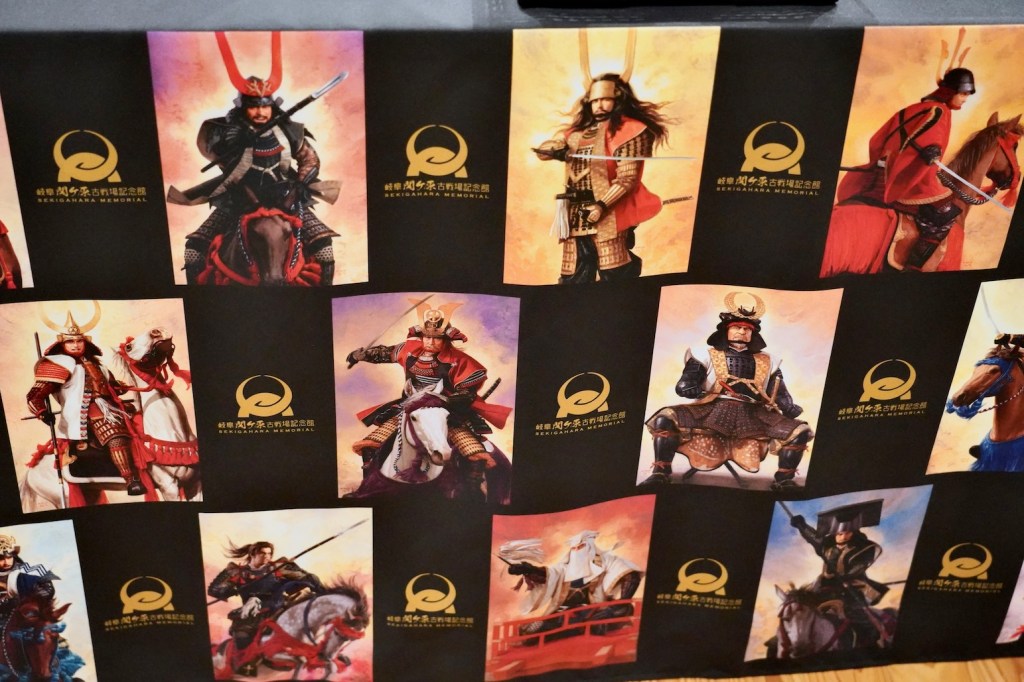
There were many small armies taking part, led by their Lords and coming from far away. Basically they lined up behind the East and West armies. And that’s the simplest way to look at it. Trying to remember all the factions involved can be difficult.
The battle waged for only six hours, with an estimated 30,000 samurai dying. Some of the leaders on the losing side also were later beheaded.
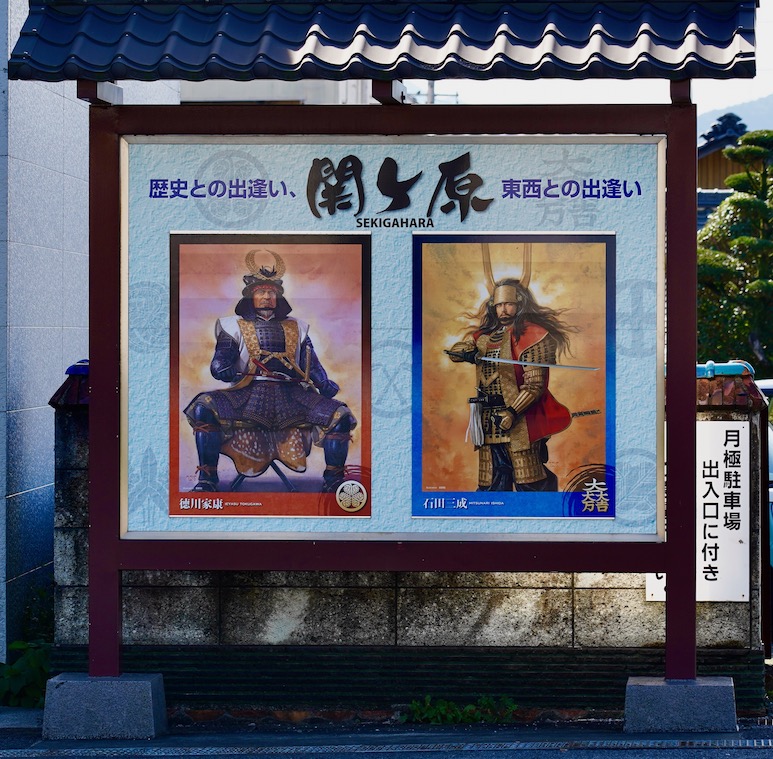
The East, led by the famous Tokugawa Ieyasu, won the day, with Ieyasu eventually established as Shogun – the leader of all Japan. His Tokugawa Shogunate would go on to rule Japan for over 260 years of relative peace.
Yes – fans of the James Clavell book and the recent award winning TV series Shogun – the very same Ieyasu! Apparently a sequel to the TV blockbuster is being worked on, set ten years on from the end of Clavell’s book. That would skip over Sekigahara – but perhaps there will be flashbacks. Surely so!
The Sekigahara battle is highly rated internationally alongside Waterloo and Gettysburg. The three battlefields joined as ‘sister cities and ‘sister parks’ in 2016. A joint declaration noted that the role of the historical battlefield was in “allowing us to reflect on those who stood and fought there, as well as the meaning of war and peace”. A sobering thought in these current times of conflict around the world.
Today, Sekigahara remains a rural town in a narrow, beautiful valley. It’s about a 50 minute train ride from Nagoya, with an easy change of trains at Ōgaki Station. You could also access it by train from Kyoto via Maibara station in just over an hour.
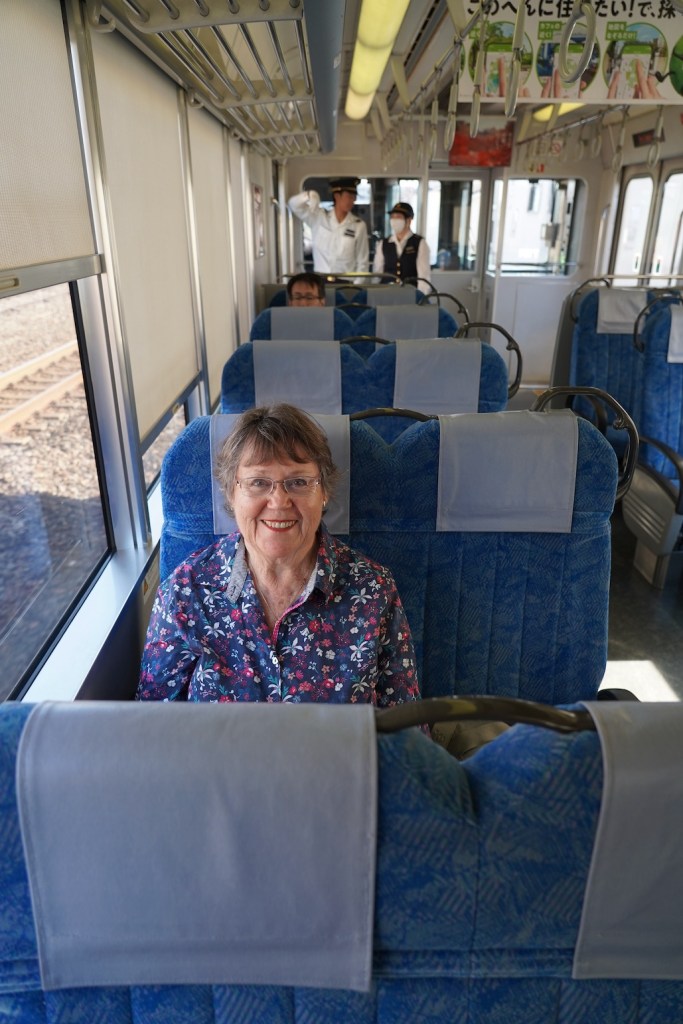
MJ and I accessed Sekigahara from Nagoya last October (2025) via local trains on a half day trip. Strangely, I felt an overwhelming feeling of peace as I walked out of the tiny Sekigahara railway station into the heart of the famous battlefield. It was 425 years – almost to the day – since the brutal battle was waged. Blue skies greeted us, though on the morning of the battle the valley was shrouded in thick fog. It must have felt ominous as the armies waited for the fog to clear to execute their attacks.
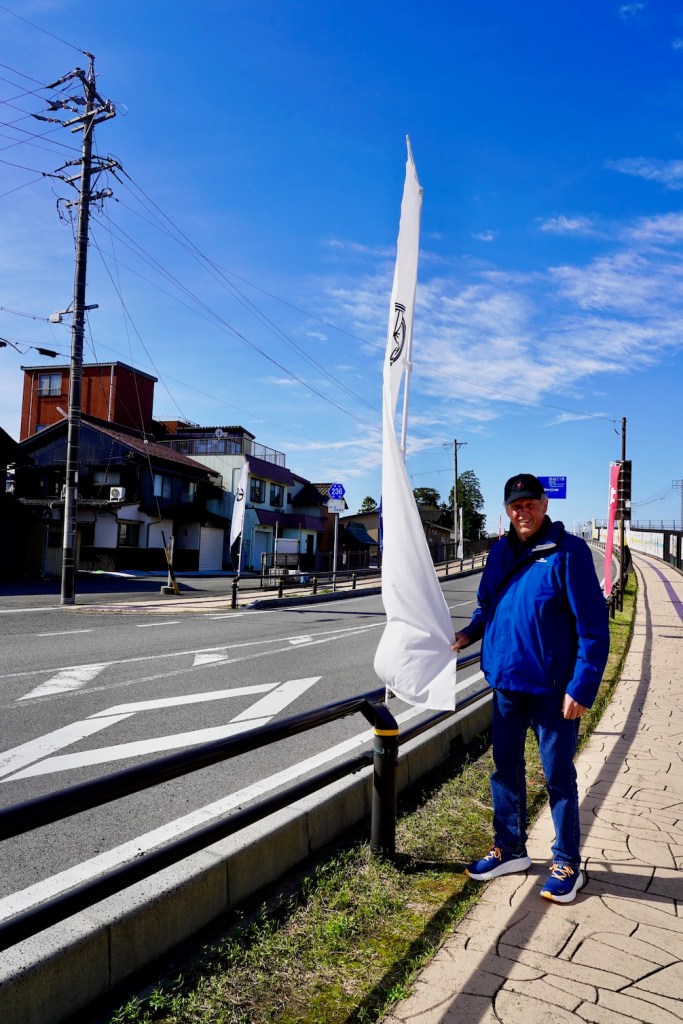
The town we arrived in was very quiet – the odd vehicle passing by, and no one in sight. Admittedly, it was a weekday, with very few people about. It might be different on a weekend, judging from the big car park at the main museum. We crossed the road from the station to a tiny tourist bureau that we saw was open. No one inside spoke english, but they seemed pleased to see foreign visitors. Extra excited smiles when we told them via google translate that we were Aussies. They directed us up a small pathway along the main road outside to the famous cutting edge Gifu Sekigahara Battlefield Museum. You can’t get lost. The road is lined with a variety of impressive battle flags and huge information signs detailing the various battle armies and their leaders. It took less than ten minutes to amble to the Museum area.
The big Memorial Museum was amazing. Definitely worth including on your Japan itinerary. I’ll detail that experience in part 2 of this story in the coming month.
However, it’s Sekigahara’s small armoury museum I want to focus on here. Before visiting Sekigahara, I had read that most of the Samurai armoury displayed at the Memorial Museum was expertly replicated – but not original. A fellow blogger said that the real deal could be seen at a nearby smaller museum in Sekigahara.
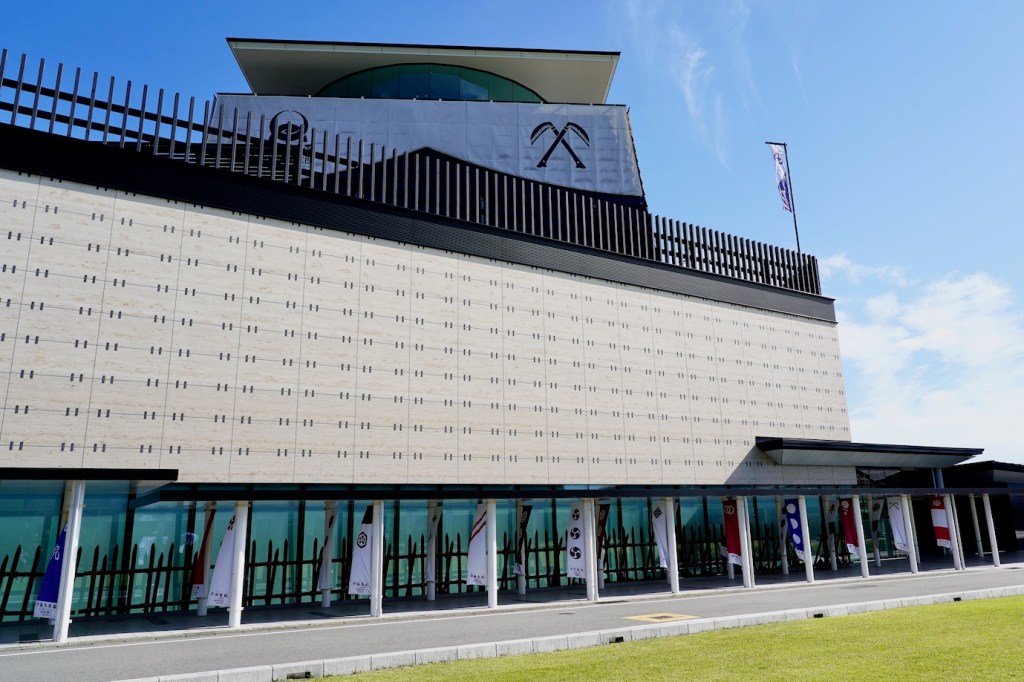
The two museums are quite close together, but are very different. One large, modern and high tech, a beautiful architecturally designed modern space with spectacular audio visuals that take you into the heart of the battle. A great viewing area to see over the valley, complete with a cute mobile robot that acts as your guide. And a big airy adjoining cafe and shop with battle influenced offerings.
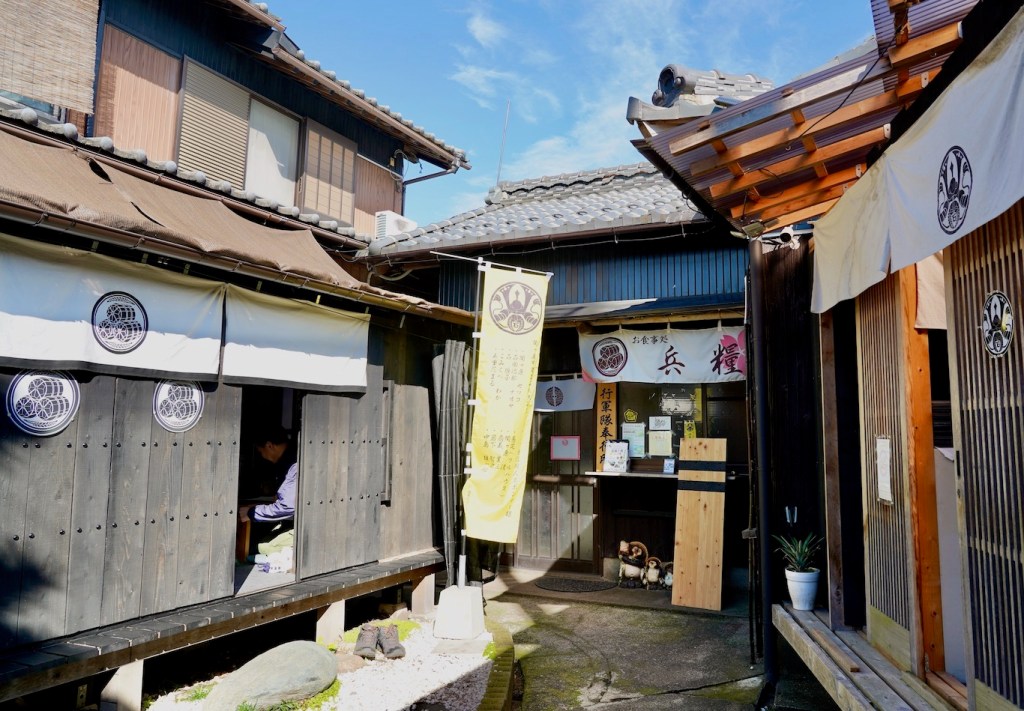
The other museum is a tiny private exhibition housed in a small space within an old traditional Japanese home – a collection resulting from a passion to locate and restore Samurai weaponry and armour. The smaller museum is not well sign posted. We followed directions from a pamphlet, searching through quiet residential streets. The museum also is not always open to the public, particularly on weekdays, so organising an appointment to visit is highly recommended. MJ and I were, however, winging it, and lucked in.
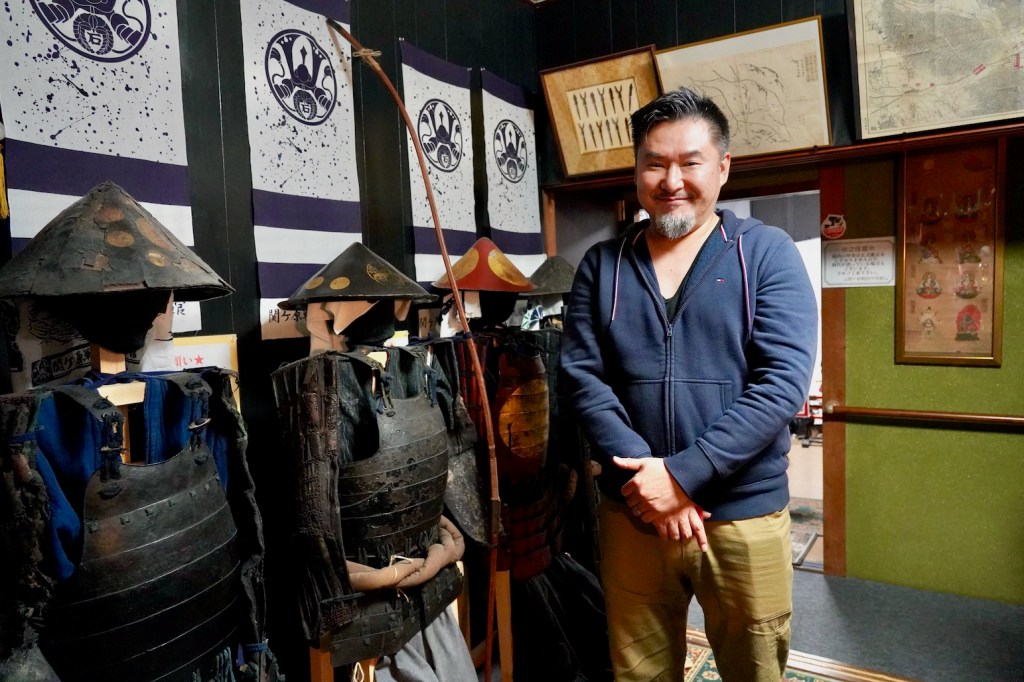
Even though the man we presumed to be the owner was in the middle of lunch, we were welcomed warmly and given a personal tour. His business card simply said Sakichi. There is a small entry fee – and please – do not dispute it! I would happily pay double to see this excellent exhibition. Apparently, some tourists do object to the fee to the chagrin of the owner. Hopefully, none of them are Australians!
Apparently some visitors think that because it’s a small museum it should be free. There’s no thought to the cost of privately gathering the exhibits and restoring them. And then there’s big groups who crowd in, regardless of the owner’s pleas to break into smaller groups to explore the tiny museum. These are the type of tourists who give us all a bad name.
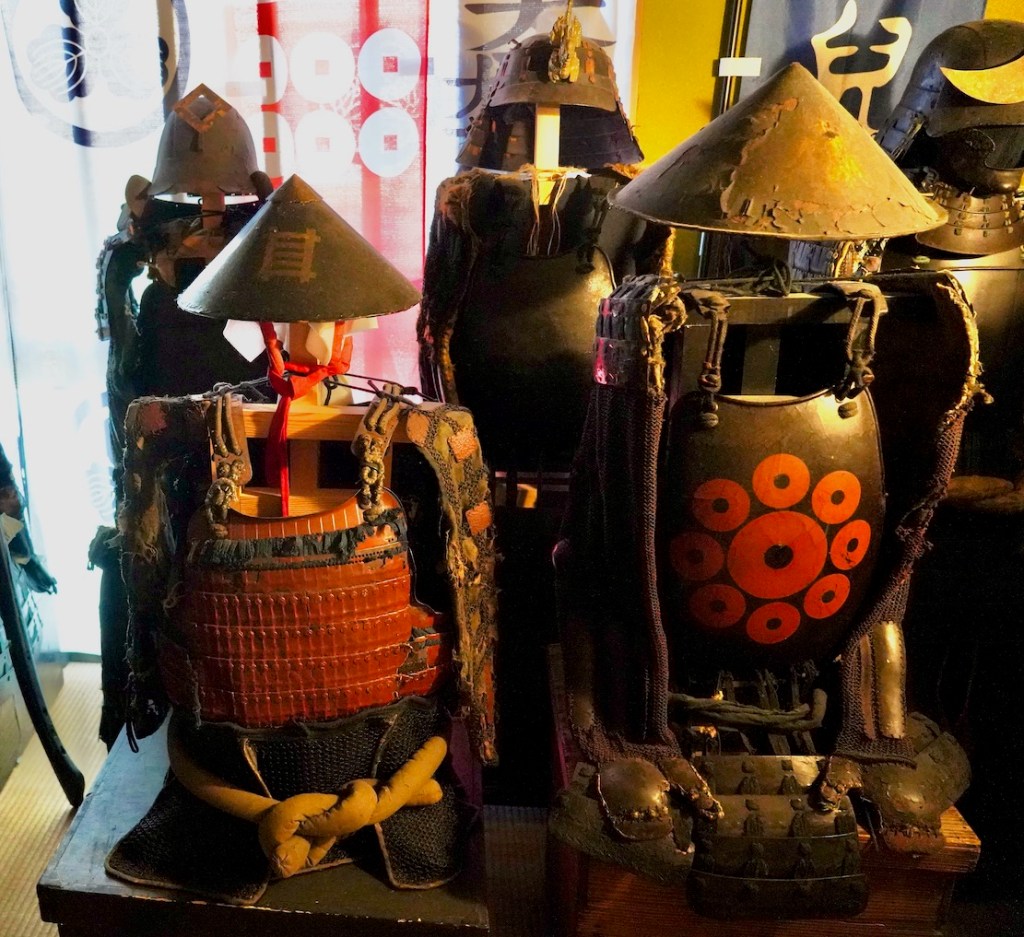
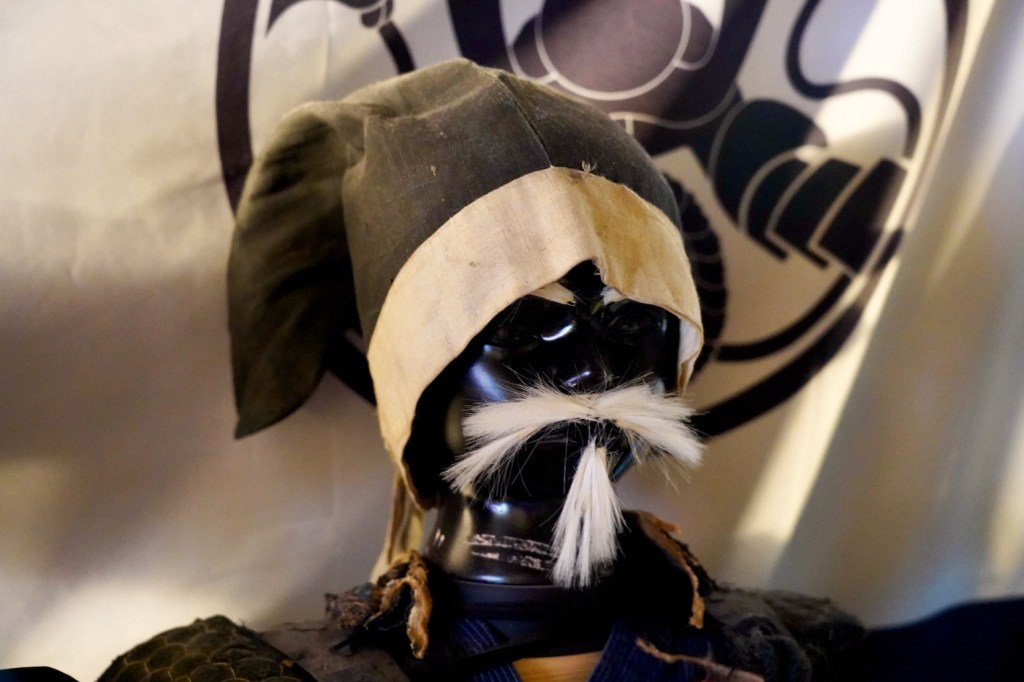
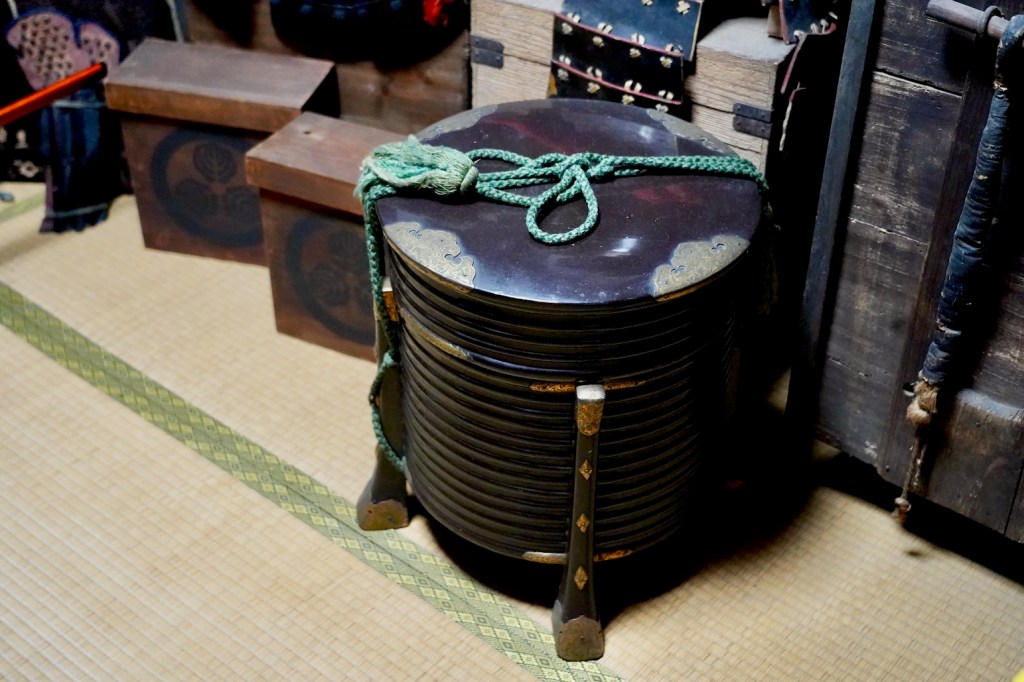
On display are old Samurai armour, weapons and other Samurai/Edo artefacts from throughout Japan. They are restored – not to full ‘like new’ restoration, Sakichi pointed out, but to a stage were long term preservation is possible.The collection is fascinating – bullet holes in some armour, blood stained undergarments. Sakichi speaks good english, and gave us excellent explainations of each item we focused on.
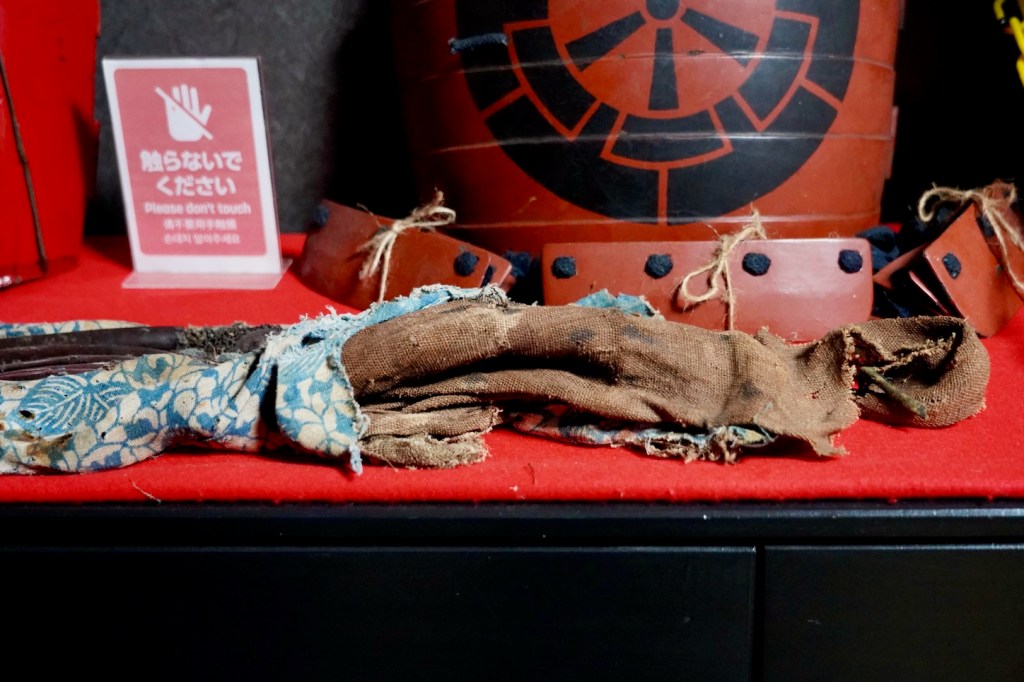

Sakichi allowed me to photograph quite a lot of it – but not work he is currently restoring. I did not use a flash, mindful that too much light might be harmful to the displays.

There were no glass cases or windows to look through. MJ says the lack of glass enclosures provided him with a very close up look at genuine armour. “I was able to appreciate it so much more than seeing armour and weapons behind glass,” he says.
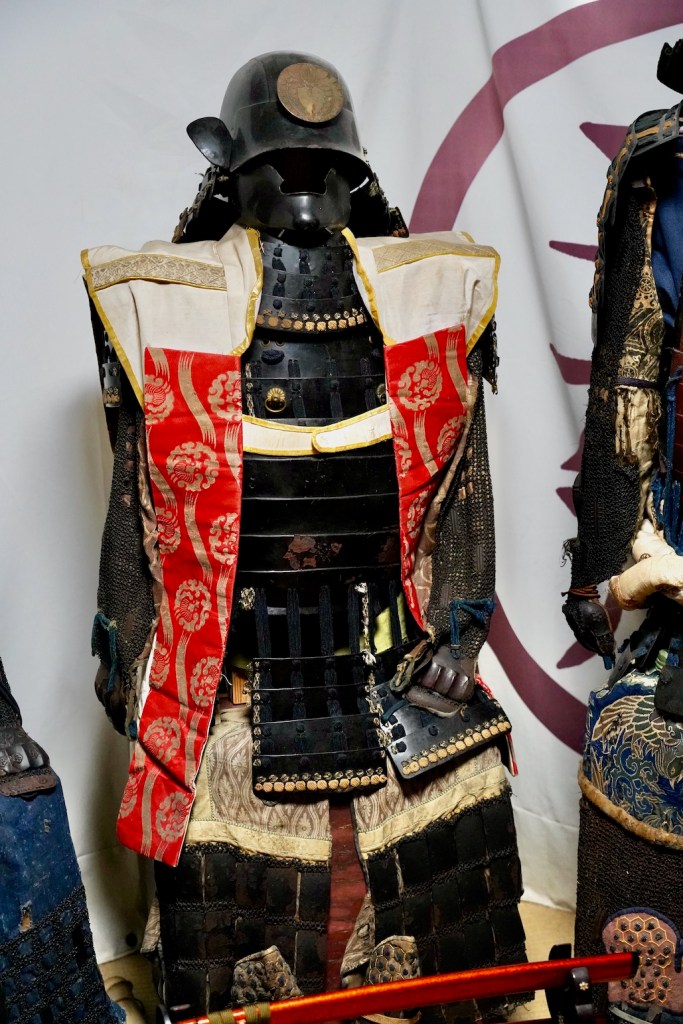
I walked out of the museum and looked out onto the valley with a much better understanding of the complexities and the humanity involved in the Battle of Sekigahara.
You can wander through the town and up into the hills surrounding it to see where the various armies involved in the Battle were based. Most set up with vantage points to help assess when they should join the battle and how to approach it. Flags and information boards are at each site. Bicycles are available for rent to get to the more distant sites. There’s a lot of signposts and explainations of how the battle was waged, including how loyalties changed during the day, influencing the outcome.
Some, on the losing side, desperately tried to escape the battlefield to safety. One small losing side group, courageously led by their Lord, drove straight into the heart of the victorious Eastern Army in a brave and daring tactical move to break through and get away! You don’t have to make up drama here! It all happened for real!
Most sobering, I thought, was visiting the ‘heads moulds’ – where the heads of samurai killed in the Battle of Sekigahara were buried following a ceremony where Tokugawa Ieyasu personally examined them and honoured the heads from both sides equally.
The thing that puzzled me was how so much authentic Edo period armour still exists today in Japan. Some, of course, are carefully cherished by the descendents of Samurai families. We were honoured to see some kept by a family in Kiso Fukushima in the Kiso Valley on this same trip (another story I’ve yet to write).
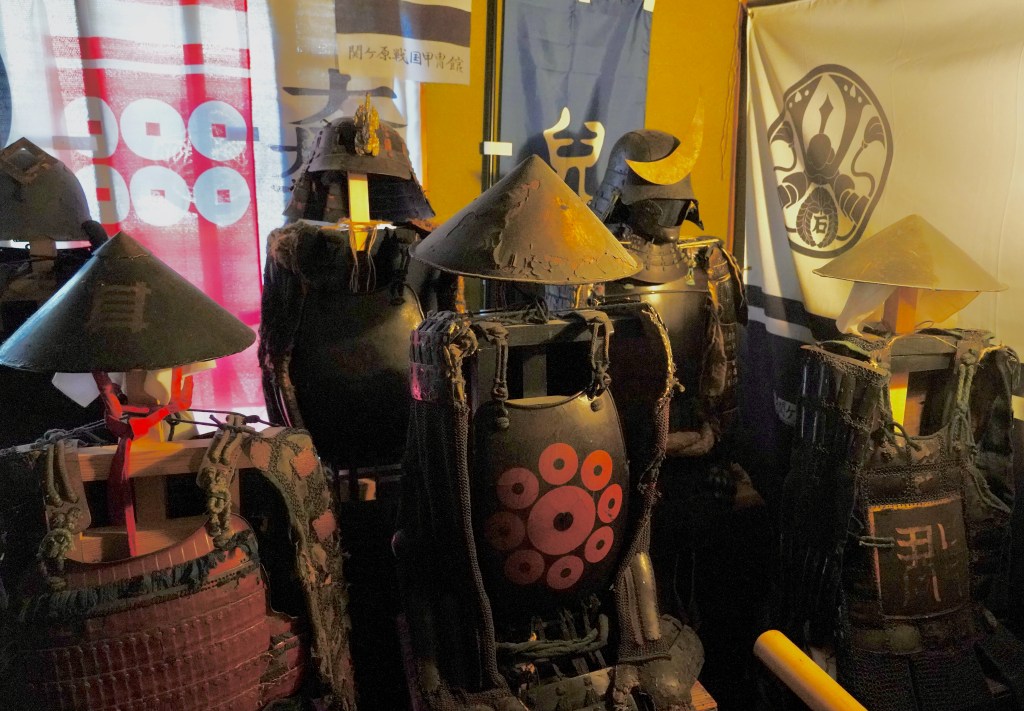
Sakichi also explained that a lot had been found in temples and at shrines.Soldiers, he said, escaping the battlefield, would take cover at these buildings as they desperately rid themselves of their armour to move on in their undergarments or change into civilian clothes. In that moment with his comment – I better grasped the human side of the battle. Not just a war waged and reflected on in history books – but a battle with men who weren’t simply brave and loyal to their Lords facing the challenge of the deadly fight. But frightened, fearful and desperate for their lives – desperately wanting to survive and return to their families.
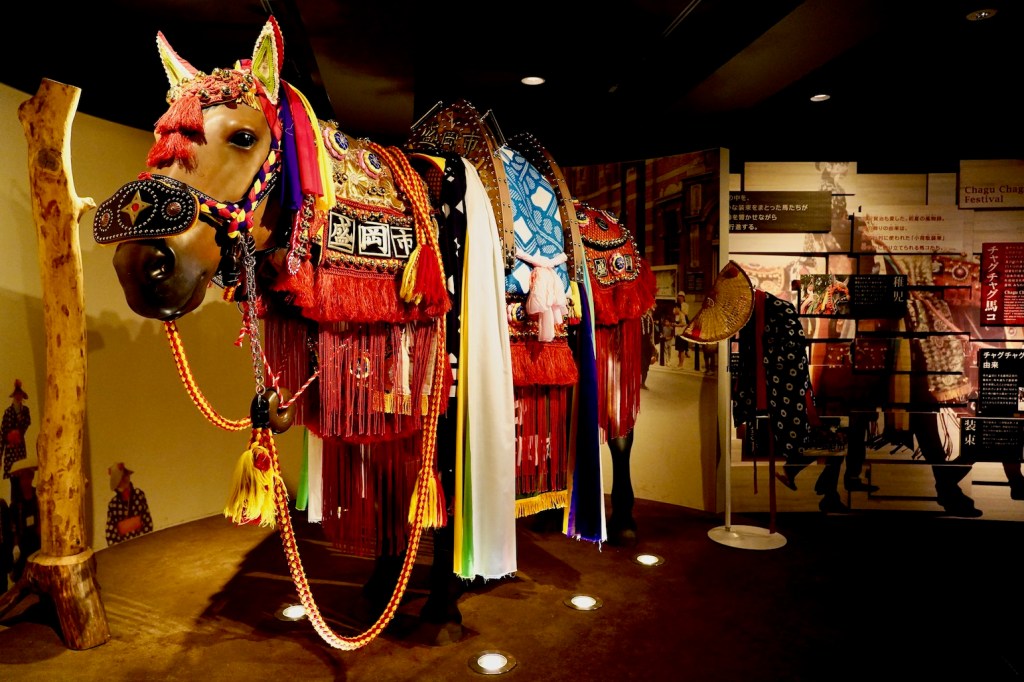
Not everyone was a full time, highly trained Samurai warrior. Many would have been simple folk – farmers and merchants who answered the call to arms from their Lords. That was an accepted tradition in Samurai times. I’ve been told that farm horses were utilised as war horses as well. In Morioka, north of Tokyo, there is an annual festival to honour these Samurai farm/war horses.
There were women fighting in battles too, though it’s not well documented in the Sekigahara battle. Certainly many Samurai women were skilled in fighting techniques. The 2017 award winning Japanese movie ‘Sekigahara’ featured them based on real life historical characters, including a woman doctor attending the injured on the front line of the Sekigahara battlefield. She was Hanano, the wife of the right hand general of the Western Army’s leader Mitsunari Ishida.
Sekigahara is a worthwhile place to visit in Japan, especially if you want a better understanding of the Samurai period in Japan. We rated it highly – one of the highlights of our October 2025 trip to Japan.
I recommend visiting both museums before taking your battlefields wander.
In Part 2 of this story later this month I’ll tell you more about the larger Memorial Museum.
 Travelling Therese
Wow. What an interesting read. This is a place I would love to visit. Samurai always fascinated me, especially their armour and their rules.
LikeLike
It’s a very interesting place and the history of the battle is fascinating. For some reason it’s not on the main tourist radar – though I think a lot of Japanese must visit on weekends. The main museum was incredible and I’ll write that up in my next post. What surprised me was the connection with Waterloo and Gettysburg. The three battlefields formed a sister battlefield relationship back in 2016 and the main museum features letters and artefacts from the other two battles – real Napoleon letters etc!
LikeLiked by 1 person
Totally awesome and surprising at the same time.
LikeLike
Very interesting! Might put it on the list for the next trip, hopefully in the not too distant future!
LikeLike
Worth it. Go on a weekday and ensure you book at the main museum ..you’ll understand if you look up the website or read part 2 of my story next month.
LikeLiked by 1 person
actually .. part two is ready and published today.
LikeLike
[…] I detailed some of the battle in my blog story released earlier this month on January 16 – Samurai Armour – a small museum. https://travellingtherese.com/2026/01/16/samurai-armour-a-small-museum/ […]
LikeLike